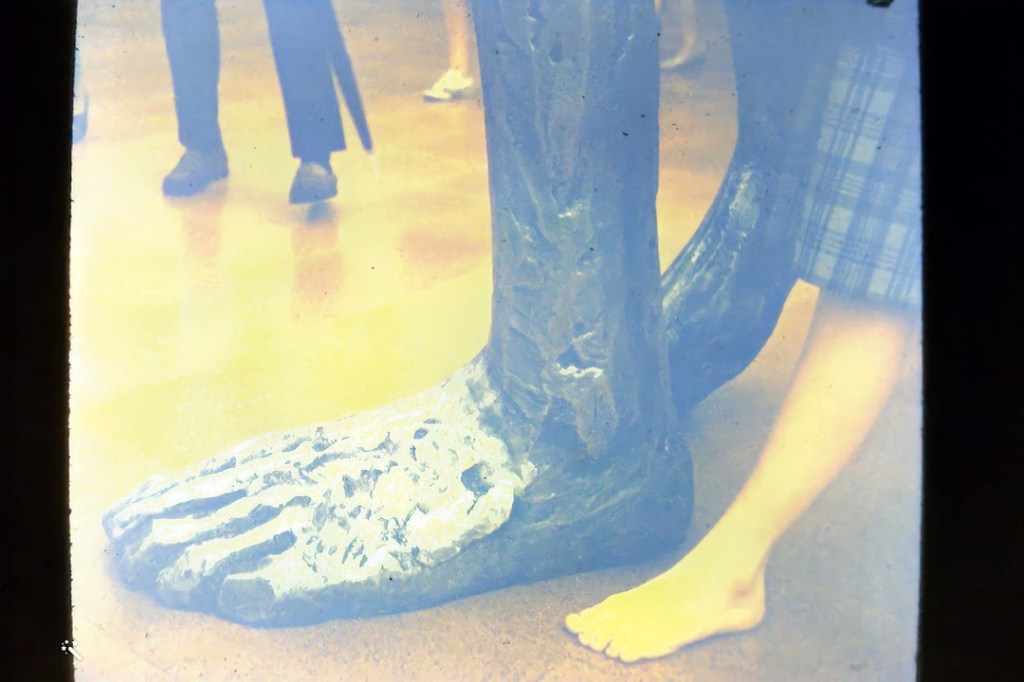
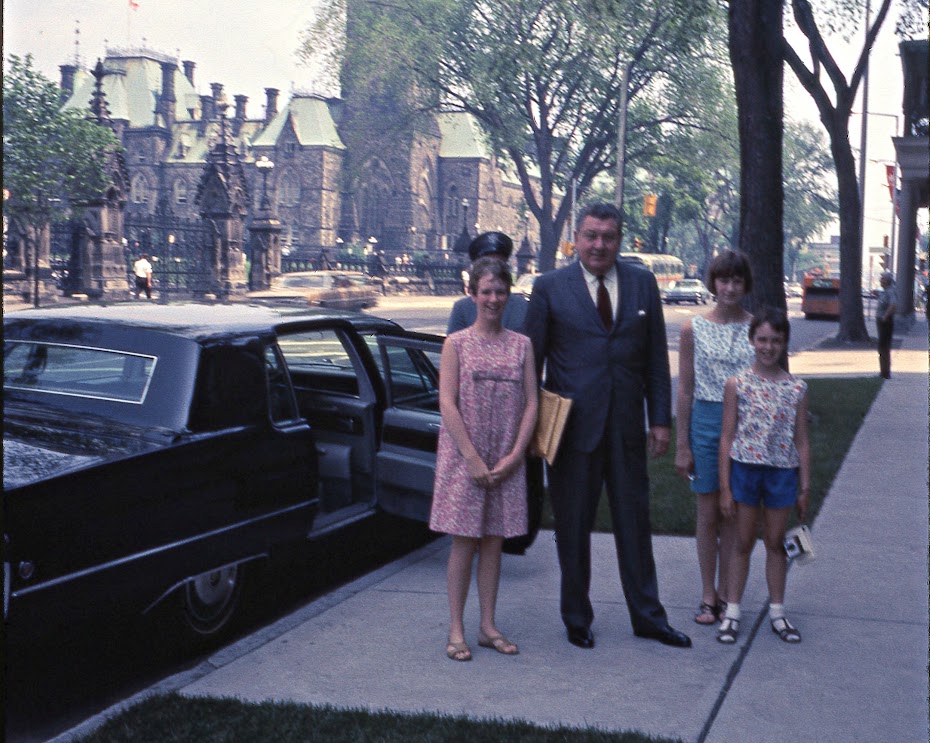
I think this photo was taken at the 1967 World Expo in in Montréal, Canada,
I remember being a little girl sitting on the swing set in my backyard on Harbrooke Ave. in Ann Arbor. As I slowly pushed myself back and forth on the swing, I looked down in wonder and delight at my shoes. They were sandals with a giant flower decoration and they are still possibly my favorite shoes ever…
I was also greatly influenced to love shoes by the story of Cinderella- I always enjoy these quotes:
“Cinderella is proof that a new pair of shoes can change your life.”
“Give a girl the right shoes, and she can conquer the world. Just look at Cinderella!”
“Cinderella never asked for a prince. She asked for a night off and a dress. And maybe, just maybe, a great pair of shoes.”
The history of shoes has certainly changed over the course of my 70 years on the planet. This blog is just a fun way to celebrate some of the shoes we wore.
So…get ready to tap your foot and read a fun blog while walking down memory lane with me.
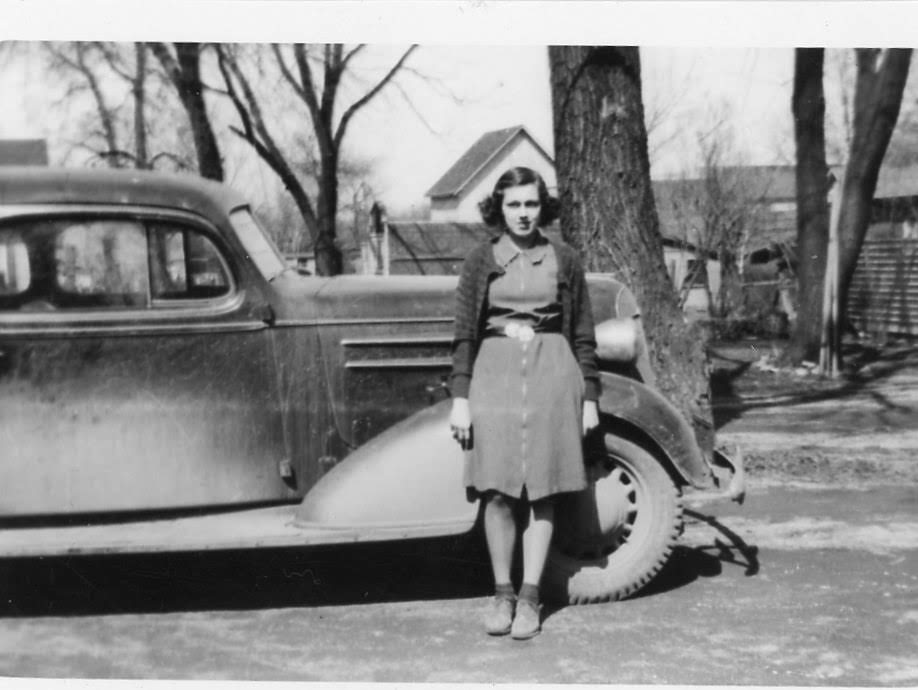
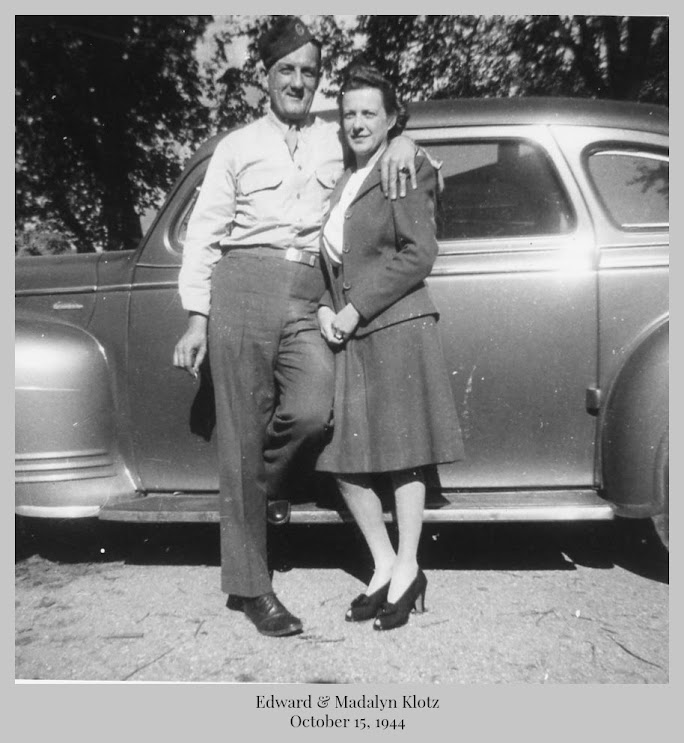
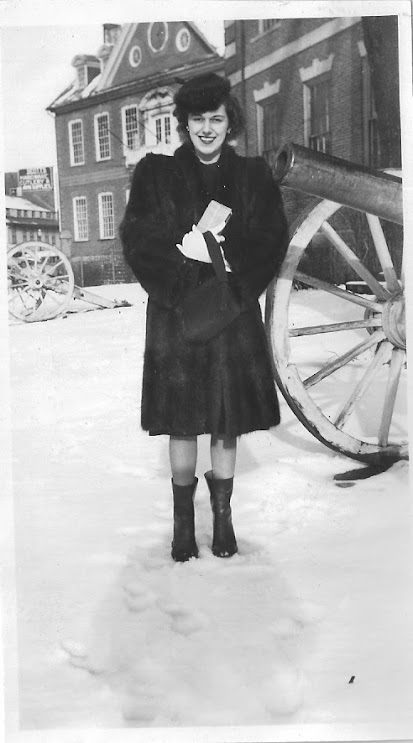
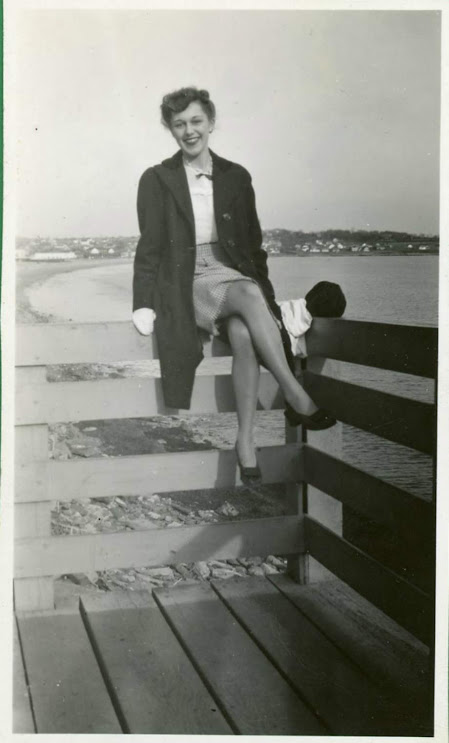
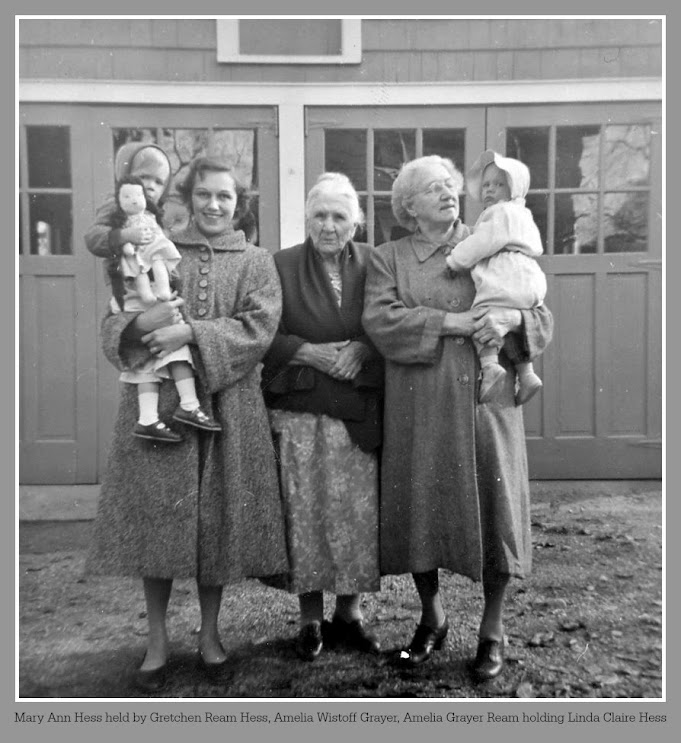
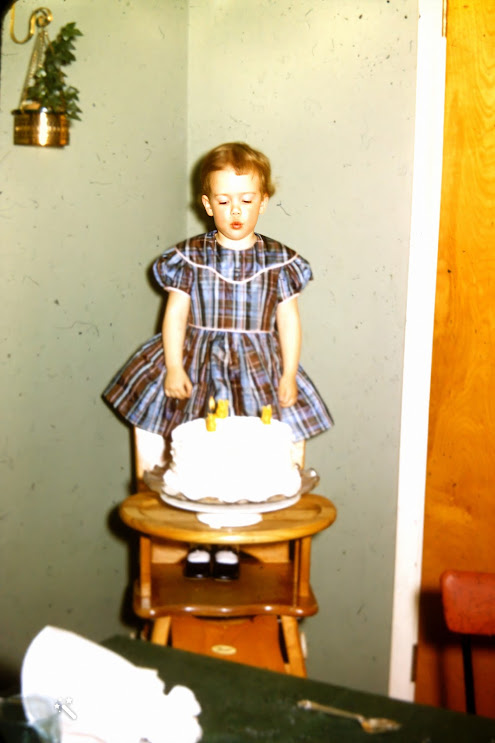
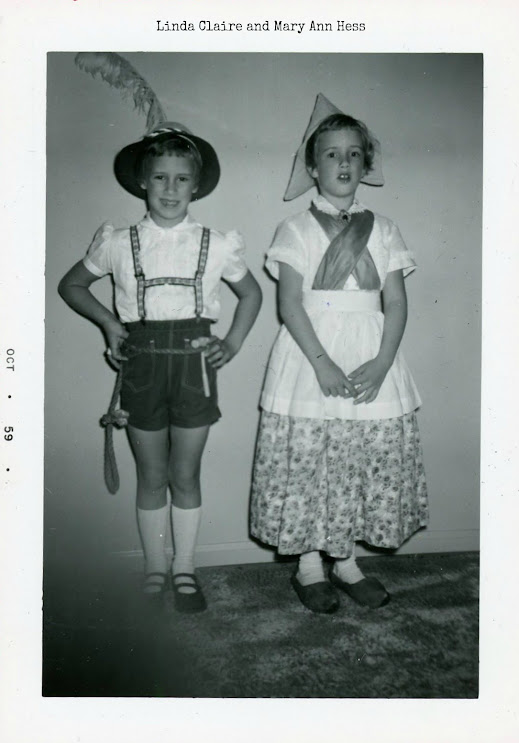
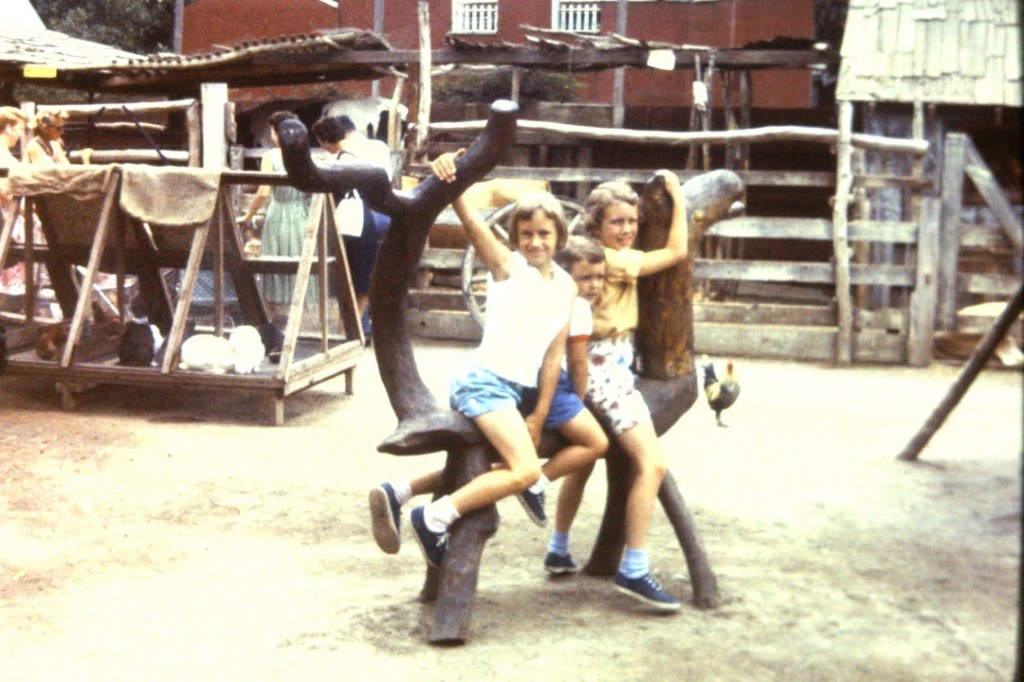
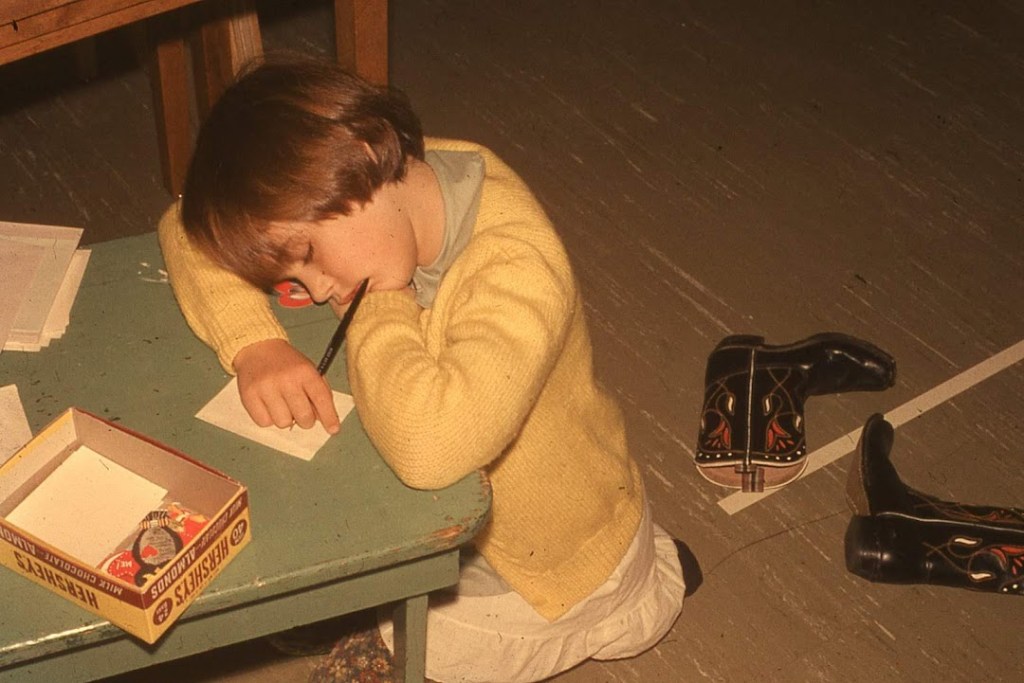
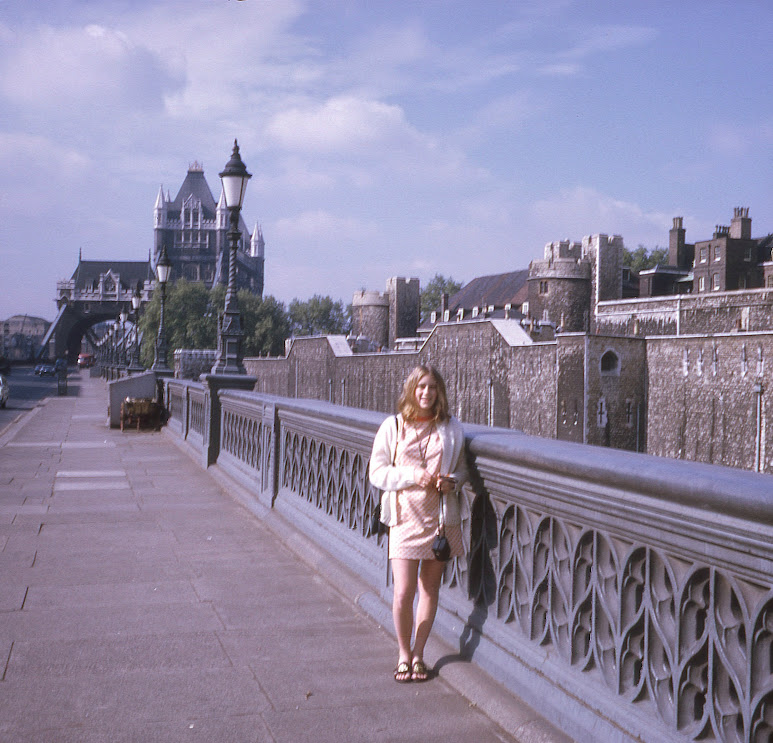
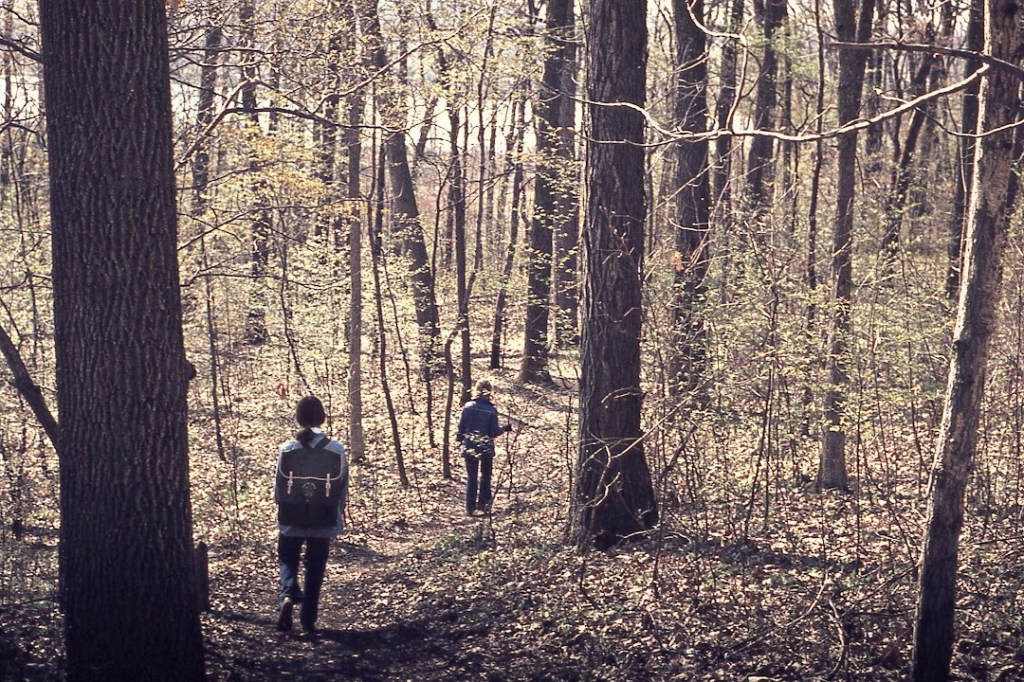
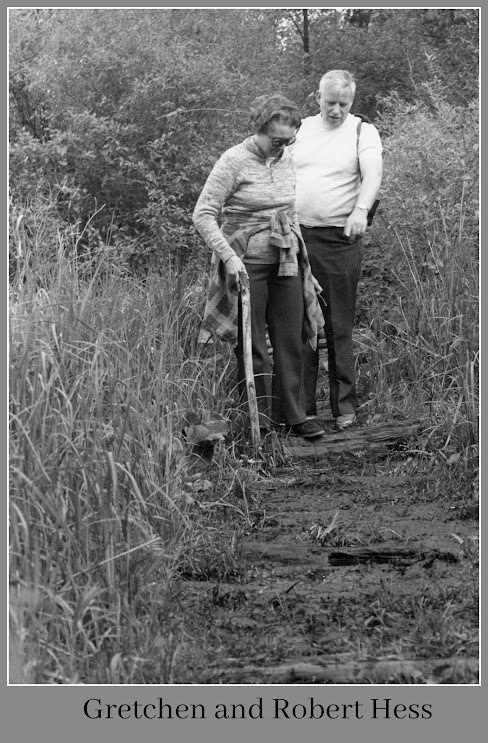
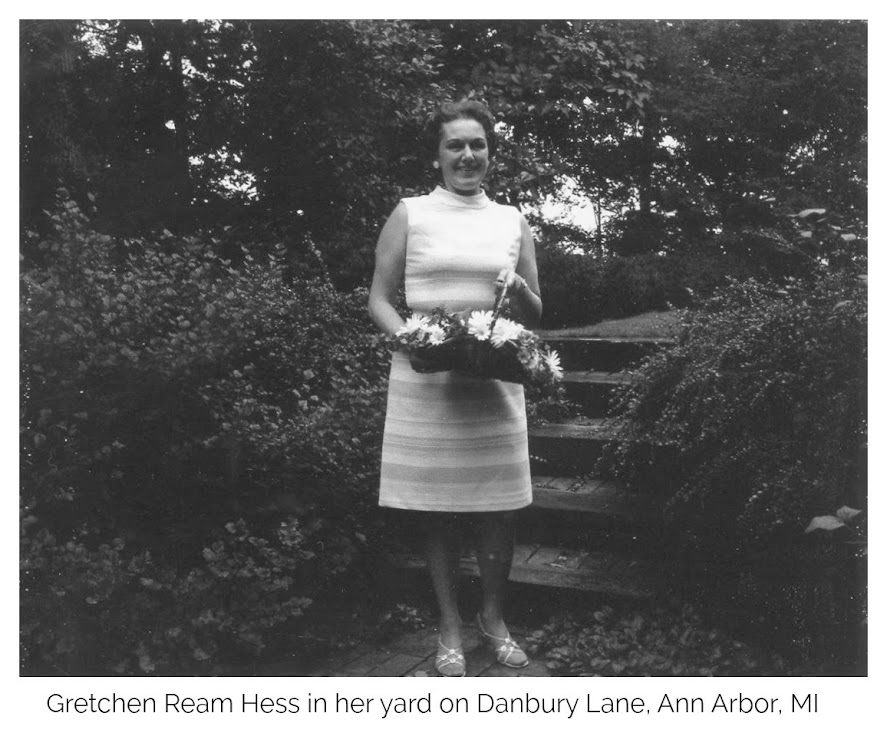
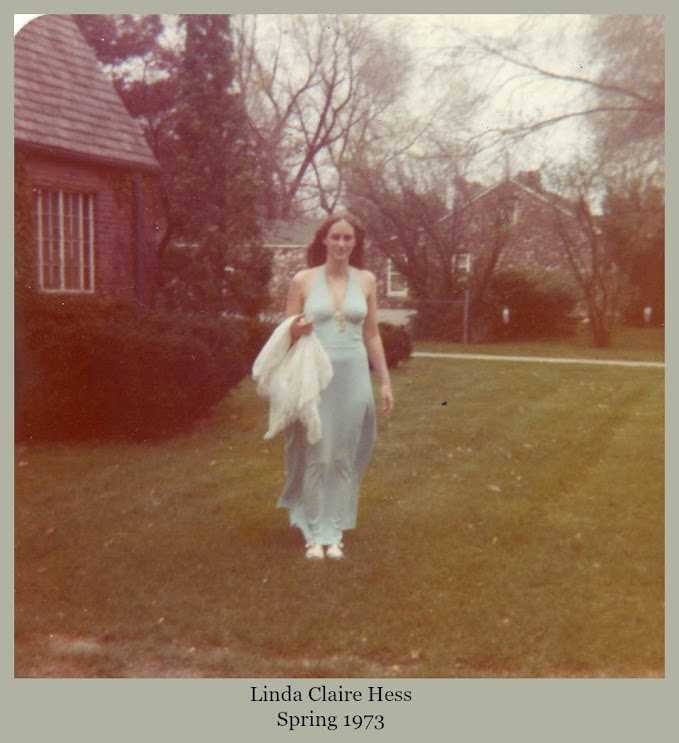
This photo of Gretchen Lois Ream Hess was taken in approx. 1940. As I study this photo, I realize that I could easily dress just like her even now in 2024! The anklet socks worn with the loafers were a classic combination.AI has estimated that the date of this photo is 1942. Mom would have been 17 years old. The location was 520 N. Main Street, Ann Arbor, MI. Gretchen Ream Hess is wearing a pair of modest shoes that seem to reflect this time era as the Great Depression was just ending. A photo of Robert Lawrence Hess on his 1st day at the University of Michigan. This would have been in 1942. Look how spiffy he is in this outfit paired with classic shoes.Look at these beautiful two toned shoes my mother is wearing in 1944. A photo of my Uncle Robert Emerson Ream with my mother Gretchen Ream Hess. AI dates this photo as 1945 – so maybe just at the very end of WWII. I notice that Uncle Bob’s shoes are not the shiny patent leather but some much more practical leather. Mom’s shoes are adorable with the little open toe and a cute bow. I am in love with Madalyn’s gorgeous heels!Mom is probably visiting Dad at Midshipman School. When did she get a fur coat? Was it possibly from Aunt Babe? What are your ideas? The boots actually look very stylish. I date this photo at approx. 1945.My stunning mother. Look at these beautiful shoes! I believe this photo is from her honeymoon in December of 1945.I am dating this photo at approx. 1948. Mom is sitting on a park bench with a friend. I believe this is from Mom’s young married days in Bethlehem, PA. So – what amazing sling back shoes…right?An amazing photo of Mom from approx. 1950. Everything about this outfit is WONDERFUL.Mary Ann is wearing the quintessential baby shoes of the 1950’s. These shoes may be the ones that Mom had bronzed later as a memory. Also…did toddlers really get to wear a string of pearls? I love the knit dress.A chance to see 4 generations of my family and the shoes we all had on. Precious!Mary Ann with 3 candles in the birthday cake. Look at her pretty patent leather Mary Jane shoes with a type of dress that required a “stick out slip” to hold the skirt in place. Bonus photo that shows my leather tie up shoes and my rubber boots. The funny thing is that the shoes were worn inside the boots back in those days. WOW…I bet we are all laughing at this photo! Mary Ann’s shoes were passed down and were a classic style for little girls of the 1950’s. I seem to have some pretty swell slippers. March 1, 1956.I am sporting red tennis shoes. I feel like I still have a memory of them. Chrissy White is between me and Mary Ann. My mother, Gretchen, is on the far right and is pregnant with Kathryn. This photo was taken in 1957.Here we are in our Easter dresses. Linda Claire, Kathryn Sue, and Mary Ann. Kathryn has the standard toddler shoes and Mary Ann and I are wearing patent leather shoes. Remember that dresses from this era were made with only natural fibers (no polyester yet) so they had to all be carefully ironed. Date estimate 1958.This photo is proof that flip flops have been around for a long time. I always smile when I look at this picture- the foreshadowing of me being afraid of heights and nervously grabbing my father’s slacks. Mary Ann looks confident and Kathryn is just busy playing with the sand. Photo possibly in late 1958 or early 1959.I am the mountain climber – an alpine German yodeler and Mary Ann is the little dutch girl in wooden shoes. The shoes I am wearing appear over and over in our family photographs. I think that we must have kept getting the same shoes in a different size. Back in 1959 we owned only a couple pairs of shoes each and frequently took them to the cobbler in Nichols Arcade to be repaired. Yes, we did have wooden shoes. They were kept in the dress up chest.This photo also has me laughing. Kathryn looks at Santa so lovingly and Mary Ann is also happy as can be. But, look at me…not sure at all about this guy! LOL. Also, until this blog, I never realized that Kathryn is wearing the hand me down boots from the earlier photo of me asleep on the floor in my snow suit. Again, these types of boots were worn with our shoes inside. In order to put the boots on, we first covered our shoes in plastic bread bags to help them slip on. Christmas 1959.What a hoot. At least Mary Ann has the pretty smile. My smile is a little over the top and Kathryn looks quite displeased that the cake is obviously not hers. Kathryn is wearing the recycled pair of red shoes that appear over and over in these photographs. We are with Bones and Madalyn at their home in March of 1960.Apparently Kathryn is being smooshed between her sisters. Mom liked to dress us in similar styles. I see that we all are wearing identical pairs of blue sneakers. Photo 1961.It looks like Kathryn is wearing our hand me down black patent leather shoes. Photo circa 1962. Aunt Babe possibly actually sewed this coat- her occupation was as a seamstress.In 1962 we seem to be wearing some quite lovely summer sandals. In this photo we are pictured with a Canadian dignitary. Kathryn…why are you wearing socks?I love looking at the shoe fashions in this 1964 photo of the Silver Anniversary party for Madalyn and Bones. The photo was taken at 2629 Danbury Lane, Ann Arbor. Grandma Pet (Amelia Ream) is seated in the orange chair on the front right of the photo.I love this photo of Kathryn for a hundred reasons. Check out her amazing cowgirl boots! Yee Haw! Photo circa 1965.A photo from my 1970 European vacation with Dad. I am wearing a “stretch and sew” dress made by Mom. This was the start of polyester. I think my sandals are pretty cute!We definitely had hiking boots and did plenty of nature walks as a family. Photo circa 1971.Mom and Dad are also wearing practical walking type shoes in this 1971 photo.Jack is wearing the Earth Shoes that became kind of an obsession for all of us in this 1972 time period.Mom looks so lovely in the back garden at 2629 Danbury Lane, Ann Arbor. Fantastic shoes…right?I know. I know. I haven’t changed a bit. LOL. This is in front of Waterman Residence in my 1970’s college days. Pretty borrowed dress and shoes.Can you tell that Bones is wearing the classic rubbers over his shoes. This was the classic winter style for men at that time.Christmas c1975. Mary Ann is wearing a beautiful smile and some great wedge shoes.I am on my honeymoon in 1977 wearing my wonderful Earth Shoe sandals.
Two of the Bravin brothers married two of the Melosso sisters. One of these marriages was of the great aunt and great uncle of my ex-husband’s Groshans family. The other marriage was of the maternal grandparents of my ex-husband’s Groshans family.
When 2 brothers marry 2 sisters it brings an interesting bond and actually blends many of the family lines between sibling and in-law. It is fun to think that their family gatherings would have brought together these 2 families and 2 sets of siblings!
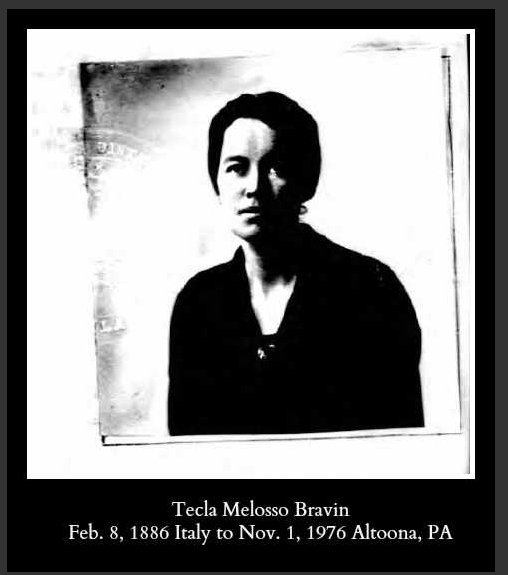
Tecla Melosso was an older sister to Lousa Melosso (aka Louise Bravin). She was a Great Aunt to my ex-husband and his Groshans siblings.
Tecla Melosso was an older sister to Lousa “Louise” Melosso. This made Tecla a great aunt in the Groshans family.
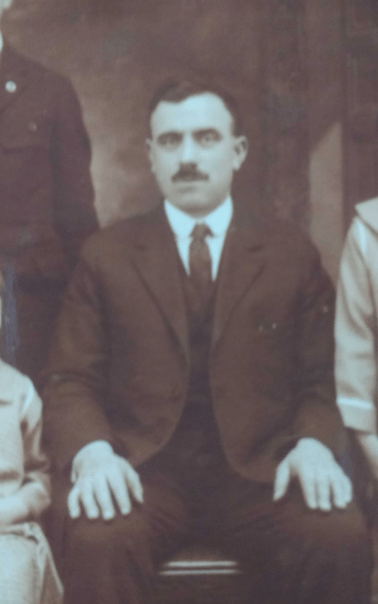
Tecla married Luigi “Louis” Bravin. Luigi was born in Meduno, Italy on 1 Apr 1884. He immigrated to the USA on 15 Nov 1906 (he was 22 years old.) The marriage of Tecla and Louis took place in PA on 15 Nov 1909 (he was 25 years old and she was 23 years old.)
Tecla and Luigi’s children were 1st cousins once removed to my ex-husband and his siblings.
Luigi “Louis” Bravin 1884-1936
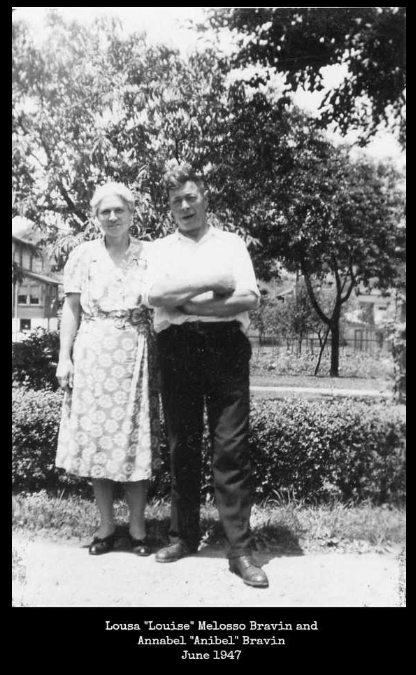
Techla’s younger sister, Lousa Melosso (Louise), married Luigi Bravin’s younger brother Anibale Bravin. Lousa (Louise) and Anibale were the maternal grandparents of my ex-husband and his siblings.
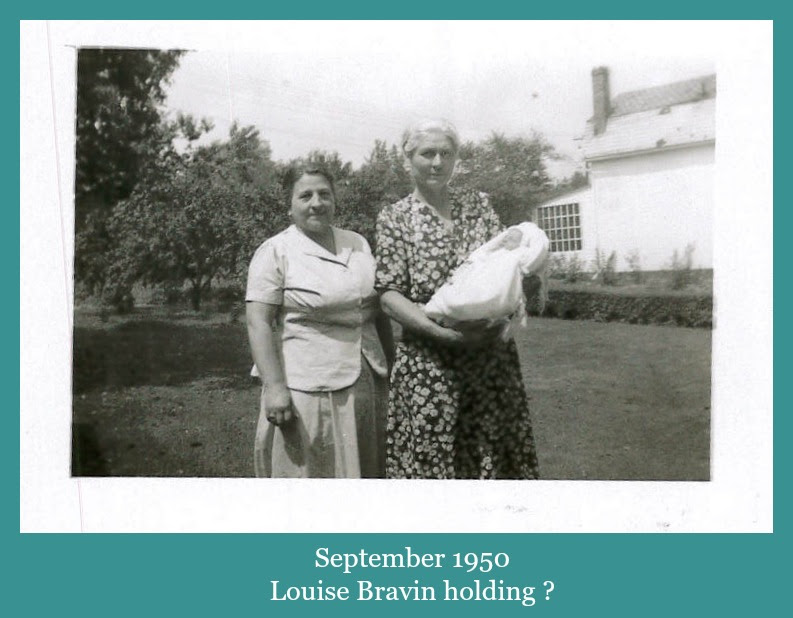
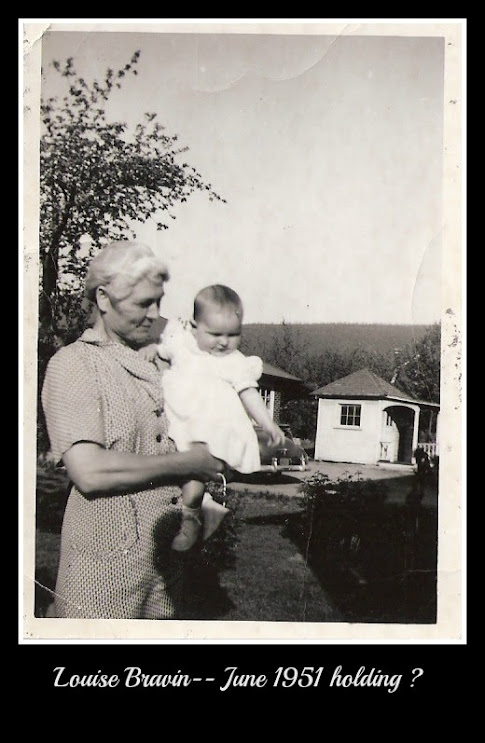
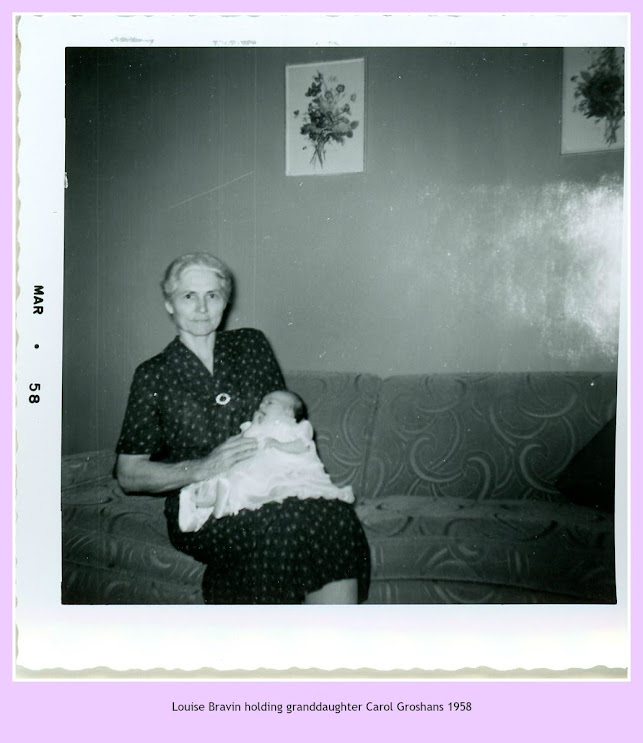
Lousa (Louise) was born 13 June 1899 in Frisanco, Pordenone, Friuli-Venezia Giulia, Italy. She immigrated to the USA when she was 23 years old. This is a link to a blog that I wrote about Lousa (Louise).https://tellinglifestories.org/tag/louise-bravin/
Anibale Bravin was born on 13 Feb 1891 in Udine, Friuli-Venezia Giulia, Italy.
Anibale Bravin 1891-1969. I believe his name was pronounced Ahh Nee Bah Lee.
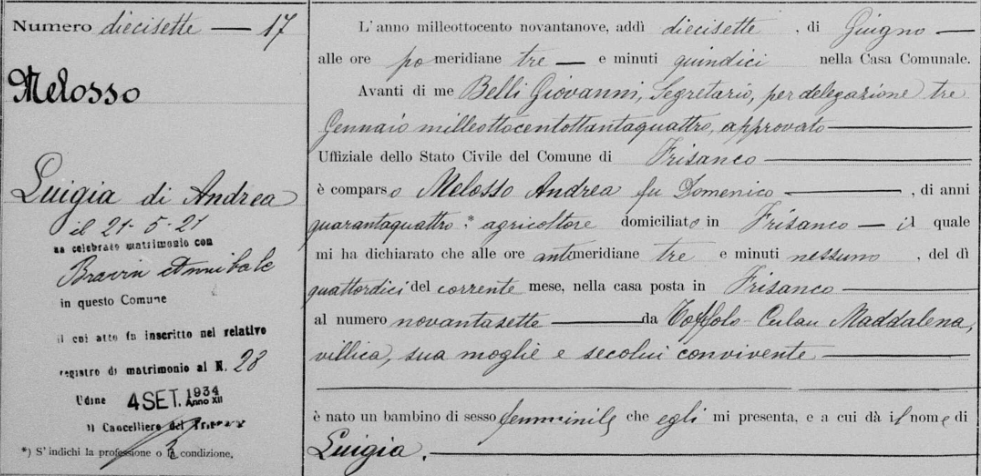
When Lousa “Louise” Melosso was born on June 13, 1899, in Frisanco, Pordenone, Italy, her father, Andrea, was 43, and her mother, Maddalena, was 36. She married Anibale (Annibale) Bravin on May 21, 1921 in Italy. They had three children during their marriage. She died on August 17, 1990, in Altoona, Pennsylvania, at the age of 91, and was buried there.
1899 birth
Here is a time line of Lousa’s life:
Birth: Lousa was born on June 13, 1899, in Frisanco, Pordenone, Italy, to Maddalena “Lena” Toffolo Culau, age 36, and Andrea (Andrew) Melosso, age 43.
Age 3: Her brother Angelo Selemino died on December 31, 1902, in Frisanco, Pordenone, Italy, when Lousa “Louise” “Luigia” was 3 years old.
Age 5: Her sister Albino was born on July 30, 1904, in Udine, Udine, Italy, when Lousa “Louise” “Luigia” was 5 years old.
Age 21: Lousa married Anibale (Annibale) (Pete) Bravin on May 21, 1921, when she was 21 years old. They were married in Italy.
Age 22: Her son John Andrew or Giovanni Andrea Battista was born on March 1, 1922, in Meduno, Pordenone, Italy.
Age 23: Lousa immigrated to the US on 29 Aug 1922 on the Europa. I believe she was processed at Ellis Island. She had started the voyage in Genoa, Italy on 22 Aug 1922.
This is the arriving passenger list
Age 26: Her son Louis Edward “Lou” was born on August 25, 1925, in Altoona, Pennsylvania.
Age 27: Her daughter Madeline Mary Rose or Maddalena Maria was born on December 20, 1926, in Altoona, Pennsylvania.
Age 34: Her father Andrea (Andrew) passed away on March 31, 1934, in Meduno, Pordenone, Italy, at the age of 78.
Age 62: Her sister Angela died in 1961 when Lousa “Louise” “Luigia” was 62 years old.
Age 70: Her husband Anibale (Annibale) (Pete) passed away on December 14, 1969, in Altoona, Pennsylvania, at the age of 78. They had been married 48 years.
Age 77: Her sister Tecla died on November 1, 1976, in Altoona, Pennsylvania.
This 1930 US census shows that Lousa was born in Italy – her parents were also born in Italy.1930 US census data on Lousa1940 US census data on Lousa
What was Frisanco, Friuli-Venezia Giulia, Italy like when Lousa Louise was born?
The following information was generated by AI.
In 1899, Frisanco was a small village located in the region of Friuli-Venezia Giulia, Italy. Nestled in the picturesque foothills of the Dolomite Mountains, Frisanco was a close-knit community with a rich cultural heritage. Let’s explore what life was like in Frisanco during this time.
Daily Life:In 1899, the people of Frisanco lived a simple yet fulfilling life. The village was primarily agrarian, with most residents engaged in farming and animal husbandry. The fertile soil and favorable climate allowed for the cultivation of crops such as wheat, corn, and barley. Families worked together to tend their fields and care for their livestock, ensuring a sustainable livelihood.
Cultural Traditions:Frisanco was known for its vibrant cultural traditions. The people took great pride in their heritage, preserving and celebrating their unique customs. Festivals and religious processions were an integral part of village life, bringing the community together in joyous celebration. Traditional dances, music, and local cuisine were cherished, reflecting the rich tapestry of Friulian culture.
Community Spirit:The people of Frisanco valued strong community bonds. Neighbors supported one another, sharing resources and lending a helping hand when needed. Social gatherings, such as weddings and baptisms, were cherished occasions for the entire village to come together and celebrate. The local church played a central role in community life, serving as a place of worship, social gathering, and a source of guidance and support.
Historical Context – from an AI biography on My Heritage Lousa Bravin, née Melosso, was born into a world on the brink of great change. The year 1899 saw Italy in a period of political flux and social transformation as it grappled with its relatively recent unification and industrialization. Her father, Andrea Melosso, would have witnessed Italy’s struggles for independence and unity during his lifetime, which were marked by significant events such as the Third Italian War of Independence (1866) and the capture of Rome (1870). Lousa’s early years in Friuli-Venezia Giulia, an area known for its cultural diversity and linguistic minorities, likely exposed her to a melting pot of traditions and languages. When Lousa married Anibale ‘Pete’ Bravin in 1921, Europe had just emerged from the devastation of World War I. Italy, having joined the war on the side of the Allies in 1915, experienced economic hardship and social unrest in the post-war years. This tumultuous environment, coupled with the promise of the American Dream, may have influenced the Bravins’ decision to emigrate to the United States. They became part of the massive wave of European immigrants seeking better opportunities abroad in the 1920s before the U.S. Congress passed immigration quotas with laws like the Emergency Quota Act of 1921 and the Immigration Act of 1924. The Bravin family settled in Altoona, Blair, Pennsylvania, during a time when America was transitioning from the Roaring Twenties to the Great Depression and then into the recovery efforts of the New Deal era. Altoona, with its thriving railroad industry, offered employment opportunities that attracted many immigrants. By the 1930s and 1940s, the city reflected broader national trends, including the impact of World War II on domestic life and the subsequent post-war boom that reshaped the American economy and society. Lousa Bravin lived through momentous periods of the 20th century, witnessing the rise of mass media, the civil rights movement, the Cold War, and the technological advancements leading up to the Space Age. She passed away at the age of 91 in 1990, a year marked by global shifts such as the fall of the Berlin Wall the previous November and the dissolution of the Soviet Union shortly thereafter. Her death in Altoona, where she had spent much of her life, came at the close of a century that had seen immense changes in the world she first entered back in 1899.
Last Name Origins The surname Melosso is not a common name, and its origin is not widely documented in mainstream onomastic references. It may be of Italian origin, given the suffix ‘-osso’ which is characteristic of some Italian surnames, often denoting a physical trait or characteristic. The prefix ‘Melo-‘ could derive from ‘melo,’ the Italian word for apple, but without specific genealogical or historical evidence, this is speculative. Further research would be required to determine the exact origin and meaning of the surname Melosso. The last name Bravin is likely of Italian origin. In Italian, ‘bravo’ means ‘good’ or ‘skilled’, and the suffix ‘-in’ can denote a diminutive form or affiliation. Therefore, Bravin might originally have been used to indicate a person who was a good or skilled worker, or possibly the son of someone named Bravo. This surname is more prevalent in northeastern Italy, suggesting regional origins or associations with that area. As with many surnames, the precise etymology can vary based on family history and geographic distribution.
Benjamin Ream was born in September 1855, in Schuylkill Haven, Pennsylvania. He was the son of John Ream, born circa 1816 , and Sarah Maria Ream (born Reichert), who was born in 1823.
Benjamin was my great grandfather. His son, Grover Cleveland Ream, was my maternal grandfather.
He married Hattie R. Ream (born Fike), who was born on July 25, 186 , in Indiana. They were married in 1881 and had nine children: Rebecca, Winfield, Grover, Lucy, John, Harriet, William, Josephine and Frederic.
Benjamin’s occupation was a carpenter. Throughout his life, he lived in various places including South Manheim Township, Schuylkill, Pennsylvania, and Ann Arbor city Ward 7, Washtenaw County, Michigan. By 1920, he had moved to Metzger, Washington, Oregon.
I am particularly interested in this blog to find out where he worked in lived in Ann Arbor, MI.
These are the records I found for his connection to Ann Arbor.
1888-1889 worked for Jacobus & Son as a carpenter. His employer’s business was located at 92 E. Catherine, Ann Arbor. This is an address that no longer exists. I suspect that it may have been part of a purchase by the UM Health System for the Catherine Street Hospital.
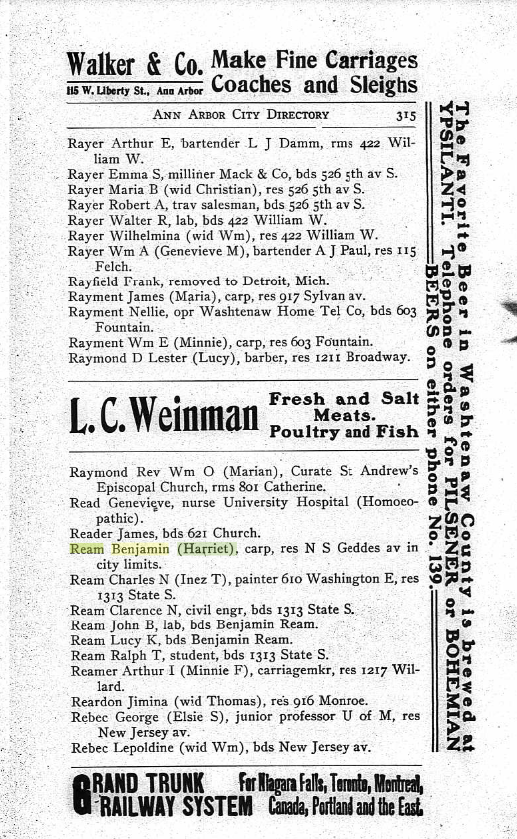
In an Ann Arbor directory from 1898 and 1899, it lists the home residence of Benjamin and Harriet as simply the east end of Wells, Ann Arbor, MI.
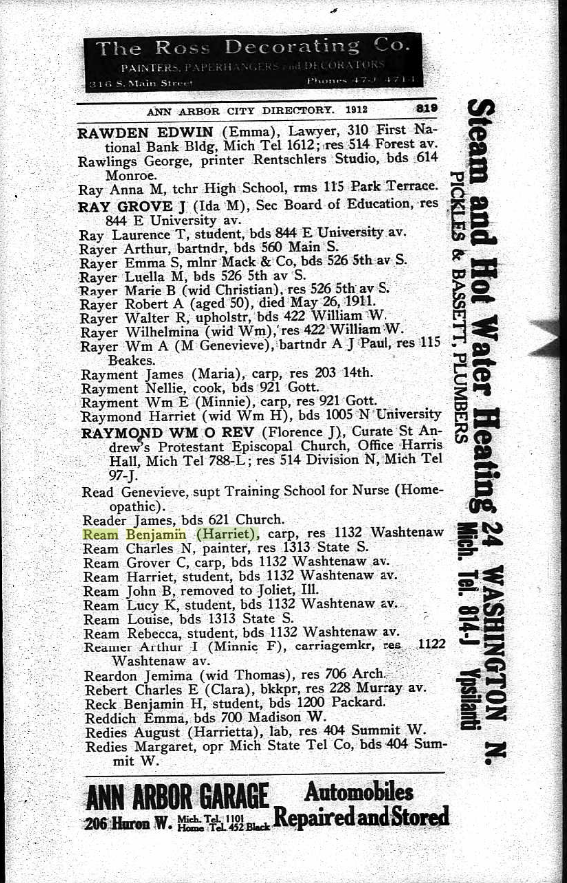
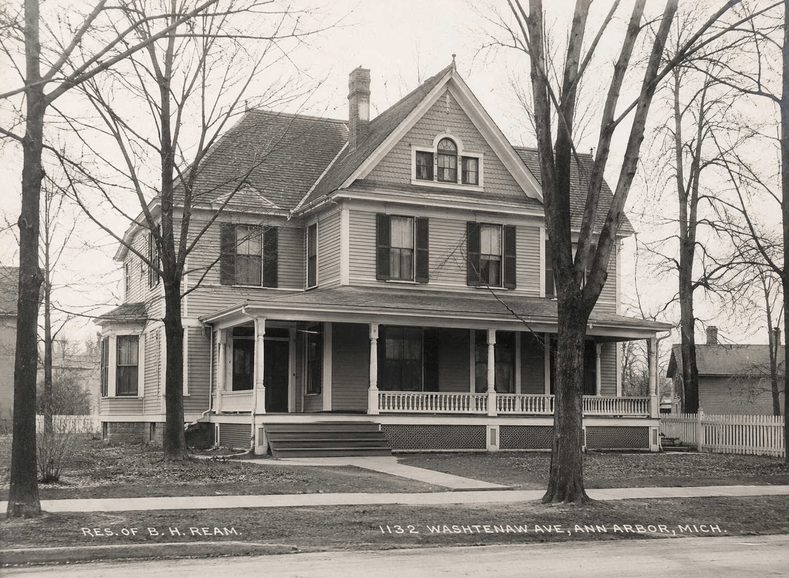
In the 1908 Ann Arbor City Directory his address is listed as N S Geddes Ave., Ann Arbor in the city limits! Too bad they did not list an actual address.In the 1912 city directory for Ann Arbor, MI, Benjamin and Harriet were living at 1132 Washtenaw Ave.Home of Hattie and Benjamin Ream
From a quick search on the internet, I found out that their beautiful Queen Anne Victorian home on Washtenaw no longer stands. This would have been in the area between Church Street and S. Forest Avenue. The house was removed decades ago and became part of the property of the U of M.
Benjamin Ream’s birth in the mid-19th century came at a time when America was rapidly changing. Born into an era of industrialization and just before the Civil War, his Pennsylvania roots placed him in a state that was a hotbed of political and economic activity.
Marrying Hattie R. Ream on May 28, 1881, Benjamin started his own family during a period of reconstruction and national healing following the Civil War. Their children’s names, including my maternal Grandfather named Grover Cleveland, suggested a connection to the broader political landscape, as Cleveland was elected President of the United States twice during this era.
As a carpenter, Benjamin Ream belonged to a profession that supported the nation’s growth and expansion westward. His movement from Pennsylvania to Michigan and eventually Oregon followed a pattern of migration as Americans sought new opportunities in different parts of the country. This period saw significant urbanization and the development of infrastructure, which would have provided ample employment for skilled tradesmen.
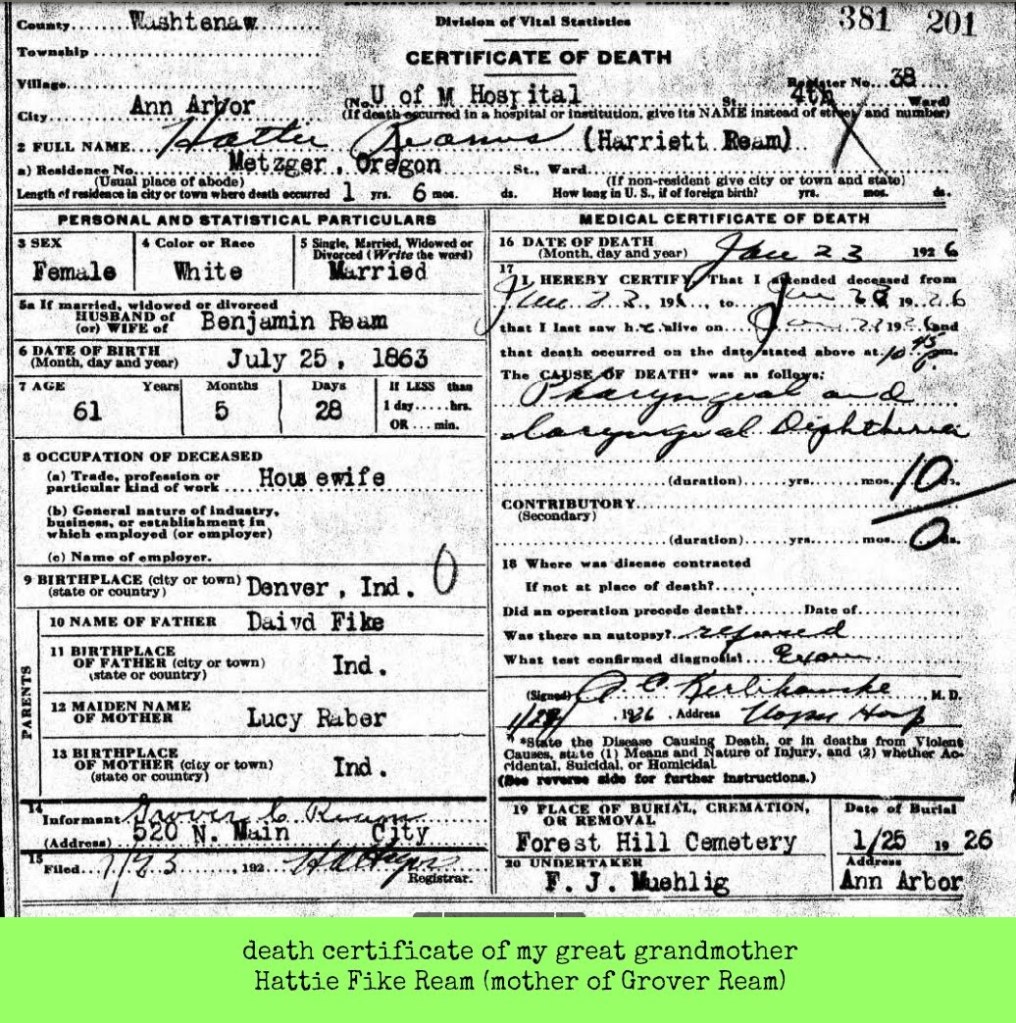
Harriet “Hattie”, his wife, died at the age of 61 in 1926 after a brief illness. My mother would only have been 1 year old when Hattie (her paternal grandmother) passed. I have found a copy of her death certificate.
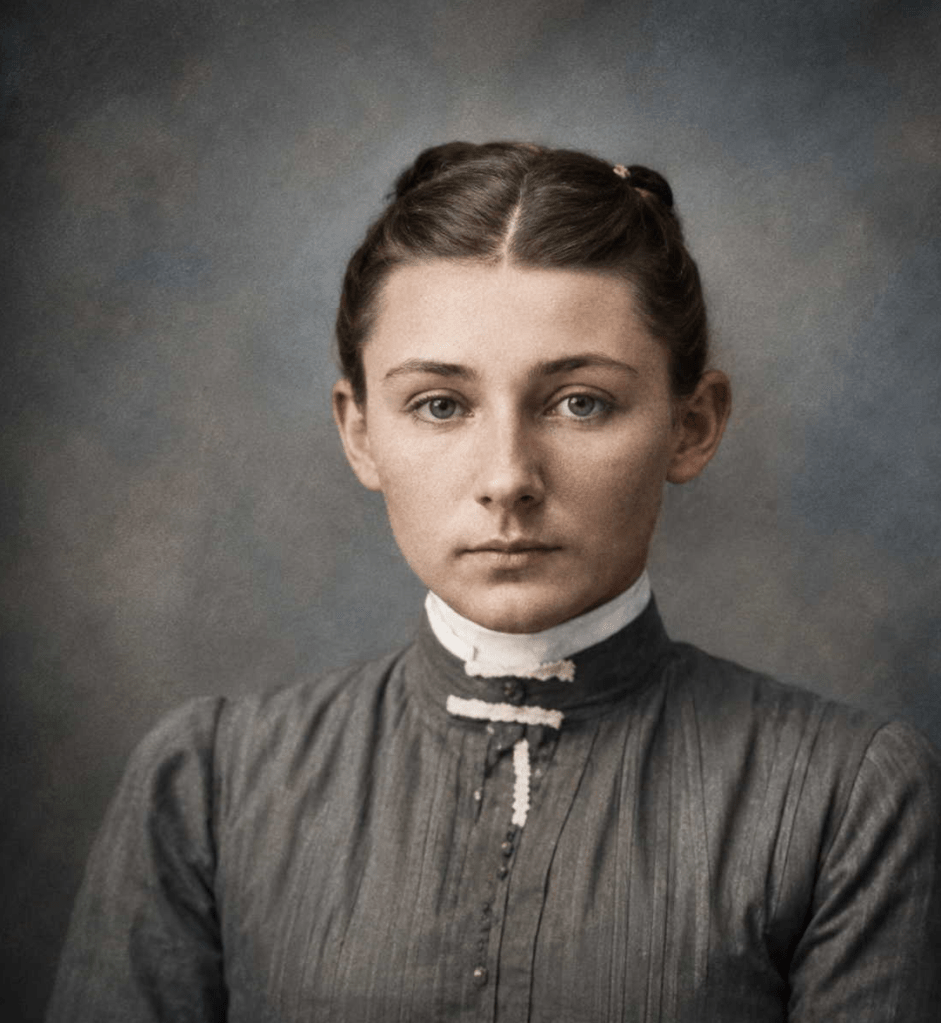
It appears that she died of diphtheria – a very horrible way to pass. A computer enhanced photo of Hattie Ream – my great grandmother (mother of Grover Cleveland Ream)
Passing away in 1928, Benjamin Ream lived through some of the most transformative years in American history, including the end of the frontier, the Gilded Age, World War I, and the beginning of the modern era.
His death in Metzger, Oregon, marked the end of a life that spanned both coasts and reflected the dynamic changes of the United States during his lifetime. He is buried in Ann Arbor, MI. where he shares a grave with his wife Harriet.
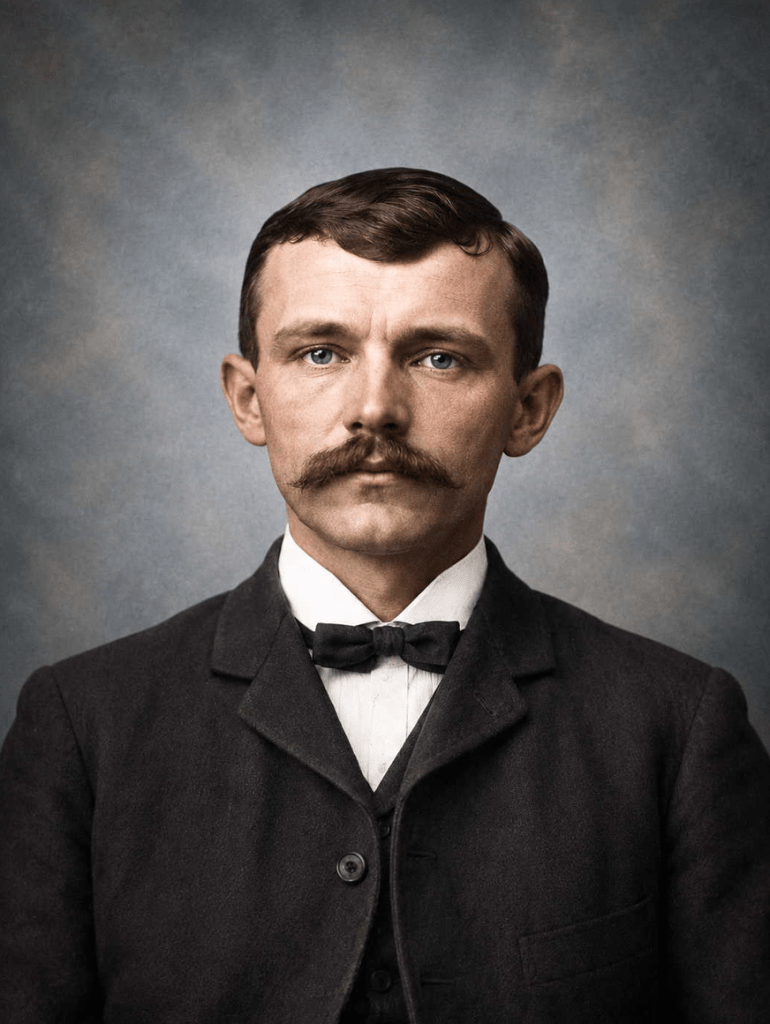
A computer enhanced image of my great grandfather- Benjamin Ream (father of Grover Cleveland Ream)
Francesco ‘Frank’ Bivona was born into an era when Argentina was a prime destination for European immigrants, particularly from Italy. His parents were part of a massive wave of Italian immigration that began in the late 19th century and continued through the early 20th century, driven by economic hardship in Italy and the promise of opportunity in the Americas. Mendoza, where Frank was born, had become a hub for agricultural development, attracting many immigrants to its burgeoning wine industry.
As Frank reached adulthood, the world was undergoing significant turmoil. The Great Depression (1929-1933) severely impacted economies worldwide, including the United States, where Frank would later settle. This period saw widespread unemployment and poverty. Additionally, the lead-up to World War II was marked by political instability and the rise of totalitarian regimes in Europe. Despite these challenges, New York remained a melting pot of cultures and a land of potential for immigrant families like the Bivonas.
The Brooklyn neighborhood where Frank’s family lived was emblematic of the diverse ethnic enclaves that characterized New York City at the time. Assembly districts such as the ones mentioned were often home to close-knit communities of immigrants who maintained cultural traditions while assimilating into American life. By the 1940s, the United States was experiencing economic growth due to wartime production, which provided employment opportunities for many residents, including those in immigrant communities.
When Frank passed away in 1969, it was a time of great social change in the United States. The Civil Rights Movement had made significant strides towards equality, and the Vietnam War was at its height, leading to widespread protest and societal division. It was also the year of the Apollo 11 moon landing, symbolizing technological progress and optimism for the future. Frank’s lifetime spanned some of the most transformative periods of the 20th century.
Last Name Origins
The surname Bivona is of Italian origin, derived from a place name. It likely traces back to the town of Bivona in the province of Agrigento on the island of Sicily, Italy. Surnames based on geographic locations were commonly adopted in Italy during the Middle Ages when individuals moved from their birthplace and took the name of their hometown as a means of identification. The name Bivona would have been used to signify someone who was from that particular town.
Samuel Tilden Barnes was born into a post-Civil War America, during an era known as Reconstruction which ended in 1877. His birthplace, Bishopville, Sumter County, South Carolina, was part of the Southern United States that grappled with economic devastation and social upheaval following the war. The year of his birth also marked the end of federal intervention in Southern politics and the beginning of the ‘New South’ period, characterized by attempts to modernize the economy while maintaining traditional social structures.
Barnes’s family life unfolded against a backdrop of significant agrarian change. His father, Simeon Scarborough Barnes, would have witnessed the transformation from slave-based plantations to sharecropping and tenant farming systems. This period saw many African Americans and poor whites striving for self-sufficiency amidst challenging economic conditions and the rise of Jim Crow laws enforcing racial segregation.
By the time Samuel Tilden Barnes married Mittie Campbell in Holmes, Florida, on February 23, 1904, the United States had entered the Progressive Era, a time of widespread social activism and political reform addressing issues caused by industrialization, urbanization, immigration, and political corruption. Their marriage location suggests possible participation in the south-to-south migration patterns where individuals moved within southern states seeking better opportunities.
Samuel Tilden Barnes was born on February 6, 1877, in Bishopville, Sumter, South Carolina, United States. He was the son of Simeon Scarborough Barnes and Margaret Barnes (born Kelley). His father was born on November 20, 1852, although other records suggest a birth year circa 1851 or December 1851. His mother’s birth is recorded as February 18, 1856, with some sources indicating circa 1856 or December 1857. Samuel had seven siblings: Wilson Scarborough, Reese Algiers, Harriett Salina, Maggie Viola, Christiana, Magnolia, and Sarah Ethel.
Samuel Tilden Barnes married Mittie Barnes (born Campbell) on February 23, 1904, in Holmes, Florida, United States. Mittie was born on June 6, 1882, in Georgia. Together they had one son, Eugene Ludlow Barnes, who was born on August 5, 1906. However, there are conflicting records suggesting another marriage to Mary Letha Galloway, born on November 20, 1879, with whom he reportedly had a daughter named Aletha, born on January 12, 1902.
The early years of Samuel and Mittie’s son, Eugene Ludlow Barnes, were marked by the burgeoning Progressive Movement, aiming to improve living conditions and reduce the gap between rich and poor. However, they also faced the realities of the pervasive Jim Crow laws and the increasing entrenchment of white supremacy in the South, which would have shaped their daily lives and societal interactions.
Samuel Tilden Barnes passed away at the young age of 32 in Columbia, Marion, Mississippi. His death came just one year after the Panic of 1907, a financial crisis that affected many American families and businesses. He was laid to rest in a nation on the cusp of great changes, with the advent of World War I only five years away, which would dramatically alter the United States’ role on the world stage and its internal dynamics.
Henrietta S Hess was born on January 31, 1894, in Illinois, United States. She was the daughter of Henry Joseph Spruhan, who was born on March 3, 1857, in Crawfordsville, Montgomery, Indiana, United States, and Caroline Spruhan (born Baur), whose birth took place on October 12, 1863, in Washington, Clark, Indiana, USA. Henrietta had three siblings: Mary, Garret Denny, and Josephine.
On June 25, 1921, in Chicago, Cook, Illinois, USA, Henrietta married George Kellogg Hess, Sr., who was born on September 6, 1891, in Benton Harbor, Berrien, Michigan, United States. Together they had two sons: George Kellogg Jr. and Robert Lawrence.
Throughout her life, Henrietta lived in various places. In 1910, she resided in Hoboken Ward 2, Hudson, New Jersey, USA. By 1930, she had moved to Chicago (Districts 1251-1500), Cook, Illinois, USA . From at least 1935 until 1940, she lived in Benton Township, Berrien, Michigan.
Henrietta passed away on September 20, 1984, at the age of 90 in Saint Cloud, Osceola, Florida, United States. She was buried in Osceola Memory Gardens, Kissimmee, Florida, United States.
Historical Context
Henrietta S Hess was born into the dawn of the Progressive Era, on January 31, 1894, in Illinois—a time when the United States was undergoing rapid industrialization and urbanization. Her parents, Henry Joseph Spruhan and Caroline Baur, were part of a society that was experiencing significant social and economic changes. The late 19th century had seen a surge in immigration, and cities like Chicago, where Henrietta would later marry, were bustling with diverse communities and booming industries.
When Henrietta married George Kellogg Hess, Sr., on June 25, 1921, the nation was at the height of the Roaring Twenties. This period was marked by a post-World War I economic boom, cultural flourishing with jazz music and flappers, and significant technological advances. Their marriage coincided with an era of optimism and prosperity before the onset of the Great Depression at the end of the decade.
Henrietta’s various residences reflect the mobility of many Americans during her lifetime. In 1910, she lived in Hoboken, New Jersey, which was part of the greater New York City area—a primary destination for immigrants and migrants alike. By 1930, she had moved to Chicago, aligning with the timeline of the Great Migration, where millions of African Americans relocated from the rural South to northern cities in search of better opportunities. Later, settling in Benton Township, Michigan, she witnessed the state’s automotive industry become a cornerstone of American manufacturing.
Henrietta passed away on September 20, 1984, in Saint Cloud, Florida, having lived through two World Wars, the civil rights movement, and the space age. Her life spanned a period of profound transformation in American society, including women’s suffrage, the rise and fall of Jim Crow laws, and the technological revolution. She was laid to rest in Osceola Memory Gardens, Kissimmee, Florida, as the nation continued to grapple with its evolving identity.
Last Name Origins
The surname Spruhan is not a common name, and its origins are somewhat obscure. It appears to be of Irish origin, possibly derived from an Anglicized form of a Gaelic name. However, without specific genealogical or historical evidence linking the name to a particular region in Ireland or to a Gaelic root, it’s challenging to provide a definitive origin for the surname Spruhan. Further research into Irish records and family histories might shed more light on the etymology and geographical distribution of this uncommon surname.
The last name Hess is of German origin and is a regional name for someone who came from the region of Hesse in Germany. The name Hesse itself comes from the tribal name of the Hessi. In medieval times, people were often identified by their place of origin, so surnames like Hess would have been used to distinguish individuals who had moved away from their original home territory. Over time, these locational names became hereditary, passing from one generation to the next. The spelling variations of Hess include Hesse, Hessen, and others, reflecting the dialectal differences within the German language.
These are links to other blogs that I have created about my paternal grandmother.
Norbert D. Wiesner was born on October 5, 1920, in Wisconsin, United States. He was the son of Jacob Johann Wiesner, who was born on December 20, 1878, in West Bend, Washington, Wisconsin, United States , and Emma Wilhelmina Caroline Wiesner (born Bork), who was born in 1880 in Germany . Norbert had six siblings: Ellemeda Johannah, Clarence, Florence, Anita, Adaline, and Milton William [1].
He married Joyce Lucille Wiesner (born Shaw) who was born on June 25, 1922, in Ohio, United States .
Throughout his life, Norbert resided in various places within Wisconsin. In 1930, he lived in Nasewaupee, Door, Wisconsin. By 1935, he was living in the same house as recorded earlier. In 1940, he continued to reside in Nasewaupee Town, Door, Wisconsin. Records from May 3, 1950, indicate that he lived in Sturgeon Bay, Door, Wisconsin, United States. Later in life, he lived in Saukville, Wisconsin 53080, USA
Norbert D. Wiesner passed away on April 1, 1999, at the age of 78, in Saukville, Ozaukee, Wisconsin, United States.
Historical Context
Norbert D. Wiesner was born into the interwar period on October 5, 1920, in Wisconsin, a time when America had just come out of World War I and was about to enter the Roaring Twenties, an era characterized by economic prosperity and cultural change. His father, Jacob Johann Wiesner, was a native Wisconsinite with roots dating back to the late 19th century, while his mother, Emma Wilhelmina Caroline (born Bork), brought her heritage from Germany, reflecting the diverse immigrant fabric of the United States at that time.
Marrying Joyce Lucille Shaw during the thick of World War II, Norbert’s personal milestones were set against a backdrop of global conflict and national mobilization. Their son Eugene Norbert was born in 1944, as the Allies were making significant advances in Europe and the Pacific, leading towards the end of the war.
Throughout his life, Norbert’s residences reflected the typical Midwestern American experience. The Great Depression of the 1930s would have been a formative part of his early years, influencing community life in places like Nasewaupee and Sturgeon Bay. By 1950, post-war optimism fueled economic growth and suburban development, which may have contributed to his move to Saukville, where he eventually passed away.
Norbert D. Wiesner died on April 1, 1999, in Saukville, Ozaukee, Wisconsin. His lifetime spanned monumental changes including the Great Depression, World War II, the Cold War, the Civil Rights Movement, and the dawn of the Information Age, all of which shaped the world he lived in.
Last Name Origins
The surname Wiesner is of German and Ashkenazic origin. It is a topographic name for someone who lived by a meadow or a patch of open land, derived from the Middle High German ‘wīse’ meaning ‘meadow’, ‘pasture’. In some cases, it may also be an occupational name for a person involved in the maintenance of a meadow or pasture. The suffix ‘-ner’ indicates ‘inhabitant of’ or ‘one associated with’, thus making Wiesner mean ‘inhabitant of a meadow’ or ‘person associated with a meadow’. This surname was likely given to individuals or families based on their residence near such geographical features.
This AI BiographyTM was created by MyHeritage using AI and includes data from MyHeritage and content generated by OpenAI.
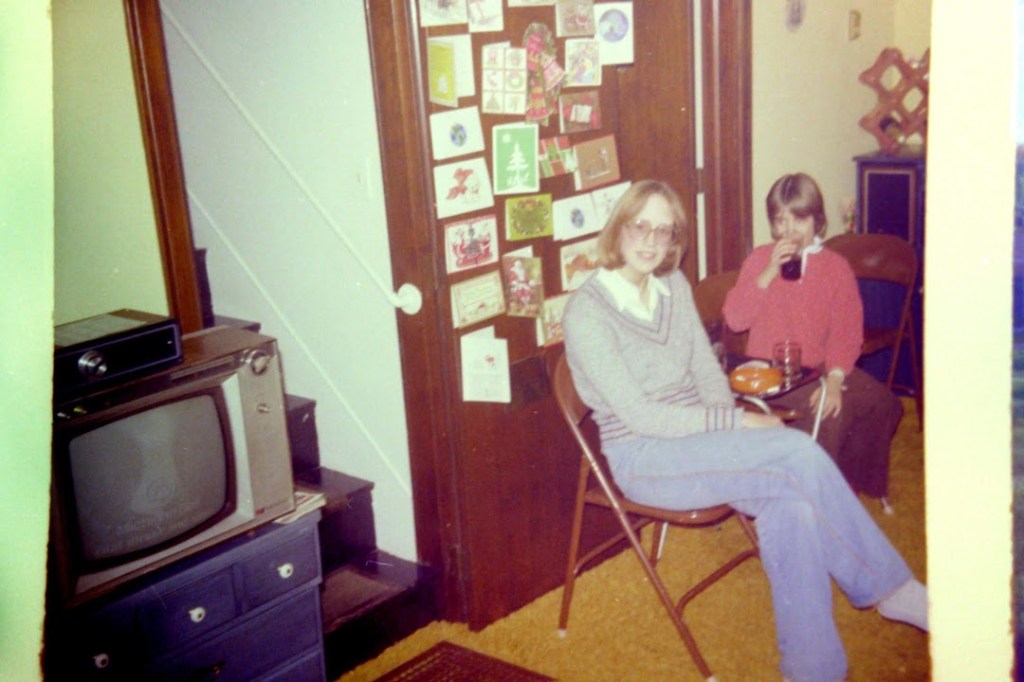
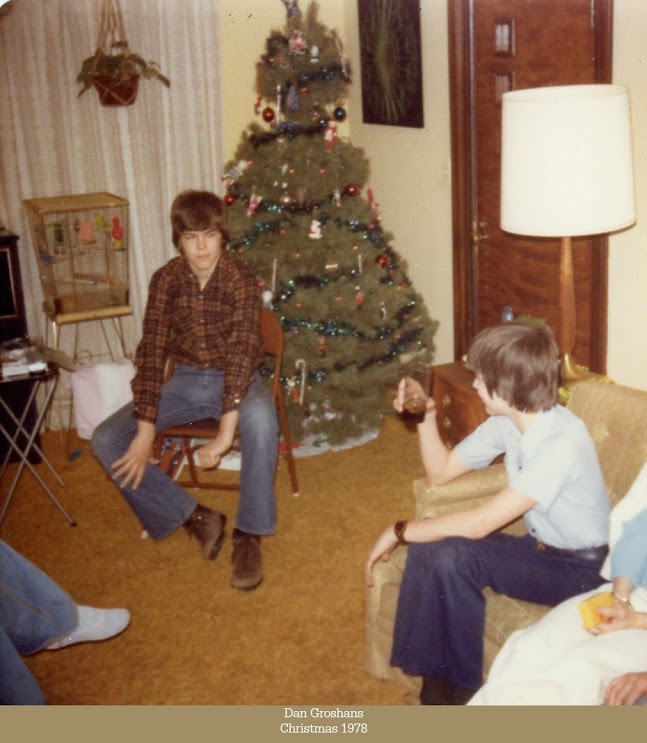
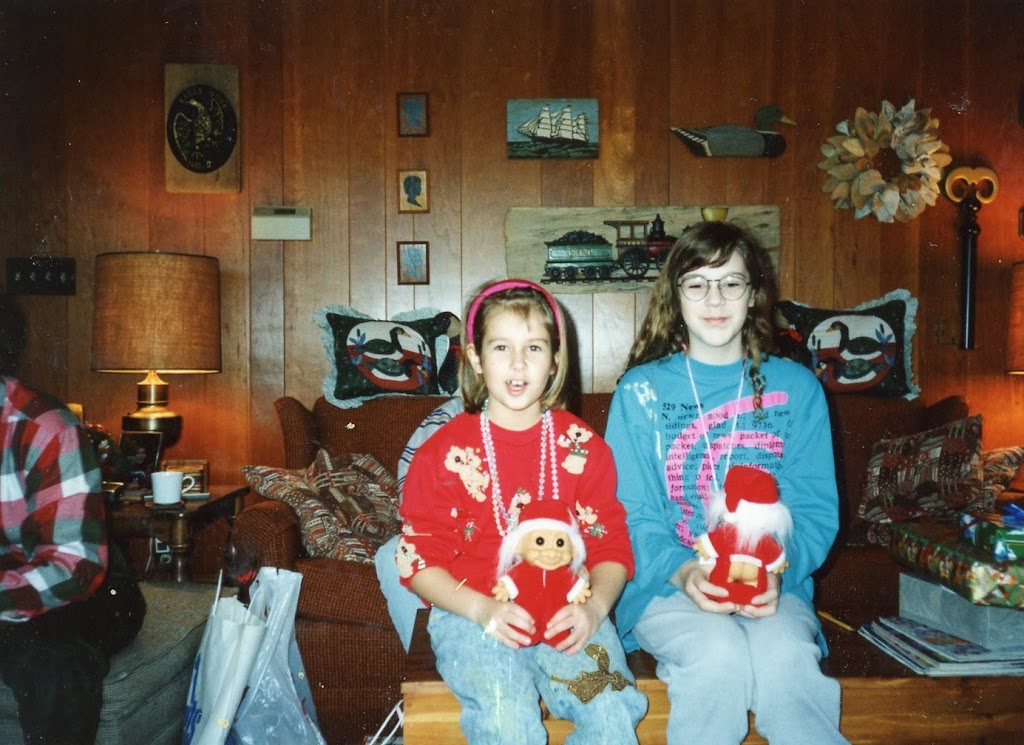
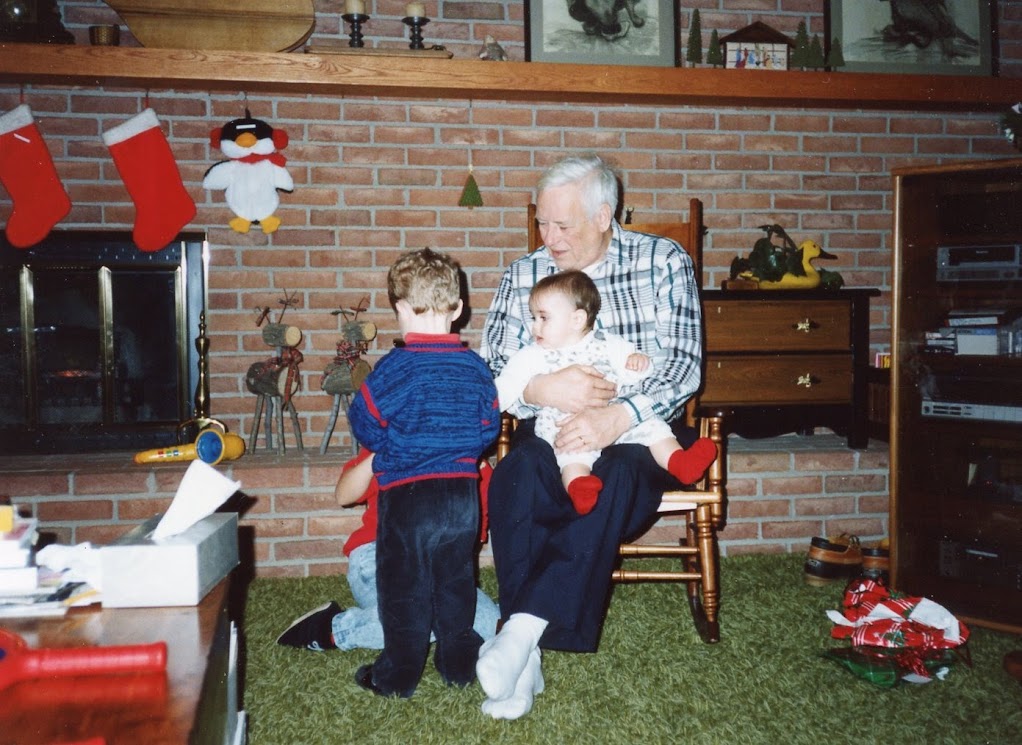
I hope you enjoy these photos from some of our wonderful Christmas celebrations from the past. The photos included were from a quick search…I know there are so many more.
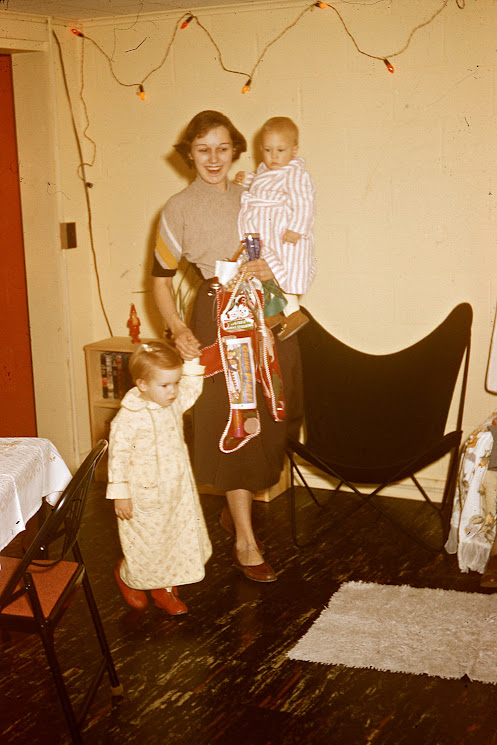
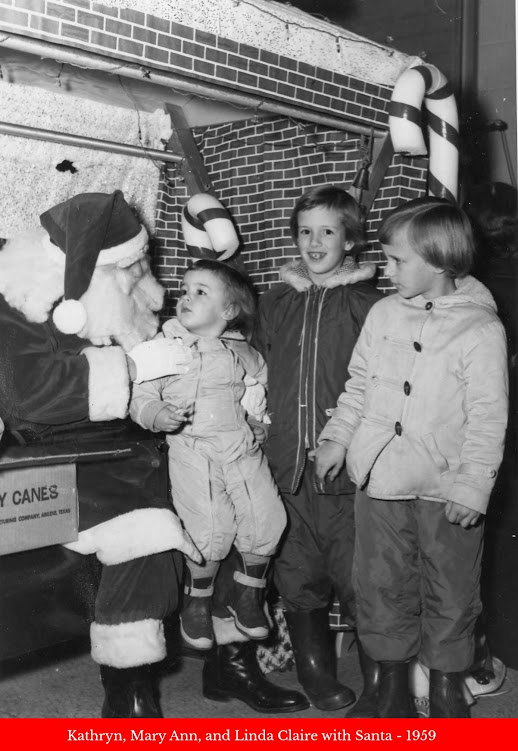
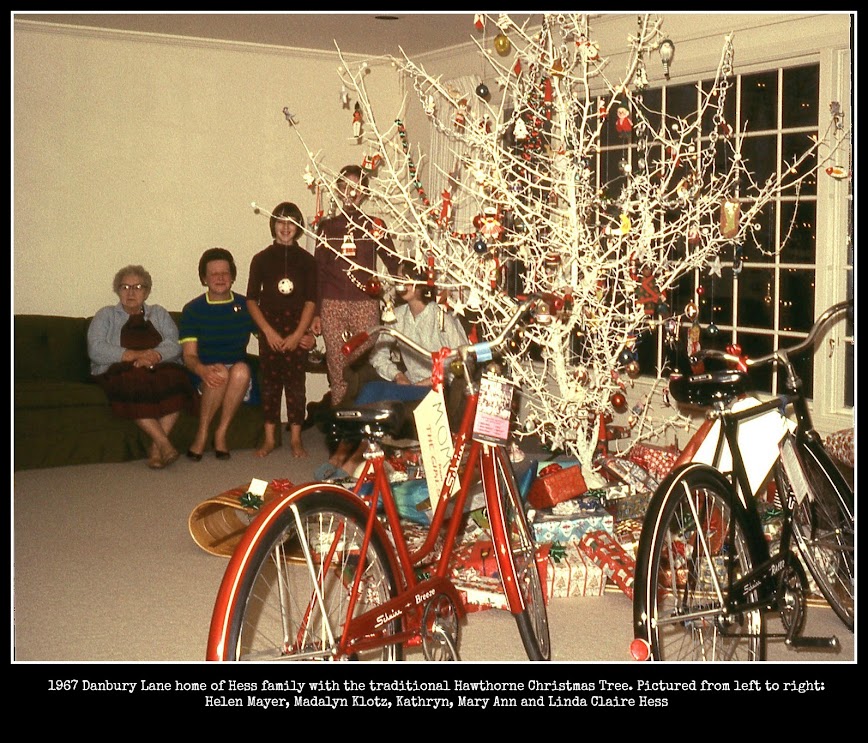
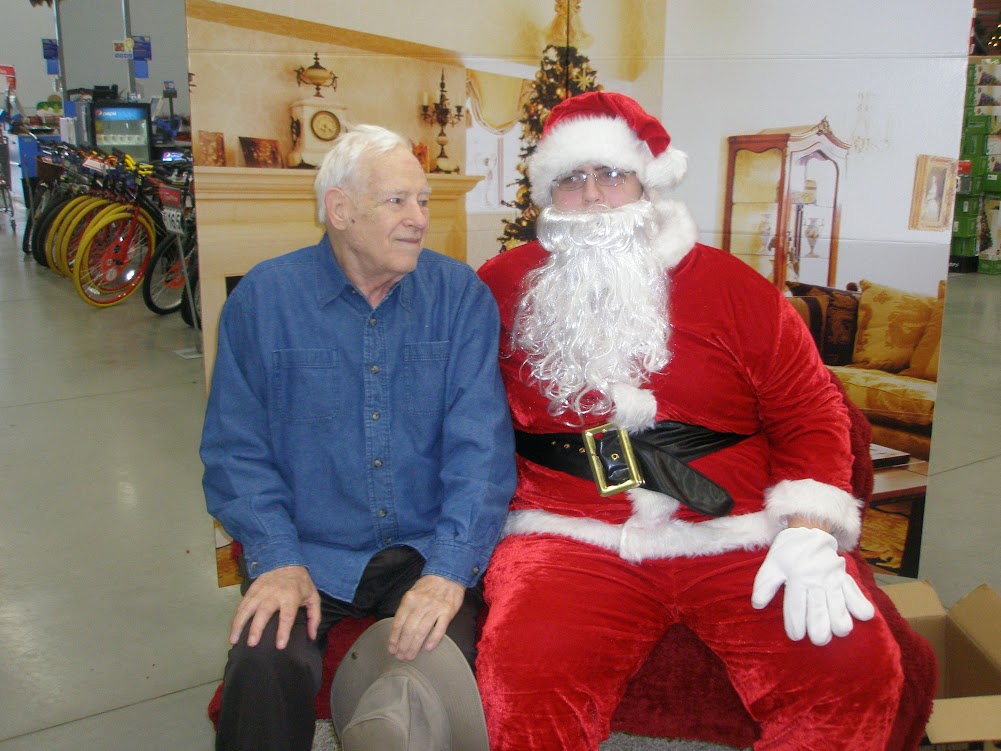
A 1924 photo – Christmas Tree of George and Henrietta Hess -my paternal grandparents Mary Ann, Gretchen, and Linda Claire Hess in the basement of 1517 Harbrooke, Ann Arbor, MI- Christmas 1954Mary Ann next to the Christmas Tree – c1954Mary Ann, Santa and Linda Claire at Grandma Pet’s house – 1957Linda Claire, Mary Ann and Kathryn in the basement of 1517 Harbrooke, Ann Arbor, MI – Christmas c1959I believe this photo was taken at the Ford Rotunda – c1959The Hess Girls with Gretchen Hess at 1517 Harbrooke, Ann Arbor, MI – c1961Santa and Kathryn at 1517 Harbrooke, Ann Arbor, MI – c1961The year that we gave Mom and Dad bicycles under the Hess family Hawthrone Christmas Tree- c1967 at Danbury Lane Kathryn visits Santa in August 1967Gene and Joann Wiesner by their Christmas Tree c1969The Hess Family Hawthorne Christmas Tree at 2629 Danbury Lane, Ann Arbor, MIEdward Klotz “Bones” with Santa – c1973
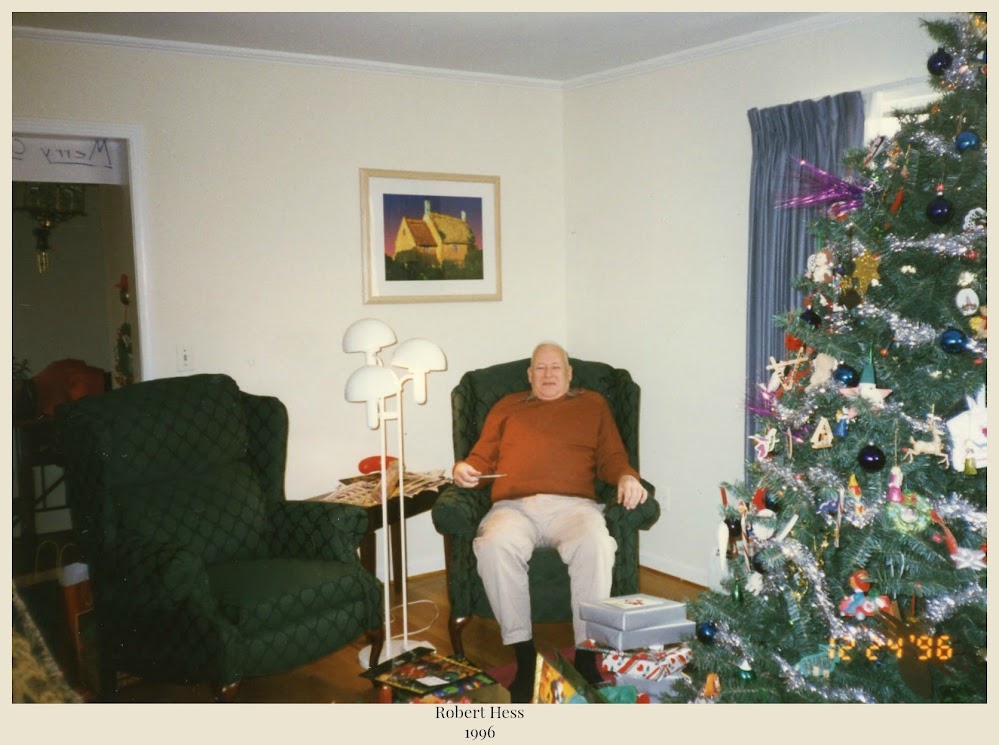
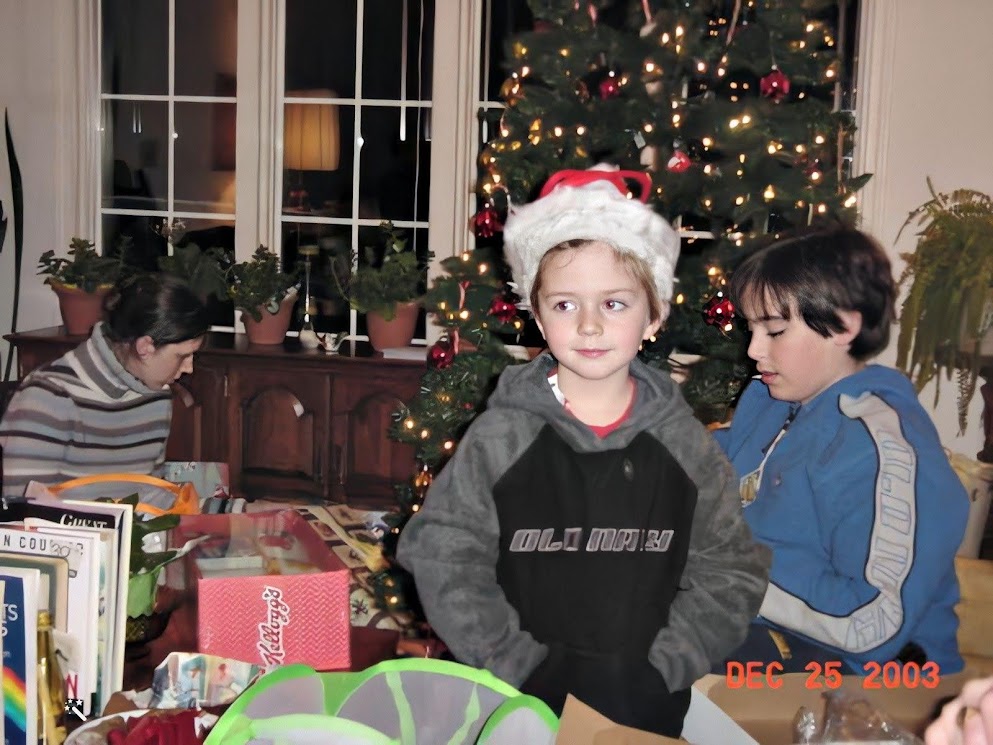
Kara and Drew with Santa – c1979Groshans family Christmas 1983 – Madeline is seated and Bob Groshans is standingAunt Rita – possibly 1975Tom and Bob Groshans c 1975Linda and Donna Groshans at the house on S. Blvd., AA c1978Dan Groshans 1978Amy visits SantaAmy and Santa – c1985Kristy and Amy – c1991Mike in Santa outfit- Christmas 1991Jack and Mike Groshans with Charlie – Christmas 1991Robert Hess holding Blake with Charlie nearby – Christmas 1991Mike with Santa -c1992Kara, Joann, Gene and Drew Wiesner with his Schmiling grandparents – c1994Mike in Santa hat – c1995Mike in Santa hat -c1996Robert Hess at 5431 Pratt Road, Ann Arbor, MI - 1996Kristy and Wanda Whitmer – c1998 Mike in Santa hat in the study of 2629 Danbury Lane, Ann Arbor, MIHess Family Christmas – c1999Blake and Mike – c1999Amy, Kevin and Blake at 549 Lancaster, Saline, MI – 2003A wonderful photo of Kevin Barnes inside a mesh storage bag! What fun…2003Mike with Paul Kettner – Christmas 2006Madeline Groshans c2006Kristy and Charlie Whitmer, Paul Kettner, Chris, and Khaki Barnes- Christmas 2006Madeline and Carol Groshans 2006Robert John, Glenn and Robert Hess 2006Robert Hess with Santa – 2011Merry Christmas from elf Linda Claire 2017
Celebrating Reading! Linda Claire 2023My maternal grandparents both were highly educated. Henrietta was a graduate of the Chicago School of Music and George was a graduate of the University of Michigan with a degree in Engineering. This photo is c1919. I believe that this photo is from the farm house in Benton Harbor, MI. My father told me that Henrietta made a condition of her move from the city to the farm was the promise that she could have her piano. Henrietta could easily read Latin and Hebrew texts.
One of the gifts that our family has continued to pass down through the generations is a love of reading and storytelling. I have compiled a precious photo collection in this blog. I selected photos that focus on books and reading with the hopes that they will help demonstrate how reading is often a way that knowledge is passed from one generation to the next. Parents reading to children and families reading together are powerful reminders of the quality level of joy that we get when we read together. When I look at these photos, I also experience a bond that I feel spanning the decades. As always, I hope that my blogs help open up our memories and generate our anecdotes and stories about these captured moments. I hope this blog provides a snapshot of my beloved family members at various stages of life, sharing a common activity that bonds them.
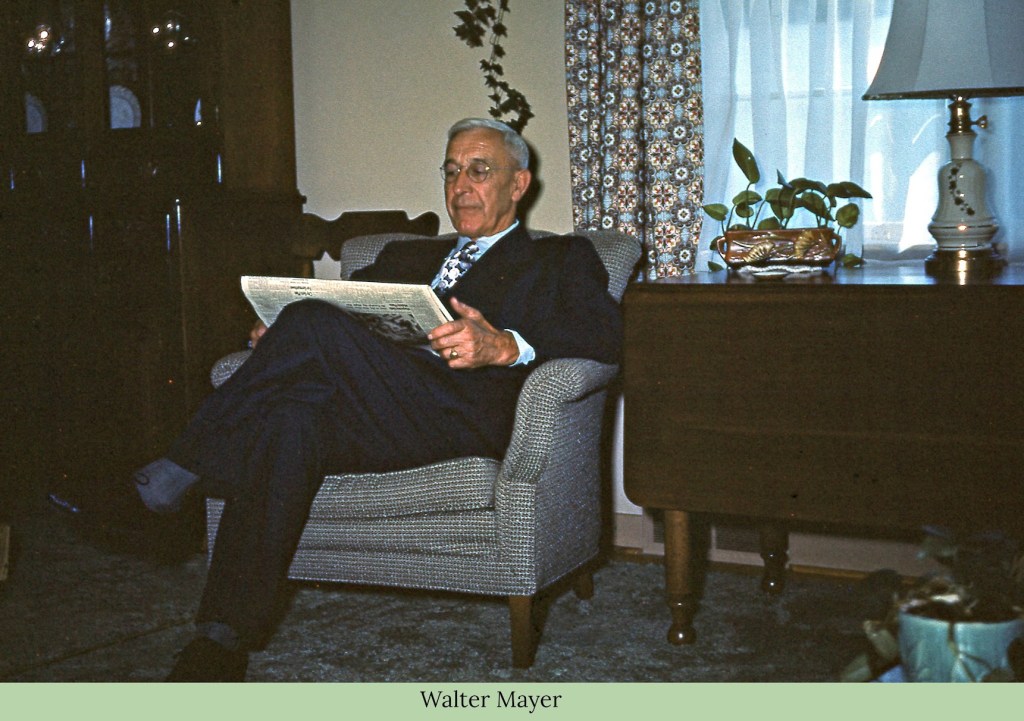
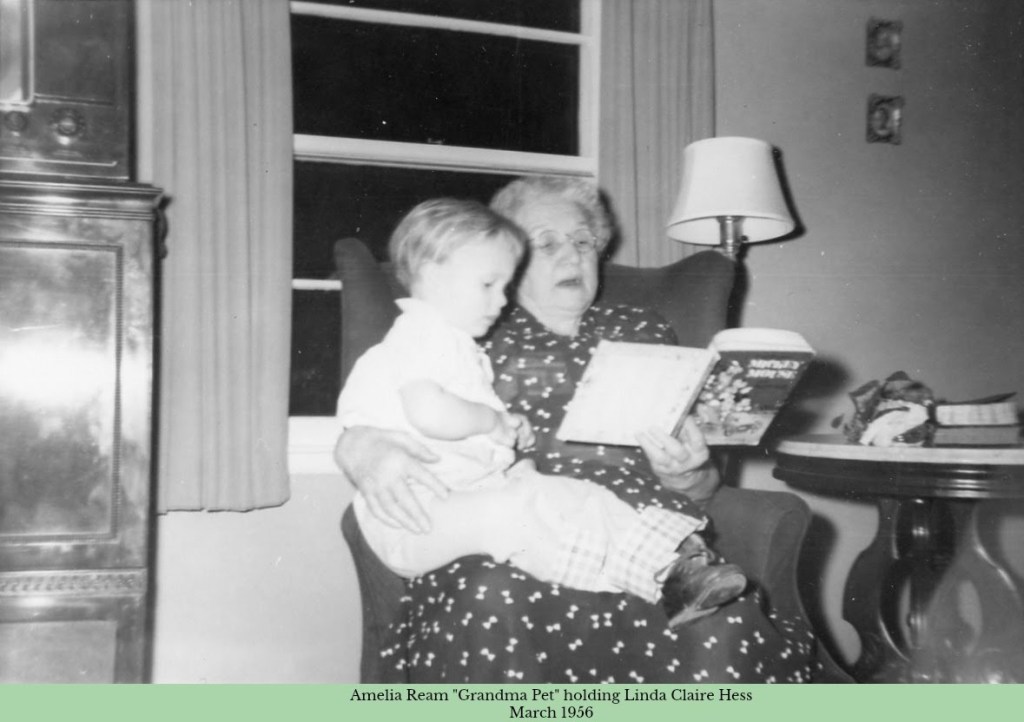
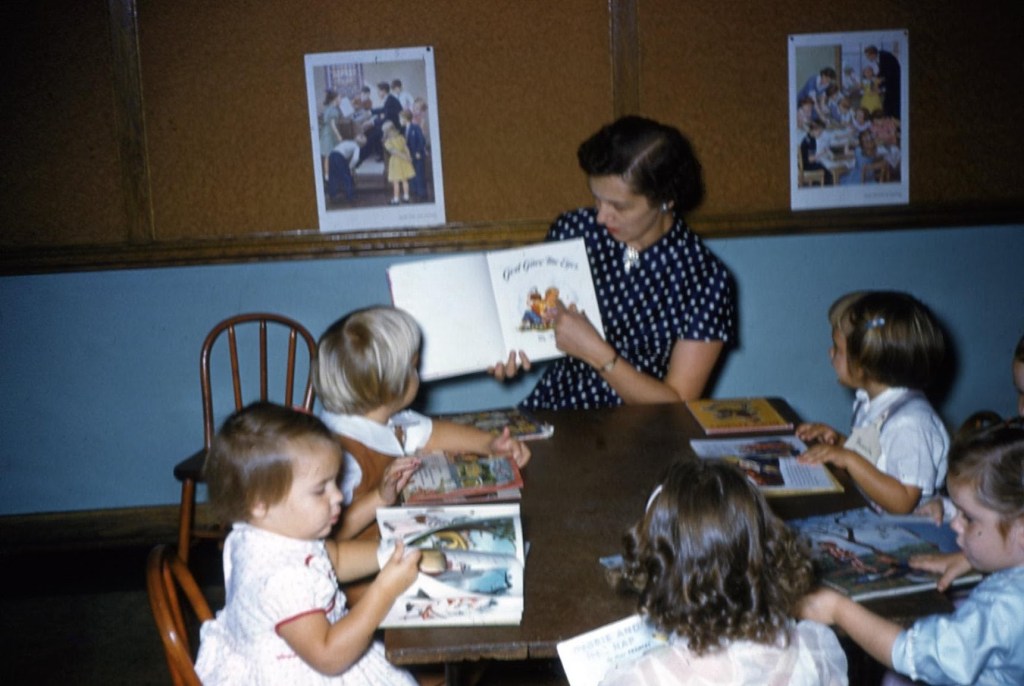
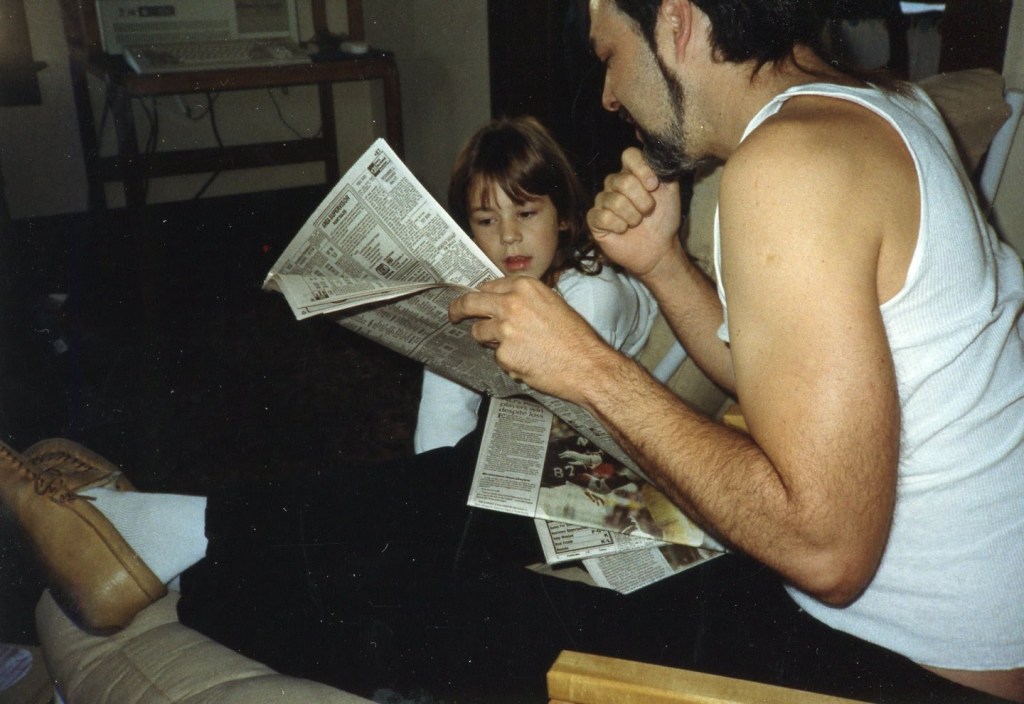
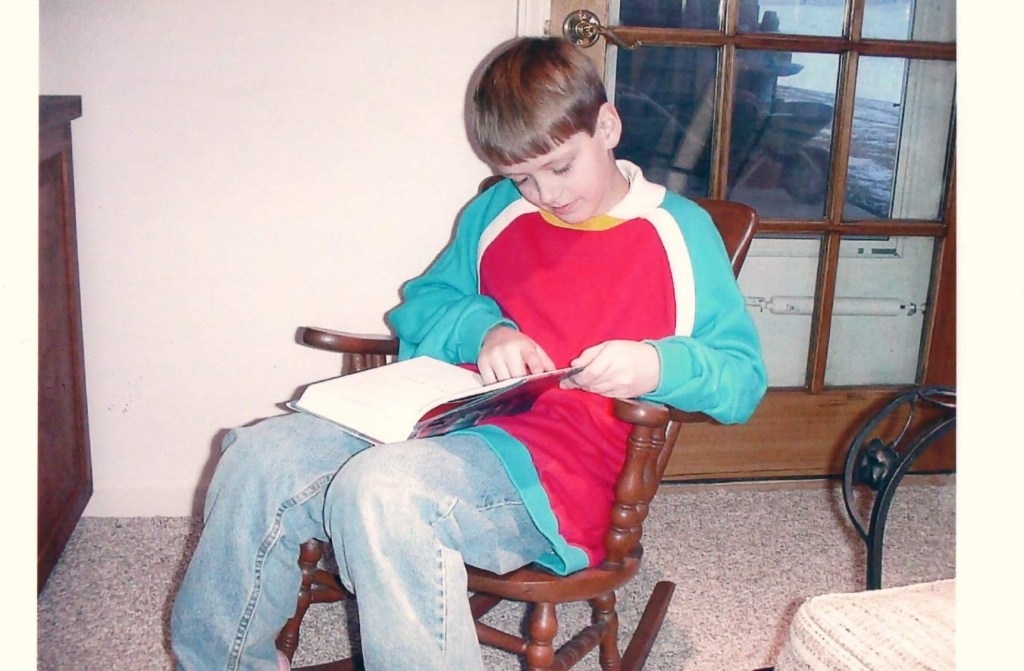
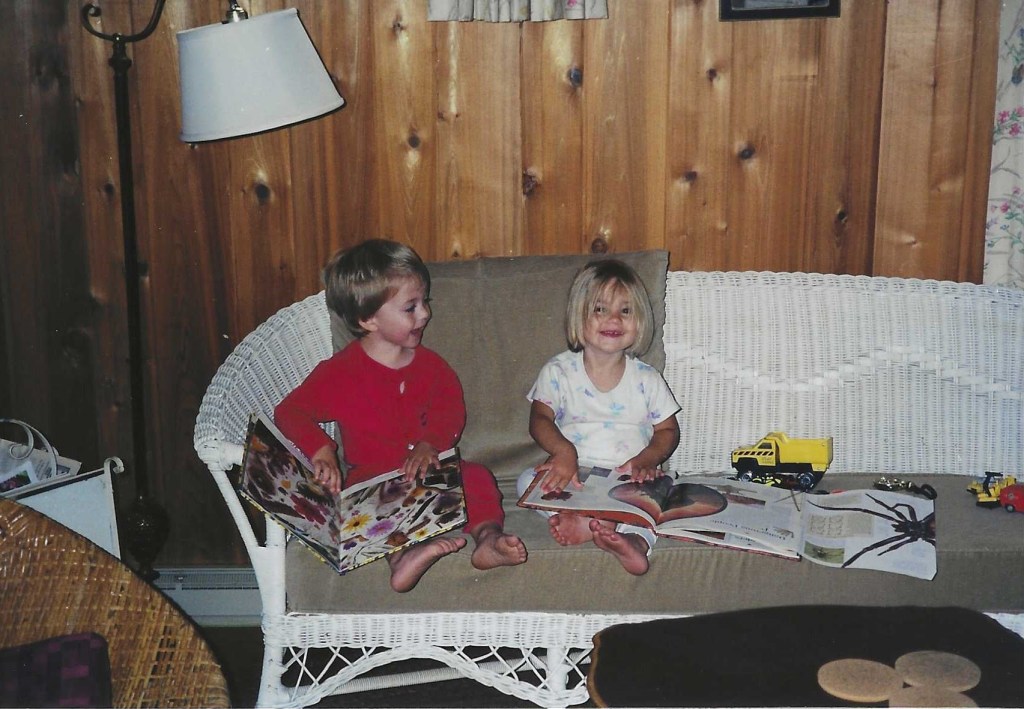
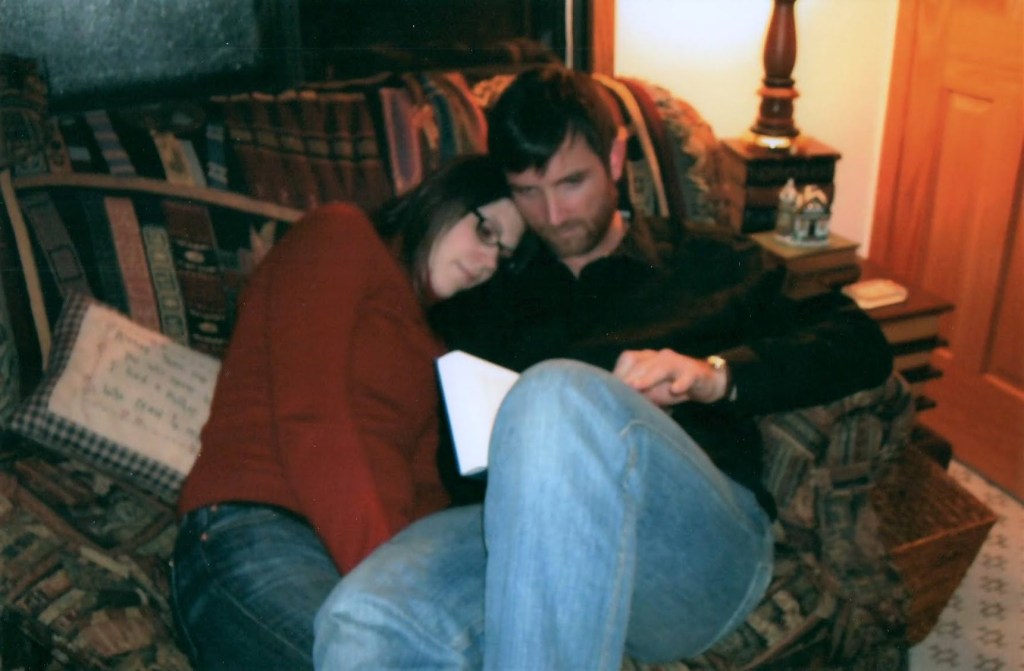
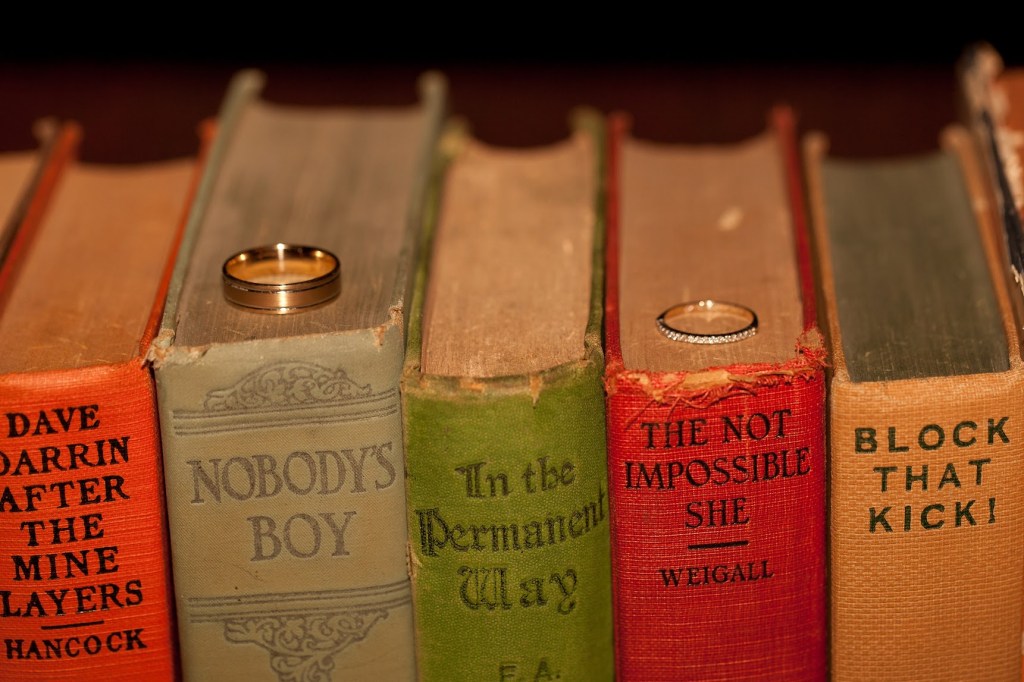
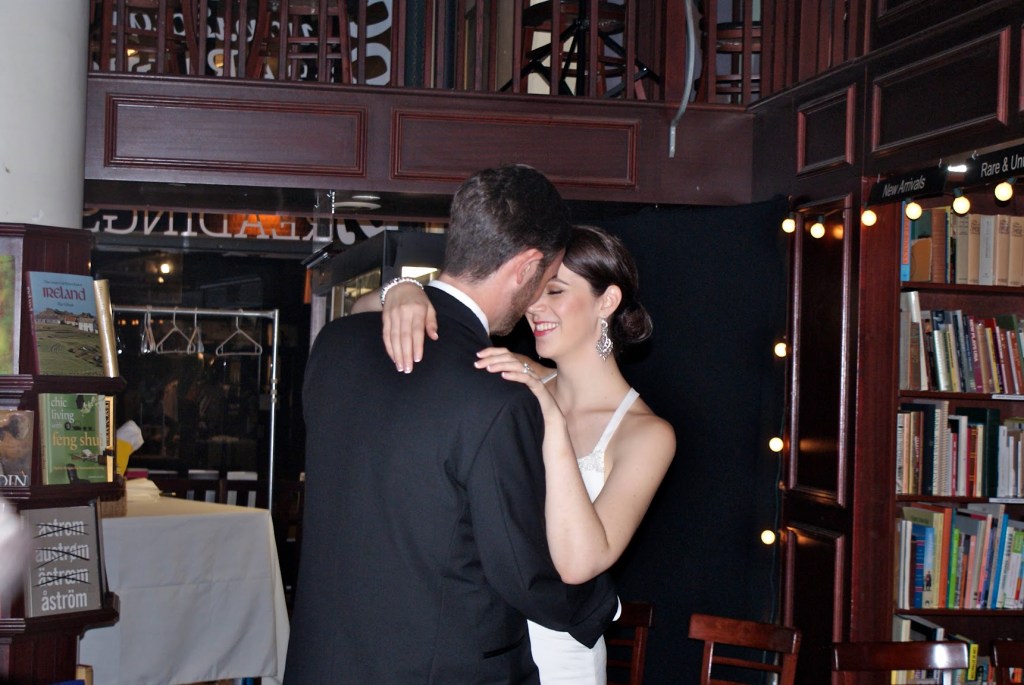
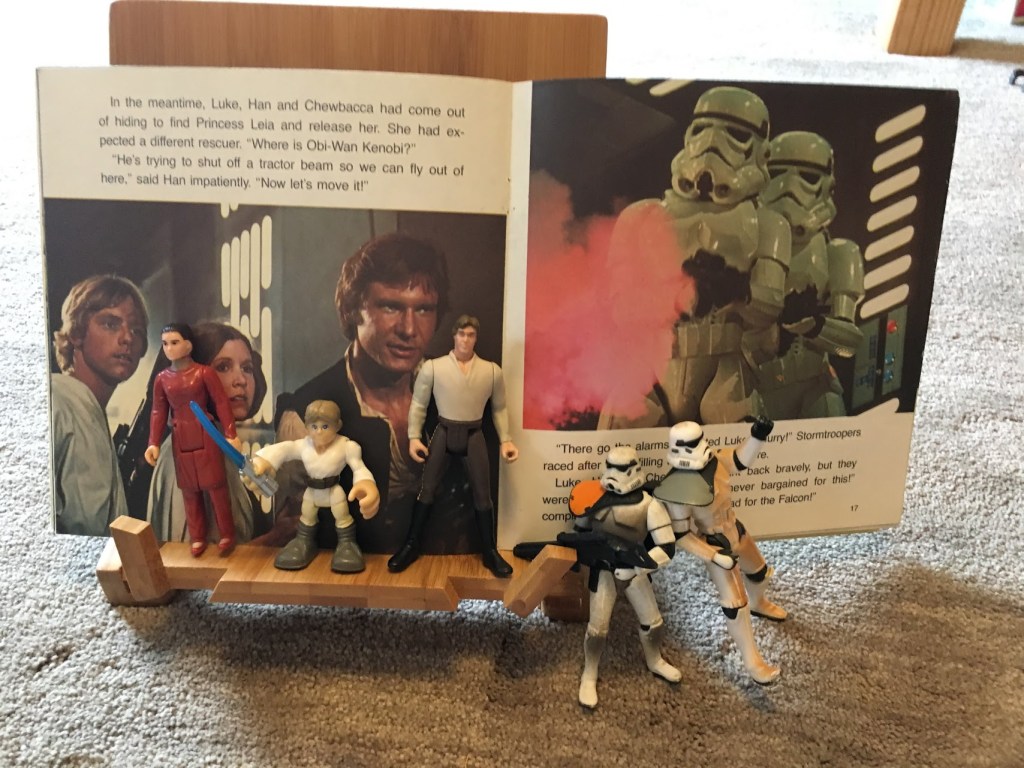
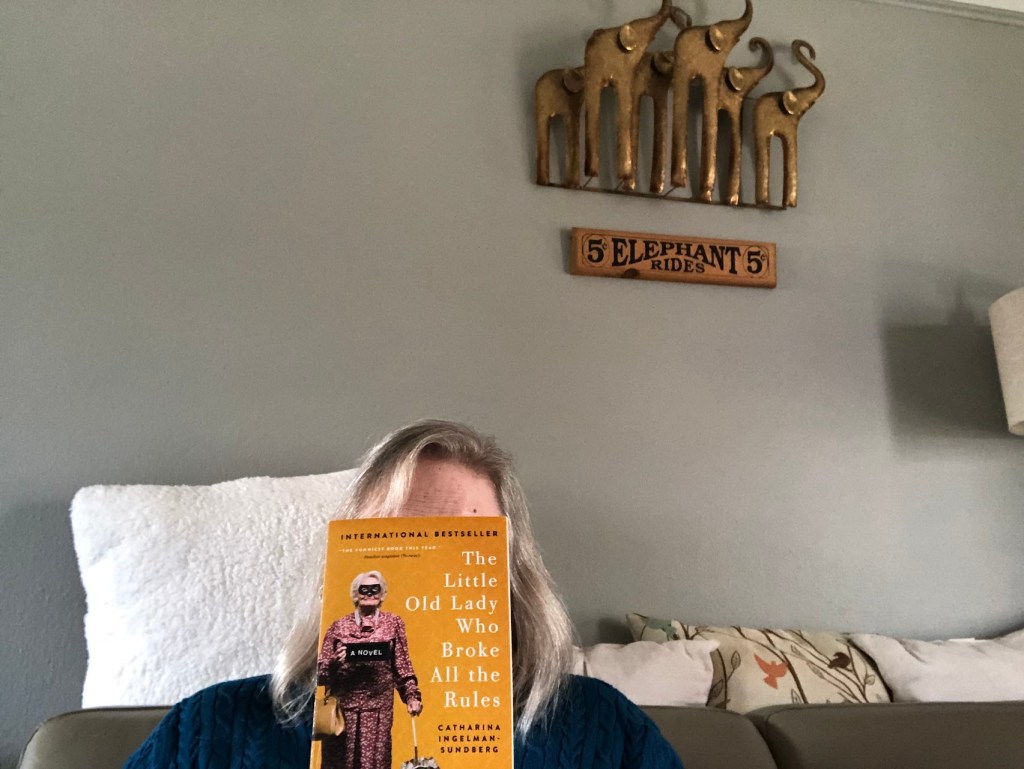
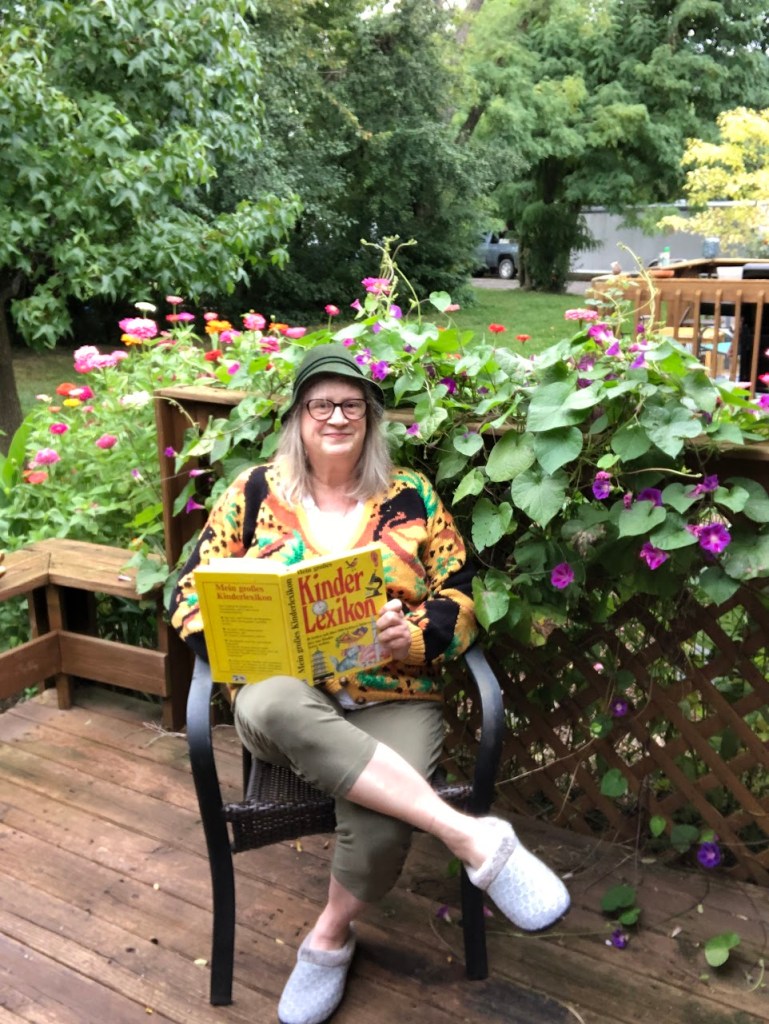
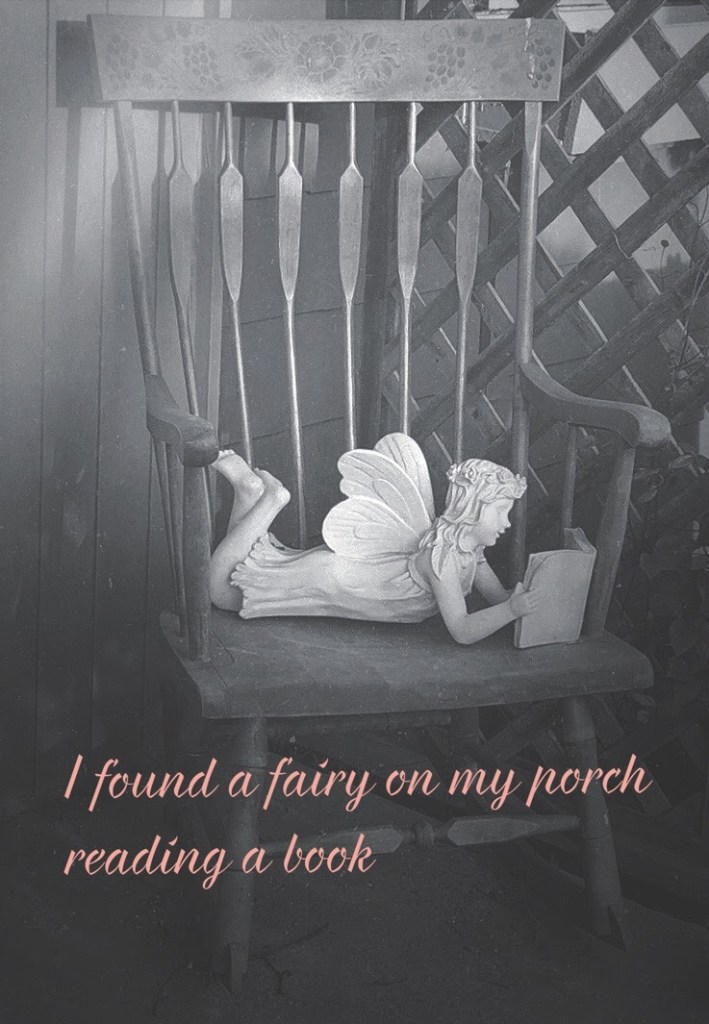
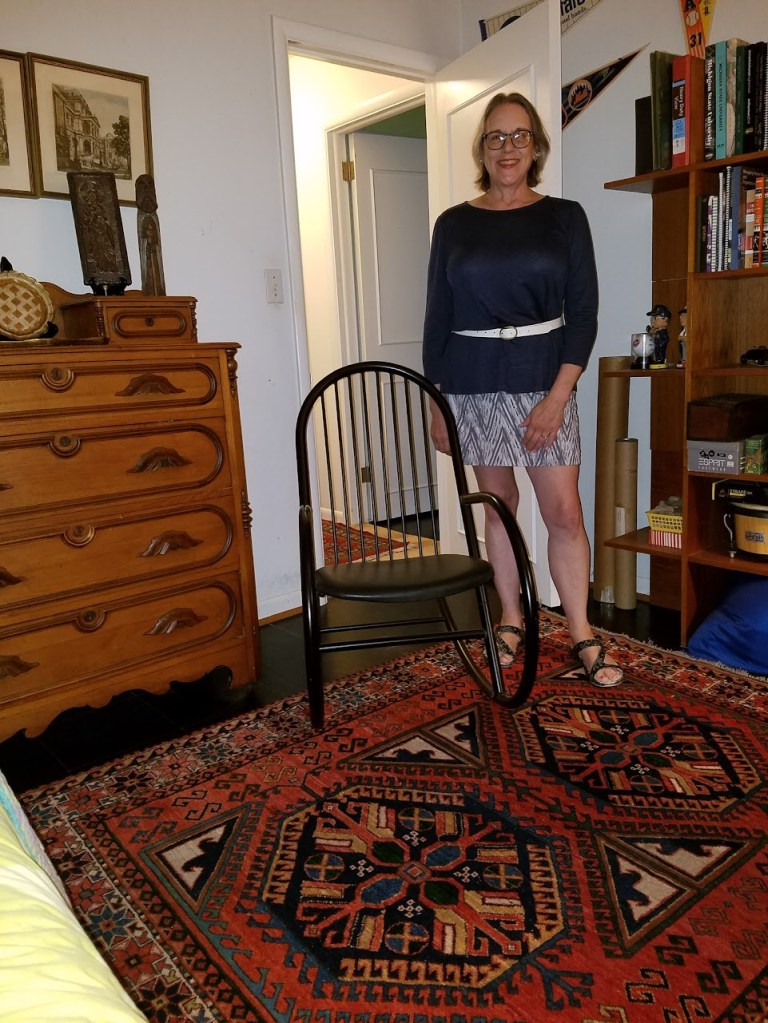
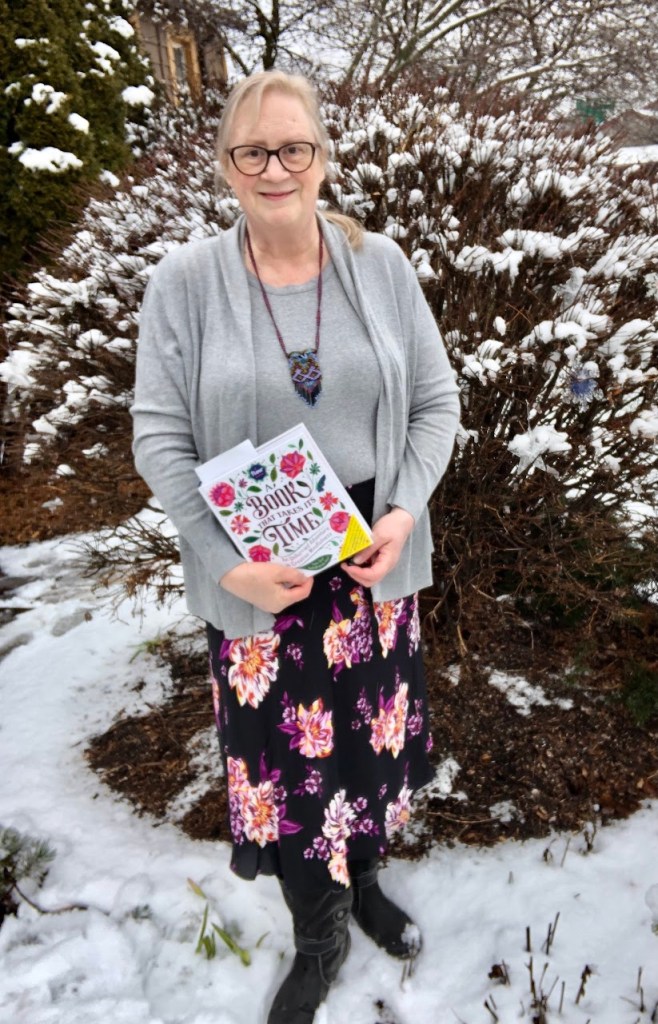
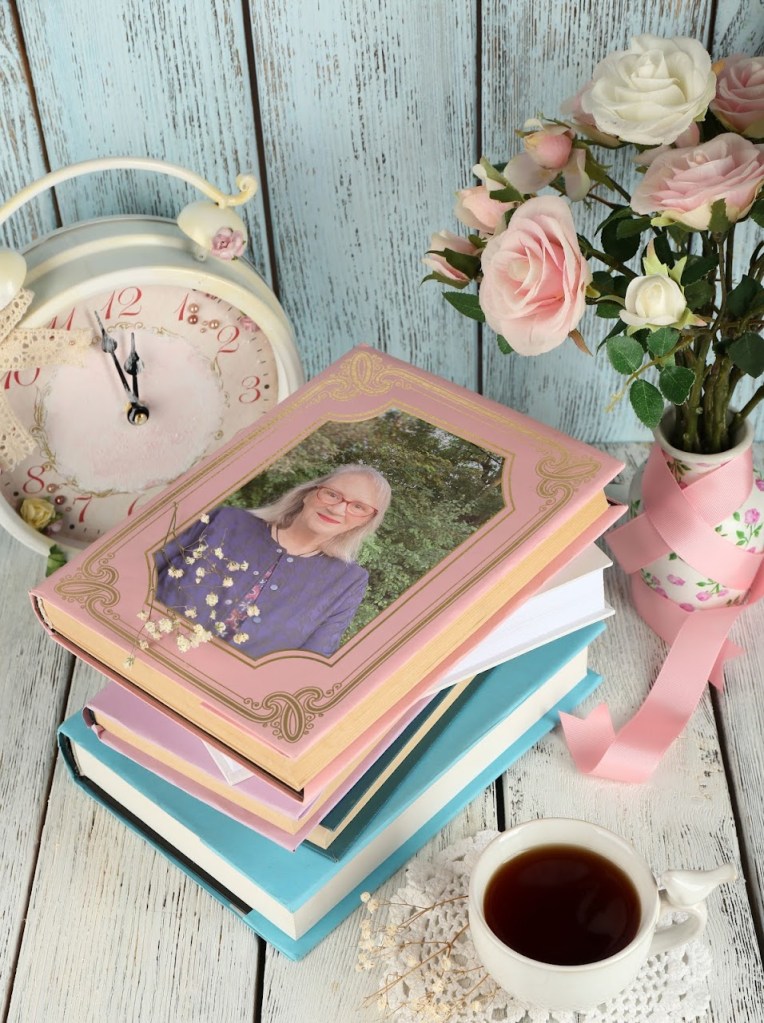
This is a photo of my paternal grandfather reading. I have estimated the age of this photo as 1942.This is a page from a digital scrapbook that I made several years ago. Mom loved to read to her children and grandchildren. I estimate the photo of my mother as 1943.Walter Mayer was the husband of my Great Aunt Babe (Helen Grayer Mayer). Stories of Walter always included references to his kind and gentle nature. Reading an actual newspaper was very much a part of our daily lives. I believe this photo was taken at 1517 Harbrooke Ave., Ann Arbor, MI. I estimate the date of the photo to be from 1954.This is a photo of Aunt Babe reading to me and my sister Mary Ann. We were at our home of 1517 Harbrooke Ave., Ann Arbor, MI. I estimate the date of this photo as 1956. Aunt Babe has her hair in pin curls. Sections of the hair were twisted up and held in place with a metal clip. If women wore their pin curls outside the home, they put on a fashion scarf or a bonnet. The title of this book is “Peter Goes to School.” This is one of my favorite photos of my father, Robert Lawrence Hess. He is reading us a Golden Book on safety. Golden Books have very much stayed popular since their debut in 1942 (12 years before I was born.) I estimate the photo date is 1956.I loved sitting in my Grandmother’s lap while she read, sang songs and told stories. This photo appears to have been taken at our home at 1517 Harbrooke Ave., Ann Arbor, MI. I estimate the photo date to be 1956/57.This is a photo of my father – Robert Lawrence Hess. I estimate the date to be 1956. My father’s brilliant career meant that much of this time was spent in reading and writing technical papers.Every fall our photos were taken for school. This is my sister Mary Ann. A common photo prop for school photos were books. I estimate that this photo is from 1959. My mother served for many years as a Sunday School teacher at Bethlehem Church in Ann Arbor. This is a photo of her reading to her students.This is my photo from 1960. The book was just a photo prop supplied by the professional photographer, but I had already become an avid reader. As a young girl, I had very blonde hair with very dark brown eyes. My hair is now white…but LOL…I still have very brown eyes!
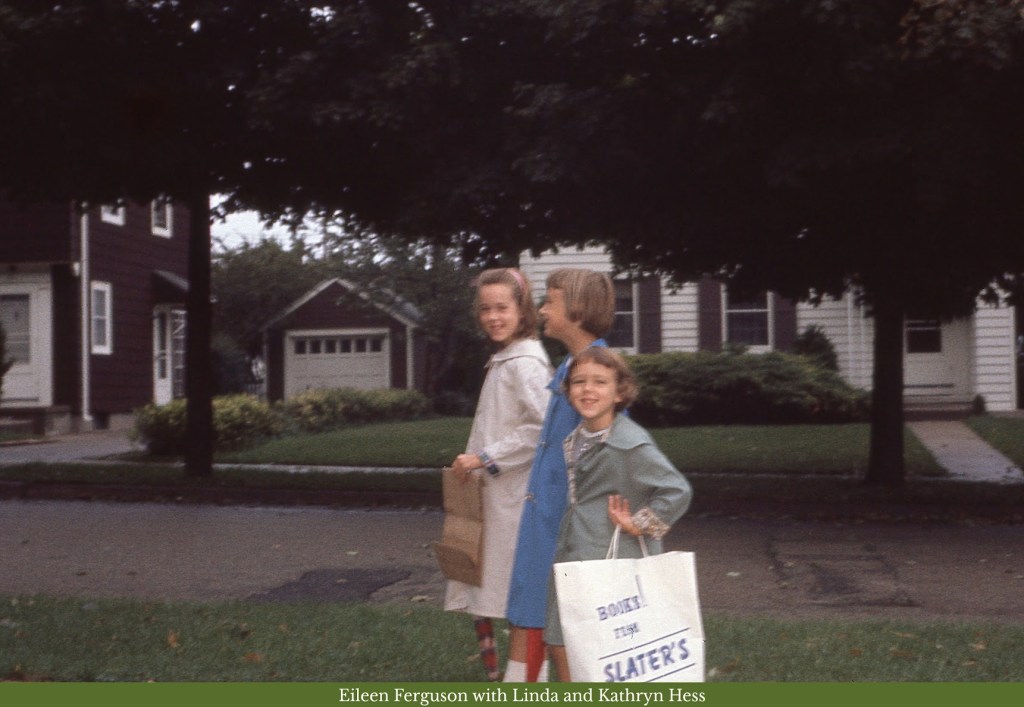
This photo is from an estimated date of 1962 – taken in front of our home at 1517 Harbrooke, Ann Arbor, MI. Slater’s book store was located on State Street in Ann Arbor and was one of the exciting highlights of our childhood. Our family friend Winnie Martin worked in the children’s section and would always greet us and guide us to treasures to be found in the store. The children’s section was located at the very rear of the store on the main level. I was just exiting this store on 22 November 1963 when the whole city got quiet and grief stricken with the breaking news that President Kennedy had been shot. I remember just standing on State Street as the world seemed to move into a slow motion reel with all the grown ups and students beginning to cry.
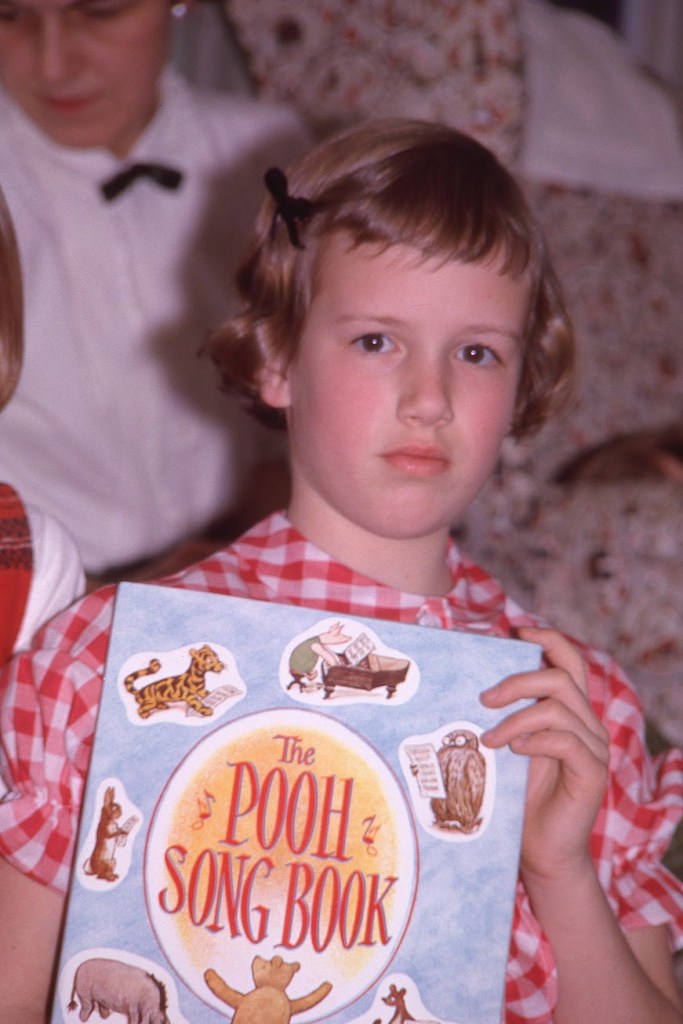
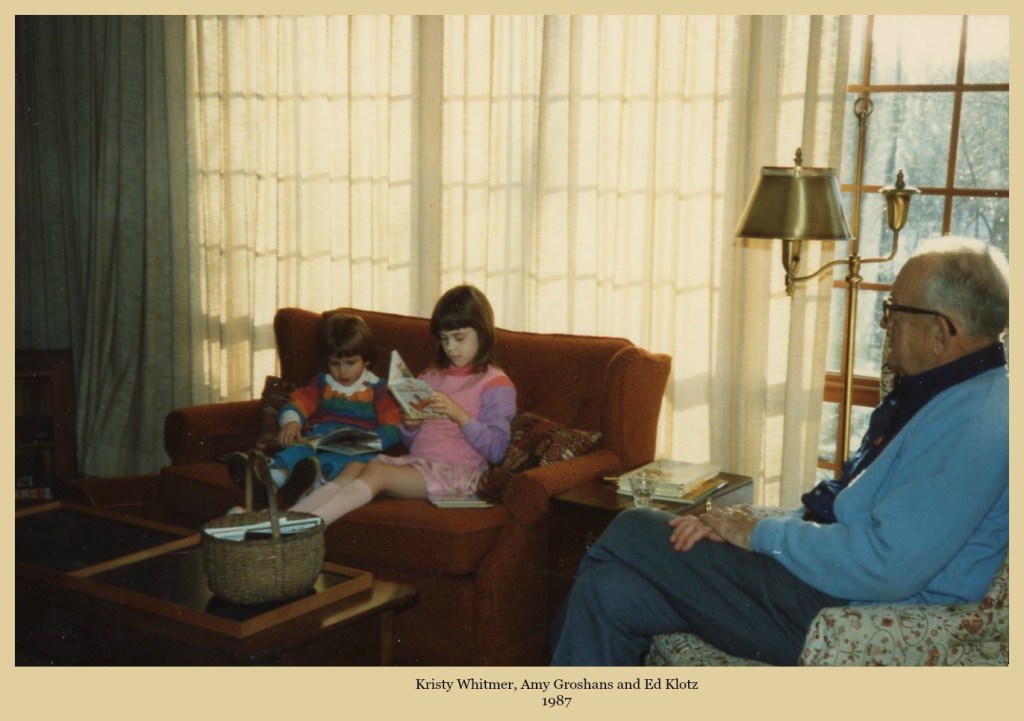
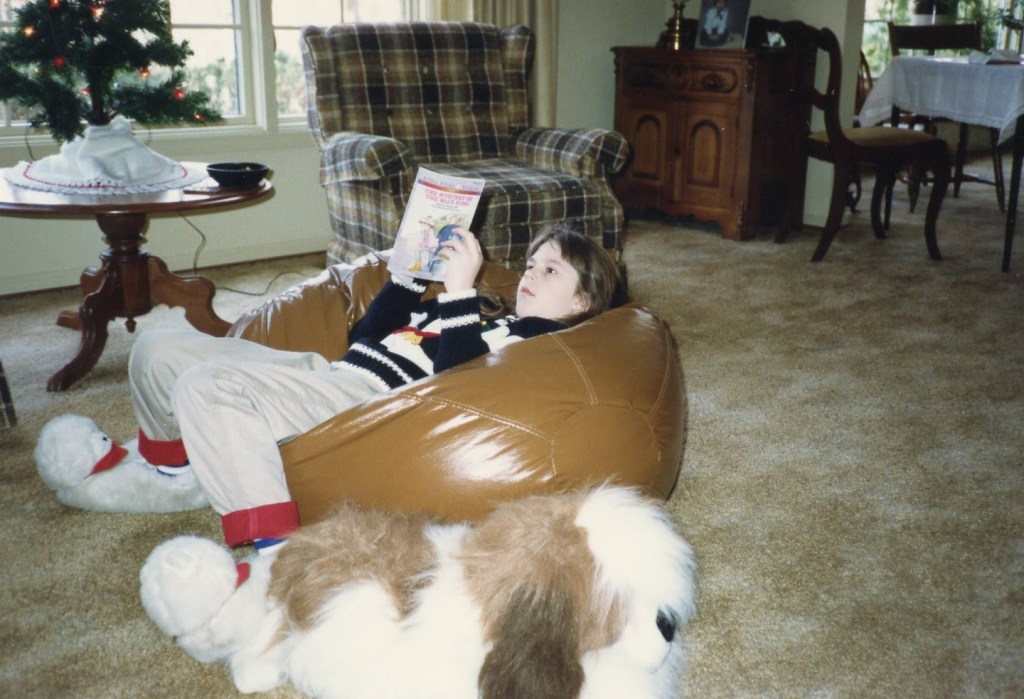
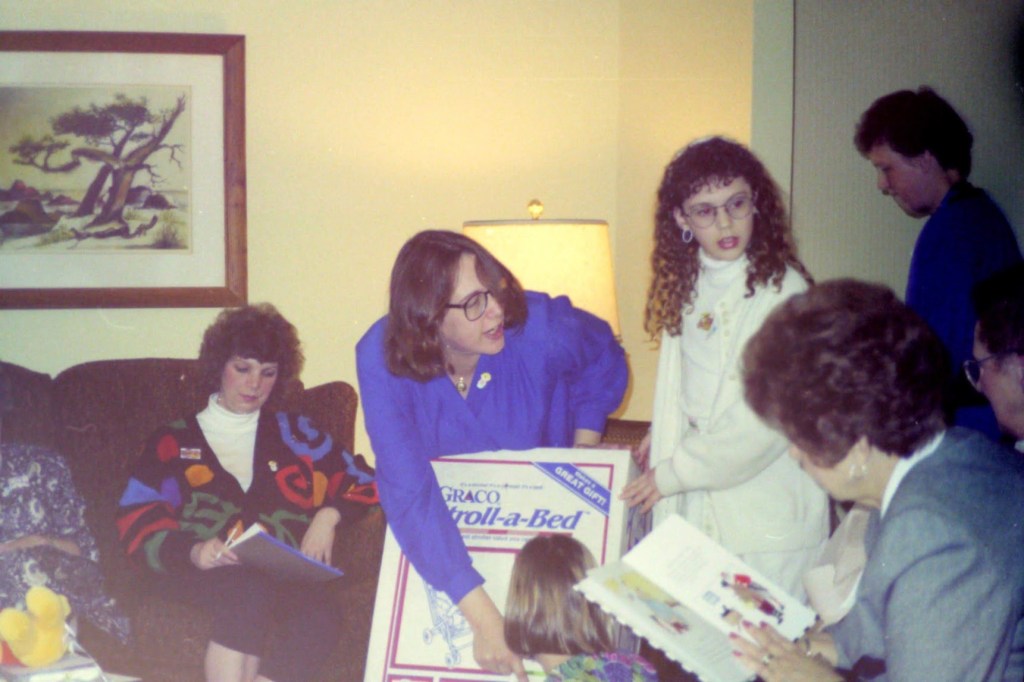
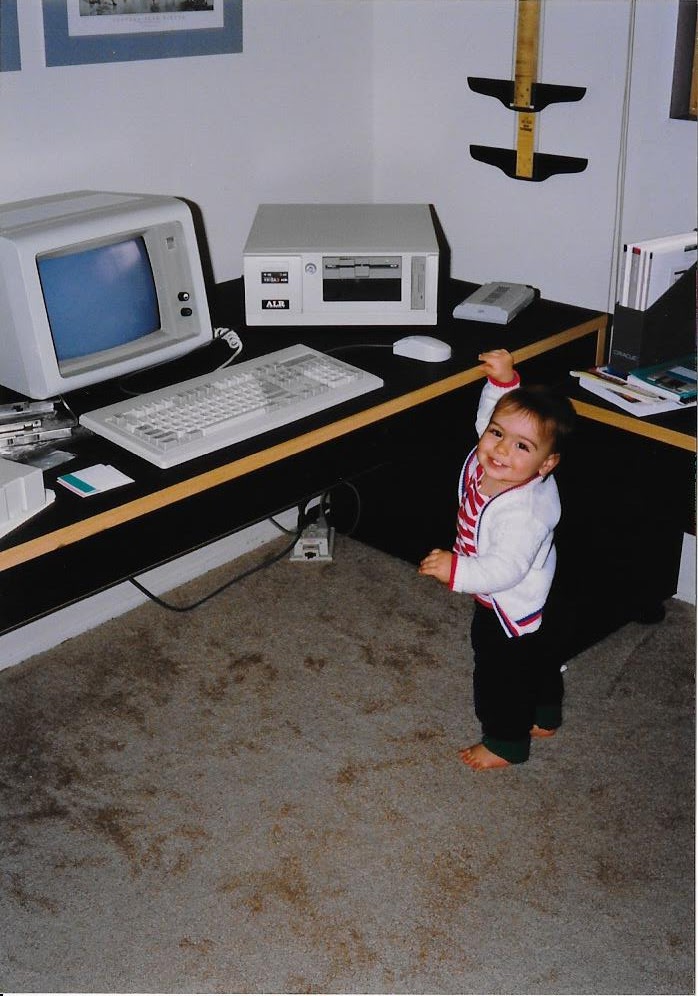
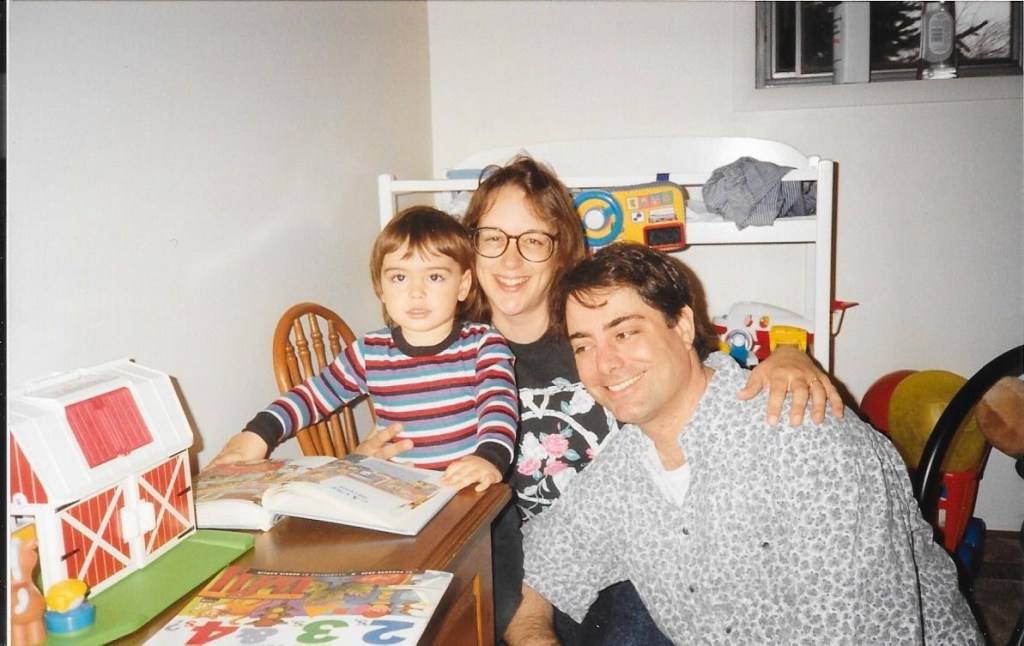
Grandma Pet often gave us books as gifts. This is one of the books that she selected for me. I valued everything from her so much. I estimate this book was a gift to me in 1962.I estimate the date of this to be March 1962. Mary Ann was quite the good pianist and our family loved Winnie the Pooh books. In fact, Dad read every book in the Pooh series out loud as bedtime stories for us.One of the all time favorite photos of cuteness. Not exactly reading but it looks like cowgirl Khaki decided to take an impromptu nap while writing out Valentine cards. Adorable. I estimate the date of this photo is 1965.Every time I see his smile, it floods me with memories. Bones and Madalyn played such an important part of our family life. Amy is getting treated to a story read to her by Aunt Marie.I can see Amy has the book Corduroy in her reading pile – one of our favorites. I estimate this photo to be from 1984.A photo of our dear family friend Winnie Martin with Kristy and Amy. I estimate the date of this photo is 1985.I look so happy and I was so happy reading to me niece Kristy and my daughter Amy. I estimate this photo date as 1985.Amy was an early reader and a devoted reader. To this day, Amy is still always checking out a find from the library. The tradition is being passed on to her son who reads every day – I am so proud! I estimate this photo date as 1987. This was taken at our home at 609 S. 1st Street, Ann Arbor, MI.I am sure that Bones was as happy as a clam watching Kristy and Amy reading. This photo was taken at 2629 Danbury Lane, Ann Arbor, MI. I estimate the date to be 1987.What a fun photo of Amy. I estimate the photo date to be 1988. The photo was taken in the Living Room at 2629 Danbury Lane, Ann Arbor, MI.It looks like Amy is just starting a new read…I estimate this photo to be from 1989. This photo was taken in the kitchen of 609 S. 1st Street, Ann Arbor, MI.I am guessing that this was a Sunday morning with Jack and Amy sharing the Ann Arbor News. I estimate this photo date as 1990. The photo was taken in the living room of 609 S. 1st Street, Ann Arbor, MI.Amy in her Penguins hockey jersey – one of her favorites. I estimate this photo to be from 1990. The photo was taken in the living room of 609 S. 1st Street, Ann Arbor, MI. It was popular to put a sort of film over your windows to keep out the cold – you can easily see this on our front window.This is a photo of Khaki’s baby shower in 1991. It looks like one of her gifts was a storybook.It looks like Blake is interested in what he can see on the computer desk! I estimate the photo date to be 1992.Mike is already interested in reading! I estimate this photo is from 1992.Yes…Mike did have very red hair for a period of time. I love this photo of my children sharing a story together. I estimate this photo is from 1992.It looks like Blake is also using his storybook to pose some of his toys! 1993.What a precious photo of the Barnes family reading together- 1993.Big brother Blake is introducing Kevin to the world of reading. 1997.Mike is busy reading in the family antique rocking chair. This photo was taken at 549 Lancaster Ct., Saline, MI. I estimated the photo date is 1998.Mike reading with his sunglasses…I wish I could figure out what book this is? I estimated the date for this photo as 2000.Kevin at his preschool library. The photo is from 2000.It looks like Kevin is enjoying an I Spy book. Photo date 2000.Kevin reading from the computer monitor. Photo date 2000.Grandpa taking a look at Kevin’s new book. 2004.Kevin…2004. Is this a book about cars? I like this reading position!Amy and Drew. 2008. What are they reading? I love this photo!Amy and Drew got married in a bookstore. 9.10.11What a wonderful venue for a perfect wedding in NYC. 2011.This is a photo of the Wiesner home in Portland. I love seeing the cookbooks here. Amy is a fantastic vegan chef. Photo 2017.Grandma Pet (me) and EJ had fun posing his Star War guys next to the storybook. 2018.Seriously, I love this photo for 100 reasons. It is fun to see an Auntie M blanket, a lego toy, The Hobbit book, and Amy and Drew both reading from electronic devices. PERFECT. 2019.This is a stack of books from a Little Free Library – reading became even more important to me during shelter-in-place CoVid times. 2020.Sometimes I think of funny poses…this was a fun book. 2020.Never stop learning…what a goofball outfit. 2020.I like this fairy – she lives on my front porch. 2020.A great photo of Khaki at her Ann Arbor home – by a bookshelf in Kevin’s room. 2021.I like this interactive book. 2021.I got a new bookcase and am getting ready to load it up. 2022.It is fun to use photoshop!Mike in a German bookstore. 2023.