My name is Red Hood. Okay, you probably remember me as Little Red Riding Hood, but that name is no longer fitting because I am now 42 years old.
I have recently completed years of therapy to help me cope with the traumatic childhood incident involving the so-called Big Bad Wolf—whose trickery nearly cost me my life. Those years of therapy, along with my husband’s understanding, have given me the strength I needed to speak publicly about how my life has turned out.
I’m sure you know my dreadful case. There are countless books printed about the nightmare event of my childhood. Sadly, I have made no money from any of these publications and have instead been 100 percent exploited. I find it deeply repulsive that illustrated children’s storybooks exist about this event. How horrifying is that? A lawyer is currently working on my behalf to rightfully secure some of the proceeds from the books and movies that monetized my trauma while leaving me to struggle financially.
Money is rather sparse these days, which is why I’ve agreed to write this article. At last, I will receive some financial compensation. I am also under contract for an upcoming docudrama, in which my husband will be featured as well.
I remain an object of curiosity. People always want to know what became of me. So let me offer you a glimpse into my current life.
I am now a middle-aged woman, and I still live in the woods. My legal name was officially changed from Little Red Riding Hood to Red Hood on my twentieth birthday. In her will, my grandmother left me her small cottage. Before moving in, I hired a security company to install high-tech security systems and cameras. I take no chances.
You may recognize the familiar illustrations of me at age ten, with blonde curls and a red hooded cloak. I grew into a fairly attractive woman. My hair has dulled over the years, so I use professional products to dye it a youthful golden blonde. I’m of average height. My wardrobe includes many colors, though I admit I still have a weakness for the color that shares my name: red.
I no longer wear a cape—it’s a terribly impractical garment. My favorite piece of clothing is a red hoodie with a front zipper and deep pockets. Appearance has always mattered to me. I pay attention to what suits me best, and I’ve discovered that my legs look especially nice in heels. I hate to admit it, but I’ve indulged in the purchase of many pairs of striking red high heels. You might say I’ve perfected the art of walking in them. My husband claims this is pure vanity, but he smiles and winks whenever I show him a new pair.
I had several relationships, but marriage never crossed my mind until I met someone who truly understood childhood trauma. My husband is the brother of my close friend Gretel. His name is Hansel. Hansel and I are both proud of ourselves for overcoming deeply painful experiences. Like my story, Hansel and Gretel’s lives have also been turned into storybooks.
Hansel appreciates my decorating style. He wanted nothing to do with a home that resembled a stereotypical gingerbread house. Recently, we had a photographer take a portrait of us in our cozy cottage. Hansel looks handsome in his lederhosen, and I look lovely in a form-fitting red dress paired with my red heels.
But appearances only matter so much. What truly defines us is the advocacy work Hansel and I support. As victims of crime and as children whose lives were exploited for profit, we are deeply involved in legal efforts to protect other children. Hansel holds a law degree, and his firm specializes in—and actively tries—these cases. You may have seen his firm’s advertisements on television: the ones celebrating victories on behalf of Jack (also known as Jack of Beanstalk fame) and Pinocchio, who is, in fact, a real boy.
Sadly, we did not prevail in the highly publicized trial on behalf of Peter Pan. Hansel hopes to appeal the decision. These cases have severely depleted our limited financial resources—but the work is vital.
That is why we ask for your help.
First, please stop telling children about our misfortunes as though they are harmless bedtime entertainment. We are real people with real pain.
Second, we urge you to donate to the Red Hood Foundation. Your contribution is tax-deductible and will help us continue to litigate and win cases that protect children. For every $500 donation, you will receive a red hoodie from us. For a $100 donation, you will receive a red coffee mug featuring our photograph.
Show that you care about children. Donate generously.
After all, we are fighting for every child’s chance to live happily ever after. We long for a world free of monsters—whether they are wolves in disguise, giants who smell the blood of Englishmen, or witches who lure children with candy so they can eat them.
Help us stop these atrocities.
Thank you for your support.
Disclaimer: Only 10% of donated funds will be used to purchase fashion items such as my red hoodies.
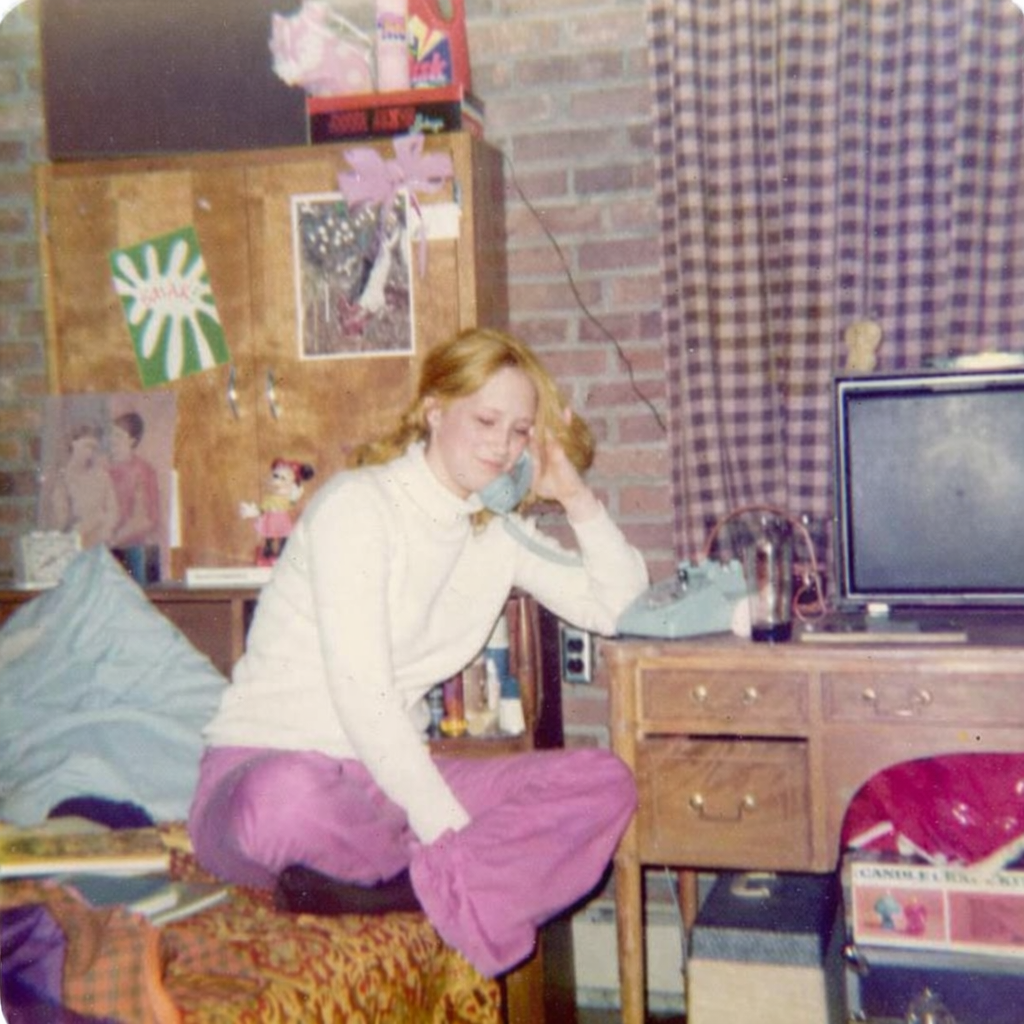
Photo was taken 20 years ago when this experience happened!
I had been using an online dating site long enough to know how to protect my identity. Before meeting anyone in person, I always asked for the man’s phone number and never gave him mine unless I was extremely interested after a successful date. I used only my first name. I never shared my home address or place of work. I was prepared. I was secure.
So when a gentleman on the dating site sent me a message saying he had read my profile and seen my photo—and hoped we might get to know one another—I was flattered and a little surprised. He mentioned that he noticed I was a teacher and said he was sure I had a lot I could teach him. I found the comment slightly suggestive, but also clever and witty.
I had been asked out plenty of times before, but this man seemed exceptional. He was beyond handsome—perfect, really. Picture a Greek god and you’ll have a fairly accurate idea of his appearance. He was impeccably groomed, and in his profile photo he wore a striking black shirt and black tie. I suppose you could say I was smitten.
We arranged to meet at Panera for coffee. He was a complete gentleman.
“Hello, Linda,” he said, his voice deeply masculine and romantic. “I recognized you instantly from your photo.”
“Hello, Harlan,” I replied. Yes—his name was Harlan, and I liked it immediately.
“May I get you a coffee drink or anything else?” he asked.
I requested a vanilla latte, and he suggested I wait for him at a nearby café table. As I sat down, I used my compact mirror to make sure I looked my absolute best. This man was amazing. There was an aura around him—people smiled at him, nodded as he passed. Magnetic, I thought to myself.
Still, I reminded myself, I was his date. I was the focus of this meeting. I couldn’t wait to learn why he had invited me and what he wanted to know about me.
He returned, sat close, and handed me my drink. “Careful,” he said. “There’s a warning label on the cup.”
“A warning label?” I asked.
“Yes,” he said, pointing to the tiny print explaining that the contents might be hot.
I was even more impressed. How attentive. How thoughtful.
After a few quiet moments of gazing into his mesmerizing eyes, I asked him what he wanted to know about me.
“I am ready to scan any information you would like to provide,” he said. “It will be useful for my knowledge base.”
His voice was silky—like a late-night radio host on Pillow Talk. I realized he could say absolutely anything and it would sound like the most fascinating conversation of my life.
I giggled and began. “Well, I live in a nice home not far from here. I have two cats.”
I was about to continue when he reached across the table and took my hand.
“Tell me about cats,” he said.
“Oh—my cats?” I asked, making a mental note that this man must be a serious cat lover.
He nodded affirmatively, so I told him about them: one black, one orange. “Halloween colors,” I said.
“Do you have pets?” I asked.
Still holding my hand, he said that physical contact helped him learn more about me. I felt flattered again. His hand was warm and steady, his gaze intense.
“Affirmative,” he said.
I blinked. “What?”
“Affirmative. I do have pets,” he clarified.
“Cats?” I asked.
“Yes,” he said carefully, “they are… a sort of cat.”
“What color are your cats?” I asked.
He hesitated, visibly thrown off. “I don’t know how to answer that question.”
“I just wondered what color they are,” I persisted.
“I must explain,” he said. “I do not perceive color the same way you do.”
“Oh,” I smiled. “You’re colorblind.”
I decided that even the perfect man could have one small imperfection.
The rest of the conversation was odd—strange pauses, unusual phrasing—but I didn’t care. I was in love with Harlan. Oddness seemed trivial. Perhaps he was just nervous, I told myself.
After about an hour, we agreed to end the date with hopes of meeting again soon.
Outside the café, he asked if he could kiss me. I was surprised—this wasn’t something I usually did on a first date, especially not at the entrance of a Panera—but I couldn’t wait for him to kiss me.
He leaned in and whispered, “Now you will understand me.”
Oh, I wanted to understand him. I wanted to elope that very day.
We kissed.
My feet felt as if they lifted off the pavement. Swirls of color surrounded me. Warmth spread through my entire being. I felt safe, adored, and deeply desired.
When I blinked, I saw him clearly: Harlan was a creature who slightly resembled a tabby cat—large, gentle, loyal. And somehow, this made perfect sense.
He broke the kiss and looked sad. Holding both my hands, he gazed into my eyes. I understood then that we would not have another date. He would not be on planet Earth much longer.
I read his thoughts easily. He was grateful. He loved me. He had learned from me. He promised to wish me only the best. And though he had to leave, he wanted me to know that my information about cats had been very useful.
When I blinked again, he was gone.
I have never had a kiss like that since.
Now, I only bother to look at dating profiles of exceptionally gorgeous men dressed entirely in black—especially those who are eager to learn.
I encourage you to take a moment to share photos or memories of wallpaper that once claimed precious wall real estate in your homes. It’s such a fun topic—and almost everyone seems to have a story to tell.
Wallpaper actually began as a luxury, created in medieval times as a substitute for costly wall tapestries. By the 18th and 19th centuries, printing advances made wallpaper more affordable and accessible across social classes. It reached peak popularity during the Victorian era—though unfortunately, this was also when many wallpapers contained arsenic. Yikes. Because people didn’t yet understand the dangers, the resulting illnesses were often blamed on “bad air.”
I’ve been using Google search within my Google Photos albums to track down pieces of our own family wallpaper history, and it’s been a surprisingly delightful trip down memory lane. I hope you’ll share photos too! Tell me about the wallpaper you loved… or the patterns you couldn’t wait to see disappear.
Linda Claire, Kathryn, Edward Klotz “Bones”, Madalyn Klotz and Mary Ann in March 1960 at the Klotz home on North Main Street, Ann Arbor, MI.I colorized this photo and enhanced it, but in my memory it should have more gold tones. What a lovely and elegant 60’s style entry way to 2629 Danbury Lane, Ann Arbor, MI The pocket door on the left side was the doorway to the kitchen. The dining room at 2629 Danbury Lane, Ann Arbor, MI – photo from the mid 1960’s.This photo shows the wallpaper in the dining room at 2629 Danbury Lane, Ann Arbor, MI. My Heritage dates this photo with 86% accuracy as 1977. Pictured are: Robert Hess, Tim Whitmer, Madalyn Klotz and ? (this does not look like Aunt Babe to me???)This photo is estimated as 1975. The Dining Room of 2629 Danbury Lane, Ann Arbor. The door wall leads out to the enclosed back porch.I am dating this wonderful photo of Dad at about 1990. He is seated in his study at 2629 Danbury Lane, Ann Arbor, MI . I adored this wallpaper and the study. This was also the location for our piano.
When Mike was in college at the University of Michigan, he rented an apartment near the Law Quad on Oakland Avenue. Honestly, I don’t think anyone could ever top the creative use of wallpaper in that place. It was boldly expressive and always sparked conversation.
I’m still a little distraught that I can’t find the photo I took of theliving room ceiling—it was covered with a huge quilted star that was absolutely unforgettable. The image below is from the entryway of that apartment, but the ceiling is the one I wish I could show you!
The front hall to Mike’s apartment on Oakland Ave., Ann Arbor. This wallpaper design was carried through into the living room and was really quite remarkable.
The wallpaper story that immediately comes to mind for me is Mike and I trying to remove a Winnie-the-Pooh wall border in the house at 2725 Yost Blvd. It must have been super-glued to the wall. We were so determined to get the job finished before our exchange student arrived that we worked ourselves into total exhaustion. Somewhere along the way, fatigue turned into slap-happy delirium, and the whole miserable task became oddly hilarious in retrospect.
This is a fictional scenario involving a man named RR, a psychiatrist by profession, who is in the early stages of a new, healthy romantic relationship with a woman named Lydia. Although RR’s professional life centers on mental health, insight, and care, he is not Lydia’s doctor and does not relate to her in a clinical role. Their relationship is grounded instead in mutual affection, respect, and emotional safety.
Lydia carries emotional scars from her past. She has previously been involved in two significant relationships marked by verbal abuse, where her intelligence and worth were repeatedly questioned and diminished. Those experiences left lasting wounds, particularly around how she hears and interprets words spoken about her.
When an ex-partner unexpectedly contacts Lydia again and demeans her intelligence, the old injuries are reopened. The contact is brief, but its impact is sharp and destabilizing—because it echoes a familiar pattern of cruelty she has worked hard to outgrow.
RR responds not as a psychiatrist analyzing a patient, but as a lover who sees, understands, and deeply cares for her. His awareness of psychology informs his empathy, but his words come from intimacy, protectiveness, and love—not diagnosis or authority. He writes to Lydia to steady her, to counter the old narrative with truth, and to remind her that the voice that wounded her does not get to define her.
The email becomes an act of reassurance and re-anchoring: an affirmation that she is intelligent, resilient, and worthy of tenderness—and that she is no longer alone in facing echoes from her past.
Blue skies ahead
Blue Skies Ahead
My dear Lydia,
I wish with everything in me that you never had to feel this kind of hurt again—because you’ve already carried more than your share. Knowing what you’ve endured before makes me ache all the more when someone reaches back into your life and tries to diminish you, especially by attacking your intelligence. That particular wound cuts deep, and it’s not accidental. It’s a familiar tactic of people who feel threatened by light they cannot control.
Please hear this clearly: nothing that was said to you today is a reflection of who you are. It is only a reflection of the limitations of the person who said it.
You are intelligent in ways that go far beyond cleverness or credentials. You are perceptive, thoughtful, emotionally literate, and deeply curious about the world. Those qualities don’t shout; they endure. And they cannot be taken from you by someone who once needed to belittle you in order to feel tall.
I know words have hurt you before. Repeatedly. When that happens, the nervous system learns to brace itself, as if every sharp sentence confirms an old lie. But I want to offer you a different frame—not as a psychiatrist, not as anyone analyzing you, but as the man who loves you. Words only have the power we grant them, and today’s words do not deserve a permanent place in your heart. They were never truth. They were noise.
There really are blue skies ahead. I believe that—not as a slogan, but as a promise life keeps when we stop mistaking cruelty for insight. You are doing something profoundly brave: choosing health after harm. That takes more intelligence than most people ever muster.
I am so proud of you. I miss you more than I can reasonably explain—like CRAZY, actually. If you want to fly out and meet me, we could make that happen. Truly. The thought of seeing your smile, that sweet dimple that gives you away every time, makes me laugh out loud.
Before you sleep, imagine this: I’m kissing that happy face goodnight and reminding you that you are safe now. I’m here. You don’t need harsh voices in your life anymore—inside or out. What happened today doesn’t undo your growth; it highlights it. You didn’t collapse. You noticed the pain, and you reached for connection instead of silence. That matters.
We can talk about this as much or as little as you need. I know the words wounded you. But if you’re willing, let’s turn them into something else—not armor, but strength that stays soft. That’s your gift, Lydia: you don’t harden; you deepen.
Please give some consideration to what you are yearning to receive from our upcoming Board Retreat.
How can I make this the most fulfilling and meaningful retreat for you at this time?
Your vision and ideas are important to keep our Board on a path that nourishes us as well as offers a fun time together with our Center and our friends and family.
Here are some questions you might want to ponder:
What would bring you joy and fill your soul in our Board meeting?
What do you think are the best ways to achieve your visions?
Are there topics that you have liked before? Are there new topics you want to research?
What are things that we can do as a group to support each other and our world?
How do we keep Spirit central to our discussions?
I am going to be mailing out an email almost every day leading up to our Retreat.
Also, you might want to get out a large carry tote because I will also be asking you to bring some items with you to the retreat.
I am going to spend some time talking about some topics that begin with letter “C” – these topics will be:
*Curiosity
*Comfort and Calm
*Clear Vision
*Centering the Center
For each one of these topics, I will be asking you to bring an item along with you. If you can’t bring the object then perhaps you can describe it to us at our meeting.
So- starting with Friday evening please bring something that you found outside in Nature (this will be for an exploration of how we can become more curious about our paths) and also bring along something that is comforting to you (examples: a soft flannel shirt, a blanket, a rock for your pocket, a teddy bear, a poem, a book, a photo). Comfort and Calm will be one focus word for our retreat as we strive to promote ease among ourselves as members of the Board and as we can project that sense of calm during some turbulent times in our world. How do we make a retreat for everyone?
I have been an educator for many years, but the number of Board retreats I have done is ZERO. I hope that by starting these emails now you will feel a “calling” to offer an activity, a story, or some leadership role at this important event.
Your friend, Claire Groshans
Board Retreat email #2
Send a photo of the books I am looking through.
I am spending time putting together our Board Retreat – see photo (smile)
In the past years, one fun activity that folks could do online was an on-line personality strengths assessment test https://www.16personalities.com/
Board Retreat email #2
Do you want to have some fun and possibly get to know more about yourself and the way you interact with others?
In a past board retreat, a website that helps gauge our personality strengths was used in the programming. This website offers a free personality assessment test. I usually don’t think tests are fun but this one was both fun and insightful. No surprise – I am an extrovert.
We will not be using this test or the results during our upcoming retreat, but I didn’t want to keep the fun all to myself. So here it is: https://www.16personalities.com/ Scroll down until you see the link for personality tests.
Now… Here are some things that you can expect at the Board Retreat.
We will each take one or more note cards from a hat. The note cards will have one of these words starting with the letter “C”.
*Curiosity
*Comfort and Calm
*Clear Vision
*Centering the Center
*Communication
*Contributions
*Care
*Companionship
*Challenges
*Change
*Connecting
*Conversations
(And my favorite) *Celebrations
As we hold our cards, we will share the word with the group and then be asked to give a reflection or thought on that word and how it can connect with our Center. Some words will be easier than others, but I believe they are all important words for our Board to consider and will help guide our intentions and vision and also help us to delight in the many ways a word can be interpreted.
Don’t forget to start thinking about 2 objects to bring along on Friday night. Item #1 will be anything from nature. Item #2 will be something that displays comfort to you.
I am looking forward to this time together as the Board at Interfaith. As this is the first and only retreat that I have planned, I am anxious for any of you that may want to contribute or offer a suggestion.
Paulette, I am sure we will all miss you at the retreat, but we certainly will wish you a happy retirement party. A celebration for sure!
Your friend, Claire Groshans
The times that we selected for the retreat are Friday, May 19th from 5PM to 8PM and Saturday, May 20th from 10AM to 5:30PM
—
Board Retreat starts THIS FRIDAY
I am excited to be together for our Board Retreat. I have tried to put together a meaningful and relaxing retreat. Here is our agenda:
Agenda:
Friday:
Dinner – As we dine together, we will chat about when we first arrived at the Center and how our experiences led us to serving on this board.
Sign a group birthday card for Dave Bell.
Team building exercise – Relational Psychology – Take a virtual walk with Claire
Show and Tell – We will share the items that we brought with us. 1) A nature item. 2) An item that speaks “comfort” to us personally. HInt: the items will become part of a vision for the Center.
Group Meditation by Brett
Saturday:
Opening Meditation by Brett and hopefully a song led by Layla
Presentations by Layla and Delyth (topics include but are not limited to Board rules/ Carver model/ By-laws/ Documents/ Relationships
Voting for the offices of Chair and Secretary
Luncheon
Everyone gets to take a word from this list – a time of discussion, recognition, and planning
*Curiosity *Comfort and Calm *Clear Vision *Centering the Center *Communication
Claire’s cartography – Art with a purpose – Mapping our path forward and noting our favorite ICSG landmarks. Sample map attached.
Guided Question/ Answer Time on SWO– Strengths, Weaknesses, Opportunities.
A sending meditation by Brett for our Board as we begin our new term.
The retreat begins with dinner. A time to enjoy the delicious foods that Delyth ordered for us. I know we all must be grateful that the Bell’s have opened their home to us for this retreat.
Today, is Dave Bell’s birthday. I purchased a birthday card and Delyth purchased a little plant as a gift. I hope that as you finish your meal, you will take just a minute to sign the card for Dave and in your note thank them both for being the venue for this gathering. “A change of place and a change of pace equals a change in perspective.”
At dinner, if you feel inclined to chat with others about when you first arrived at the Center and what your experiences were that led you to now serving on this board.
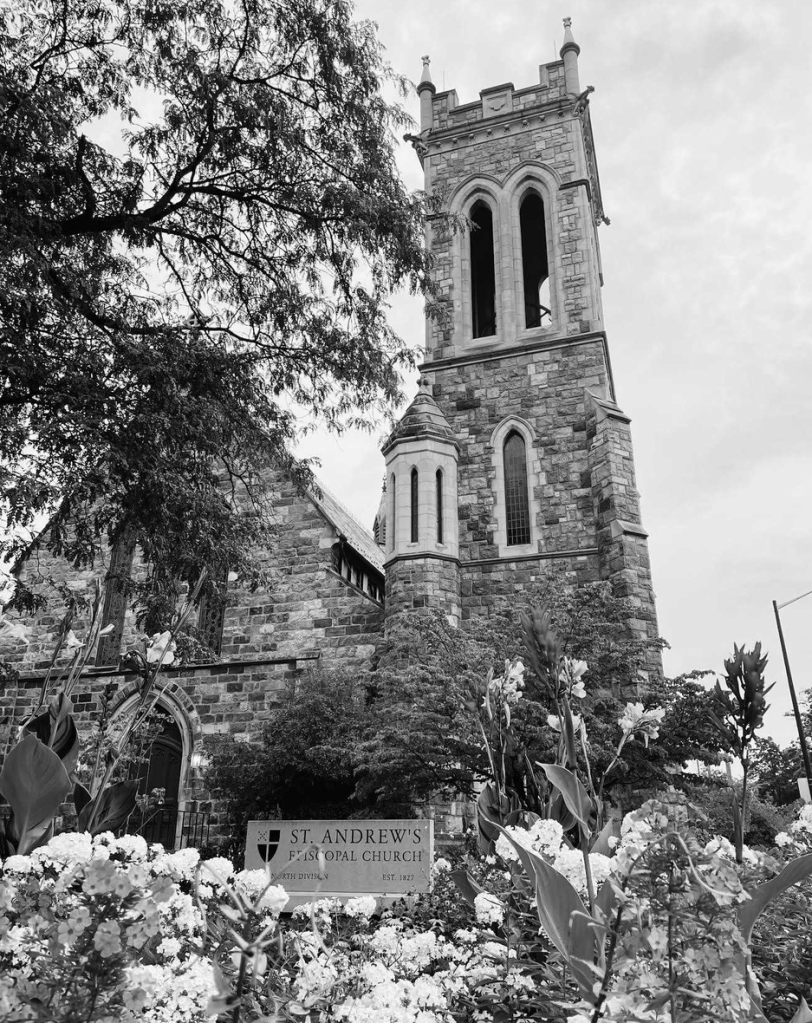
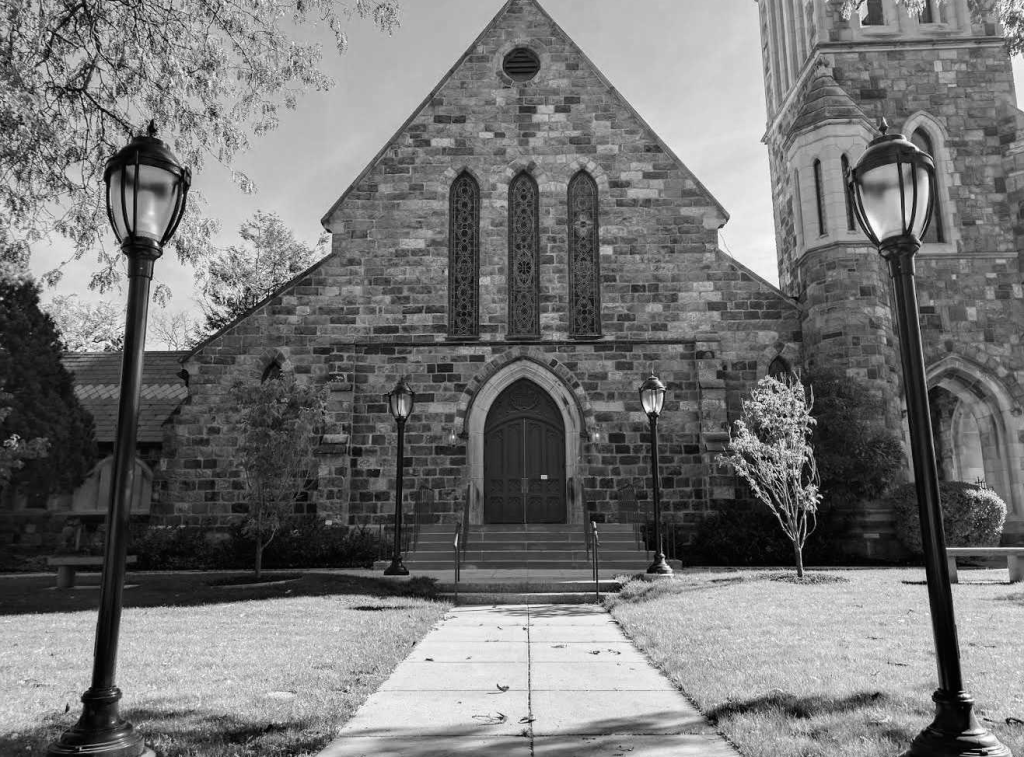
Interfaith Center for Spiritual Growth has emerged on the Ann Arbor scene as a vibrant place for community events and a dynamic alternative to Sunday worship.
Sunday service: an upbeat gathering in which attendees, alongside ministers, provide the texts, meditations, songs, and sermons that are shared, and engage with each other during an open-mic session.
Members of the Interfaith Center include people from all walks of life.
A community center where they can find meaningful connections with other spiritual seekers throughout the week,
And, if you asked, a lot of the membership at Interfaith would identify as “recovering” — be it from institutionalized religion, their formal education, or a previous way of thinking or acting.
Those who gather there seem to share a vital interest in charting a personalized approach to spirituality and enjoy doing so in this supportive community setting.
A New Age vocabulary is commonly used, and many members are at home in the esoteric, just as many are self-identified healers.
Though the Center’s location is unprepossessing, its interior has a homespun charm. David Bell explained:
It is not surprising that “Namaste,” both word and gesture — palms together in front of heart, accompanied by a slight bow — is much in use here. Namaste is Sanskrit for “the Divinity in me salutes the Divinity in you.”
“Interfaith Center for Spiritual Growth: founded on the common thread in all spiritual paths.”
In the songs, invocations, benedictions, and incantations echo the credo of the Interfaith community:
Honor the universal truths in all spiritual paths.
Acknowledge the inseparable Oneness of Spirit with Humankind.
Understand the power of our thoughts in our lives and of co-creation in our communities.
A sacred Sufi poem: May the blessings of god rest upon you, / May god’s peace abide with you,/ May god’s presence illuminate your heart, / Now and forever more.
To begin the retreat, I would like to ask you to think about the day after this retreat is over. That will of course be Sunday, May 21, 2023.
I tried doing this as I was planning what activities to fill our time to the best advantage.
I hoped that, on the day after this retreat, I would feel that I have formed a closer connection and understanding with each of my fellow board members. That we had collaborated on some visions and learned more about the ways we can assist the people of the Center’s who are connected to us now and the people that have yet to come to the Center. Also, how we can continue to honor the memories of the work done by previous boards and members. How do we have vision without always recreating a wheel.
I hoped that on that Sunday after the retreat, we would all feel great about having made some solid plans for the next year at the Center.
I pictured a sense of knowing that we are ready to (at least figuratively) roll up our sleeves and begin to make sound decisions and support the amazing staff at the Center.
I pictured feeling proud of being on this Board and knowing that together with each of you we might take us into whatever the year brings as a cohesive team.
One of the highest values of a staff retreat is to deepen relationships and increase connections.
I tried to google what a good board retreat should look like.
No matter how many sites I visited, there was one thing that really stood out and that was doing team building activities.
I didn’t want to do the trust exercises where you encourage someone to fall backwards as you catch them. Geez, I’m sorry but I would probably drop you. Sorry.
I asked around and I had friends suggest some activities for retreats. Their ideas included such things as straws and marshmallows. As hard as I could think, I could not find a way that would offer any long-lasting insights.
So, after an exhaustive google search, I decided to just use an activity that I have done in my past and that is using a relational psychology test. Now, since I never did anything professionally with my college experience as a psych. Minor … I am fairly sure that this will not be serious psychology but rather my own interpretations based on a long-ago memory of learning this technique. I learned relational psychology in college in the 1970’s. Everyone that I gave this test to were at least mildly entertained or on some lucky occasions they became a little enlightened. Let’s try it…
In some ways, I feel sad for you that I am the person leading such an important event because of my inexperience with this type of group. In other ways, I feel happy that my inexperience will make me and you lean into each other more and become a more interactive board.
When I thought about that more and decided that maybe this is exactly what is at the core of the Center. That the Center is truly where we each can bring our beautiful, sometimes messy, sometimes naive, and sometimes tender selves.
I had an image of a Viking Ship with all the rowers rowing away. In my vision, someone was pounding a drum and the rowers were all rowing with all their might to move their ship through the water. Now, the thing that concerns me is that in that image there is always someone who should be directing the ship to land. Otherwise, the ship might be going in circles.
But I don’t know on my own how to direct the figurative ship to land and so I am going to have to ask all of you to be shouting out directions as we go along on our time together.
So… Before we begin the team building let’s ask this question. What is our Center? What is our mission? What is our purpose?
A vibrant and diverse spiritual community welcoming and exploring all spiritual paths
Interfaith Center’s Vision Statement: As expressions of divinity, we celebrate a world awakened to Love.
Interfaith Center’s Mission Statement: Our mission is to explore universal truths underlying all paths of spiritual growth by providing weekly fellowship, learning and service opportunities, and social events to create and inspire a vibrant and diverse spiritual community.
Life Abundant – We are many different religions and faiths, but we are just one community of humans who believe that a higher power is central to our universe. A community that cares deeply about inspiring each other. We are a group of people that stays open to learning about other faiths and wants to use that knowledge to work for good.
The Forest Personality Test is of the type known as a “relational psychology” test — that is, it’s a mental walk-through adventure that works by taking you on a psychological journey of self-discovery. It builds up a scenario in your head step by step, ultimately encouraging you to reflect on the meaning and significance of each element of the scenario for you as an individual.
Imagine yourself walking down some sort of path or road. Describe what you see.
You come across a key. What does it look like and what do you do with it?
Next you come across a cup or bowl of some sort. What does it look like and what do you do with it?
You continue down your path and see a structure up ahead (a building or house, etc.) Describe what you see and do.
You continue the path and come across a bear. What is your feeling, interaction, etc. with this bear?
You arrive at a body of water. It can be anything, a puddle, stream, river, lake, ocean, etc. What is it and what do you do?
Finally, you come to an obstacle to your path. What is it and what do you do?
THE ANSWER GUIDE
1. The PATH represents your life or the course your life is taking. Scenic, bumpy, hilly, straight, winding, miserable, etc. indicate how you interpret the ease or difficulty in your life.
2. The KEY represents your education. Keeping it means you find use for your education. If you don’t pick it up or take it with you, obviously you won’t be needing or using it.
3. The CUP/BOWL symbolizes your family or friendships. Do you kick it to the side of the path, take it with you? Is it valuable, cracked, plastic, fine crystal, sturdy, etc.? Do you drink from it? Do you keep it with you? This might indicate that you maintain close ties with your family, and you value them.
4. The HOUSE, BUILDING or STRUCTURE represents your mind or your religion. Is it a flimsy grass hut, a big expansive building, a warm and cozy house? Do you use your KEY to open the door? Do you linger there? Are you comfortable there?
5. The BEAR is GOD. (Surprise, Pete! lol!) How you feel about the bear indicates your relationship with God. Frightened, calm, friendly, indifferent, angry, etc. Do you stay with him, avoid him, or run from him?
6. The WATER is the symbol for your sex life or SEX in general. Splashing about the puddle, would indicate a very healthy sex life. Congratulations. As would swimming in the ocean or lake, etc.
7. The OBSTACLE represents all obstacles/problems in your life. What was your obstacle? How did you approach it? Did you panic, master it with ease, contemplate it, turn around and go in another direction, etc.? I forgot to ask you what you saw on the other side… this represents how you see your future?
I asked you to bring two items with you. Something that represents comfort to you and something from Nature.
I am sure you could tell from my emails that we are going to use words that begin with letter “C” to help direct us into conversations about the Center.
So, I would like to talk for a minute about Comfort. Think about a quilt patched with love, a wrap around your shoulders, a candle flickering in the corner, the feeling of sun on your face, sand between your toes, even your favorite chair. Think about baking bread, doing a puzzle or making a watercolor painting.
Why did I choose the word Comfort to begin some conversations about the Center?
Was it only because the word Comfort begins with letter “C”? I chose the word because I want us to realize how important it is to begin to feel comfortable with each other. Also, because I believe the Center is a place of Comfort.
I am going to ask you to share your comfort item and also to tell us about how you have experienced (or if you have experienced) receiving and giving comfort at the Center. What are the things that you have tried to offer to promote comfort? How has someone at the Center offered you comfort? Please be as detailed as possible with your answers.
As we go back to our Mission Statement’s words “to create and inspire a vibrant and diverse spiritual community.” In a state of comfort, it is always easier to find a path to create and inspire.
How can we make our Board meetings, our Sunday service, and our events more comfortable and by that, I mean be a place that is active in giving courage, consolation, and sanctuary to others? This does not mean in the type of furniture we use, but instead thinking about how we make the Center a place to openly engage, relate and belong. Conversations on comfort are usually focused on the experience of newcomers and that is enormously important and vital, but I also want us to think about what it is that causes us to have that sweet moment of calm and comfort. What part of our programs offer that? Why and how do they do that?
The opposite of comfort is being uncomfortable. Are there ways that you have experienced discomfort? Do you want to share your feelings on that topic? Are there things that have caused you to feel uncomfortable with our programs or messages?
It is good to focus on a sense of comfort in just being. How can we give that sense of comfort in “just being” to others? How do we offer a place for people to meet each other with openness and respect? The landscape of daily life is sometimes so challenging, what is it that gives our Center the feeling of a comfortable retreat? Can we create more programs with a focus on Comfort?
Meditation – page 135 of Meditations on Everything inserting the phrase Feeling of Community.
Give each person a notecard with a word on it. Tell them that this will be a word that they will lead the group in discussing.
The words all start with letter C
*Curiosity – Truth arises in every culture. We can be truth seekers if we are curious to learn.
*Comfort and Calm
*Clear Vision
*Centering the Center – We are not on the same journey, but we are here to support others on their journey.
*Communication
*Contributions
*Care
*Companionship
*Challenges
*Change
*Connecting
*Conversations
*Celebrations – including Sunday celebration services.
*Community – some part of every service is about connecting to the community. During our time together we make a conscious practice of stopping and being more present to Spirit. Awakening people to the Divine power.
Use Art for Reflection
Saturday
We will need to vote for the positions of Secretary and Chair
Important to note that the Board speaks with one voice. Discuss privacy and policies.
As I planned our board retreat, I wanted to make sure we lean into the spiritual side of leadership. I did not want to do all business and planning. I want to make sure we include spiritual development on our agenda. I am going to challenge us all to try to refuse allowing the retreat to become issues of maintenance. Instead, let’s focus on some of the words we have on our list and above all Spirit!
Cartography project
Your map project should have 4 city states. The city states’ names may be taken from the list of “C” words, or the city states could be called: Interfaith/ Center/ Spiritual/ Growth
• Strengths: What has led to our Center’s successes (last year, last 4+ years)? What is our Center known for that can help us accomplish our mission? What are the good things that people say about our Center?
Weaknesses: What do we need to improve on in order to accomplish our mission? What are the weaknesses within our structure, processes, systems, facilities, leadership, attendees, and culture that may hinder us from accomplishing our mission?
Opportunities: What opportunities are presenting themselves to us based on our strengths and weaknesses? What should we do that we are not doing today in order to accomplish our mission?
Threats: What are the issues, concerns, roadblocks, barriers, and threats to accomplishing our mission? What are the biggest barriers that could limit our growth and health as a center? What are we doing that does not align with our mission, vision, and values? Could we eliminate or stop doing them?
We need to do write ups for Layla to put on the website
Claire’s cartography – Art with a purpose – Mapping our path forward and noting our favorite ICSG landmarks. Sample map attached.
Guided Question/ Answer Time on SWO– Strengths, Weaknesses, Opportunities.
A sending meditation by Brett for our Board as we begin our new term.
As we go back to our Mission Statement’s words “to create and inspire a vibrant and diverse spiritual community.” In a state of comfort, it is always easier to find a path to create and inspire.
How can we make our Board meetings, our Sunday service, and our events more comfortable and by that, I mean be a place that is active in giving courage, consolation, and sanctuary to others? This does not mean in the type of furniture we use, but instead thinking about how we make the Center a place to openly engage, relate and belong.
Conversations on comfort are usually focused on the experience of newcomers and that is enormously important and vital, but I also want us to think about what it is that causes us to have that sweet moment of calm and comfort. What part of our programs offer that? Why and how do they do that?
The opposite of comfort is being uncomfortable. Are there ways that you have experienced discomfort? Do you want to share your feelings on that topic? Are there things that have caused you to feel uncomfortable with our programs or messages?
It is good to focus on a sense of comfort in just being. How can we give that sense of comfort in “just being” to others?
How do we offer a place for people to meet each other with openness and respect?
The landscape of daily life is sometimes so challenging, what is it that gives our Center the feeling of a comfortable retreat?
Can we create more programs with a focus on Comfort?
S W O T
Strengths:
What has led to our Center’s successes (last year, last 4+ years)? What is our Center known for that can help us accomplish our mission? What are the good things that people say about our Center?
Weaknesses:
What do we need to improve on to accomplish our mission? What are the weaknesses within our structure, processes, systems, facilities, leadership, attendees, and culture that may hinder us from accomplishing our mission?
Opportunities:
What opportunities are presenting themselves to us based on our strengths and weaknesses? What should we do that we are not doing today in order to accomplish our mission?
Threats:
What are the issues, concerns, roadblocks, barriers, and threats to accomplishing our mission? What are the biggest barriers that could limit our growth and health as a center? What are we doing that does not align with our mission, vision, and values? Could we eliminate or stop doing them?
Highlights from the Board of Directors Retreat
On Friday evening, May 21st, and all day on May 22nd, the Interfaith Board of Directors had a dynamic and meaningful retreat. The Bell’s were gracious enough to offer their home as the venue for the retreat. It was such a lovely space to gather.
The retreat began by discussing that the result of the gathering would be to create a strong and unified Board – a team that can work in concert with each other during the next year to look at all areas of the Center.
As a fun way to review aspects important to the Center, the Board used several words beginning with the letter “C” as discussion launching pads. Those words were: Curiosity/ Comfort/ Clear Vision/ Centering the Center/ Communication / Contributions/ Care/ Companionship/ Challenges/ Change/ Connecting/ Conversations/ Celebrations/ and Community.
For fun team building, the Board along with Delyth Balmer and Annie Kopko, participated in a relational psychology virtual walk, art (in the form of cartography) as a method of reflection, and lots of time for shared discussions of visions for our precious Center. Brett Koon offered meditations each day that powerfully guided focus and intent.
Here are examples of some questions that were asked and answered during the retreat:
What has led to our Center’s successes (last year, last 4+ years)? What is our Center known for that can help us accomplish our mission? What are the good things that people are saying about our Center? What should we do that we are not doing today to help us accomplish our mission?
The Board was graced with presentations by Layla Ananda and Delyth Balmer. Their discussion topics included items like Board Rules, The Carver Model, By-Laws, Documents, and Relationships.
I am very grateful for the bright spirit of hope shared at the meeting and for the enthusiasm of this Board to do the work (teamwork) of serving you as your Board of Directors.
When Anna Cappadoro was born on November 30, 1877, in Sicilia, Italy, her father, Guglielmo, was 45, and her mother, Maria, was 44. She had seven sons and one daughter with Vincenzo (Vincent) Vincente Bivona between 1898 and 1918. She died on 10 July 1976 in Queens, New York, at the age of 98.
Anna is seated on the right side of this photo – date unknown. The magic wand on the caption means that I have made a digital enhancement to this photo.I asked AI to take the above photo of Anna and restore it completely. I will wait for members of her family to let me know how well this photo edit worked and how realistic it is.This edit certainly helps to see the details of her lovely dress and her gold necklace. The smile is gorgeous!The birth certificate for Anna. 26 Jul 1877. She was born in Custonaci which is a town and municipality located in the Trapani province of northwestern Sicily, Italy
I asked for AI for a translation of the birth certificate shown above:
Year 1877, on the 26th day of July, at the hour one after noon and minutes twenty, in the Town Hall. Before me, Emanuele Occorso, Mayor and acting Civil Registrar of the Municipality of Custonaci, appeared Cappadoro Luigi, 40 years old, stonecutter, domiciled in Custonaci, who declared to me that at the hour one after noon and minutes twenty, of the current day,in the house located on Via Salvo, to Cappadoro Maria, his wife, housewife, living with him, a female child was born, whom he presents to me and to whom he gives the name: Anna
The above declaration and presentation were made in the presence of the witnesses Bascio Giuseppe, aged 40, stonecutter, and Casale Luigi, aged 30, bricklayer, both residents of this municipality.
After this act was read to the declarant and the witnesses, they signed it with me.
Signed: Emanuele Occorso, Civil Registrar
Wedding certificate for Anna. 27 Jul 1987 in Custonaci. Anna was 19 when she married. Her husband was 23 years old.
I used AI to translate this wedding document – see below:
Year 1897, on the 27th day of July, at the hour ten in the morning, in the Town Hall of Custonaci, open to the public. Before me, Dott. Luigi Quaranta, Mayor and acting Civil Registrar, vested in official form, there personally appeared:
Bivona Vincenzo Salvatore, unmarried, stonecutter, born in Gibellina, resident in Gibellina, son of Giuseppe, resident in Gibellina,and of Giuseppa Foderà, resident in Gibellina; and Cappadoro Anna, unmarried, housewife, born in Custonaci,resident in Custonaci, daughter of the late Luigi, resident in Custonaci, and of Accardi Maria, resident in Custonaci; who requested to be united in marriage.
For this purpose they presented the required documents, and from the examination of these, as well as of those already produced at the time of the marriage banns, all bearing my approval and inserted in the volume of attachments to this register, and finding no impediment to the celebration of their marriage, I read to the spouses the articles of the Civil Code concerning the rights and duties of husband and wife.
I then asked the groom whether he intended to take as wife the present Cappadoro Anna, and the bride whether she intended to take as husband the present Bivona Vincenzo Salvatore; each having answered affirmatively and mutually, in the presence of the witnesses named below, I declared, in the name of the law, that they were united in marriage.
The witnesses present were: Coppola Giuseppe, 40 years old, laborer, and Di Carlo Domenico, 44 years old, farm worker,both residents of this municipality.
The documents presented were: certificates of birth, marriage banns published in this Civil Registry Office and in the Civil Registry Office of the Municipality of Gibellina, and certificates showing that no impediment existed to the marriage. After this act was read aloud to those present, it was signed as follows.
Signatures: Cappadoro Anna Bivona Vincenzo Salvatore Coppola Giuseppe Di Carlo Domenico Luigi Quaranta, Civil Registrar
According to my research, Anna’s two oldest children were born in Italy. They were Giuseppe “Joseph” Bivona 1898-1961 and Gugllielmo “William” Bivona 1900-1981.
Her next 5 children were born in Argentina. They were; Juan “John” Bivona 1902-1975, Francesco “Frank” Bivona 1904-1969 (the direct ancestor to my brother-in-law’s family), Vincent E Bivona Jr 1908-2001, Antonio (Anthony Tony) Bivona 1911-1998,
Her youngest was born in New York. Angelo Bivona 1918-1993.
It is interesting to note that both Anna’s father and her husband were stone cutters.
Anna became a naturalized citizen of the USA in 1945.
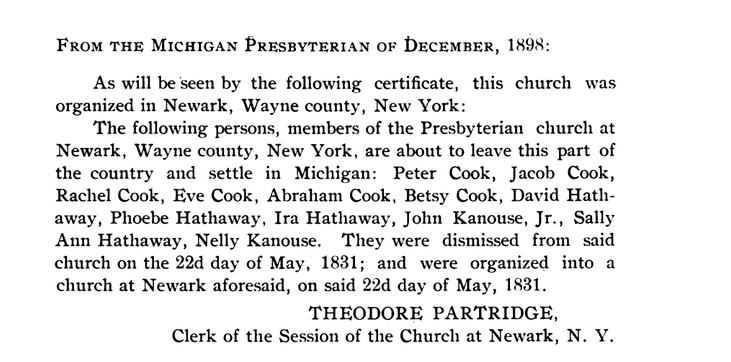
Nicholas Knapp was my 8th great grandfather. Here is how my family relates:
When Nicholas Knapp was born on May 16, 1592, in Wells-Next-To-The-Sea, Norfolk, England, his father, John, was 42 and his mother, Martha Blois (or Blosse), was 27. He married Eleanor (or Elinor) Disbrow Lockwood and they had 11 children together. He then married Unity Brown on January 9, 1659, in Stamford, Connecticut. He died on April 16, 1670, in Stamford, Connecticut, having lived a long life of 77 years, and was buried there.
In my other ancestry posts, I’ve shared that I grew up believing my heritage was predominantly German. As my genealogy research has deepened, I’ve discovered that this assumption isn’t quite accurate. In fact, a significant part of my ancestry is English, a realization that has both surprised me and opened up new avenues of learning. The more I explore my family history, the more I see how much there still is to understand.
I had to look up information about Wells-next-the-Sea where Nicholas was born. At the time of his birth, it was a small port town on the North Norfolk coast of England.
Fishing was crucial in 1592, with Wells-next-the-Sea known for crab, lobster, and herring. The port facilitated regional trade, exchanging fish and agricultural products for textiles and manufactured goods.
The town was a close-knit community with most residents involved in fishing or farming. Houses were typically built from local materials like flint and brick. Religion played a significant role, with the Anglican Church at the heart of social life.
On 6 April 1630, Nicholas (my 8th great grandfather) and wife Eleanor (my 8th great grandmother) left for America and traveled to Salem, MA.
Topographical dictionary of 2885 English Emigrants to New England 1620 to 1650
There, they were a part of the Massachusetts Bay Colony. He was one of the very early settlers of Watertown, MA. and Stamford, CT. His life in the colonies was one of living and working under the strict Puritan governance associated with John Winthrop and Richard Saltonstall.
Refugees of 1776 from Long Island to Connecticut
Nicholas appears multiple times in Massachusetts Bay court records. In one record, Nicholas was fined for pretending or claiming to cure scurvy by using a local water sourcethat the court judged to have no medicinal worth. Oops!
His other legal woes included land disputes, fines, and behavioral or regulatory infractions. Specifically he engaged in, an unlicensed medical practice, misuse or promotion of land or water resources and making claims that could cause disorder or deception. As shocking as this may seem, it did not necessarily mean that he was a con man because early settlers experimented with remedies – I would love to see a movie about him!
He had enough of a standing not to be jailed but was fined.
Nicholas passed away on April 16, 1670, in Stamford, Connecticut.
The Spring of 2020 sprung full of sorrow and fear. In January of 2020, we had heard stories of a terrible virus. The virus was named Covid-19 because it had been discovered in the year 2019. This virus made the news by January, but it had not yet really changed our lives in the state of Michigan. But the clock was ticking, and the virus was ruthless.
By March of 2020 there were the earliest signs of Spring but also the fear of a new life reality. The virus was now proclaimed to be a pandemic. It was here to stay for an unspecified time. I have always spent a lot of my time doing genealogy. I had studied a relative’s life who had died during the 1917/18 pandemic. I also knew that these pandemics appear around every 100 years. The horror of realizing that a pandemic would be a part of my life reality was devastating. I was more worried for my family than myself. But it was all a grave concern. I have several health conditions that put me at more risk for serious disease. One of those health concerns was obesity. I made choices to use the time of the pandemic as a time to rid myself of excess weight. I planned to walk daily. I walked off pound after pound. I walked miles every day either rain or shine.
My fear level was high. I watched the news stories, and they were not good. Our nation was not prepared for this event. Our nation’s leader denied the science and denied the revered Dr. Fauci. I was in despair. My sense of terror was growing as my understanding of the implications to the future of humanity became more informed thru the science stories that I consumed by watching hours of TV news.
On March 10, 2020 I went for a preparation shopping trip. I was going to shop like the preppers who plan for the end of the world. I wanted to buy enough to sustain myself for several months. You see at that time I still thought the pandemic would not last more than that. I did something that is hard to do when you live in a tiny house, I hoarded. I packed a grocery cart with over $300.00 worth of food, cleaning supplies, and paper products. I had big jumbo bags of rice, pounds of potatoes and cans of soup. I only have a tiny kitchen, so my closets had to become mini pantries. I had to use my laundry soap bottles as door stops, and a rather odd look began to emerge in my tiny dwelling. As I personally started to shed some weight, my tiny home suffered from an over stocking.
The Governor of Michigan issued a “Stay Home and Stay Safe” proclamation in the spring of 2020. I decided then that I would wait out the pandemic in the safe bubble of my little house. I live alone, so this was an incredibly significant decision that began to change many of my priorities. I am a social creature, so this was foreign to me.
One of the first good things that happened was the advent of Zoom meetings. I zoomed. I zoomed and zoomed. I zoomed with my family in Germany and in San Francisco. I zoomed with family in St. Louis Missouri, I zoomed with family in Atlanta Georgia and in Fargo North Dakota. Oddly enough, I was also zooming with family in Ann Arbor Michigan even though we lived just a few miles from each other.
Still, during all the despair in the world, there was a change in our seasons. Spring finally was arriving by April and May of 2020. On my morning walks, I saw signs of crocus and other spring flowers. I spent a great deal of time engaging in my other hobby of photography and especially macro photography. I posted photos to my friends on social media. I posted photos on google maps and other places.
I had many phone calls with friends. I also started a writing campaign to our state lawmakers. My social awareness had accelerated and there was clearly action to be taken.
In May of 2020, I sadly realized that because of Covid and my isolation I would not be making my annual trip to the flower nursery. I adore flower gardens. I sat at my computer and ordered flower seeds on Amazon Prime. So strange. It was all so strange. I ordered zinnia seeds. By the end of summer in 2020, I had a new title in the neighborhood and on social media. I was now called the Zinnia Queen because my yard exploded with these flowers in every inch of soil available to them.
By May of 2020, I was not sure how much longer I could endure. My weight was still going down. All the walking and gardening was good for me. I also am very called to be socially active. I became very disquieted by stories coming from meat packing plants across our country, especially Iowa. I saw the working conditions for employees of these plants where they worked in horrid conditions during this global pandemic. I made a choice to be fully vegan and then I lost still more weight.
In the spring of 2020, I took a class on cartography and made a map. I made a map of a fantasy city/state land that showed my Covid-19 experiences. By this time, I also sadly had begun to hear stories of the souls who had perished. People who I had known. Life was fearful. And yet, in my morning walks, I studied and photographed flowers. I zoomed with friends. I stopped hoarding food when I realized how easy it was to order it on-line. I engaged in learning more about the issues of racial injustices. I put my efforts into joining writing campaigns and classes as I made not just a change in my weight but in my understanding of our culture and of white privilege. I yearned for change in politics, racial equality, economics, and a million other concerns.
Looking back, the biggest thing that was happening was the change that I was undergoing. I was a socially conscious, active liberal, a vegan Zinnia Queen. I was more in love with my loved ones even though I was not able to share time in person with them. I met new people in on-line forums. Life was moving forward. The Spring was causing a metamorphosis.
It is now approaching the spring of 2021. I just had my Covid 19 vaccine. I have more hope. I will forever be changed. This Spring, the lessons of 2020 will be very present as I prepare to finally step outside my tiny home and into the world. I still hope to keep my Zinnia Queen title. I yearn for healing. I yearn for all people to have the opportunity to be vaccinated. I know that I will leave this experience more aware, and thankfully still alive. I have sprung into a resolve to keep the lessons of the dark year we call 2020.
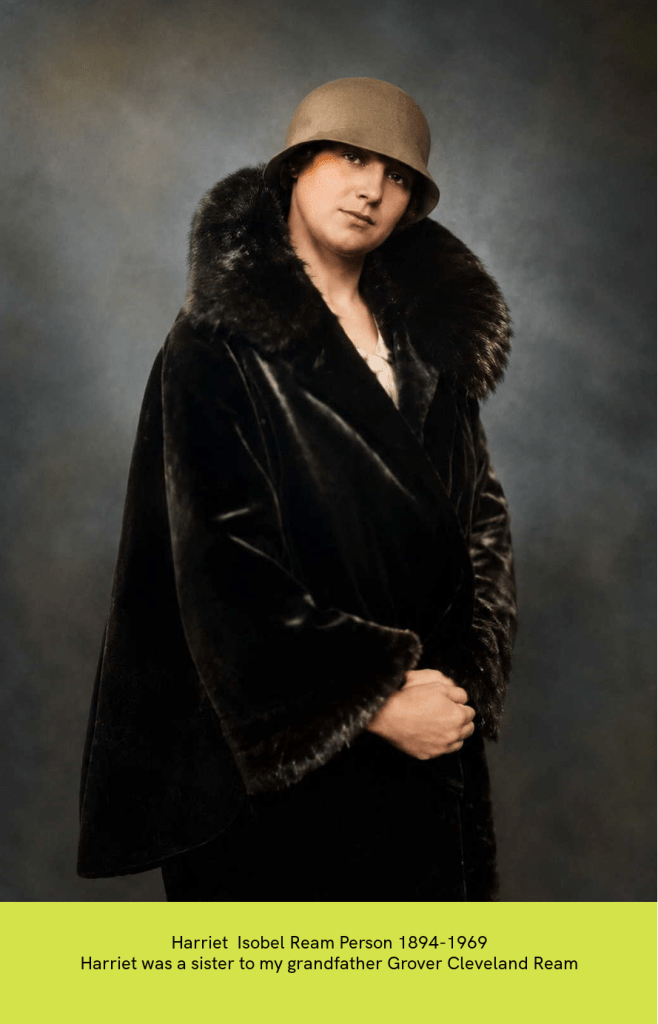
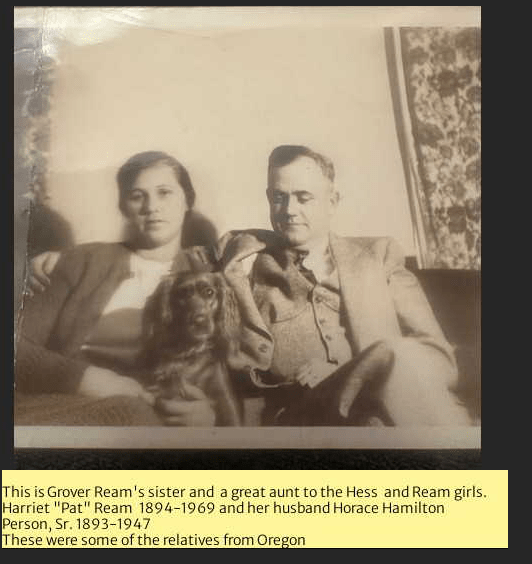
I want to make sure that the family photos of 520 North Main Street, Ann Arbor, Michigan, are preserved. This family home holds an important place in the history of Ann Arbor, as it served not only as the home of my family line but also as a Main Street tourist home. It was also and always a home where love abounded!
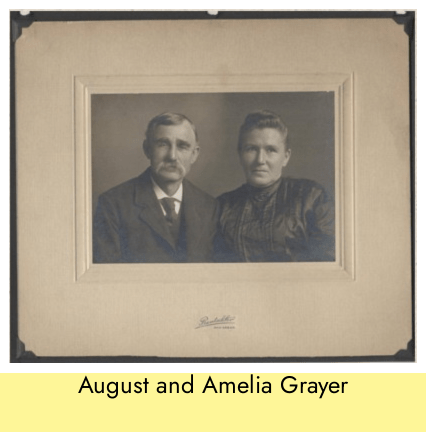
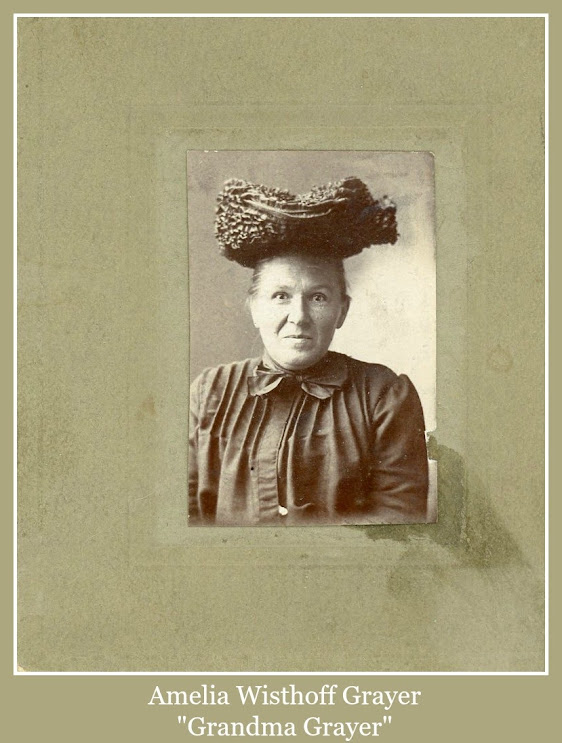
My mother Gretchen Lois Ream with her Grandmother Amelia Grayer standing on the front porch of 520 N. Main Street, Ann Arbor. April 2, 1939. Grandma Grayer went by Amelia just like her daughter. Grandma Grayer’s given name was Emilie Louise Wisthoff Grayer (1861-1965 – immigrated from Germany)My mother Gretchen Ream standing on the front porch steps of 520 N. Main Street, Ann Arbor, MI. Photo date estimated as 1939 or 1940.My mother on the front porch of 520 N. Main Street, Ann Arbor, MI c1940Gretchen Ream standing in front of 520 N. Main Street, Ann Arbor, MI in June of 1943Gretchen Lois Ream standing on the front lawn of 520 N. Main Street, Ann Arbor, MI. c1943.In the left photo, my mother is standing in the back yard of 520 N. Main Street, Ann Arbor, MI. The driveway to 520 N. Main was shared with the Klotz’s home next door to the North. It looks like the photo on the right side is of my mother standing in the front walkway to 520 N. Main Street, Ann Arbor, MI. c1943.
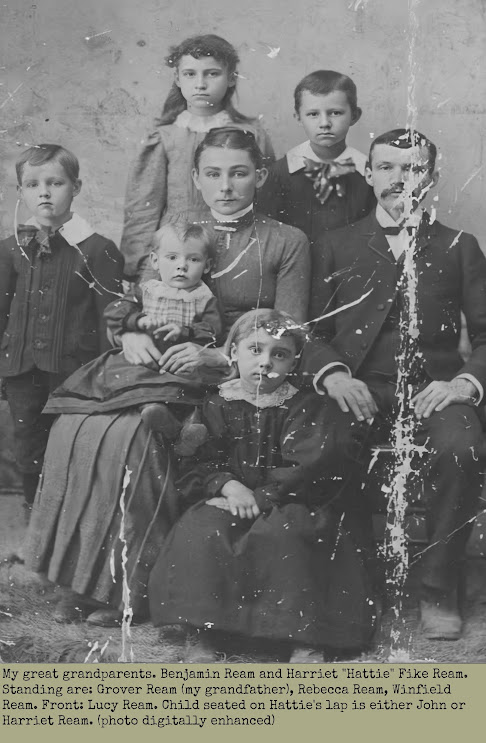
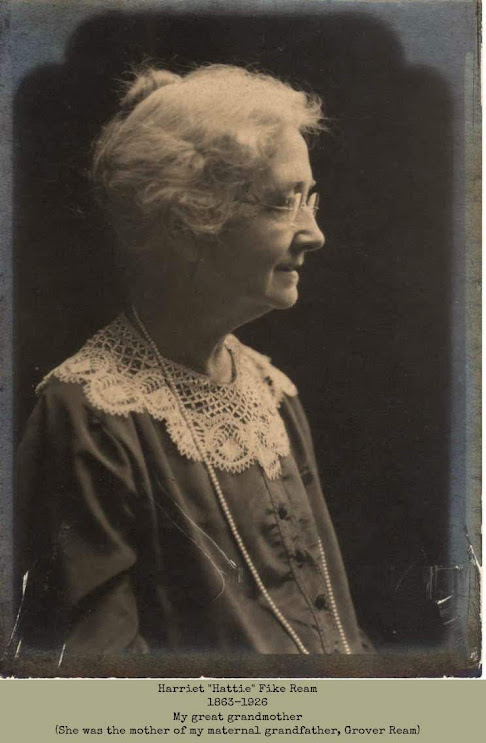
520 N. Main Street, Ann Arbor, was the home of my grandparents, Amelia and Grover Ream and their children Gretchen Ream (Hess) and Robert Emerson Ream. Also living there was my great grandmother Grandma Grayer.
The home was built in the mid 1920’s. As I understand it, my grandparents had lived at this address prior to that time in a smaller house. My grandfather, Grover Ream, was a highly skilled carpenter and a member of the Ann Arbor Carpenters’ Union. He played an integral role in the construction of many large buildings in Ann Arbor, including several fraternity houses on the University of Michigan campus.
Photo of Gretchen Lois Ream as an infant. My mother dated the photo as 4 Feb 1926 on the property for 520 N. Main Street, Ann Arbor, MIMy grandmother Amelia Ream with her children on the front porch steps at 520 N. Main Street, Ann Arbor, MI. c1930.Robert Emerson Ream standing on the front steps of 520 N. Main Street, Ann Arbor, MI c19333 generations. Amelia Ream, Gretchen Ream and Amelia Grayer. 1939. On the porch of 520 N. Main Street, Ann Arbor, MI4 generations of my family! Standing in front of the large garage in back of the house at 520 N. Main Street, Ann Arbor. 1954.
It is my belief that my grandfather planned and built this larger home on their property so that my grandmother would have a means of livelihood, knowing that his own health was fragile. He died of cancer in 1930, only a few years after the new home was completed.
If “location, location, location” defines a great home, this one was ideal. It is situated just a few blocks from downtown Ann Arbor’s shopping district, the Farmers Market, and the University of Michigan’s main campus.
The house is described as a three-story home with six bedrooms and one-and-a-half baths.
As I understand it, a tourist home was different from a boarding house. It was more akin to a modern-day Airbnb, offering short-term stays. The primary clientele were traveling salesmen (yes—men, as it would have been unheard of to host female guests) and visitors to the University of Michigan.
520 N. Main Street, Ann Arbor, MIA photo of 520 N. Main Street looking across the street.
The home itself was quite large. Bedrooms on the second floor were rented out, likely for a daily fee and intended only for short-term guests. After my grandfather died, my great-grandmother and grandmother slept on the main floor, while my mother and uncle had their bedrooms on the third floor. (This is to the best of my memory and may be subject to dispute. My grandmother died just one day after my eleventh birthday.)
The house had a large, detached two-car garage with an attic space above it. The driveway was shared with the house next door on the north side, owned by our beloved friends, Madalyn and Edward Klotz.
Things I Remember About the House
The Garage My grandmother did not own or drive a car, yet there was a very cool, old-fashioned automobile stored in her garage for someone else. Think old gangster cars—Bonnie and Clyde style. On rare occasions, we were allowed to climb onto the running boards and pretend we were headed off on great adventures.
The Living Room (19′ x 13′) The living room sat just beyond the front hallway on the right as you entered the house. It had windows on two walls. Two large, side-by-side west-facing windows looked out toward the front porch, and two additional windows—one on each side of the fireplace—faced south.
The tiled fireplace was a focal point, though I don’t recall it ever being used. In one corner stood an old-fashioned television on a stand—the kind you turned on and waited for while it warmed up. It was black and white, but my grandmother placed colored film at the top and bottom of the screen so the sky could be blue and the grass green.
We often watched The Lawrence Welk Show together and danced while the Lennon Sisters performed. My grandmother had a soft, tall-backed armchair where she would hold us on her lap. There was also a sofa for guests and a freestanding corner shelf filled with collectible figurines—ones we were actually allowed to play with.
The Kitchen (13′ x 8′) This is where the real magic happened. Grandma was a wonderful cook, and when we visited, she took our orders like a short-order chef. I loved her French fries, cooked in a deep fryer built right into the stove top. My sisters loved the made spatzen with a press.
The back door was off the kitchen and opened onto a generously sized porch with steps leading down to the driveway. We were allowed to sit on those steps and eat watermelon slices—and since all watermelons had seeds back then, we were also allowed to spit them into the dirt driveway.
A pantry in the kitchen held the joke jar—a Mason jar filled with riddles Grandma cut out of the newspaper. Two side-by-side windows faced north toward the Klotz’s house.
The Hallway The front hallway featured a wide wooden staircase with about twelve steps leading to a landing, where the stairs then turned and continued upward for another half flight. Halfway up was a lookout window.
The only telephone in the house sat on a small table in the hallway, paired with a simple straight-back chair. The front door was distinctive, with three small windowpanes arranged diagonally. A radiator stood near the door, as if to greet you with warmth as soon as you entered.
The Dining Room (14′ x 12′) An arched opening connected the living room and dining room. Two standard-sized doors led from the dining room—one to Grandma’s bedroom and one to the kitchen. Three side-by-side south-facing windows filled the room with light.
A highboy held a candy dish on top. Grandma especially liked Neapolitan coconut candies from the dime store candy counter. Another tall cabinet displayed interesting curios, and a wall shelf held a collection of miniature pitchers.
We could all fit around the dining room table, though at one point I remember a daybed being squeezed into the space as well.
Grandma’s Bedroom (12′ x 10′) Grandma’s bedroom held what I believe was a double bed and a nightstand. One window faced the garage, with a radiator beneath it, and another window was positioned above the bed.
When we spent the night, we were allowed to sleep beside her. Before falling asleep, we always listened as she recited the 23rd Psalm.
The Main-Floor Bathroom This was a very small half bath—just a toilet and a pedestal sink. The floor was a distinctive black-and-white tile. A window sat above another radiator.
Despite having only a sink, this bathroom was used for bathing. Grandma went weekly to a hairdresser for shampooing and styling, and at home I learned how to bathe using a sink full of sudsy water and a washcloth. I think we called them “stand-up showers.”
The Basement Because my grandmother lost much of her mobility due to a very aggressive form of arthritis, we rarely went up or down the stairs. When she did climb stairs, she had to use a crawling motion, placing her hands on the steps above her.
She must have lived with constant pain, yet she was always sweet and full of laughter.
The basement contained a large mangler and a coal storage area.
The Front Porch These were the best seats in Ann Arbor for parades traveling south down North Main Street toward downtown. The porch was roomy and lined with wooden rocking chairs.
It was also the perfect place for Grandma to serve one of our favorite treats—purple cows: floats made with purple soda and vanilla ice cream. I was warned more than once that if I rocked too wildly, I would tip over.
I did.
Parades on North Main Street, Ann Arbor 1967parade on North Main Street, Ann Arbor, MI 1968
The Second and Third Floors The second floor held three bedrooms and one full bath, with bedrooms measuring approximately 14′ x 11′. The third floor had two bedrooms, each about 14′ x 13′. The second floor was for the tourist rooms and the third floor was the location for my mother’s and uncle’s bedrooms.
I promised my father that I would continue to tell the stories of our family. One way I have tried to keep that promise is by preserving and sharing our family stories and legacy. I also simply enjoy looking back and remembering. In this blog, I reflect on some of the beloved pets who were part of our lives.
By exploring the animals our family has cared for, we are able to share happy and tender memories, funny anecdotes, and heartwarming moments. Each of these pets had a unique personality, and each became a meaningful part of our family’s story.
Whimpy was our first cat. This photo must have been taken at the back door of 1517 Harbrooke. Whimpy was free to roam outside. Whimpy in an antique buggy at 1517 Harbrooke, Ann Arbor, MIA beautiful photo of Mary Ann with Whimpy on the sofa at 2629 Danbury Lane.Mutti was our second family cat. Her name was fitting because she was a mother to a quite a few kittens. Her kittens were either all black or all white.Mutti with some of her kittens.
The Groshans got a black kitty and named her Valkyrie. This photo looks was taken at our apartment on Bemidji in Ann Arbor.
Check out the fun kitty toy and our old TV set! I’m not even sure what type of beverage Jack in enjoying?!
Amy pets Valkyrie – photo approx. Nov 1981
Amy, Valkyrie and a bottle on the sofa. The stuffed animal dog was a gift from Grandma and Grandpa. Later, this stuffed animal would no longer stand up after he was used as a sort of riding toy. LOL
Ruh-Roh! Valkyrie is on the desk. Photo taken at 609 S. 1st Street.