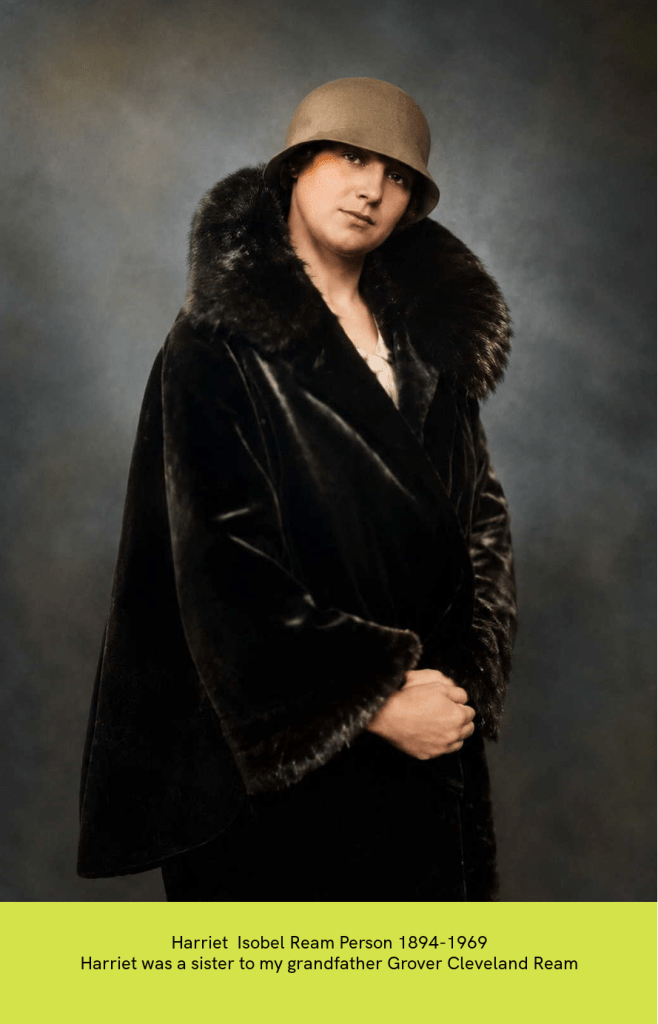
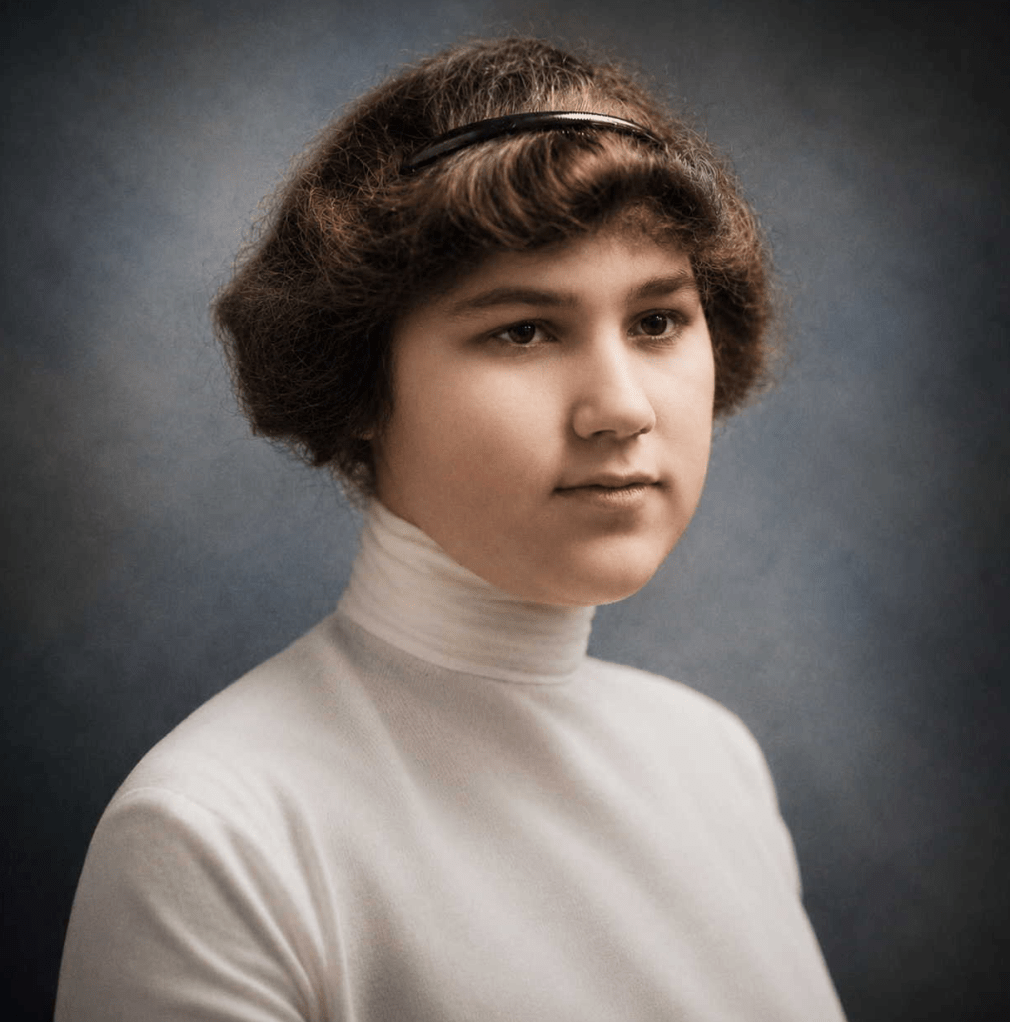
This photo is from a contributor on Ancestry. It appears to be digitally enhanced.
I’m sorry to say that I don’t remember this great-aunt, although I wish I did. She was a sister of my maternal grandfather, Grover Cleveland Ream. Sadly, my grandfather died when my mother was only five years old, so I never had the opportunity to know him either.
I do know that, as a child, I met some of my Ream relatives, even though those connections and memories have faded over the years. Thanks to my Ancestry account and the generous contributions of other family researchers, I have been able to piece together more of the story of my Ream relatives and learn about the lives of those who came before me.
It feels like an honor to be able to write about the life of this great-aunt now—to give her a place in my family story and, in some small way, “meet her.”
When Harriet Isobel “Pat” Ream was born on January 10, 1894, in Ann Arbor, Michigan, her father, Benjamin, was 38, and her mother, Harriett, was 30. They had two children during their marriage. She died on December 2, 1969, in Clackamas, Oregon, at the age of 75.
In the 1900 US census, Harriet lived on Wells Street in Ann Arbor, MI with her family. Her father, Benjamin’s occupation is listed as a carpenter. Her mother Harriet’s occupation is listed as a laundry business.
She married Horace Hamilton Person on December 31, 1912, in her hometown. Harriet was only 18 years old when she wed. Horace was 19 years old.
At some point, Harriet and Horace must have moved to Wind River, Wyoming. Sadly, tragedy struck in 1915 when their little son, Robert Horace Person, died at just one year and six months old from an accidental drowning.
I found a copy of his death certificate, which I have saved on Ancestry. Harriet and Horace brought their son’s remains back to Ann Arbor, where Robert was laid to rest at Forest Hill Cemetery.
Their second son, Horace Hamilton Person, Jr., was born in 1916 in Ann Arbor, Mi.
By 1917, Horace Person, Sr. and Harriet are listed in an Ann Arbor Directory. Horace is a Civil Engineer and they had a home on Wells Street.
In the 1920 census, Horace Person Sr. and Harriet were living with their son Horace Person Jr. in Pennsylvania.
They moved back to Ann Arbor, MI sometime before 1924 when it shows their residence in an Ann Arbor City Directory as 1515 Wells, Ann Arbor. This would be in the Burns Park neighborhood.
By 1926, they had moved again. This time to Santa Clara, CA. But by 1940,the census showed that they had moved to Portland, OR where other members of the Ream family were also settled.
In the 1940 census, Horace is working as a life insurance agent in Portland, OR.
In 1947, when Harriet was 53 years old, her husband Horace Person, Sr. died.
In the 1950 census, it appears that Harriet has become the owner of a Tea Room and is operating her business in Oregon City, OR.
Harriet was 67 years old, when her son Horace Person, Jr. died when he was only 45 years old. He had been a WWII veteran and an electrical engineer at Aerojet. How very sad for Harriet that during her lifetime, she had lost her husband and both of her sons.
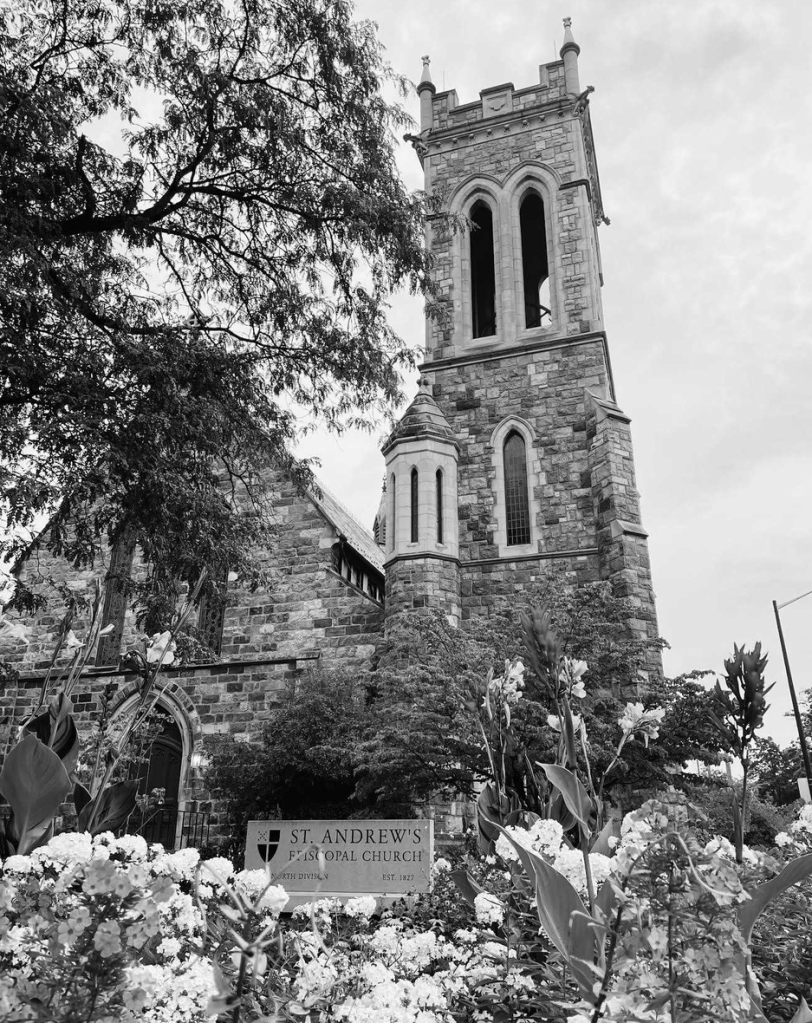
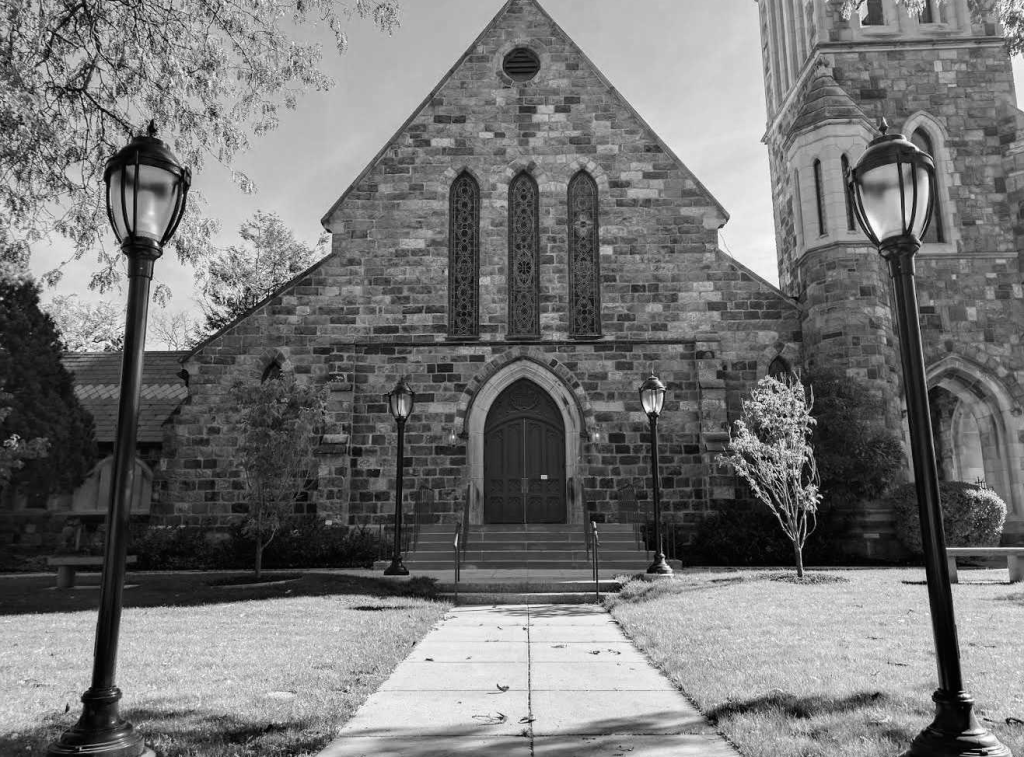
In researching Harriet, I found that one of the contributors on Ancestry added several photos of St. Andrew’s Episcopal Church in Ann Arbor. I take this to mean that Harriet and Horace must have been active members of the church. This was very interesting to me because I live very close to this beautiful church and have family members. I would love to find some old church membership records!
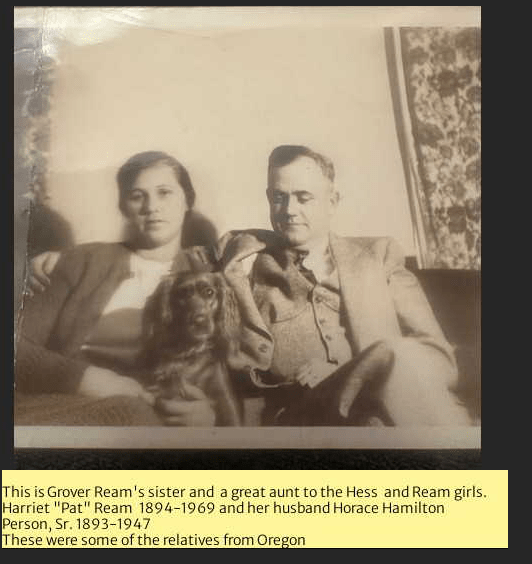
I am including here some of the photos that have been uploaded to the Ancestry website on Harriet’s profile page.
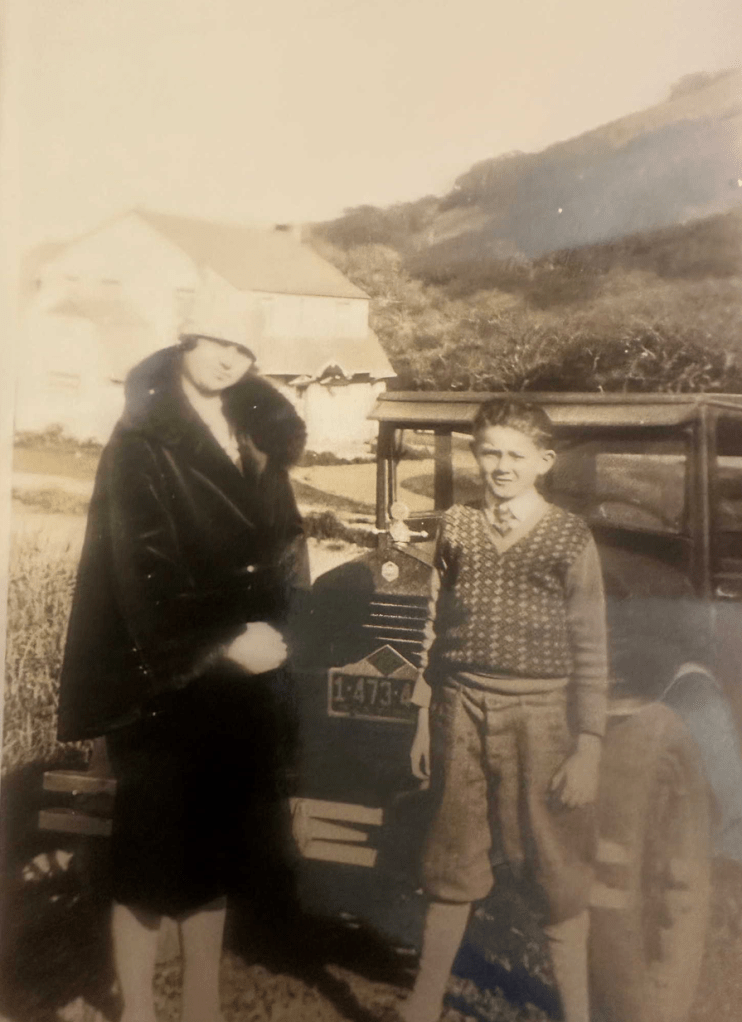
Harriet Ream Person – it appears that this photo has been digitally enhanced. Harriet “Pat” Ream was my great aunt – the sister of my maternal grandfather Grover Cleveland ReamMy great aunt Harriet Person Ream with my 1st cousin 1x removed – her son Horace H Person, Jr.I am estimating a date of approx. 1929
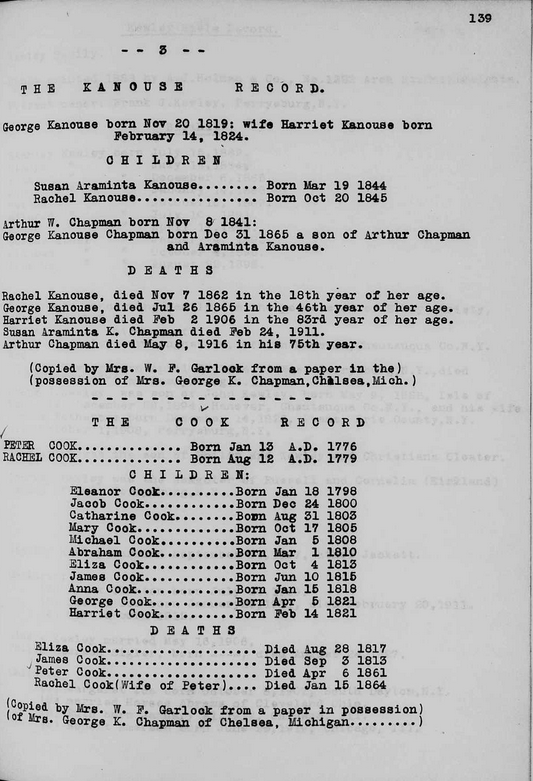
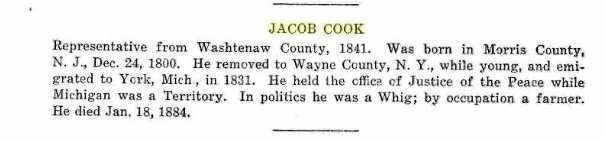
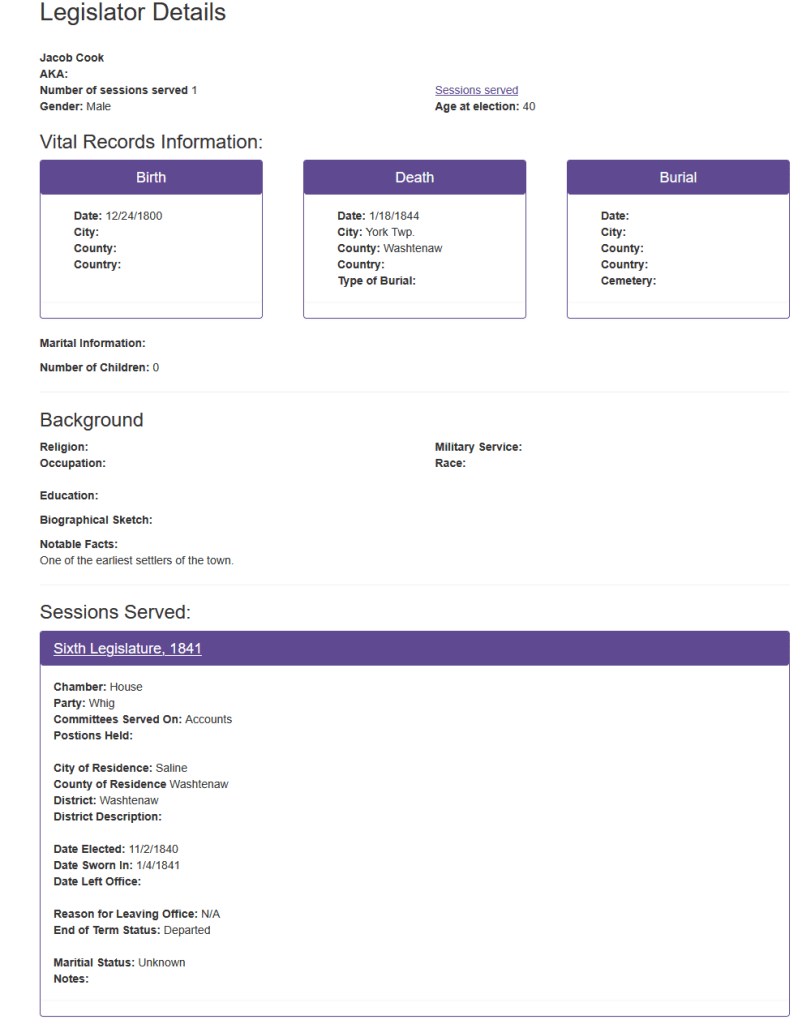
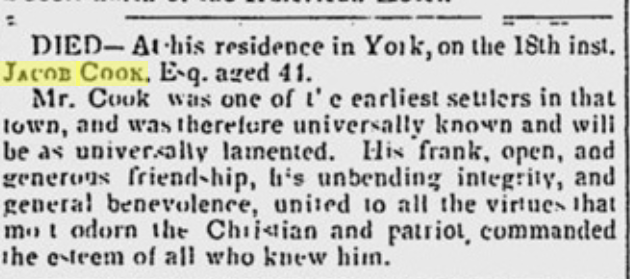
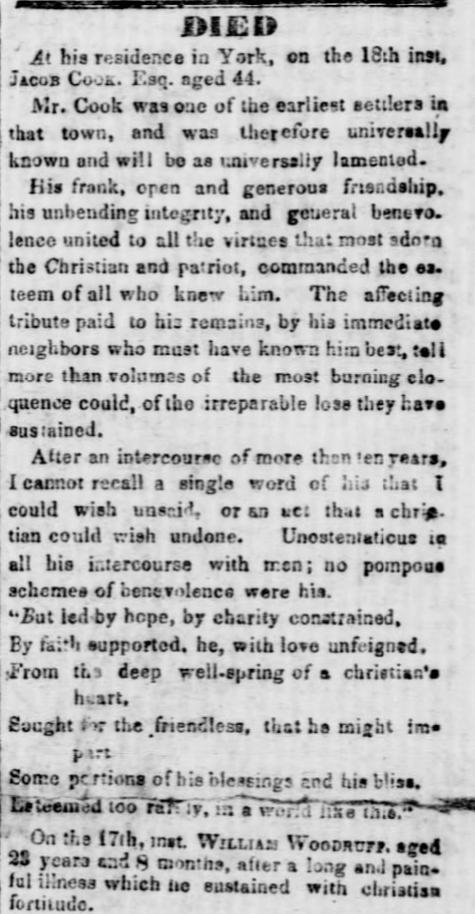
When Jacob Cook was born on December 24, 1800, in Montville, New Jersey, his father, Peter, was 24 and his mother, Rachael, was 21. He had four sons and four daughters with Eve Dunn between 1821 and 1840. He died on January 18, 1844, in York, Michigan, at the age of 43, and was buried in Saline, Michigan. ( Family search ID# is M51G-NTD)
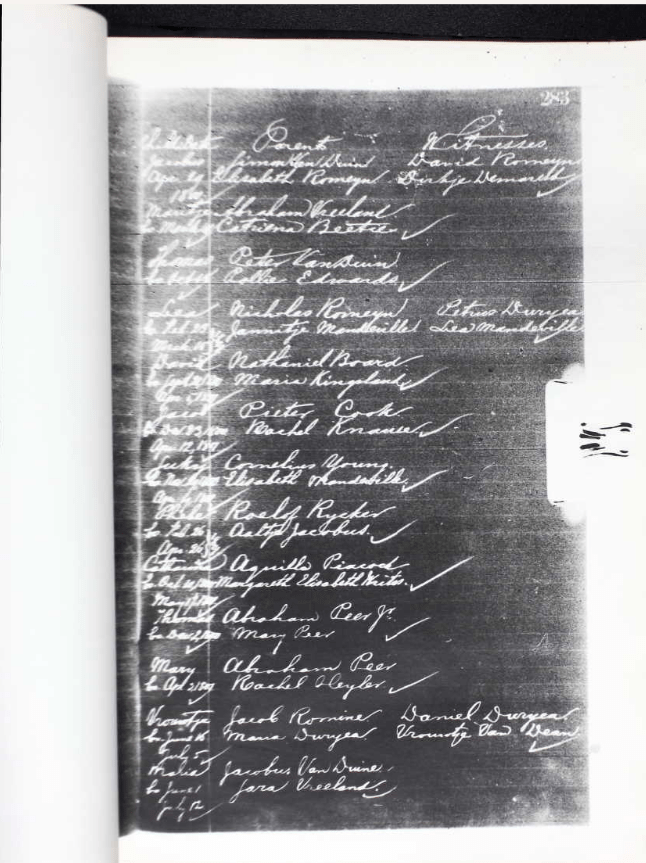
He was baptized on April 12, 1801 in Persepeney (Montville), Morris, New Jersey, USA
Record from the Dutch Reformed Church Records
Jacob was about 3 years old when his parents migrated to upper-state New York as Presbyterian missionaries from the Newark, New Jersey church.
1810 Jacob and his family are found in the 1810 Census in the Phelps Township, Ontario Co., New York. He was 10 years old.
1820 During the 1820 US Census he was 19 years old and lived in Victor, Ontario, New York, USA.
His marriage date to Eve Dunn (1800-1872) is unknown, but believed to be before the birth of their first child, Eliza Cook (1821-1842), on 26 August 1821. Interesting fact: in 1821 his brother George was also born in 1821.
1823 In 1823, his daughter Emily Cook (1823-1844) was born.
1826 In 1826, his daughter Catherine “Caty” Cook (1826-1906) was born.
1828 In 1828, his son Peter (1828-1908) was born in Newark, Wayne, New York, USA.
1830 During the 1830 US Census he was 30 years old and lived in Arcadia, Wayne, New York.
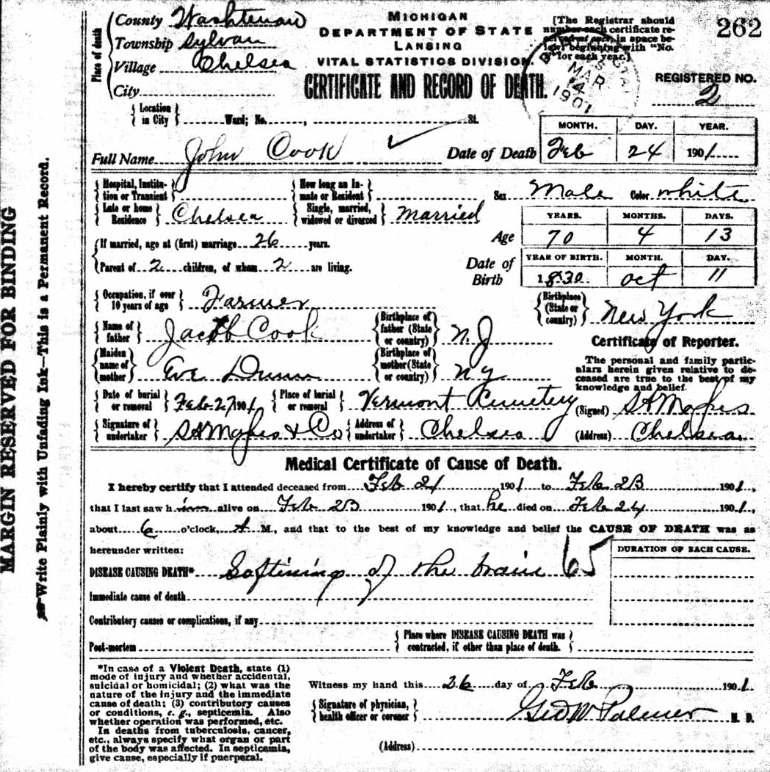
1830 In 1830, his son John (1830-1901) was born. There is a discrepancy in the information in the family record book (Chapter IV, page 1). The family record book states that John was born in Michigan. His death certificate, however, states that he was born in New York.
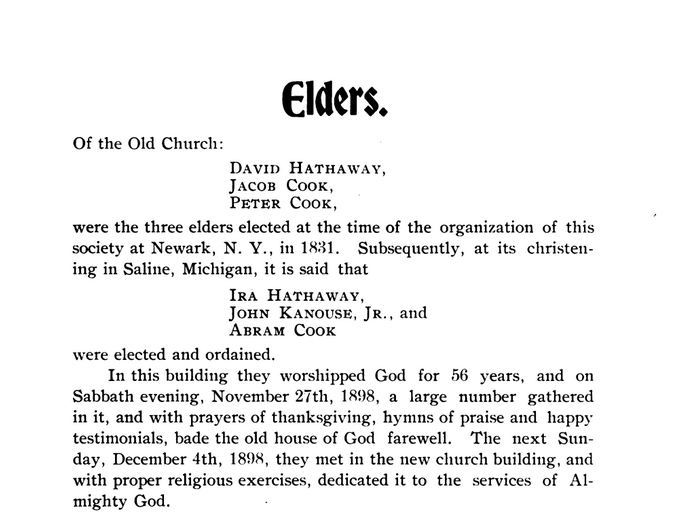
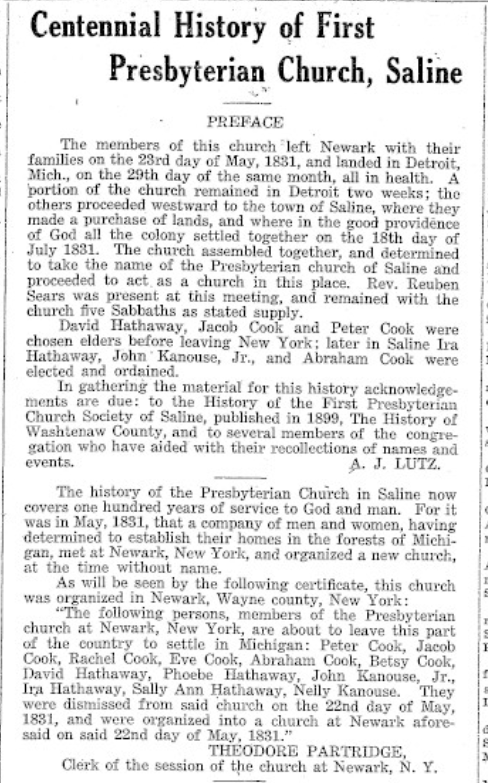
1831 At he age of 30, on 15 May 1831, the family left Newark to move west to Michigan during the opening of pioneer settlement in Washtenaw County. He traveled with his wife, their small children, several of his siblings, their families, and his mother Rachel and father Peter Cook.
1831 The Michigan patent date on Jacob’s 160 acres in Washtenaw County, MI was on June 20, 1831.
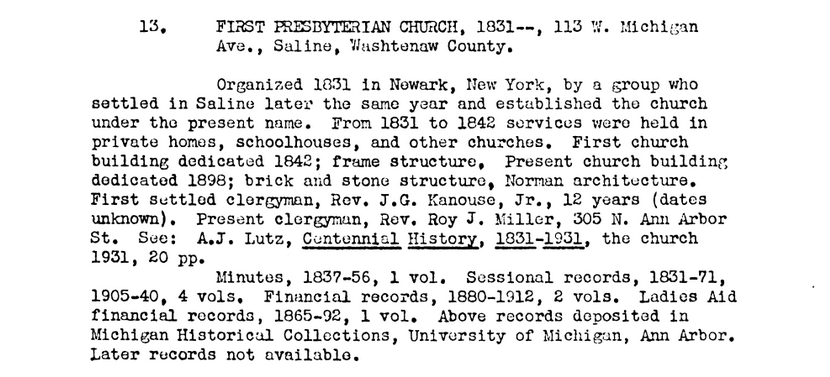
Inventory of the church archives of Michigan. Presbyterian church in U.S.A., Presbytery of Detroit
1833 In 1833, his son Albert Cook (1833- ) was born.
1835 In 1835, his son Jacob Cook (1835-1853) was born.
1836 In 1826, his daughter Margaret Cook (1836-1870) was born.
1838 – 1839 Jacob is the York Township’s Supervisor
1840 In 1840, his daughter Rachel Cook (1840- ) was born. Jacob was now 40 years old.
1841 In 1841, Jacob served in the House of Representatives for Michigan’s 6th legislature
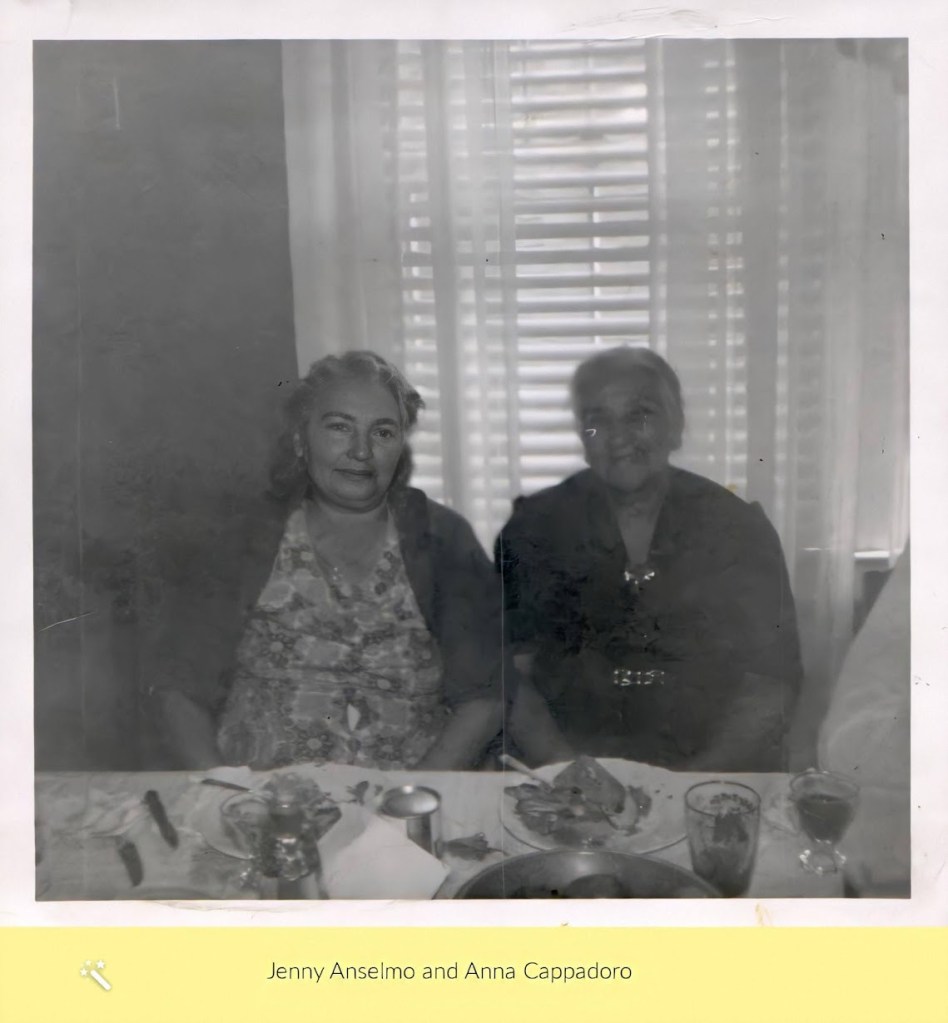
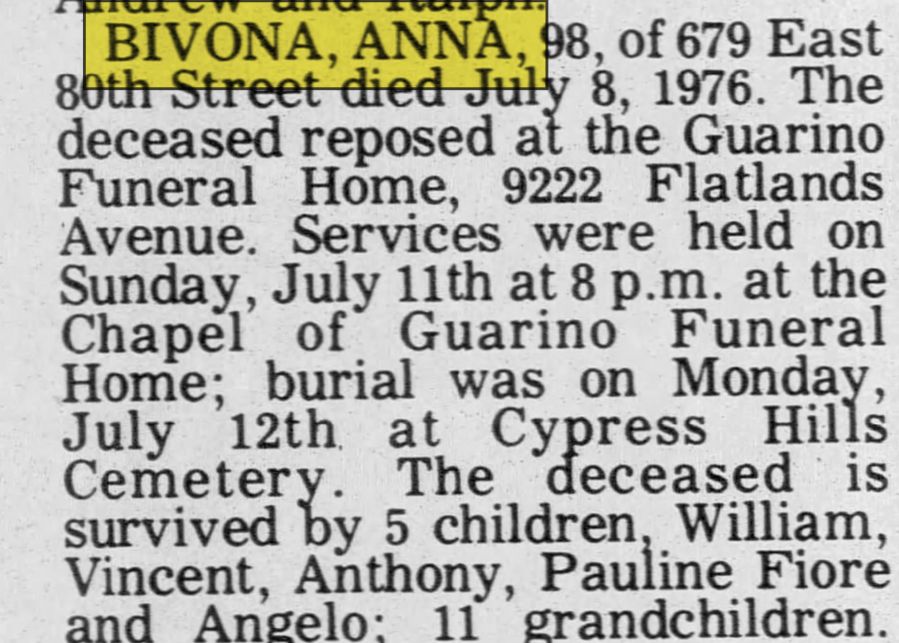
When Anna Cappadoro was born on November 30, 1877, in Sicilia, Italy, her father, Guglielmo, was 45, and her mother, Maria, was 44. She had seven sons and one daughter with Vincenzo (Vincent) Vincente Bivona between 1898 and 1918. She died on 10 July 1976 in Queens, New York, at the age of 98.
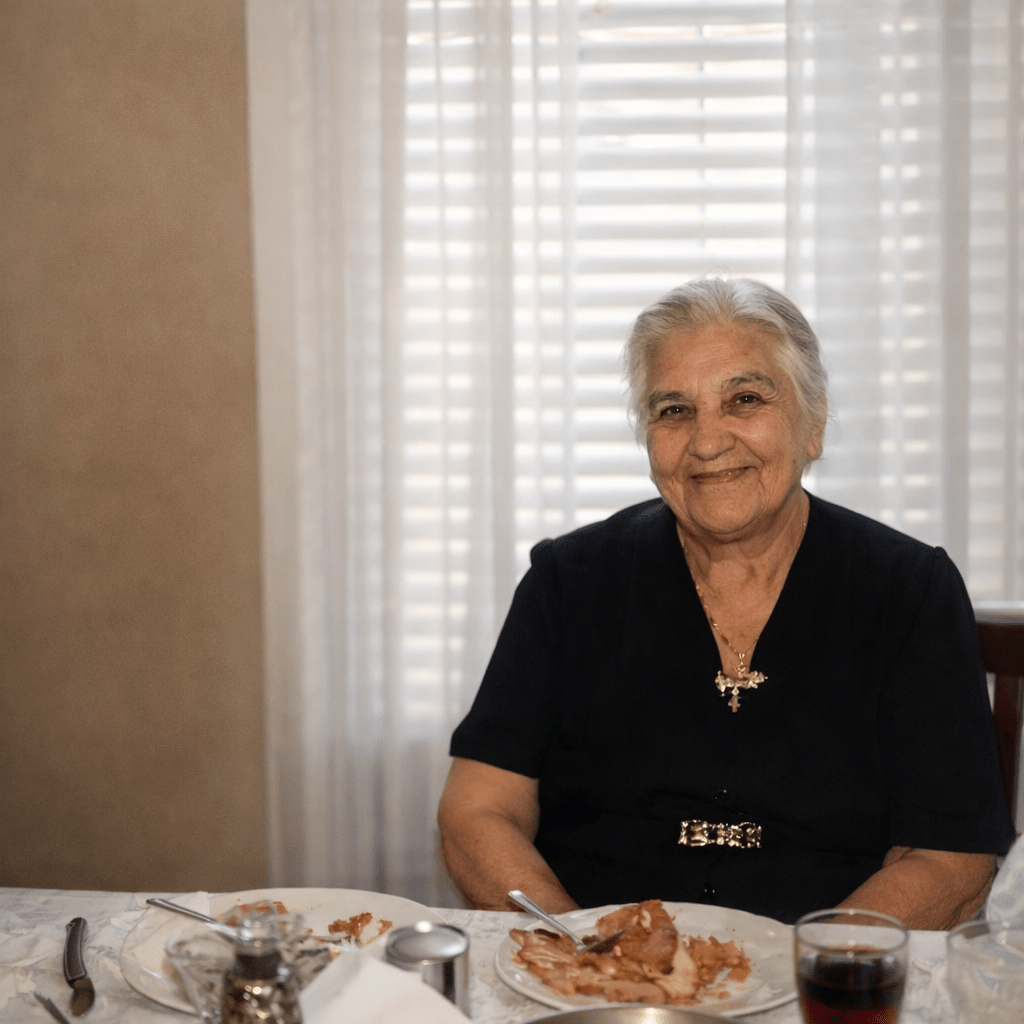
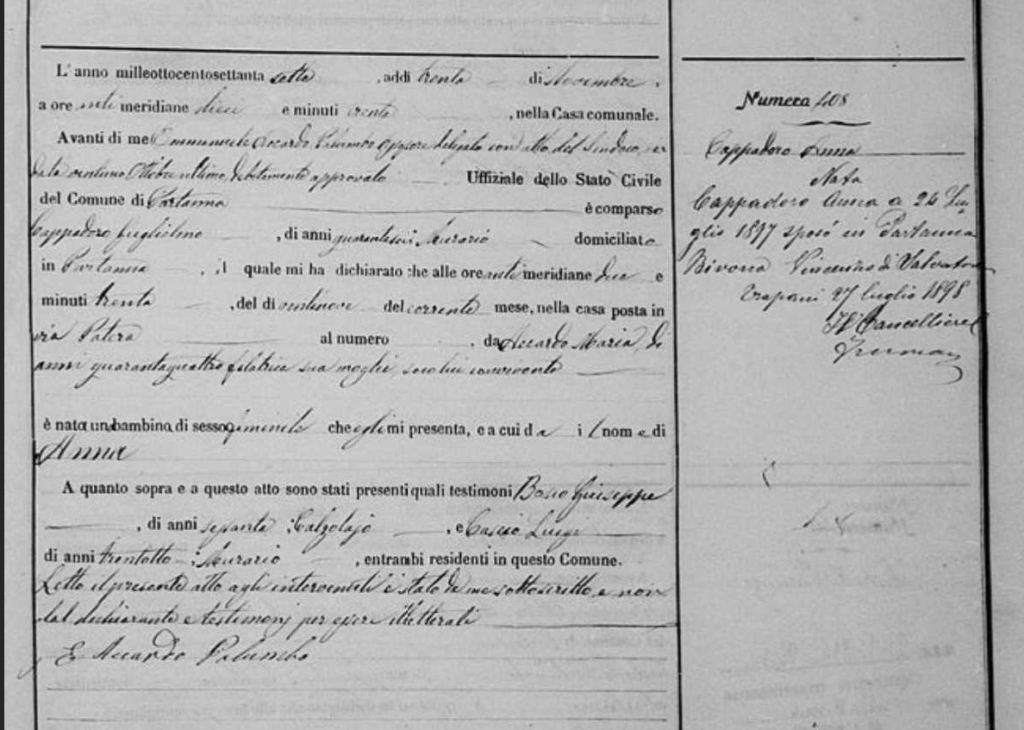
Anna is seated on the right side of this photo – date unknown. The magic wand on the caption means that I have made a digital enhancement to this photo.I asked AI to take the above photo of Anna and restore it completely. I will wait for members of her family to let me know how well this photo edit worked and how realistic it is.This edit certainly helps to see the details of her lovely dress and her gold necklace. The smile is gorgeous!The birth certificate for Anna. 26 Jul 1877. She was born in Custonaci which is a town and municipality located in the Trapani province of northwestern Sicily, Italy
I asked for AI for a translation of the birth certificate shown above:
Year 1877, on the 26th day of July, at the hour one after noon and minutes twenty, in the Town Hall. Before me, Emanuele Occorso, Mayor and acting Civil Registrar of the Municipality of Custonaci, appeared Cappadoro Luigi, 40 years old, stonecutter, domiciled in Custonaci, who declared to me that at the hour one after noon and minutes twenty, of the current day,in the house located on Via Salvo, to Cappadoro Maria, his wife, housewife, living with him, a female child was born, whom he presents to me and to whom he gives the name: Anna
The above declaration and presentation were made in the presence of the witnesses Bascio Giuseppe, aged 40, stonecutter, and Casale Luigi, aged 30, bricklayer, both residents of this municipality.
After this act was read to the declarant and the witnesses, they signed it with me.
Signed: Emanuele Occorso, Civil Registrar
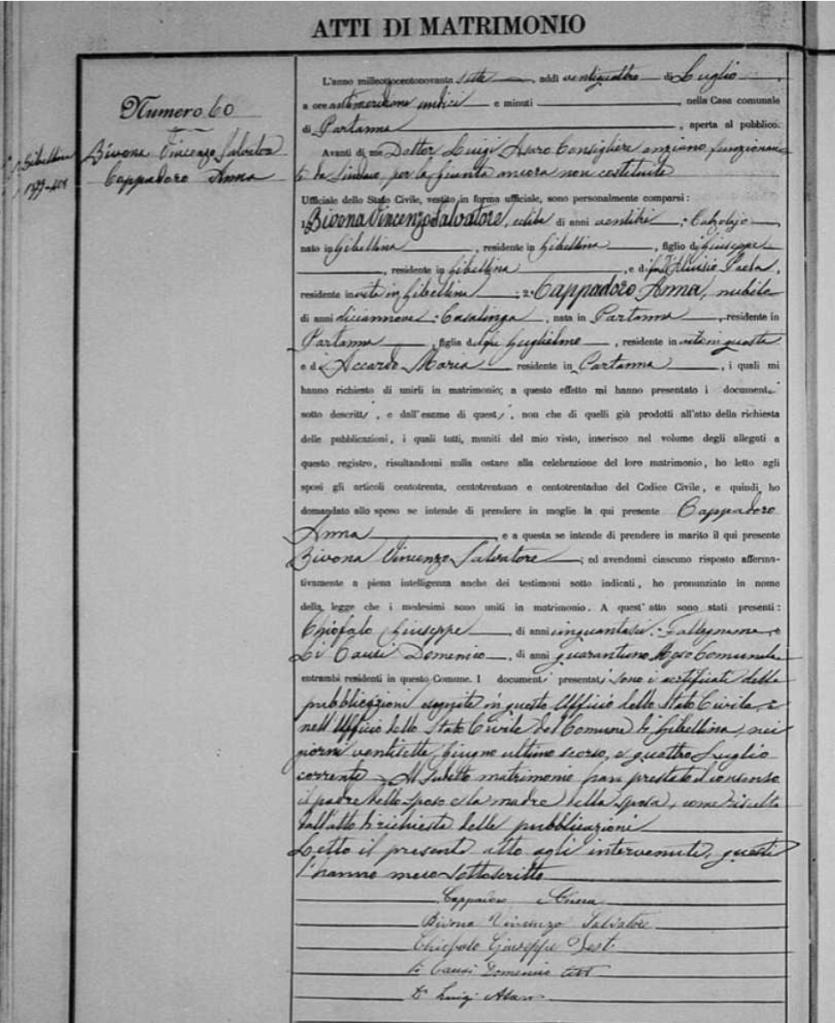
Wedding certificate for Anna. 27 Jul 1987 in Custonaci. Anna was 19 when she married. Her husband was 23 years old.
I used AI to translate this wedding document – see below:
Year 1897, on the 27th day of July, at the hour ten in the morning, in the Town Hall of Custonaci, open to the public. Before me, Dott. Luigi Quaranta, Mayor and acting Civil Registrar, vested in official form, there personally appeared:
Bivona Vincenzo Salvatore, unmarried, stonecutter, born in Gibellina, resident in Gibellina, son of Giuseppe, resident in Gibellina,and of Giuseppa Foderà, resident in Gibellina; and Cappadoro Anna, unmarried, housewife, born in Custonaci,resident in Custonaci, daughter of the late Luigi, resident in Custonaci, and of Accardi Maria, resident in Custonaci; who requested to be united in marriage.
For this purpose they presented the required documents, and from the examination of these, as well as of those already produced at the time of the marriage banns, all bearing my approval and inserted in the volume of attachments to this register, and finding no impediment to the celebration of their marriage, I read to the spouses the articles of the Civil Code concerning the rights and duties of husband and wife.
I then asked the groom whether he intended to take as wife the present Cappadoro Anna, and the bride whether she intended to take as husband the present Bivona Vincenzo Salvatore; each having answered affirmatively and mutually, in the presence of the witnesses named below, I declared, in the name of the law, that they were united in marriage.
The witnesses present were: Coppola Giuseppe, 40 years old, laborer, and Di Carlo Domenico, 44 years old, farm worker,both residents of this municipality.
The documents presented were: certificates of birth, marriage banns published in this Civil Registry Office and in the Civil Registry Office of the Municipality of Gibellina, and certificates showing that no impediment existed to the marriage. After this act was read aloud to those present, it was signed as follows.
Signatures: Cappadoro Anna Bivona Vincenzo Salvatore Coppola Giuseppe Di Carlo Domenico Luigi Quaranta, Civil Registrar
According to my research, Anna’s two oldest children were born in Italy. They were Giuseppe “Joseph” Bivona 1898-1961 and Gugllielmo “William” Bivona 1900-1981.
Her next 5 children were born in Argentina. They were; Juan “John” Bivona 1902-1975, Francesco “Frank” Bivona 1904-1969 (the direct ancestor to my brother-in-law’s family), Vincent E Bivona Jr 1908-2001, Antonio (Anthony Tony) Bivona 1911-1998,
Her youngest was born in New York. Angelo Bivona 1918-1993.
It is interesting to note that both Anna’s father and her husband were stone cutters.
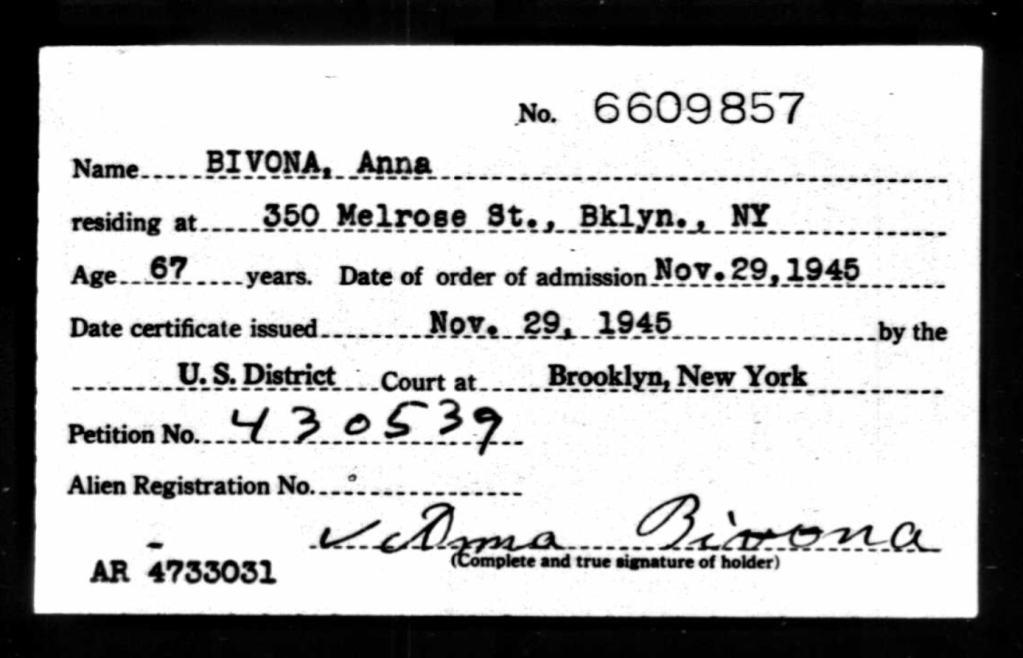
Anna became a naturalized citizen of the USA in 1945.
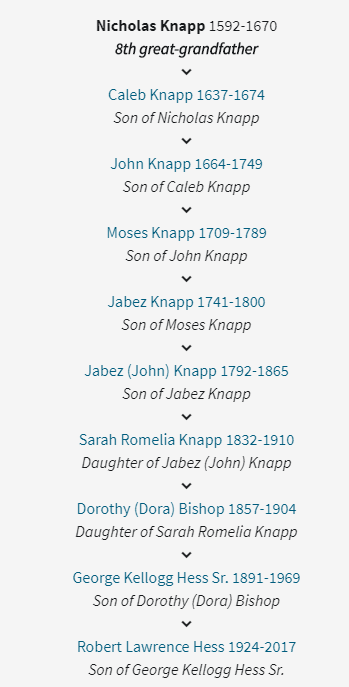
Nicholas Knapp was my 8th great grandfather. Here is how my family relates:
When Nicholas Knapp was born on May 16, 1592, in Wells-Next-To-The-Sea, Norfolk, England, his father, John, was 42 and his mother, Martha Blois (or Blosse), was 27. He married Eleanor (or Elinor) Disbrow Lockwood and they had 11 children together. He then married Unity Brown on January 9, 1659, in Stamford, Connecticut. He died on April 16, 1670, in Stamford, Connecticut, having lived a long life of 77 years, and was buried there.
In my other ancestry posts, I’ve shared that I grew up believing my heritage was predominantly German. As my genealogy research has deepened, I’ve discovered that this assumption isn’t quite accurate. In fact, a significant part of my ancestry is English, a realization that has both surprised me and opened up new avenues of learning. The more I explore my family history, the more I see how much there still is to understand.
I had to look up information about Wells-next-the-Sea where Nicholas was born. At the time of his birth, it was a small port town on the North Norfolk coast of England.
Fishing was crucial in 1592, with Wells-next-the-Sea known for crab, lobster, and herring. The port facilitated regional trade, exchanging fish and agricultural products for textiles and manufactured goods.
The town was a close-knit community with most residents involved in fishing or farming. Houses were typically built from local materials like flint and brick. Religion played a significant role, with the Anglican Church at the heart of social life.
On 6 April 1630, Nicholas (my 8th great grandfather) and wife Eleanor (my 8th great grandmother) left for America and traveled to Salem, MA.
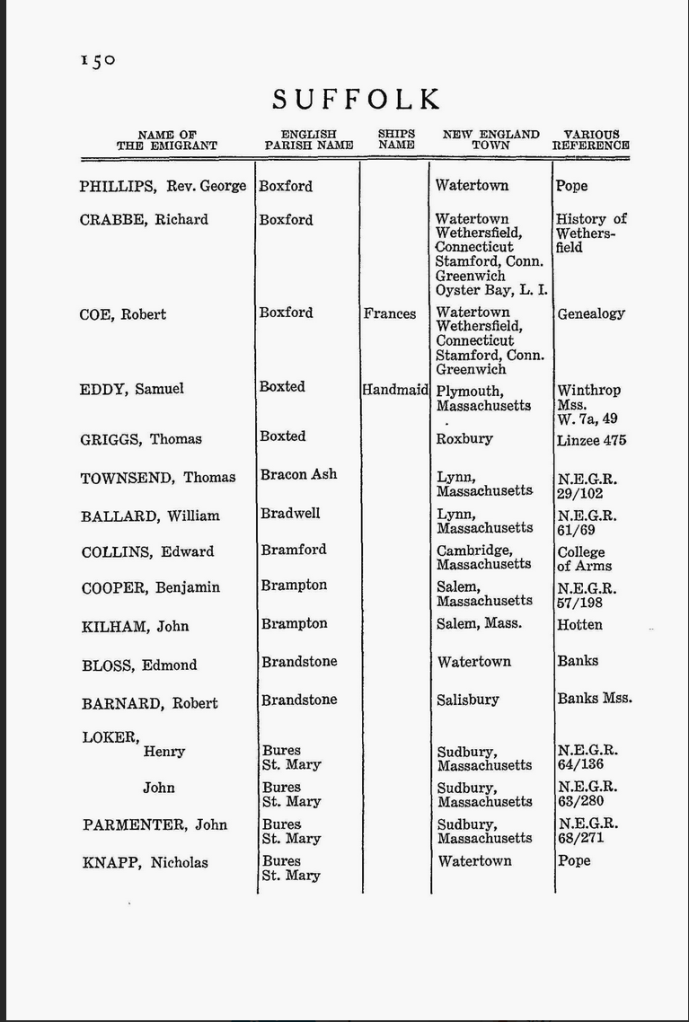
Topographical dictionary of 2885 English Emigrants to New England 1620 to 1650
There, they were a part of the Massachusetts Bay Colony. He was one of the very early settlers of Watertown, MA. and Stamford, CT. His life in the colonies was one of living and working under the strict Puritan governance associated with John Winthrop and Richard Saltonstall.
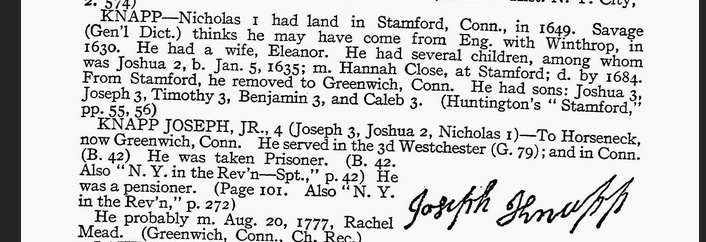
Refugees of 1776 from Long Island to Connecticut
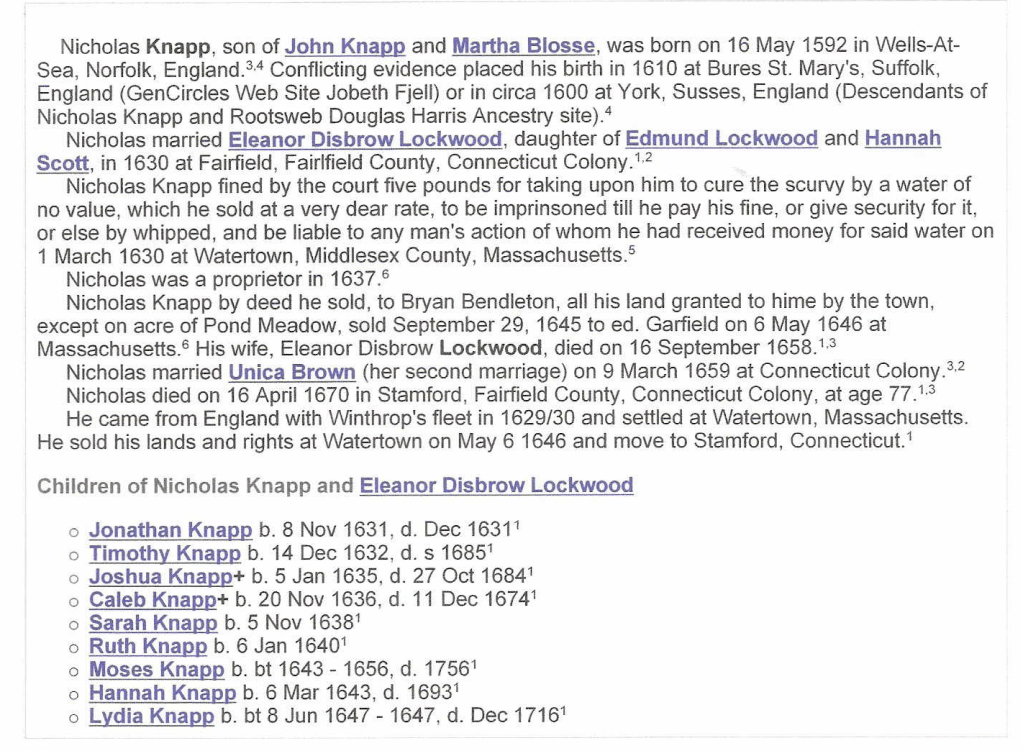
Nicholas appears multiple times in Massachusetts Bay court records. In one record, Nicholas was fined for pretending or claiming to cure scurvy by using a local water sourcethat the court judged to have no medicinal worth. Oops!
His other legal woes included land disputes, fines, and behavioral or regulatory infractions. Specifically he engaged in, an unlicensed medical practice, misuse or promotion of land or water resources and making claims that could cause disorder or deception. As shocking as this may seem, it did not necessarily mean that he was a con man because early settlers experimented with remedies – I would love to see a movie about him!
He had enough of a standing not to be jailed but was fined.
Nicholas passed away on April 16, 1670, in Stamford, Connecticut.
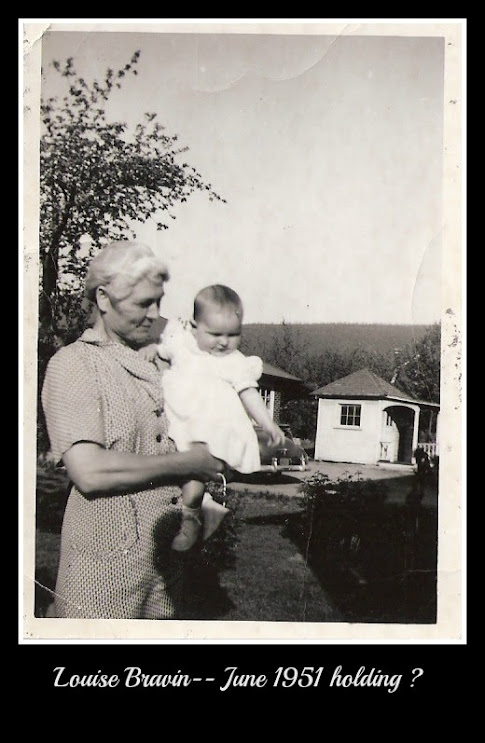
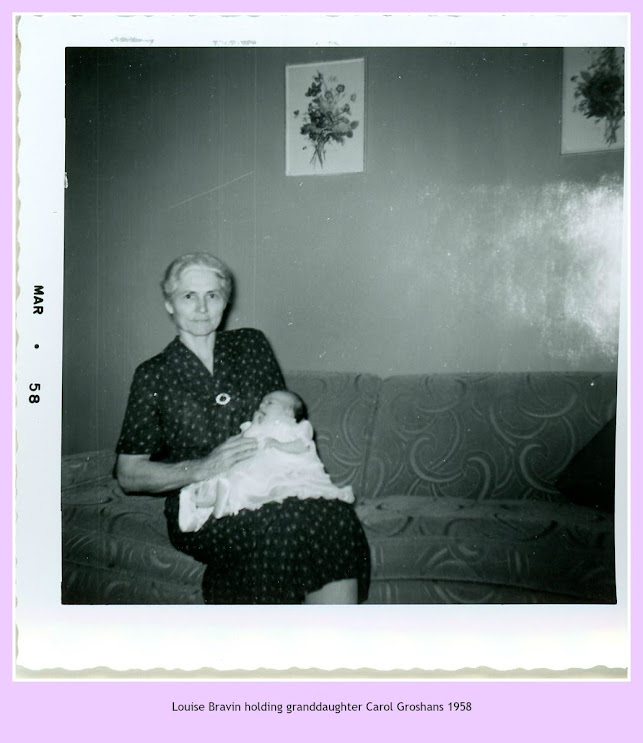
When Lousa “Louise” Melosso was born on June 13, 1899, in Frisanco, Pordenone, Italy, her father, Andrea, was 43, and her mother, Maddalena, was 36. She married Anibale (Annibale) Bravin on May 21, 1921 in Italy. They had three children during their marriage. She died on August 17, 1990, in Altoona, Pennsylvania, at the age of 91, and was buried there.
1899 birth
Here is a time line of Lousa’s life:
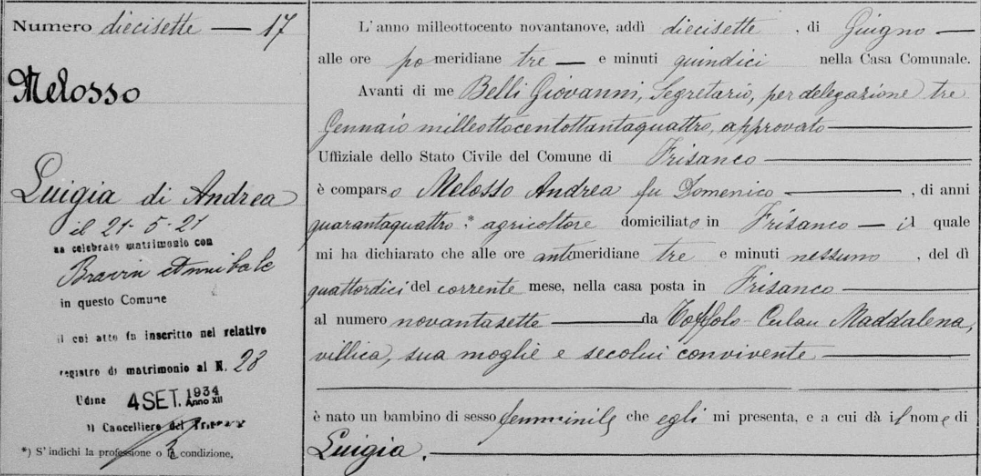
Birth: Lousa was born on June 13, 1899, in Frisanco, Pordenone, Italy, to Maddalena “Lena” Toffolo Culau, age 36, and Andrea (Andrew) Melosso, age 43.
Age 3: Her brother Angelo Selemino died on December 31, 1902, in Frisanco, Pordenone, Italy, when Lousa “Louise” “Luigia” was 3 years old.
Age 5: Her sister Albino was born on July 30, 1904, in Udine, Udine, Italy, when Lousa “Louise” “Luigia” was 5 years old.
Age 21: Lousa married Anibale (Annibale) (Pete) Bravin on May 21, 1921, when she was 21 years old. They were married in Italy.
Age 22: Her son John Andrew or Giovanni Andrea Battista was born on March 1, 1922, in Meduno, Pordenone, Italy.
Age 23: Lousa immigrated to the US on 29 Aug 1922 on the Europa. I believe she was processed at Ellis Island. She had started the voyage in Genoa, Italy on 22 Aug 1922.
This is the arriving passenger list
Age 26: Her son Louis Edward “Lou” was born on August 25, 1925, in Altoona, Pennsylvania.
Age 27: Her daughter Madeline Mary Rose or Maddalena Maria was born on December 20, 1926, in Altoona, Pennsylvania.
Age 34: Her father Andrea (Andrew) passed away on March 31, 1934, in Meduno, Pordenone, Italy, at the age of 78.
Age 62: Her sister Angela died in 1961 when Lousa “Louise” “Luigia” was 62 years old.
Age 70: Her husband Anibale (Annibale) (Pete) passed away on December 14, 1969, in Altoona, Pennsylvania, at the age of 78. They had been married 48 years.
Age 77: Her sister Tecla died on November 1, 1976, in Altoona, Pennsylvania.
This 1930 US census shows that Lousa was born in Italy – her parents were also born in Italy.1930 US census data on Lousa1940 US census data on Lousa
What was Frisanco, Friuli-Venezia Giulia, Italy like when Lousa Louise was born?
The following information was generated by AI.
In 1899, Frisanco was a small village located in the region of Friuli-Venezia Giulia, Italy. Nestled in the picturesque foothills of the Dolomite Mountains, Frisanco was a close-knit community with a rich cultural heritage. Let’s explore what life was like in Frisanco during this time.
Daily Life:In 1899, the people of Frisanco lived a simple yet fulfilling life. The village was primarily agrarian, with most residents engaged in farming and animal husbandry. The fertile soil and favorable climate allowed for the cultivation of crops such as wheat, corn, and barley. Families worked together to tend their fields and care for their livestock, ensuring a sustainable livelihood.
Cultural Traditions:Frisanco was known for its vibrant cultural traditions. The people took great pride in their heritage, preserving and celebrating their unique customs. Festivals and religious processions were an integral part of village life, bringing the community together in joyous celebration. Traditional dances, music, and local cuisine were cherished, reflecting the rich tapestry of Friulian culture.
Community Spirit:The people of Frisanco valued strong community bonds. Neighbors supported one another, sharing resources and lending a helping hand when needed. Social gatherings, such as weddings and baptisms, were cherished occasions for the entire village to come together and celebrate. The local church played a central role in community life, serving as a place of worship, social gathering, and a source of guidance and support.
Historical Context – from an AI biography on My Heritage Lousa Bravin, née Melosso, was born into a world on the brink of great change. The year 1899 saw Italy in a period of political flux and social transformation as it grappled with its relatively recent unification and industrialization. Her father, Andrea Melosso, would have witnessed Italy’s struggles for independence and unity during his lifetime, which were marked by significant events such as the Third Italian War of Independence (1866) and the capture of Rome (1870). Lousa’s early years in Friuli-Venezia Giulia, an area known for its cultural diversity and linguistic minorities, likely exposed her to a melting pot of traditions and languages. When Lousa married Anibale ‘Pete’ Bravin in 1921, Europe had just emerged from the devastation of World War I. Italy, having joined the war on the side of the Allies in 1915, experienced economic hardship and social unrest in the post-war years. This tumultuous environment, coupled with the promise of the American Dream, may have influenced the Bravins’ decision to emigrate to the United States. They became part of the massive wave of European immigrants seeking better opportunities abroad in the 1920s before the U.S. Congress passed immigration quotas with laws like the Emergency Quota Act of 1921 and the Immigration Act of 1924. The Bravin family settled in Altoona, Blair, Pennsylvania, during a time when America was transitioning from the Roaring Twenties to the Great Depression and then into the recovery efforts of the New Deal era. Altoona, with its thriving railroad industry, offered employment opportunities that attracted many immigrants. By the 1930s and 1940s, the city reflected broader national trends, including the impact of World War II on domestic life and the subsequent post-war boom that reshaped the American economy and society. Lousa Bravin lived through momentous periods of the 20th century, witnessing the rise of mass media, the civil rights movement, the Cold War, and the technological advancements leading up to the Space Age. She passed away at the age of 91 in 1990, a year marked by global shifts such as the fall of the Berlin Wall the previous November and the dissolution of the Soviet Union shortly thereafter. Her death in Altoona, where she had spent much of her life, came at the close of a century that had seen immense changes in the world she first entered back in 1899.
Last Name Origins The surname Melosso is not a common name, and its origin is not widely documented in mainstream onomastic references. It may be of Italian origin, given the suffix ‘-osso’ which is characteristic of some Italian surnames, often denoting a physical trait or characteristic. The prefix ‘Melo-‘ could derive from ‘melo,’ the Italian word for apple, but without specific genealogical or historical evidence, this is speculative. Further research would be required to determine the exact origin and meaning of the surname Melosso. The last name Bravin is likely of Italian origin. In Italian, ‘bravo’ means ‘good’ or ‘skilled’, and the suffix ‘-in’ can denote a diminutive form or affiliation. Therefore, Bravin might originally have been used to indicate a person who was a good or skilled worker, or possibly the son of someone named Bravo. This surname is more prevalent in northeastern Italy, suggesting regional origins or associations with that area. As with many surnames, the precise etymology can vary based on family history and geographic distribution.