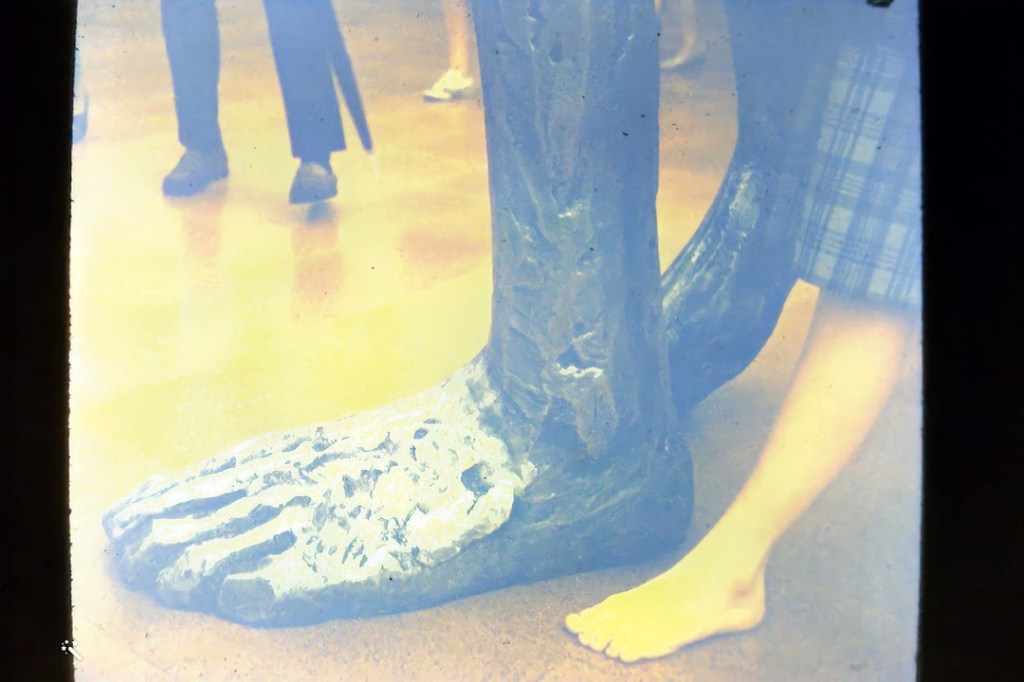
I think this photo was taken at the 1967 World Expo in in Montréal, Canada,
I remember being a little girl sitting on the swing set in my backyard on Harbrooke Ave. in Ann Arbor. As I slowly pushed myself back and forth on the swing, I looked down in wonder and delight at my shoes. They were sandals with a giant flower decoration and they are still possibly my favorite shoes ever…
I was also greatly influenced to love shoes by the story of Cinderella- I always enjoy these quotes:
“Cinderella is proof that a new pair of shoes can change your life.”
“Give a girl the right shoes, and she can conquer the world. Just look at Cinderella!”
“Cinderella never asked for a prince. She asked for a night off and a dress. And maybe, just maybe, a great pair of shoes.”
The history of shoes has certainly changed over the course of my 70 years on the planet. This blog is just a fun way to celebrate some of the shoes we wore.
So…get ready to tap your foot and read a fun blog while walking down memory lane with me.
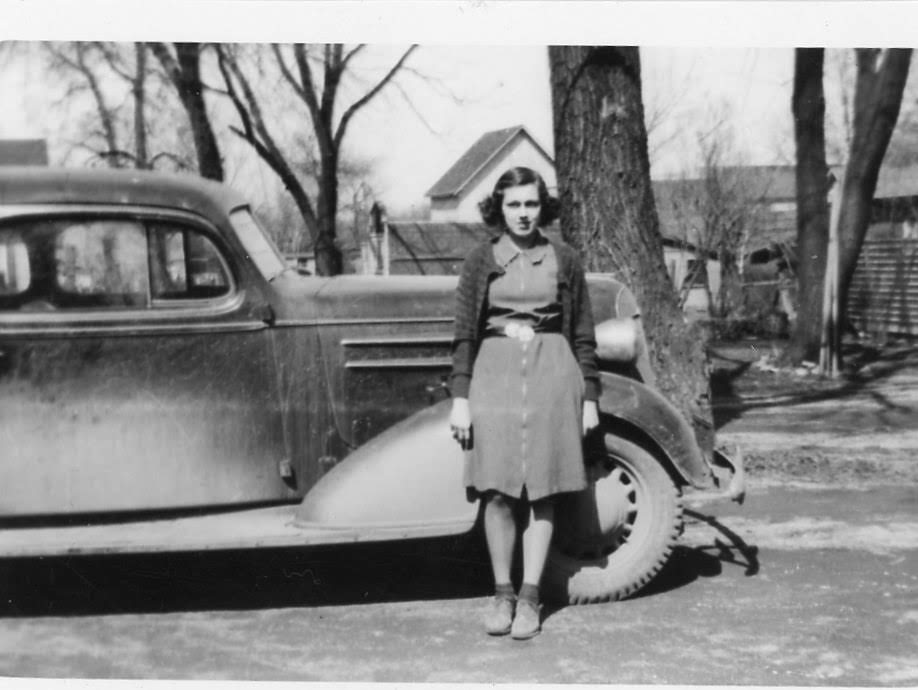
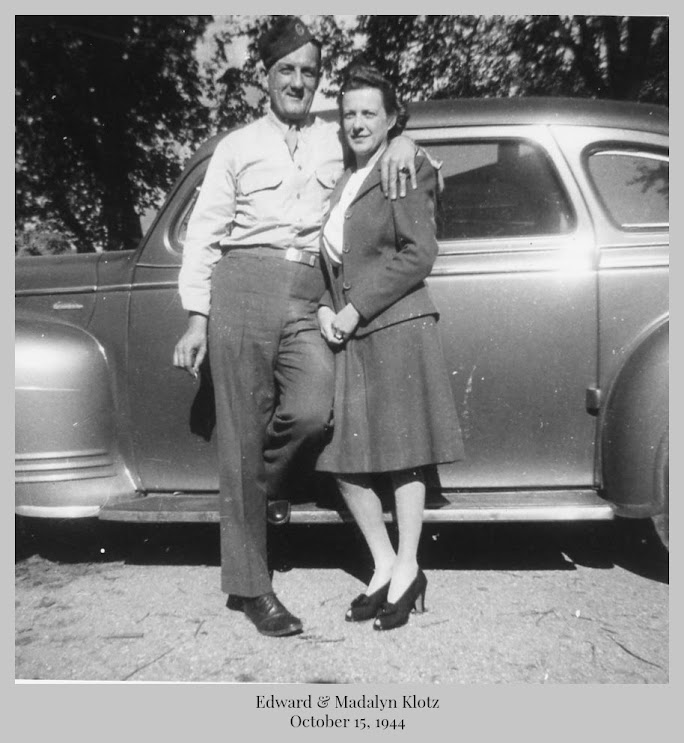
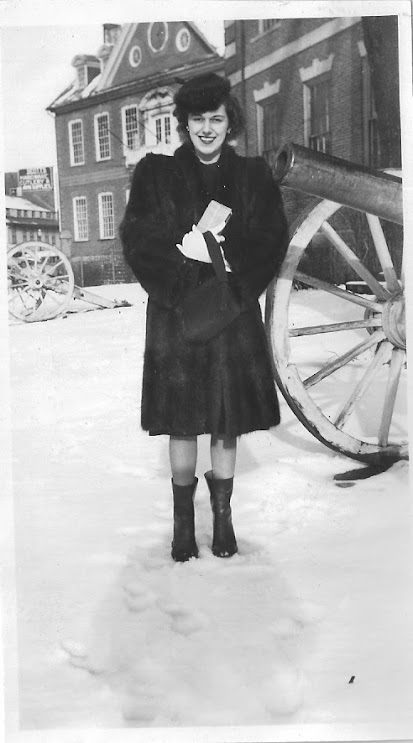
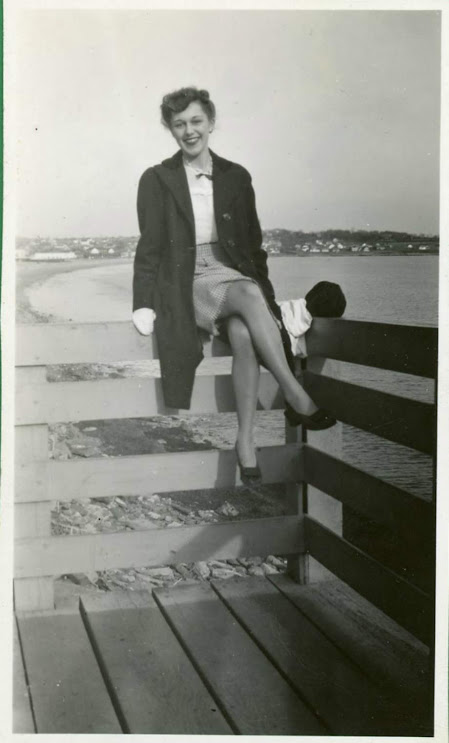
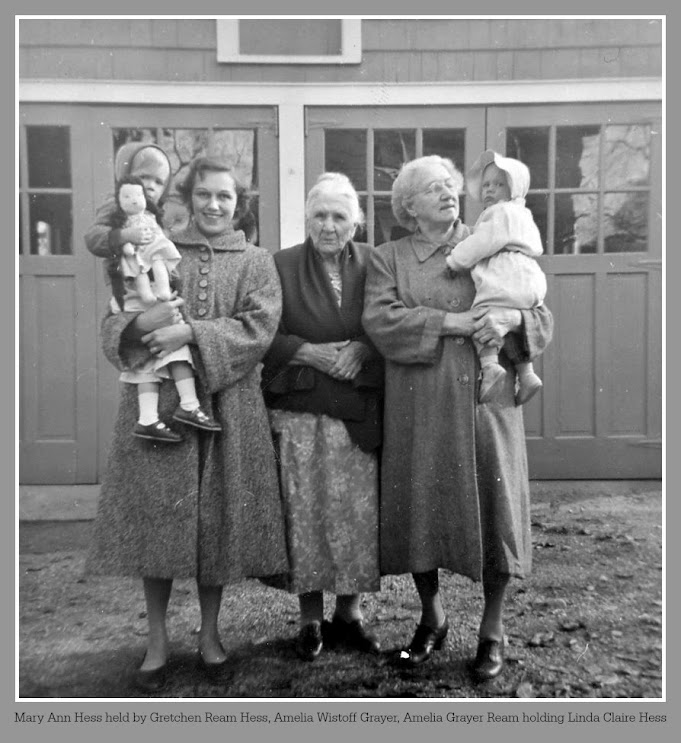
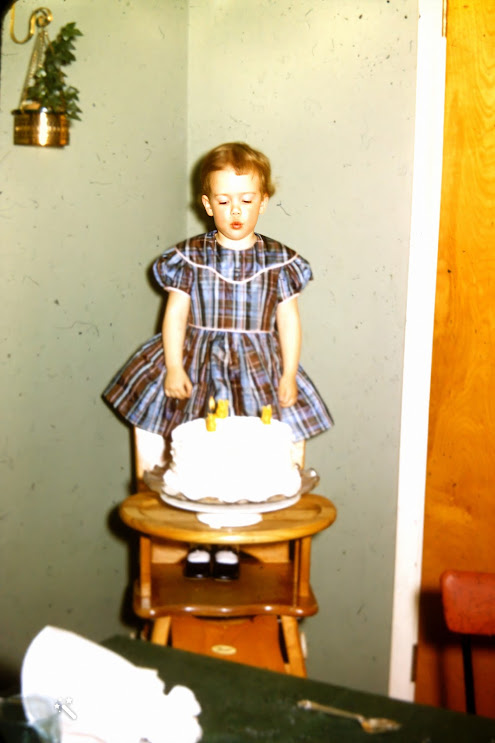
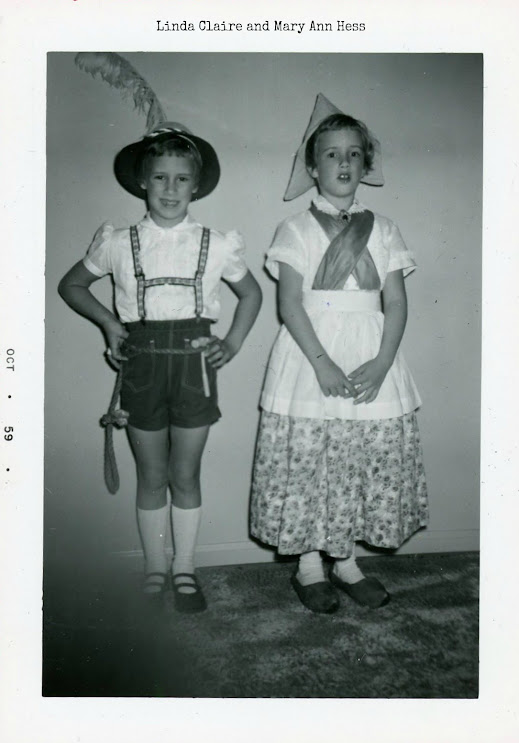
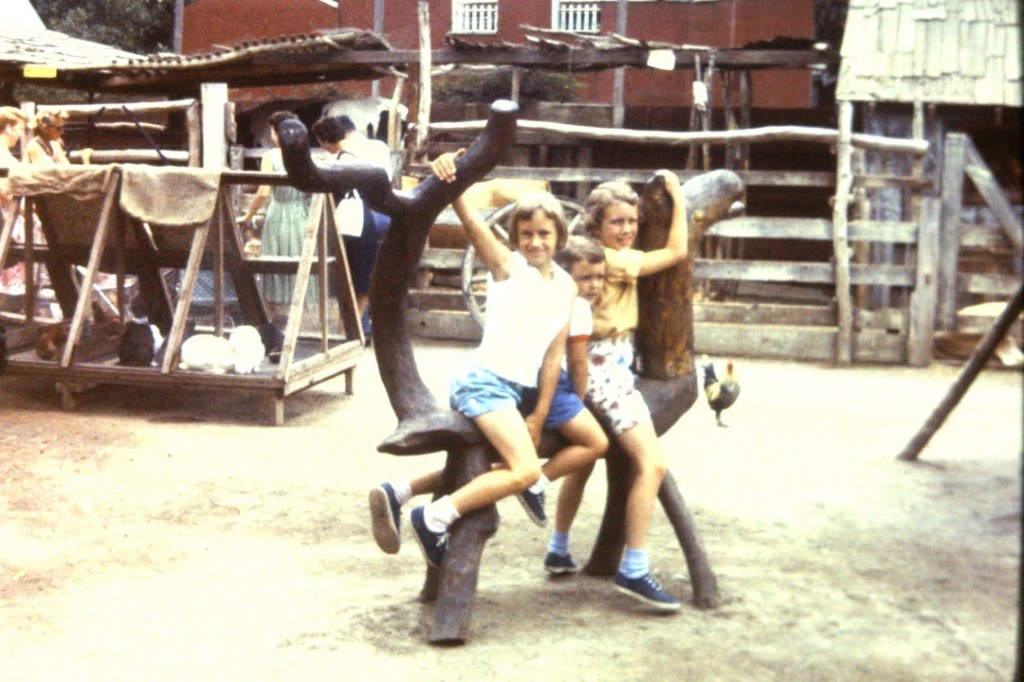
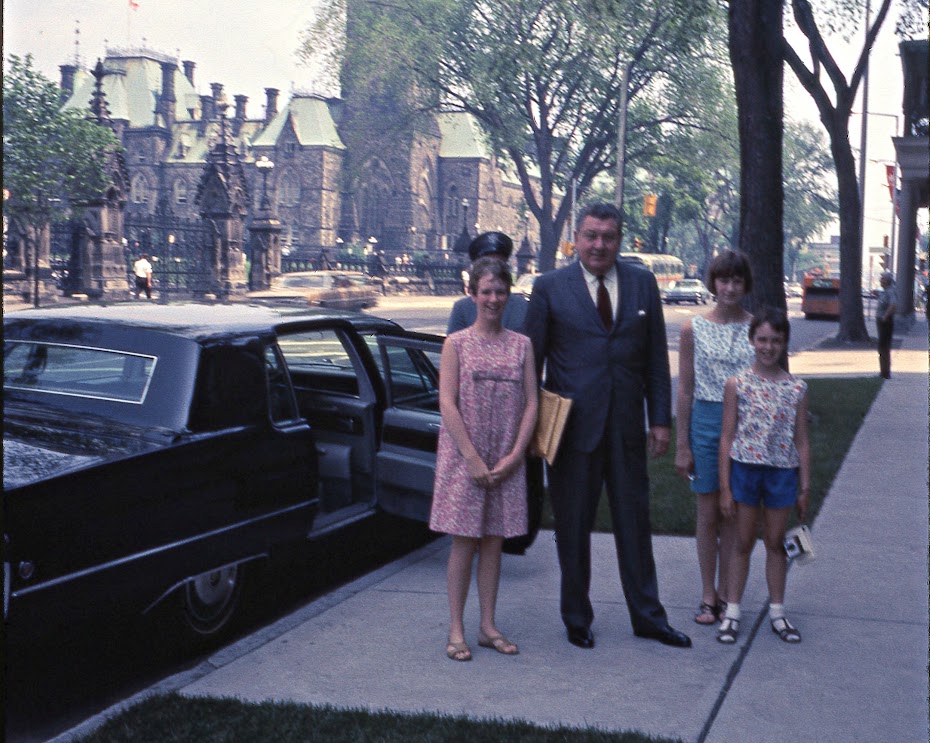
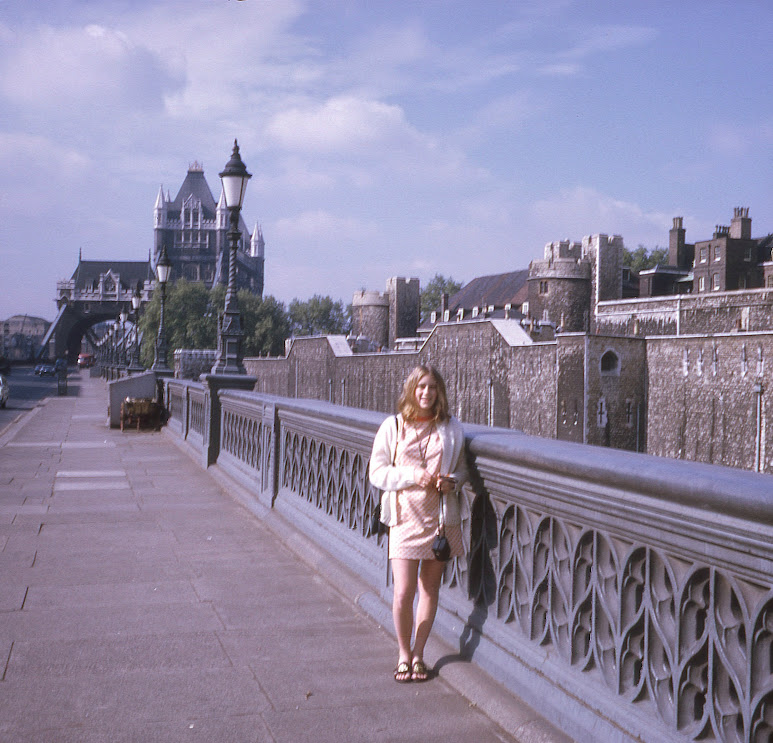
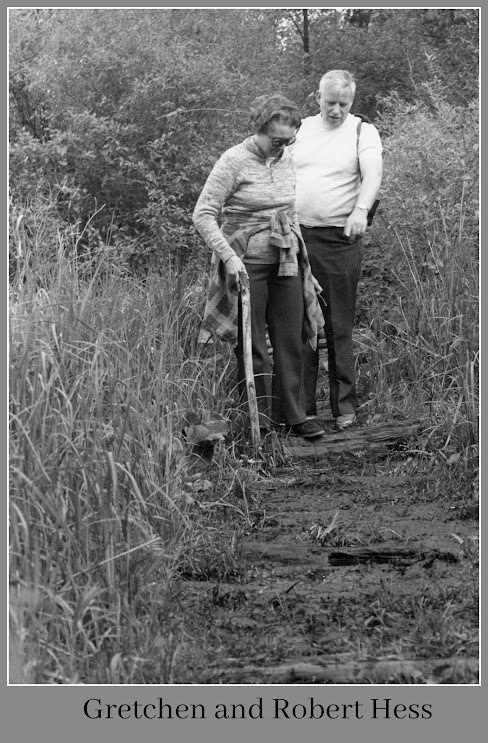
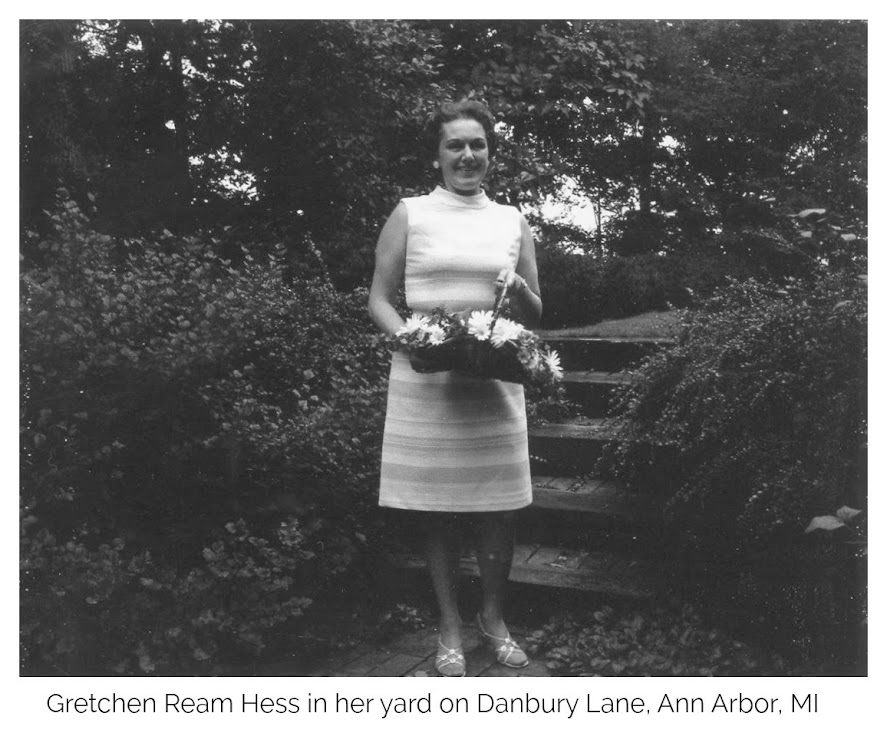
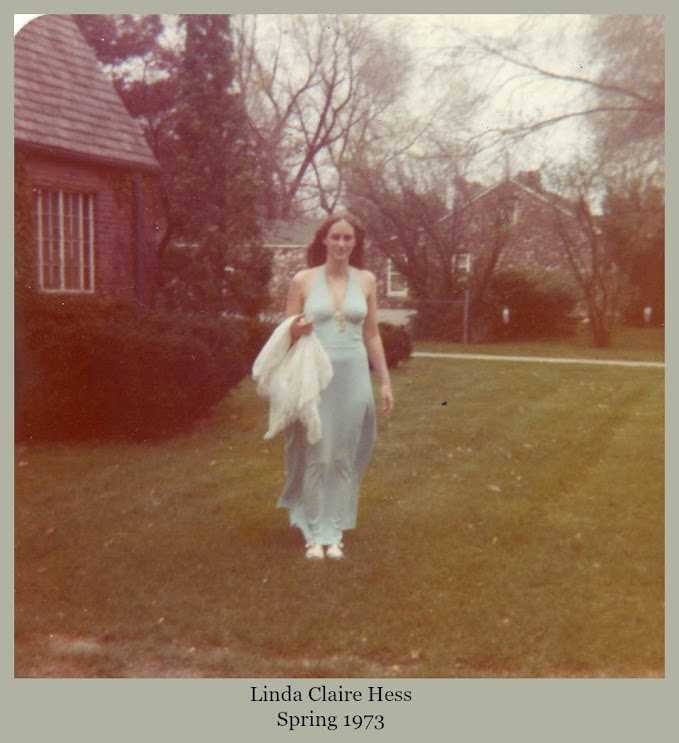
This photo of Gretchen Lois Ream Hess was taken in approx. 1940. As I study this photo, I realize that I could easily dress just like her even now in 2024! The anklet socks worn with the loafers were a classic combination.AI has estimated that the date of this photo is 1942. Mom would have been 17 years old. The location was 520 N. Main Street, Ann Arbor, MI. Gretchen Ream Hess is wearing a pair of modest shoes that seem to reflect this time era as the Great Depression was just ending. A photo of Robert Lawrence Hess on his 1st day at the University of Michigan. This would have been in 1942. Look how spiffy he is in this outfit paired with classic shoes.Look at these beautiful two toned shoes my mother is wearing in 1944. A photo of my Uncle Robert Emerson Ream with my mother Gretchen Ream Hess. AI dates this photo as 1945 – so maybe just at the very end of WWII. I notice that Uncle Bob’s shoes are not the shiny patent leather but some much more practical leather. Mom’s shoes are adorable with the little open toe and a cute bow. I am in love with Madalyn’s gorgeous heels!Mom is probably visiting Dad at Midshipman School. When did she get a fur coat? Was it possibly from Aunt Babe? What are your ideas? The boots actually look very stylish. I date this photo at approx. 1945.My stunning mother. Look at these beautiful shoes! I believe this photo is from her honeymoon in December of 1945.I am dating this photo at approx. 1948. Mom is sitting on a park bench with a friend. I believe this is from Mom’s young married days in Bethlehem, PA. So – what amazing sling back shoes…right?An amazing photo of Mom from approx. 1950. Everything about this outfit is WONDERFUL.Mary Ann is wearing the quintessential baby shoes of the 1950’s. These shoes may be the ones that Mom had bronzed later as a memory. Also…did toddlers really get to wear a string of pearls? I love the knit dress.A chance to see 4 generations of my family and the shoes we all had on. Precious!Mary Ann with 3 candles in the birthday cake. Look at her pretty patent leather Mary Jane shoes with a type of dress that required a “stick out slip” to hold the skirt in place. Bonus photo that shows my leather tie up shoes and my rubber boots. The funny thing is that the shoes were worn inside the boots back in those days. WOW…I bet we are all laughing at this photo! Mary Ann’s shoes were passed down and were a classic style for little girls of the 1950’s. I seem to have some pretty swell slippers. March 1, 1956.I am sporting red tennis shoes. I feel like I still have a memory of them. Chrissy White is between me and Mary Ann. My mother, Gretchen, is on the far right and is pregnant with Kathryn. This photo was taken in 1957.Here we are in our Easter dresses. Linda Claire, Kathryn Sue, and Mary Ann. Kathryn has the standard toddler shoes and Mary Ann and I are wearing patent leather shoes. Remember that dresses from this era were made with only natural fibers (no polyester yet) so they had to all be carefully ironed. Date estimate 1958.This photo is proof that flip flops have been around for a long time. I always smile when I look at this picture- the foreshadowing of me being afraid of heights and nervously grabbing my father’s slacks. Mary Ann looks confident and Kathryn is just busy playing with the sand. Photo possibly in late 1958 or early 1959.I am the mountain climber – an alpine German yodeler and Mary Ann is the little dutch girl in wooden shoes. The shoes I am wearing appear over and over in our family photographs. I think that we must have kept getting the same shoes in a different size. Back in 1959 we owned only a couple pairs of shoes each and frequently took them to the cobbler in Nichols Arcade to be repaired. Yes, we did have wooden shoes. They were kept in the dress up chest.This photo also has me laughing. Kathryn looks at Santa so lovingly and Mary Ann is also happy as can be. But, look at me…not sure at all about this guy! LOL. Also, until this blog, I never realized that Kathryn is wearing the hand me down boots from the earlier photo of me asleep on the floor in my snow suit. Again, these types of boots were worn with our shoes inside. In order to put the boots on, we first covered our shoes in plastic bread bags to help them slip on. Christmas 1959.What a hoot. At least Mary Ann has the pretty smile. My smile is a little over the top and Kathryn looks quite displeased that the cake is obviously not hers. Kathryn is wearing the recycled pair of red shoes that appear over and over in these photographs. We are with Bones and Madalyn at their home in March of 1960.Apparently Kathryn is being smooshed between her sisters. Mom liked to dress us in similar styles. I see that we all are wearing identical pairs of blue sneakers. Photo 1961.It looks like Kathryn is wearing our hand me down black patent leather shoes. Photo circa 1962. Aunt Babe possibly actually sewed this coat- her occupation was as a seamstress.In 1962 we seem to be wearing some quite lovely summer sandals. In this photo we are pictured with a Canadian dignitary. Kathryn…why are you wearing socks?I love looking at the shoe fashions in this 1964 photo of the Silver Anniversary party for Madalyn and Bones. The photo was taken at 2629 Danbury Lane, Ann Arbor. Grandma Pet (Amelia Ream) is seated in the orange chair on the front right of the photo.I love this photo of Kathryn for a hundred reasons. Check out her amazing cowgirl boots! Yee Haw! Photo circa 1965.A photo from my 1970 European vacation with Dad. I am wearing a “stretch and sew” dress made by Mom. This was the start of polyester. I think my sandals are pretty cute!We definitely had hiking boots and did plenty of nature walks as a family. Photo circa 1971.Mom and Dad are also wearing practical walking type shoes in this 1971 photo.Jack is wearing the Earth Shoes that became kind of an obsession for all of us in this 1972 time period.Mom looks so lovely in the back garden at 2629 Danbury Lane, Ann Arbor. Fantastic shoes…right?I know. I know. I haven’t changed a bit. LOL. This is in front of Waterman Residence in my 1970’s college days. Pretty borrowed dress and shoes.Can you tell that Bones is wearing the classic rubbers over his shoes. This was the classic winter style for men at that time.Christmas c1975. Mary Ann is wearing a beautiful smile and some great wedge shoes.I am on my honeymoon in 1977 wearing my wonderful Earth Shoe sandals.
Celebrating Reading! Linda Claire 2023My maternal grandparents both were highly educated. Henrietta was a graduate of the Chicago School of Music and George was a graduate of the University of Michigan with a degree in Engineering. This photo is c1919. I believe that this photo is from the farm house in Benton Harbor, MI. My father told me that Henrietta made a condition of her move from the city to the farm was the promise that she could have her piano. Henrietta could easily read Latin and Hebrew texts.
One of the gifts that our family has continued to pass down through the generations is a love of reading and storytelling. I have compiled a precious photo collection in this blog. I selected photos that focus on books and reading with the hopes that they will help demonstrate how reading is often a way that knowledge is passed from one generation to the next. Parents reading to children and families reading together are powerful reminders of the quality level of joy that we get when we read together. When I look at these photos, I also experience a bond that I feel spanning the decades. As always, I hope that my blogs help open up our memories and generate our anecdotes and stories about these captured moments. I hope this blog provides a snapshot of my beloved family members at various stages of life, sharing a common activity that bonds them.
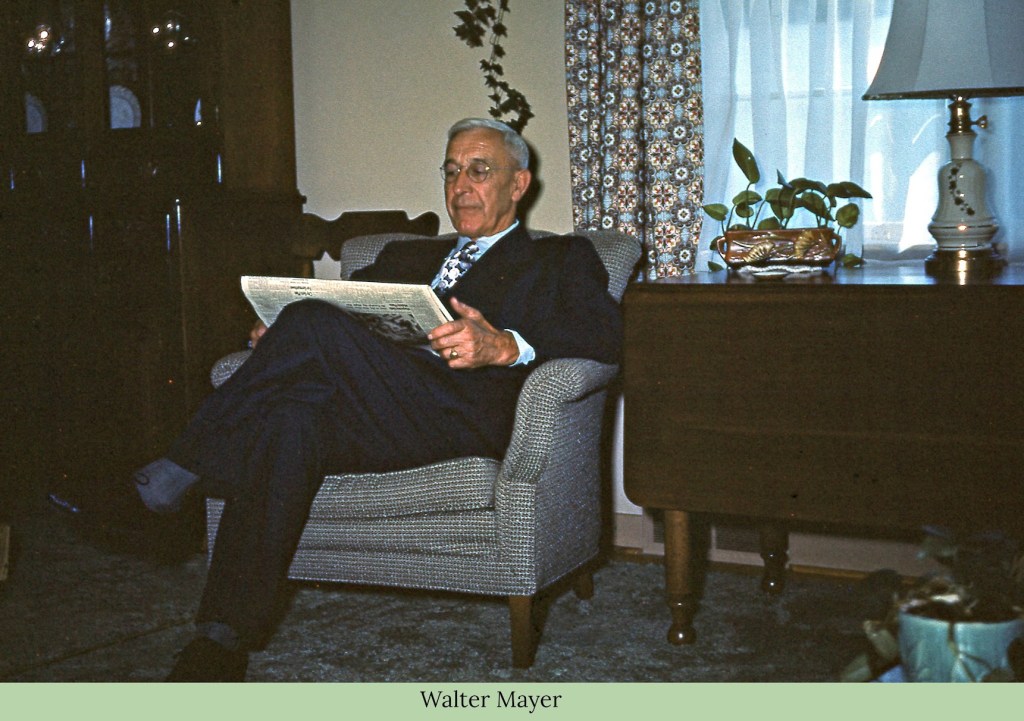
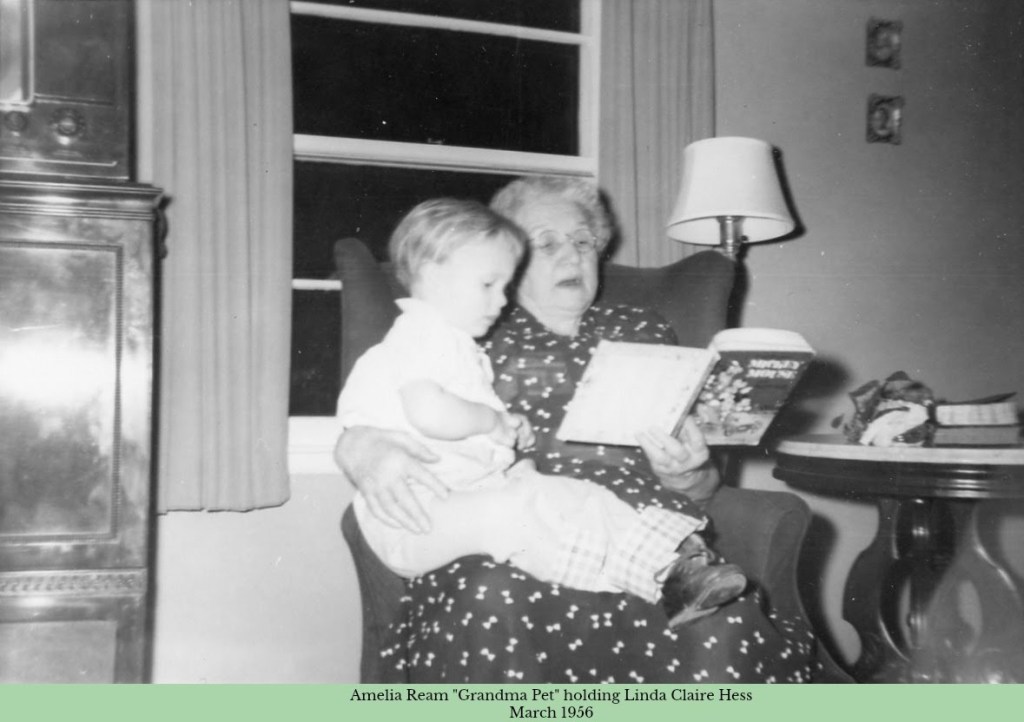
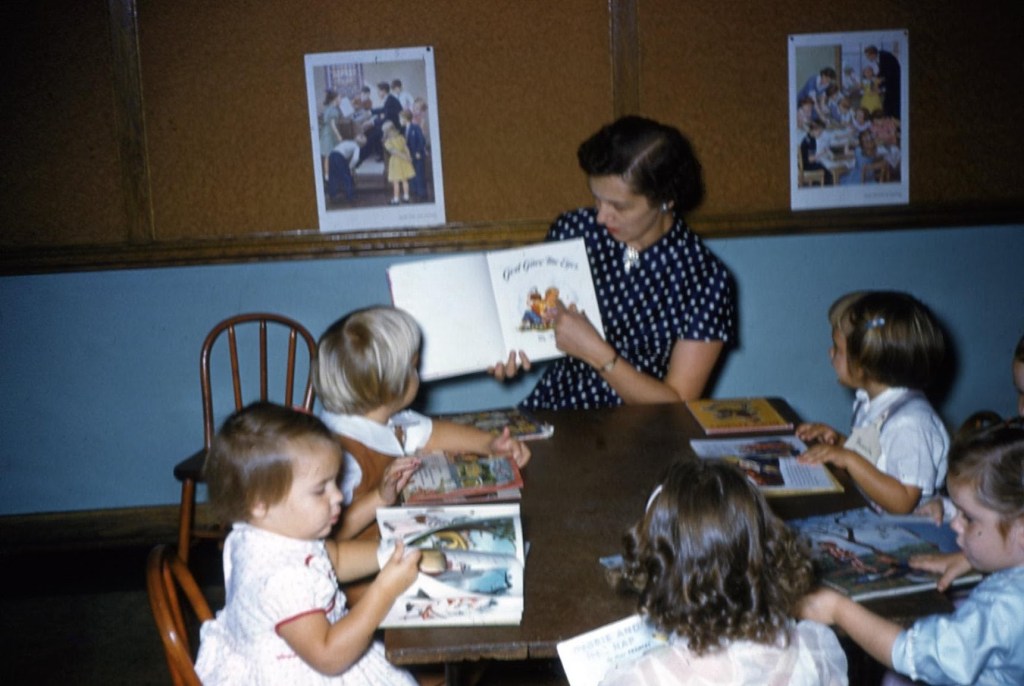
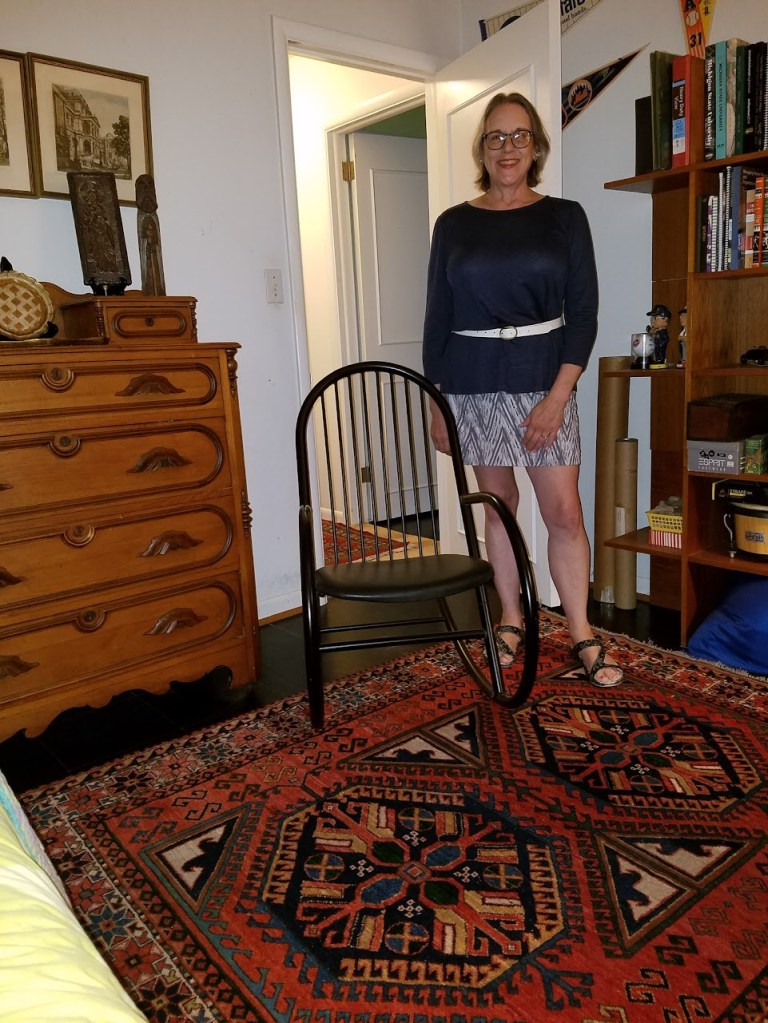
This is a photo of my paternal grandfather reading. I have estimated the age of this photo as 1942.This is a page from a digital scrapbook that I made several years ago. Mom loved to read to her children and grandchildren. I estimate the photo of my mother as 1943.Walter Mayer was the husband of my Great Aunt Babe (Helen Grayer Mayer). Stories of Walter always included references to his kind and gentle nature. Reading an actual newspaper was very much a part of our daily lives. I believe this photo was taken at 1517 Harbrooke Ave., Ann Arbor, MI. I estimate the date of the photo to be from 1954.This is a photo of Aunt Babe reading to me and my sister Mary Ann. We were at our home of 1517 Harbrooke Ave., Ann Arbor, MI. I estimate the date of this photo as 1956. Aunt Babe has her hair in pin curls. Sections of the hair were twisted up and held in place with a metal clip. If women wore their pin curls outside the home, they put on a fashion scarf or a bonnet. The title of this book is “Peter Goes to School.” This is one of my favorite photos of my father, Robert Lawrence Hess. He is reading us a Golden Book on safety. Golden Books have very much stayed popular since their debut in 1942 (12 years before I was born.) I estimate the photo date is 1956.I loved sitting in my Grandmother’s lap while she read, sang songs and told stories. This photo appears to have been taken at our home at 1517 Harbrooke Ave., Ann Arbor, MI. I estimate the photo date to be 1956/57.This is a photo of my father – Robert Lawrence Hess. I estimate the date to be 1956. My father’s brilliant career meant that much of this time was spent in reading and writing technical papers.Every fall our photos were taken for school. This is my sister Mary Ann. A common photo prop for school photos were books. I estimate that this photo is from 1959. My mother served for many years as a Sunday School teacher at Bethlehem Church in Ann Arbor. This is a photo of her reading to her students.This is my photo from 1960. The book was just a photo prop supplied by the professional photographer, but I had already become an avid reader. As a young girl, I had very blonde hair with very dark brown eyes. My hair is now white…but LOL…I still have very brown eyes!
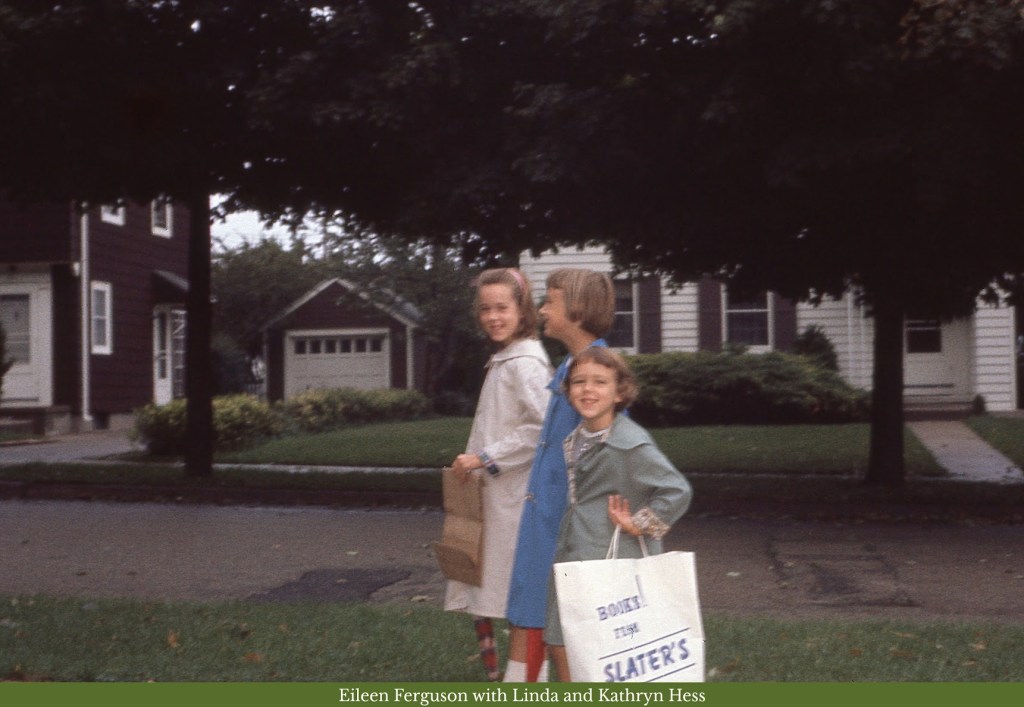
This photo is from an estimated date of 1962 – taken in front of our home at 1517 Harbrooke, Ann Arbor, MI. Slater’s book store was located on State Street in Ann Arbor and was one of the exciting highlights of our childhood. Our family friend Winnie Martin worked in the children’s section and would always greet us and guide us to treasures to be found in the store. The children’s section was located at the very rear of the store on the main level. I was just exiting this store on 22 November 1963 when the whole city got quiet and grief stricken with the breaking news that President Kennedy had been shot. I remember just standing on State Street as the world seemed to move into a slow motion reel with all the grown ups and students beginning to cry.
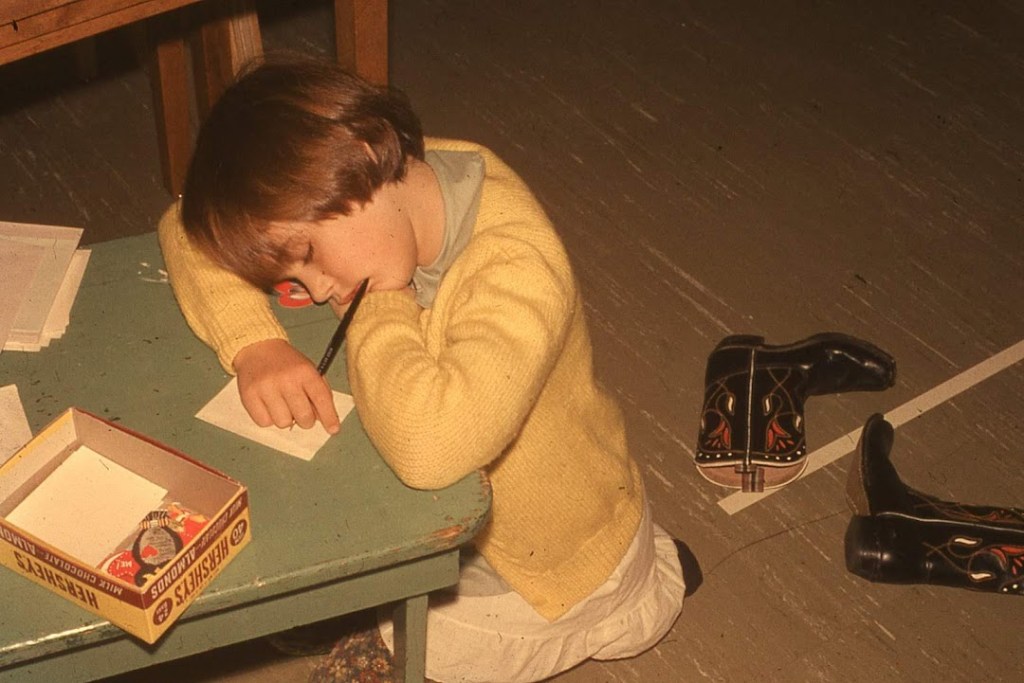
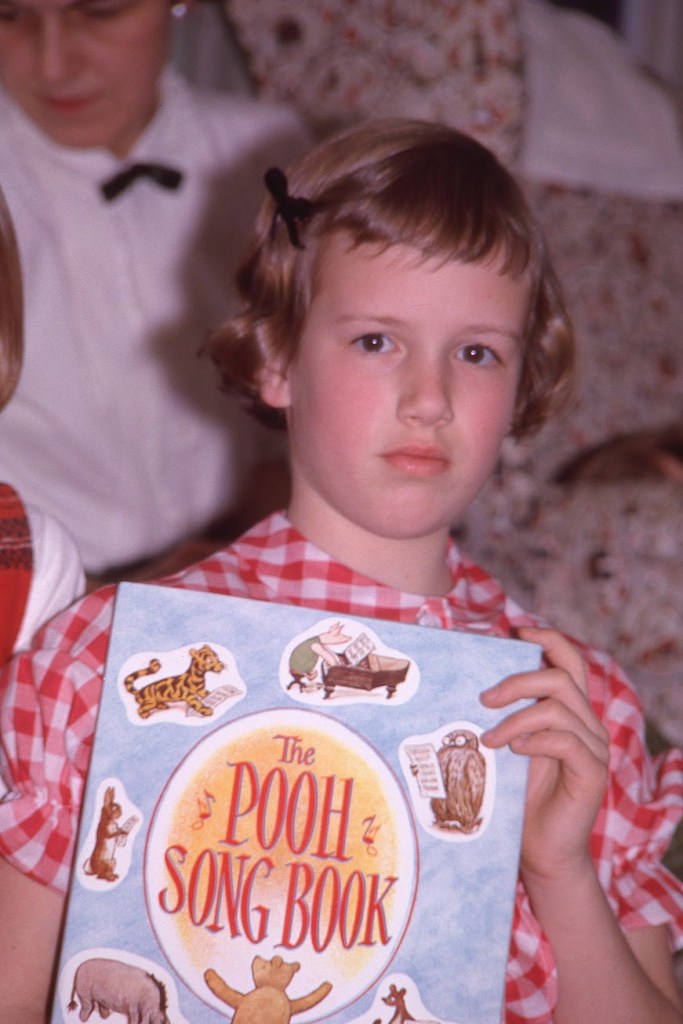
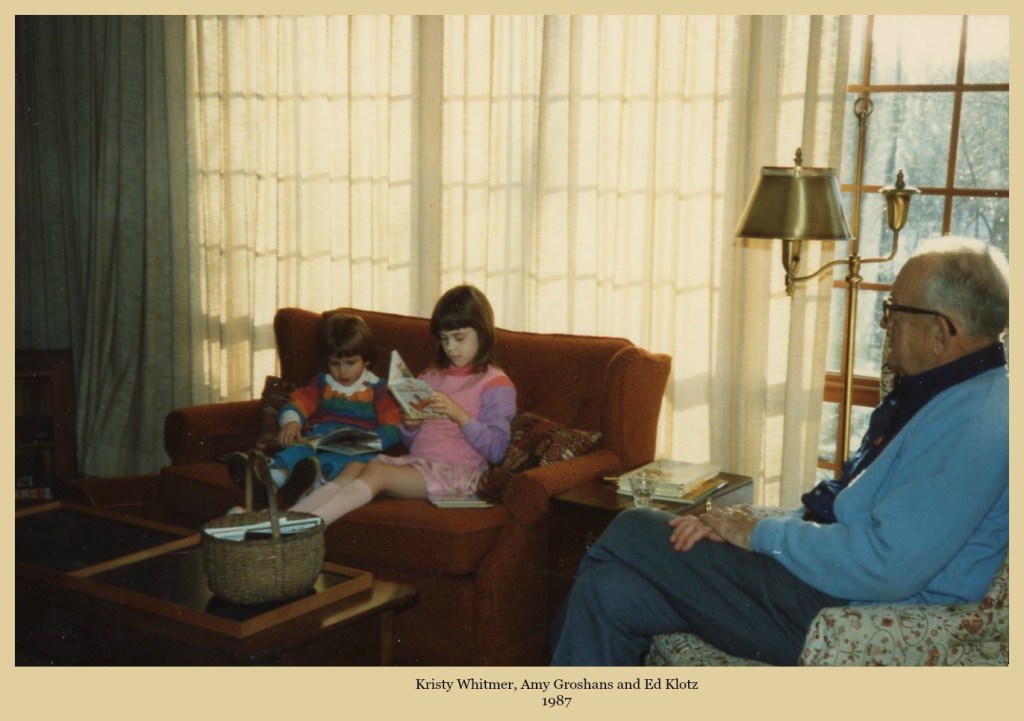
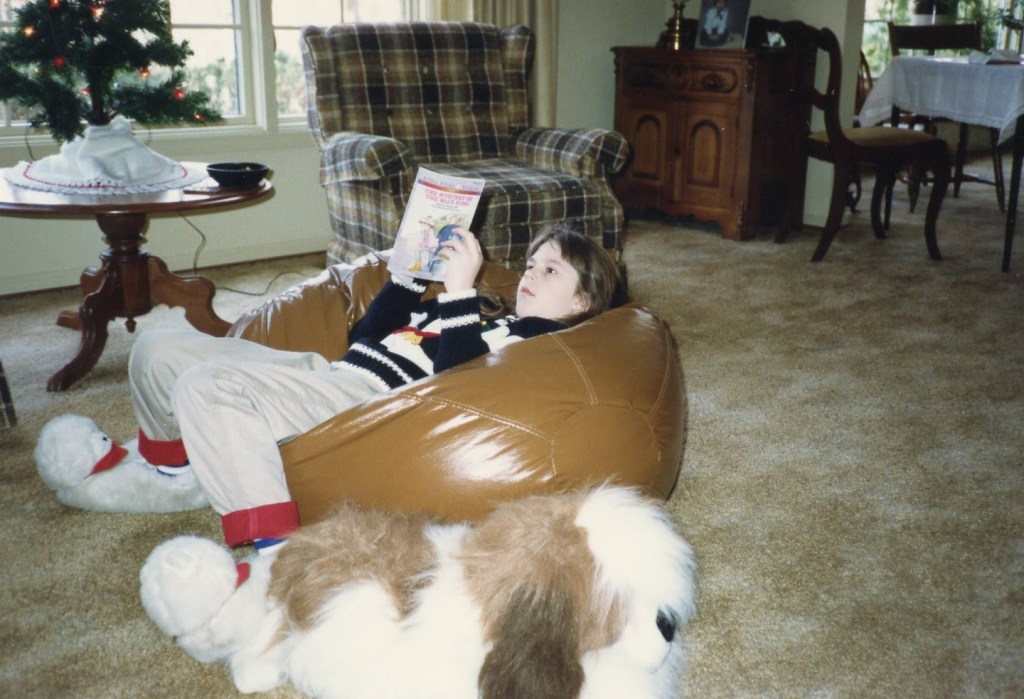
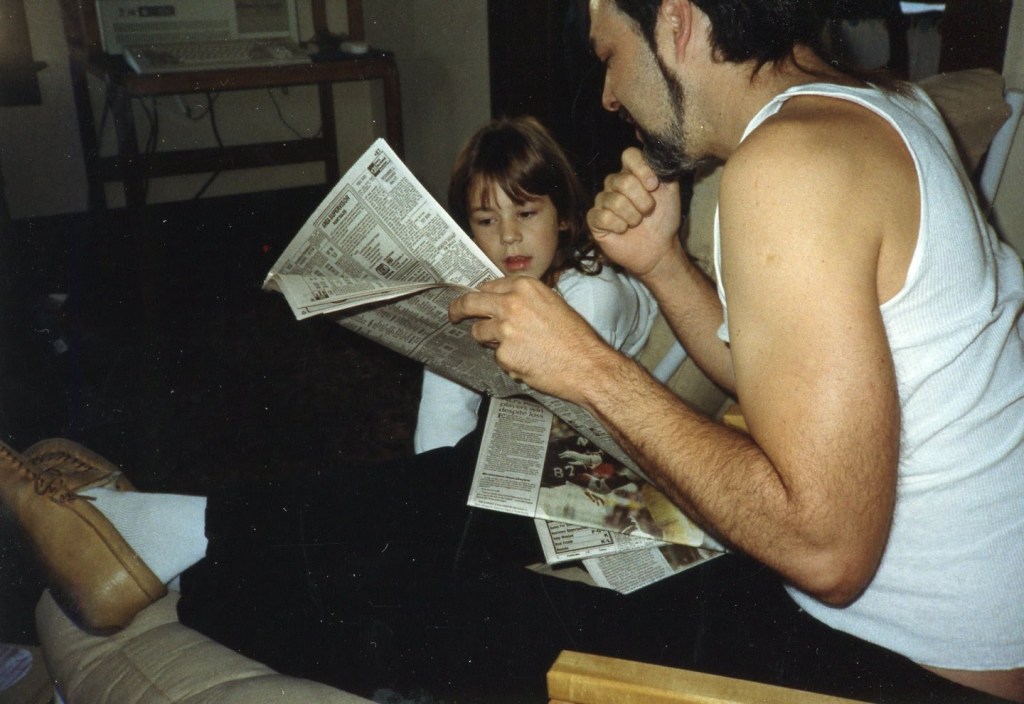
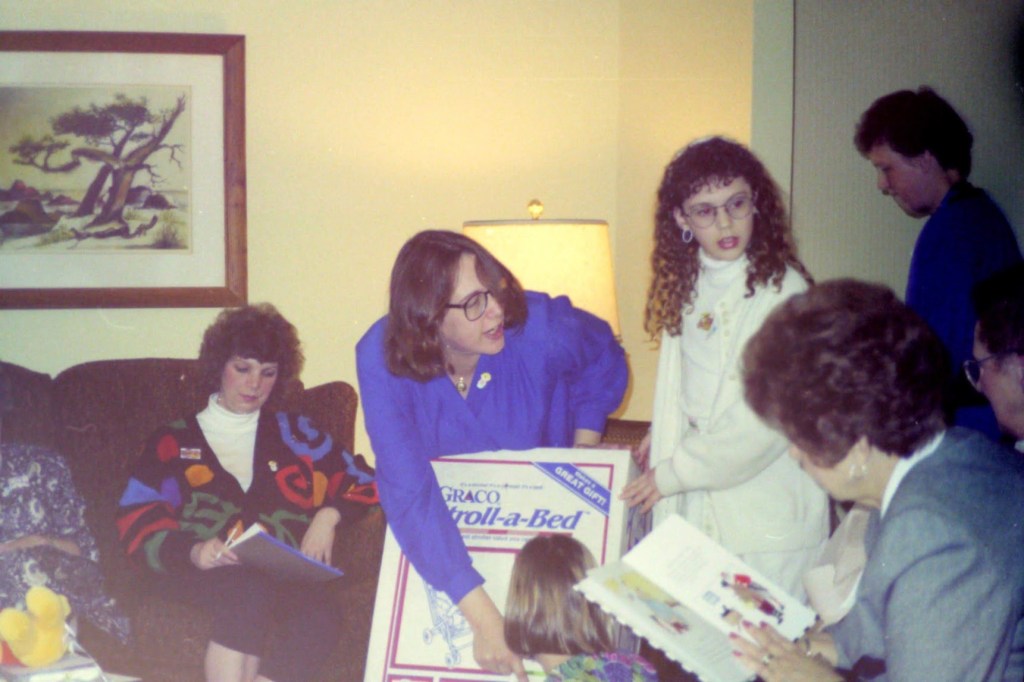
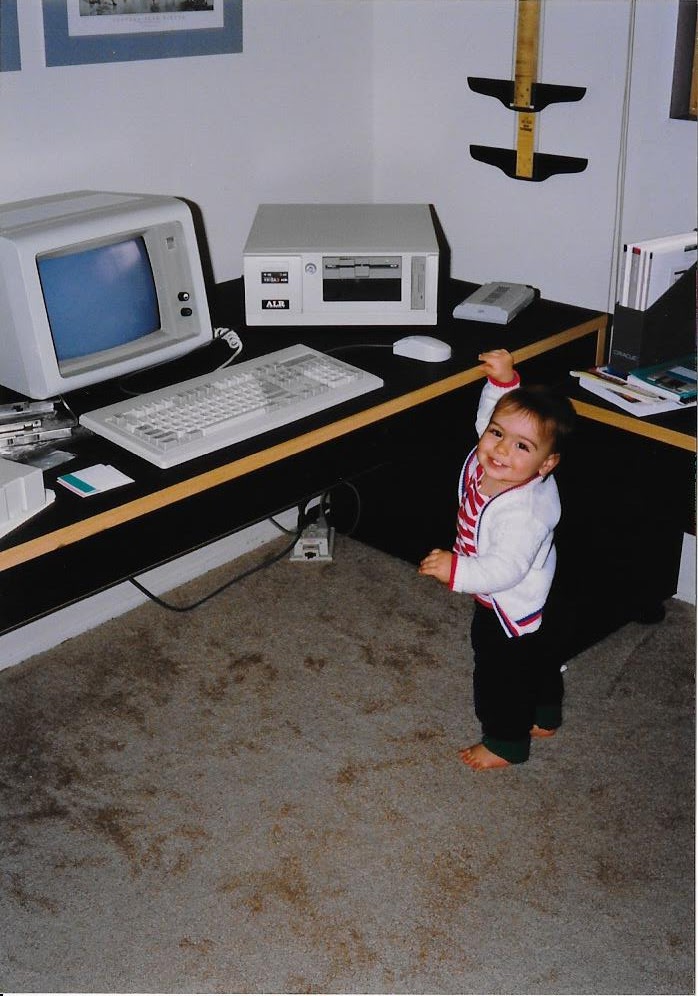
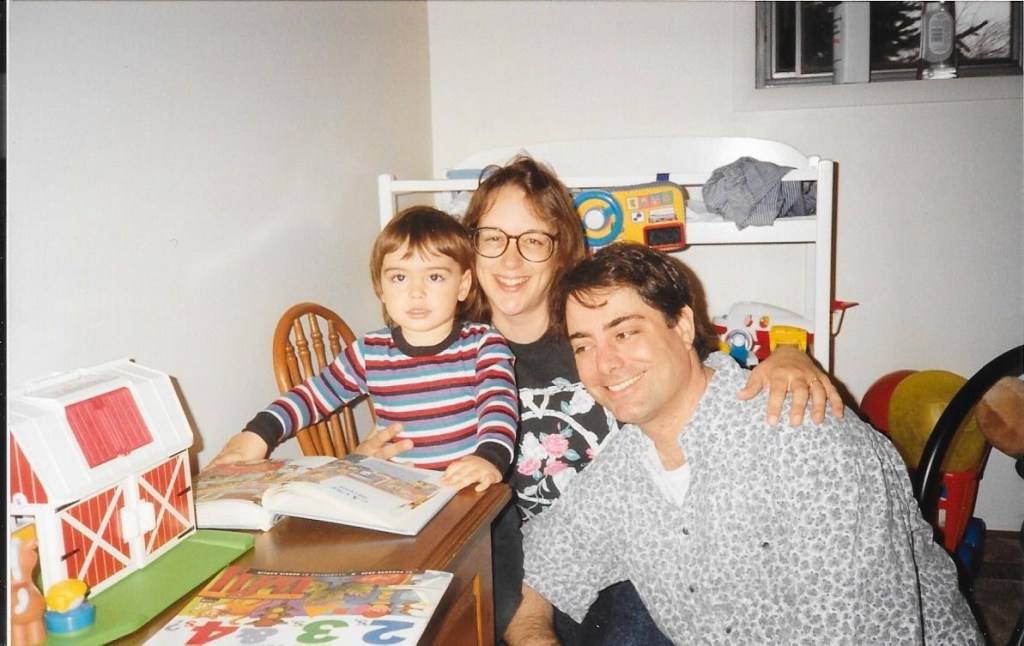
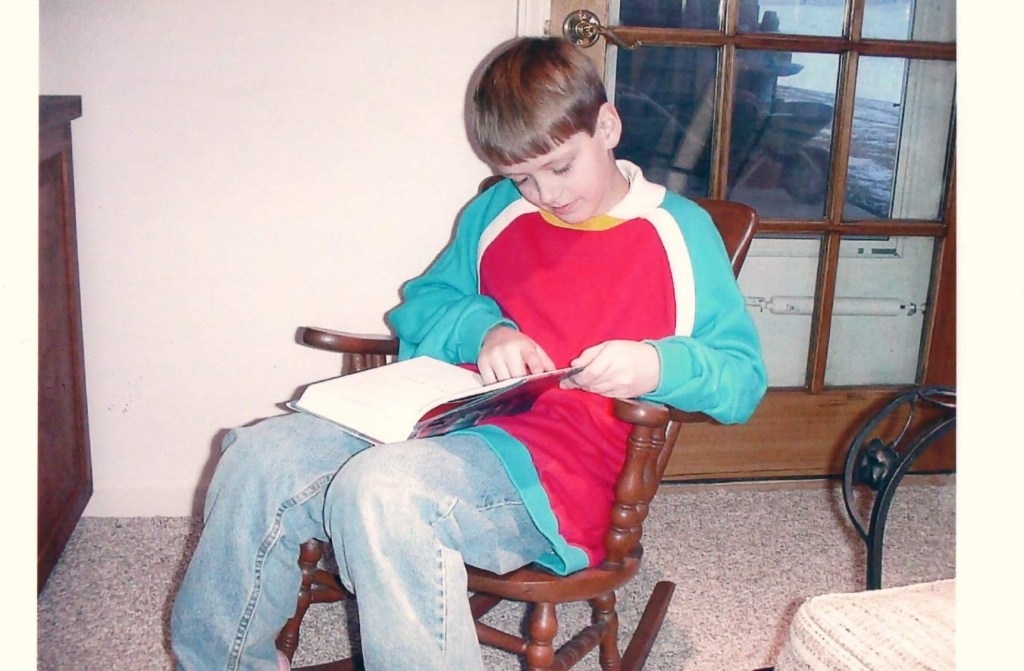
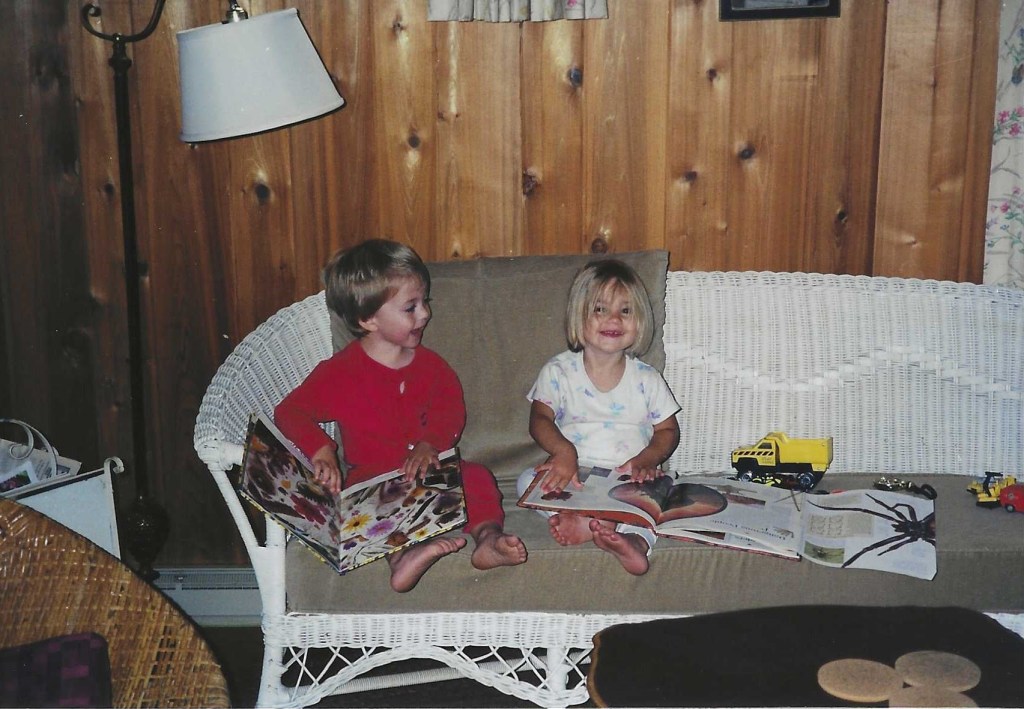
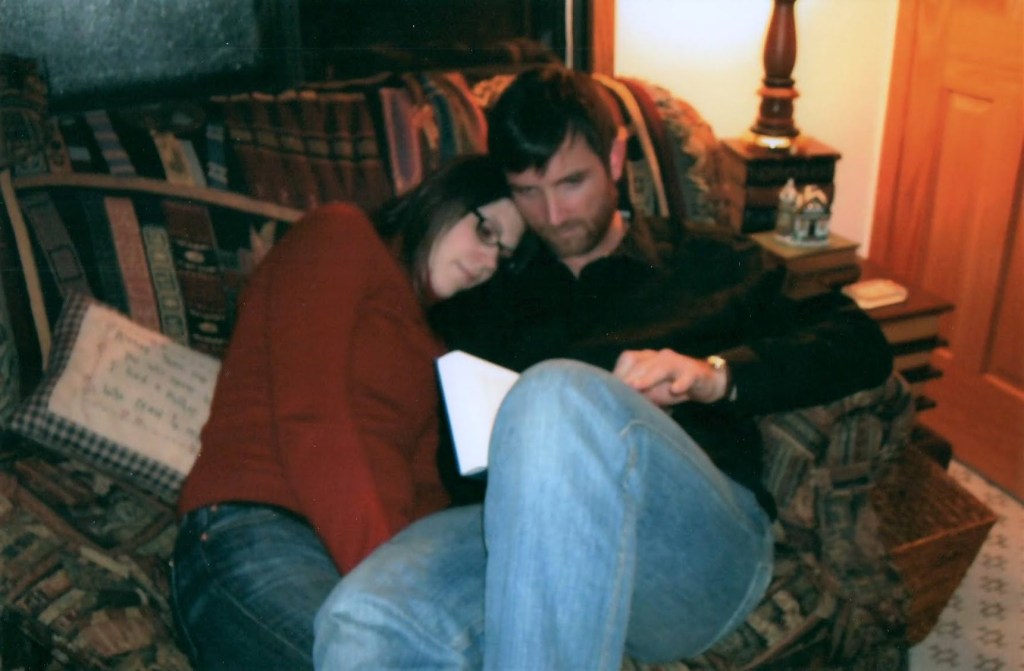
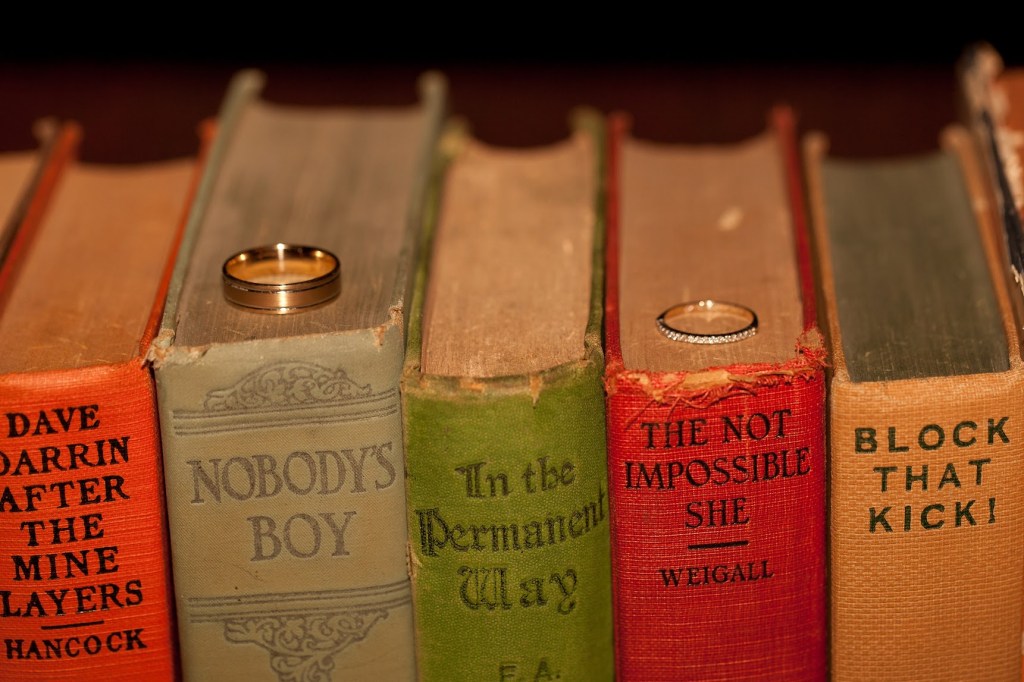
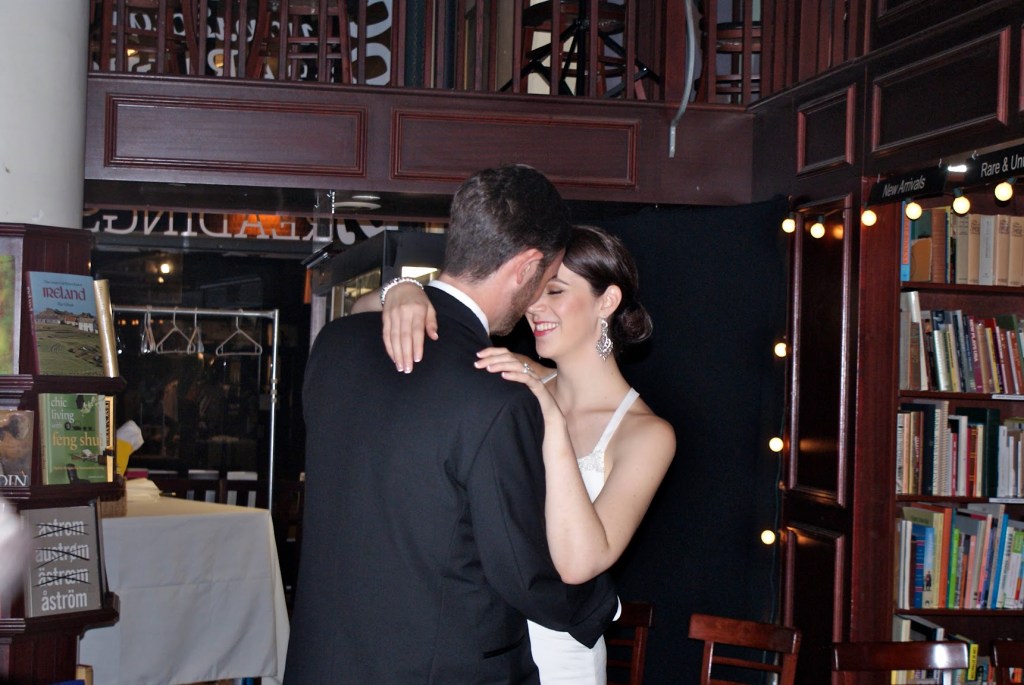
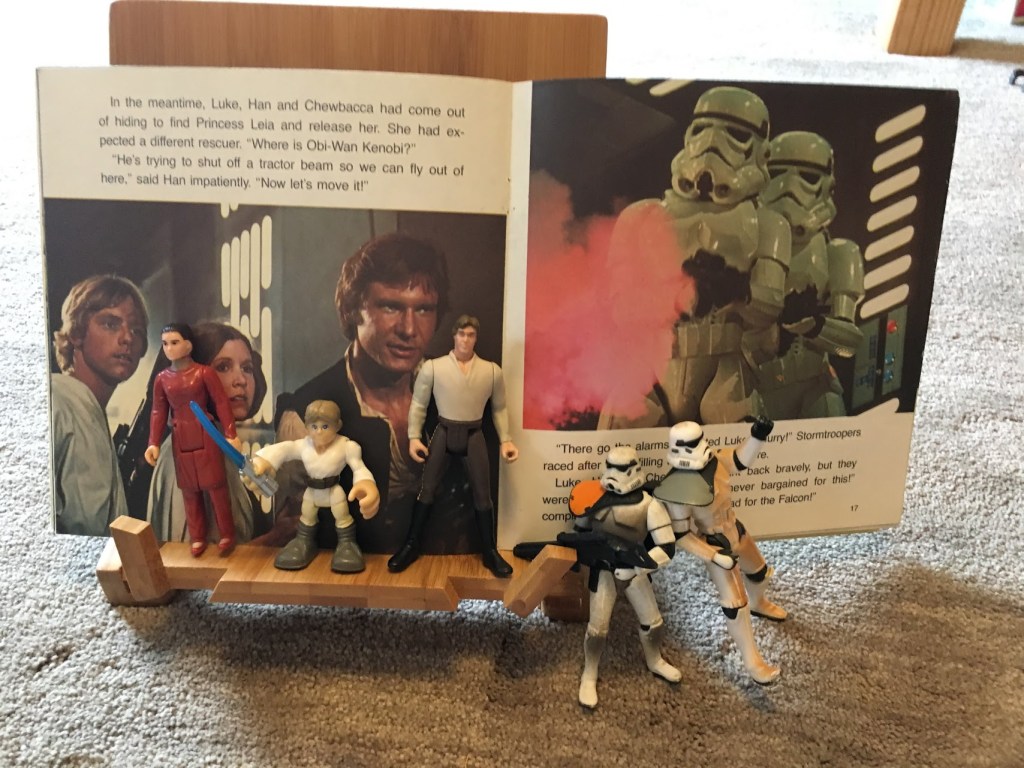
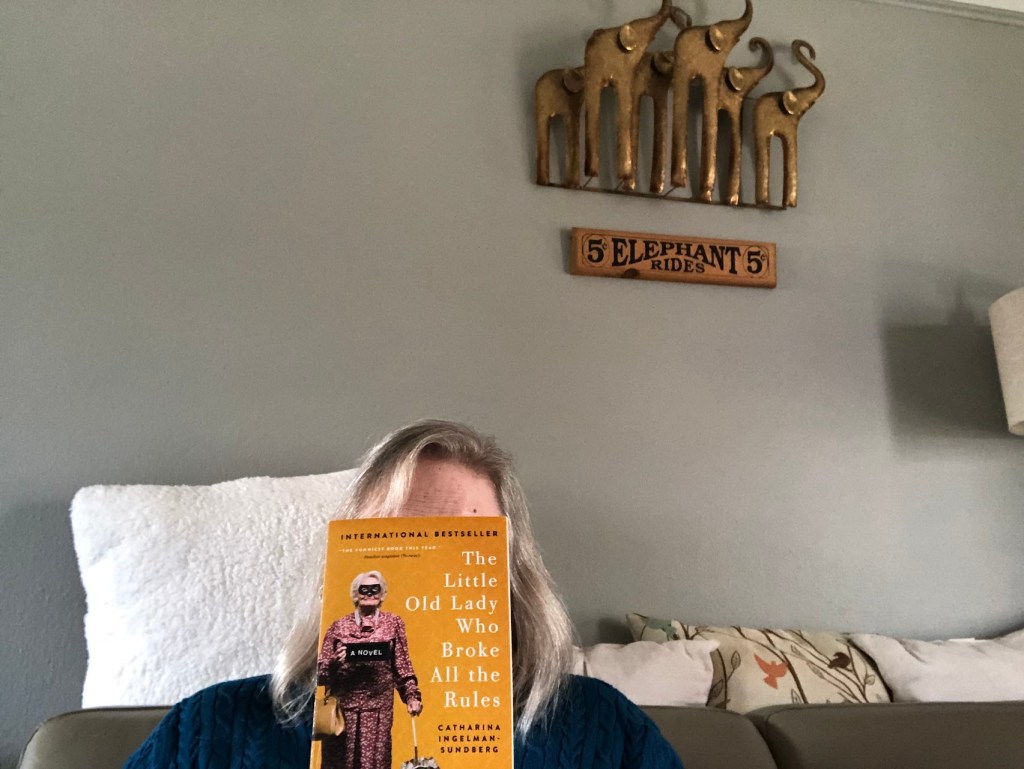
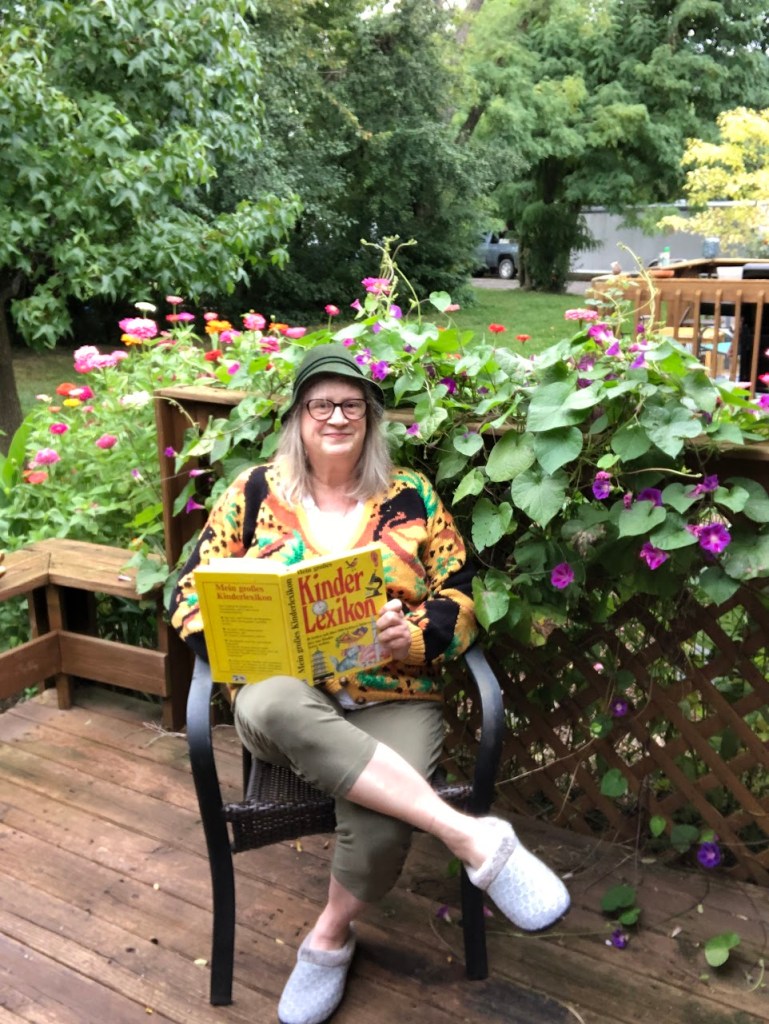
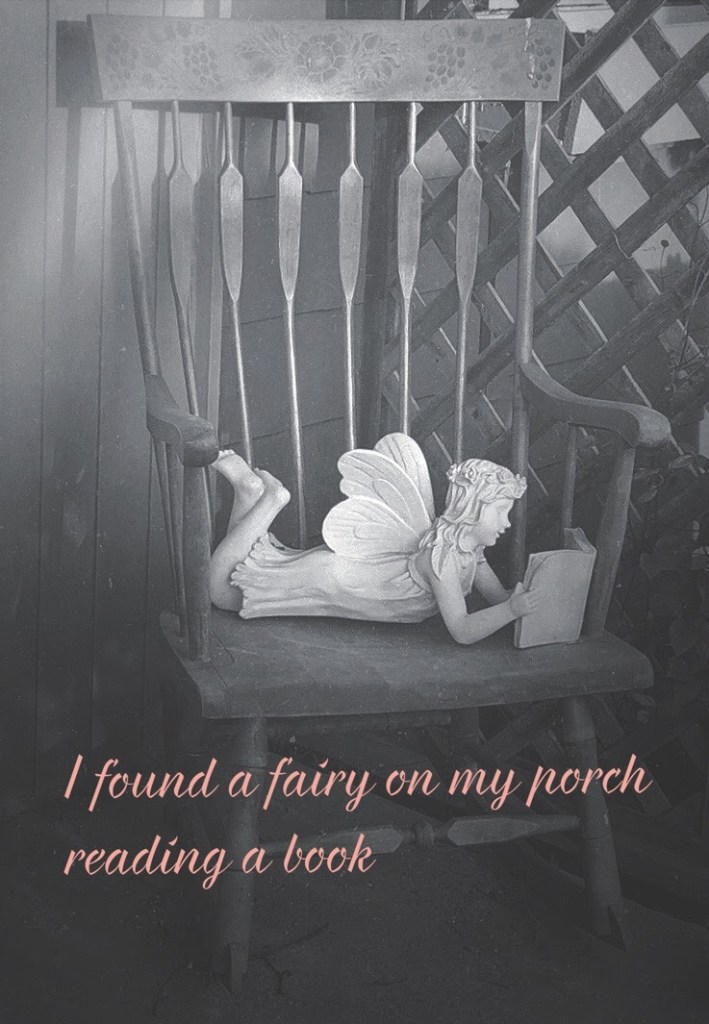
Grandma Pet often gave us books as gifts. This is one of the books that she selected for me. I valued everything from her so much. I estimate this book was a gift to me in 1962.I estimate the date of this to be March 1962. Mary Ann was quite the good pianist and our family loved Winnie the Pooh books. In fact, Dad read every book in the Pooh series out loud as bedtime stories for us.One of the all time favorite photos of cuteness. Not exactly reading but it looks like cowgirl Khaki decided to take an impromptu nap while writing out Valentine cards. Adorable. I estimate the date of this photo is 1965.Every time I see his smile, it floods me with memories. Bones and Madalyn played such an important part of our family life. Amy is getting treated to a story read to her by Aunt Marie.I can see Amy has the book Corduroy in her reading pile – one of our favorites. I estimate this photo to be from 1984.A photo of our dear family friend Winnie Martin with Kristy and Amy. I estimate the date of this photo is 1985.I look so happy and I was so happy reading to me niece Kristy and my daughter Amy. I estimate this photo date as 1985.Amy was an early reader and a devoted reader. To this day, Amy is still always checking out a find from the library. The tradition is being passed on to her son who reads every day – I am so proud! I estimate this photo date as 1987. This was taken at our home at 609 S. 1st Street, Ann Arbor, MI.I am sure that Bones was as happy as a clam watching Kristy and Amy reading. This photo was taken at 2629 Danbury Lane, Ann Arbor, MI. I estimate the date to be 1987.What a fun photo of Amy. I estimate the photo date to be 1988. The photo was taken in the Living Room at 2629 Danbury Lane, Ann Arbor, MI.It looks like Amy is just starting a new read…I estimate this photo to be from 1989. This photo was taken in the kitchen of 609 S. 1st Street, Ann Arbor, MI.I am guessing that this was a Sunday morning with Jack and Amy sharing the Ann Arbor News. I estimate this photo date as 1990. The photo was taken in the living room of 609 S. 1st Street, Ann Arbor, MI.Amy in her Penguins hockey jersey – one of her favorites. I estimate this photo to be from 1990. The photo was taken in the living room of 609 S. 1st Street, Ann Arbor, MI. It was popular to put a sort of film over your windows to keep out the cold – you can easily see this on our front window.This is a photo of Khaki’s baby shower in 1991. It looks like one of her gifts was a storybook.It looks like Blake is interested in what he can see on the computer desk! I estimate the photo date to be 1992.Mike is already interested in reading! I estimate this photo is from 1992.Yes…Mike did have very red hair for a period of time. I love this photo of my children sharing a story together. I estimate this photo is from 1992.It looks like Blake is also using his storybook to pose some of his toys! 1993.What a precious photo of the Barnes family reading together- 1993.Big brother Blake is introducing Kevin to the world of reading. 1997.Mike is busy reading in the family antique rocking chair. This photo was taken at 549 Lancaster Ct., Saline, MI. I estimated the photo date is 1998.Mike reading with his sunglasses…I wish I could figure out what book this is? I estimated the date for this photo as 2000.Kevin at his preschool library. The photo is from 2000.It looks like Kevin is enjoying an I Spy book. Photo date 2000.Kevin reading from the computer monitor. Photo date 2000.Grandpa taking a look at Kevin’s new book. 2004.Kevin…2004. Is this a book about cars? I like this reading position!Amy and Drew. 2008. What are they reading? I love this photo!Amy and Drew got married in a bookstore. 9.10.11What a wonderful venue for a perfect wedding in NYC. 2011.This is a photo of the Wiesner home in Portland. I love seeing the cookbooks here. Amy is a fantastic vegan chef. Photo 2017.Grandma Pet (me) and EJ had fun posing his Star War guys next to the storybook. 2018.Seriously, I love this photo for 100 reasons. It is fun to see an Auntie M blanket, a lego toy, The Hobbit book, and Amy and Drew both reading from electronic devices. PERFECT. 2019.This is a stack of books from a Little Free Library – reading became even more important to me during shelter-in-place CoVid times. 2020.Sometimes I think of funny poses…this was a fun book. 2020.Never stop learning…what a goofball outfit. 2020.I like this fairy – she lives on my front porch. 2020.A great photo of Khaki at her Ann Arbor home – by a bookshelf in Kevin’s room. 2021.I like this interactive book. 2021.I got a new bookcase and am getting ready to load it up. 2022.It is fun to use photoshop!Mike in a German bookstore. 2023.
Professor Emeritus, Robert L. Hess, PhD of Ann Arbor died peacefully on May 19, 2017. His wife, Gretchen Ream Hess, proceeded him in death on November 1, 2006. Dr. Hess is survived by his three daughters, Mary Ann (Tim) Whitmer, Linda Claire Groshans and Kathryn Sue (Chris) Barnes. His six grandchildren are Amy (Drew) Wiesner, Michael Groshans, Kristina and Charles Whitmer, Blake and Kevin Barnes, as well as his great grandson, EJ Wiesner.
Dr. Hess was born in New Jersey on September 29,1924 and moved to the family homestead in Berrien County Michigan in 1930. There he attended a rural, 2 room school for his first 8 grades and graduated from Benton Harbor High School in 1942.
Dr. Hess enlisted in the U.S. Navy’s V-12 officer training program. Assigned to the University of Michigan, he received two B.S.E. degrees in 1945 and was assigned to the Midshipman program at Columbia University. He was commissioned as Ensign in October 1945 and married his fiance, Gretchen Ream, in Bethlehem Church, Ann Arbor in December 1945. He served on a heavy cruiser at sea and later as division officer on a pair of light escort carriers. Upon release from active World War II service he returned to Ann Arbor, the home of his wife where, in 1958 he was appointed to a full professorship.
Dr. Hess’ academic and service accomplishments were outstanding. The respect that he gained from his peers is only reflective of the credit he had given to them during his devoted service. He held many academic honors and served the nation as a consultant to the World Health Organization, to the Army Science Board and served as the personal representative to the Chief of U.S. Army Intelligence where he led teams of scientists though field reviews of Army’s Combat Surveillance capabilities both in Europe and in Korea. In addition he was selected to be a member of President Nixon’s first National Highway Safety Advisory Committee. He served with distinction at the University of Michigan where he is honored by a bronze bust in the lobby of the University of Michigan’s Transportation Institute, of which he was the founding director in 1965. In the Pentagon, corporate offices, the classrooms and laboratory he represented the best to his students, peers, academic associates and to his country. The Department of the Army awarded him the Outstanding Civilian Service award and medal.
A memorial service to celebrate his life will be held at First Presbyterian Church of Saline on July 22, 2017 at 10:30 AM.
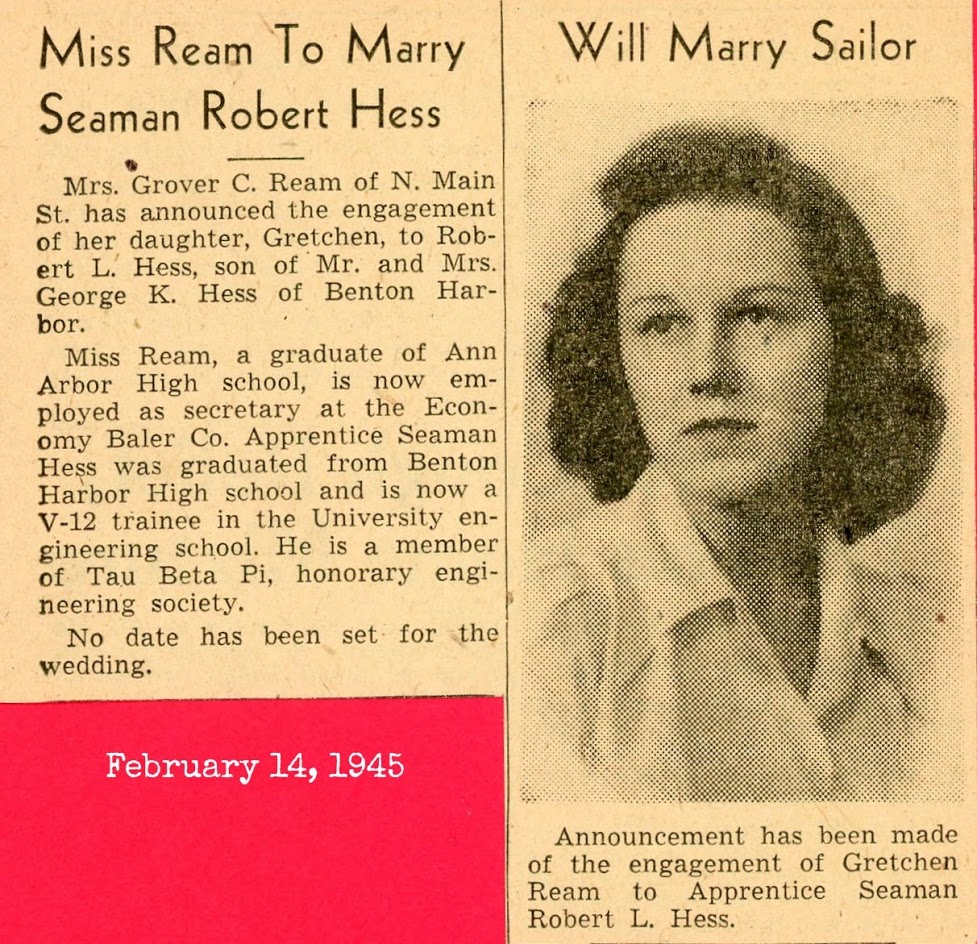
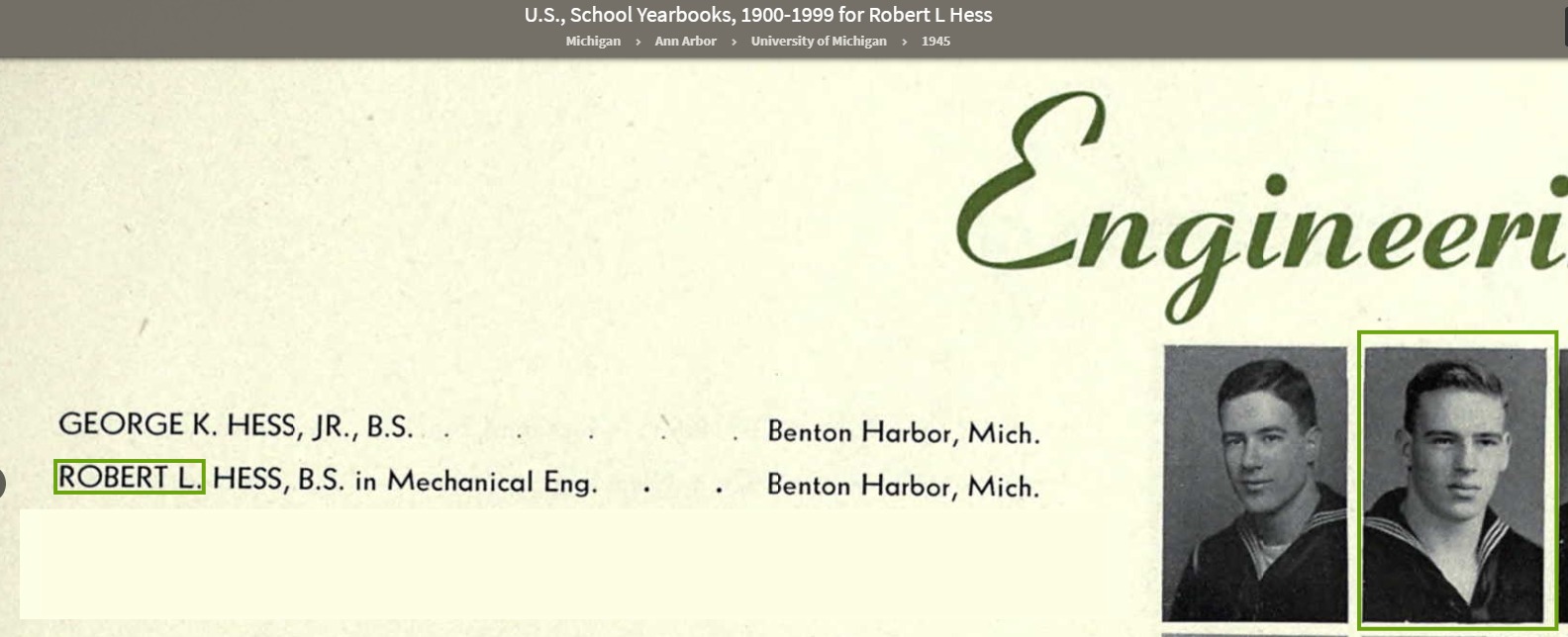
On 14 Feb 1945, Robert Hess proposed to Gretchen Ream. Gretchen was 19 years old. Robert was 20 years old. As the article above states, Robert was a V-12 trainee in the University of Michigan Engineering School. The date of Robert’s entry into active service had been 1 July 1943. Gretchen and Robert had met in 1943, so they actually waited to become engaged. In 1943, Robert’s residence was at 426 Hamilton Place, Ann Arbor, MI and Gretchen lived with her mother at 520 N. Main Street, Ann Arbor.
At the time of their engagement, our country was still involved in WWII which we had entered the war in December 1941 after Pearl Harbor. In 1945, Gretchen was a secretary for Economy Baler Co.
APRIL 1945
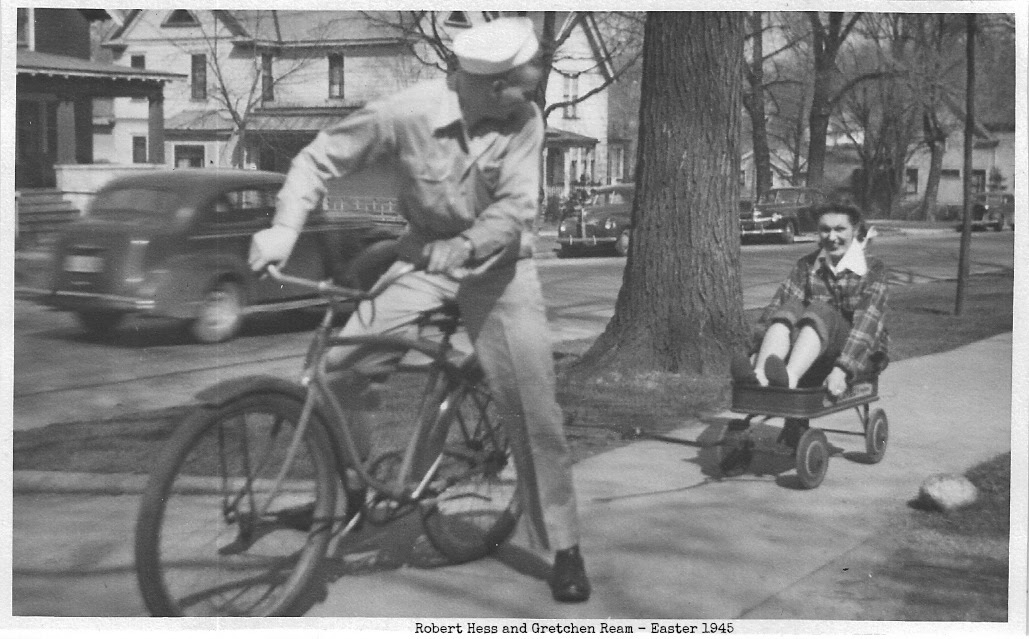
On 1 April 1945, Easter Sunday, the photo below was taken of Gretchen and Robert having fun with a bike and a wagon. It was one of Robert’s favorite photographs.
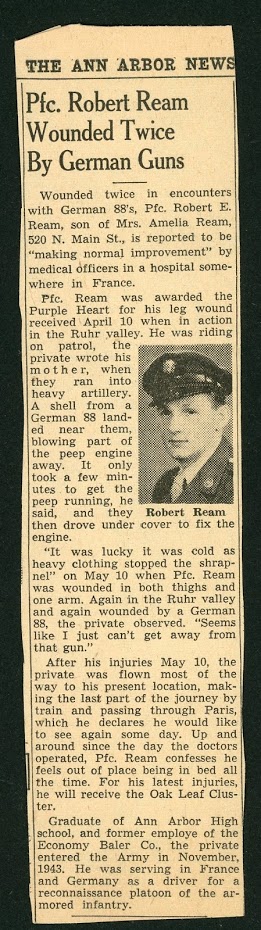
On 10 April 1945, Gretchen’s brother Robert Ream received a Purple Heart after his leg injury.
On 13 Apr 1945, Gretchen and Robert attended the Slide Rule Ball at the Michigan Union. She saved her dance card, autographed by the entertainer Louis Prima and his band.
On 21 April 1945, Robert and his brother George Hess graduate from the University of Michigan with honors.
MAY 1945
10 May 1945 – this article is about Gretchen’s brother, Robert Ream who was receiving the Oak Cluster.
On 2 November 1945, Robert Hess was appointed an Ensign in the US Navy.
Robert Hess served as Junior Division officer, main engines division, on a heavy cruiser at sea and later as auxiliary Division officer on a pair of light escort carriers.
On 30 November 1945 and 8 December 1945, Helen Mayer (Gretchen’s Aunt) hosted bridal showers.
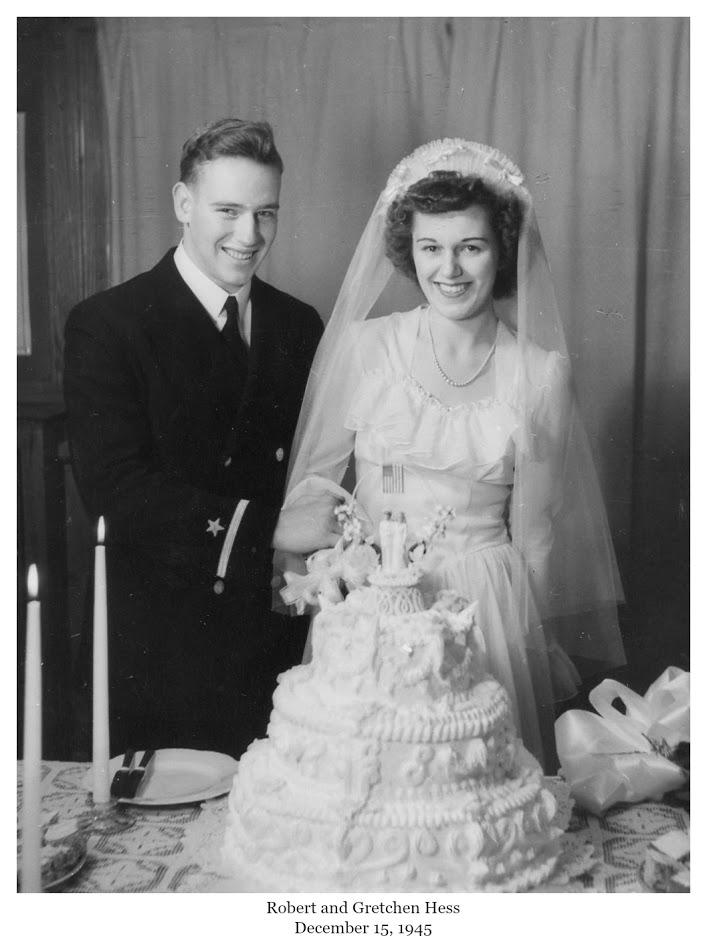
On 15 December 1945, Gretchen and Robert were wed.
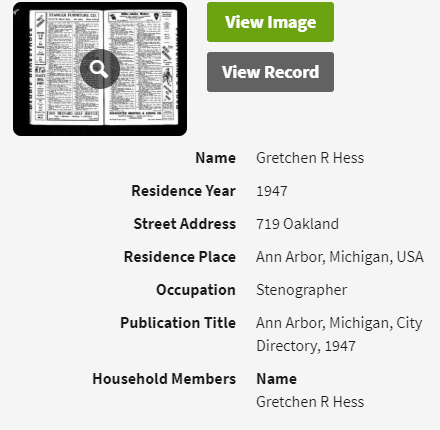
On 16 Dec 1945, Robert and Gretchen began their honeymoon. I am fairly sure that their residence was 719 Oakland Ave., Ann Arbor, MI (see 1947 Ann Arbor Directory below- note that in 1947 George and Ruth Hess lived at 1107 Oakland Ave.)
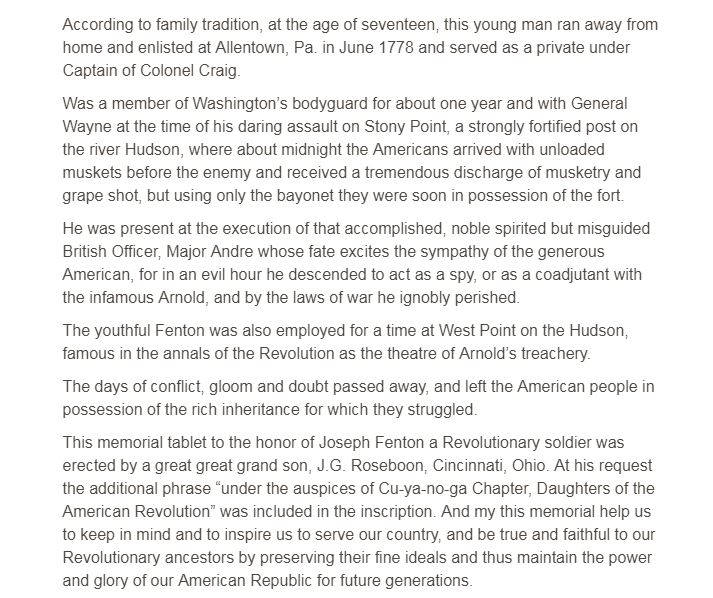
Joseph Francis Fenton was my 4th great grandfather.
Here is how I relate:
I wanted to write about this ancestor partly because he has been so carefully researched by many other folk on Ancestry and they have shared valuable photos and other documents about Joseph. I wanted to pool all of these resources into one spot in order to share them easily with my family.
Joseph’s surname was Finton and this is how his first grave marker was inscribed, but later, when a new plaque was made the surname was changed to Fenton.
When Joseph Francis Finton was born on February 28, 1761, in Dutchess, New York, his father, William, was 29 and his mother, Mary George Fenton, was 29. He married Margaret Swegals in 1781 in New York. They had 11 children in 24 years. Joseph’s wife Margaret Swegals (my 4th great grandmother) died of measles on 30 March 1822.
Later, in 1825, he married Thankful Gillett and he had no children with this second wife.
He died on October 23, 1851, in Barrington, New York, at the impressive age of 90, and was buried in Penn Yan, New York.
He had a military background:
Source is DAR Lineage Book NSDAR Volume 166:1921
This is what is inscribed on a tablet: Dedication of Joseph F. Finton Tablet in Penn Yan Cemetery, Nov. 27, 1934
Enlisted June 1778 for 3 years, under Capt. Craig, went recruiting for 3 months. Joined 3rd Pa. Regt. in the fall under Col. Craig (brother of Capt. Craig) Lt. Col. Wiliams & Major Biles.
He was in the assault and taking of Stoney Point in 1779, and in an engagement at Bargains Point, at the time of Arnold’s defection, soldier went to West Point and remained there some time. He was also in New Jersey a long time.
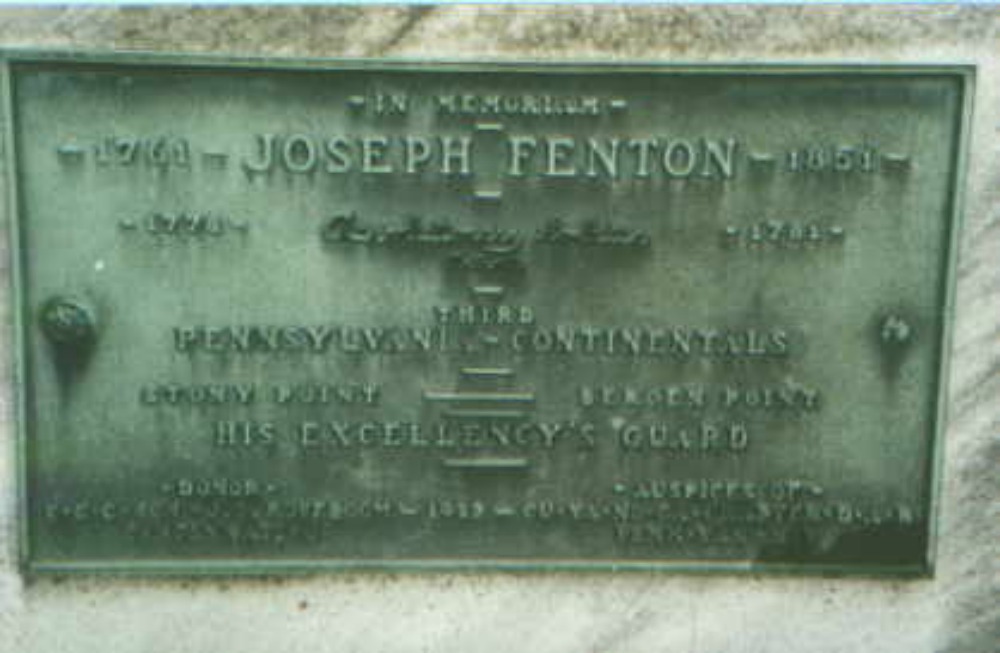
This photo of his tombstone also shows military associations:
Lived from 1761 to 1851
The burying ground of the Finton family was located on the family farm until most of the burials were removed to Lakeview Cemetery in Penn Yan, where they are today.
JOSEPH COMES TO BARRINGTON
The source (Page 145-148-The Fintons and Crosbys) gives us the following information about the farm.
“Joseph Finton was a revolutionary soldier, and came with his family into Barrington, (then Wayne) from New Jersey in the Spring of 1806, and settled on land in the northwest part of the town, which, for some unexplained reason, was not run into lots and numbered wih the original survey. There was enough of this land for about five lots, and it was marked on an early map as “very poor.” Mr. Finton chose this location rather than land more heavily timbered in Milo, because in the open, less wooded land, there seemed a prospect of sooner getting food for stock, which was an object of great importance to pioneer settler. The Bath road at that time was a crooked way through the woods, and Mr. Joseph S. Finton, who lives now on the spot where his after settled, thinks it was not opened as a highway till after the lake road. Their first school for that neighborhood, was in a log house, north of the Barrington line, near the present residence of Job. L. Babcock, on land long owned by Jonathan Bailey. The house was warmed by a hugh old fashioned fireplace, capable of holding almost a cord of wood. School was principally attended to in the winter; and Mr. Finton says that on all the pleasant days they had to stay at home and break flax. Cotton was not king then, and flax wrought by home industry, was the most important element for clothing the family.”
The photo below of the Fenton farm was as pictured after the 1851 death of Joseph.
Finton Farm 1876
The next photograph was not taken until 1925 (Joseph had died in 1851)
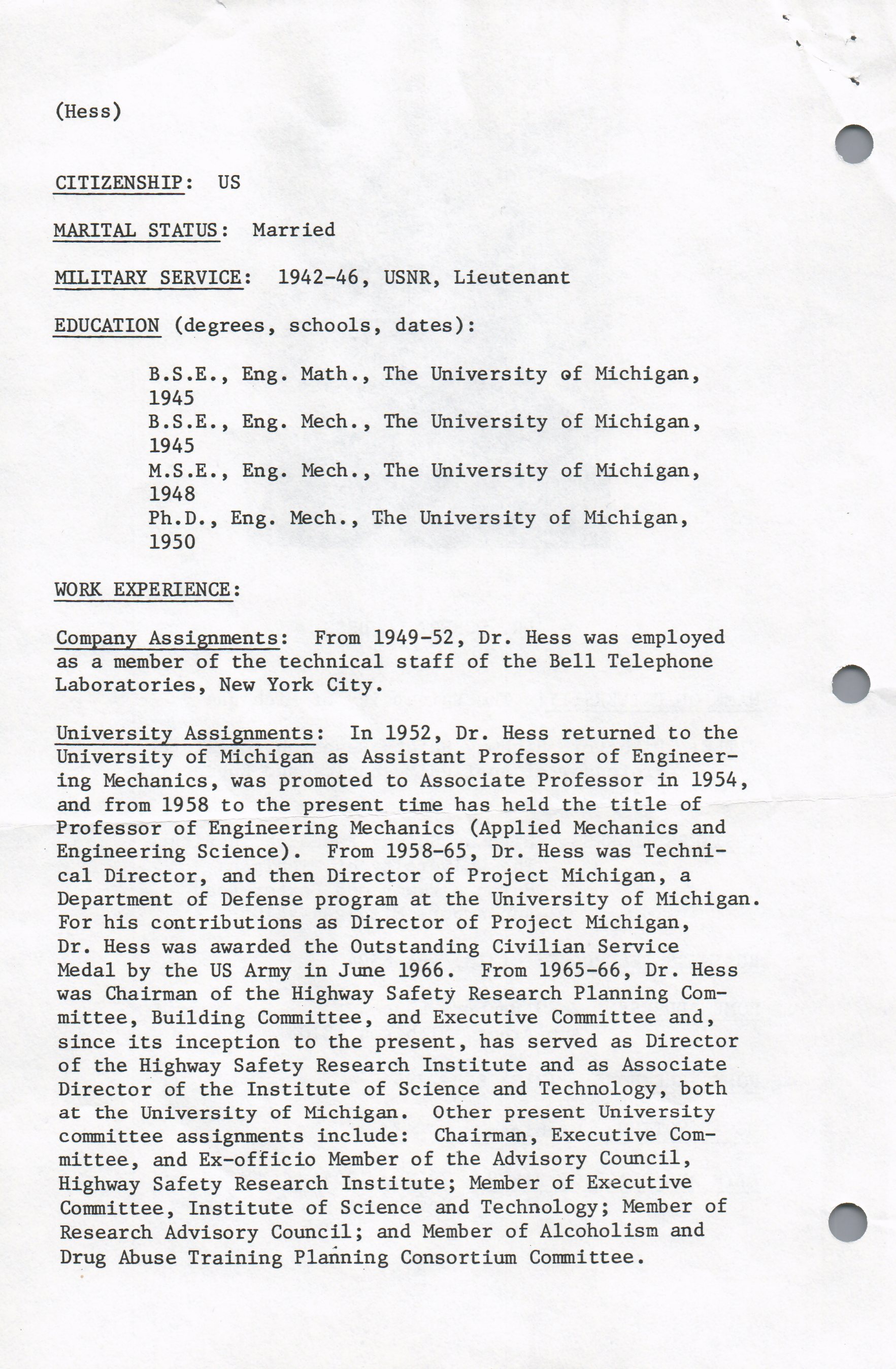
SUBJECT: Robert L. Hess’s History of Research,
Service and Teaching
Contributions
to
the
University
of
Michigan.
Professor
Hess
received
his
B.S.E.
in
Engineering
Mathematics and
B.S.E.
in
Engineering
Mechanics
from
the
University
of
Michigan, after which he
served as
an Engineering Officer in
the
U.S.
Navy.
Upon
release
from
active
world
war
II service
he returned to Ann Arbor,
the
home
of
his
wife,
Gretchen
R.
(Ream)
Hess
and
on
a
visit to the Engineering
Mechanics office was hired as a full-time instructor
and
was
asked
to
undertake
a
research
project
by
Prof.
J. Ormondroyd. The
project
became
the
basis
of
his
Doctorial
Thesis, “The
Dynamics
of
Ship’s
Structures,
including
Shear
Deformations”.
This work was directed by Professor· Ormondroyd and became one of the first major engineering works to be programmed for the ENIAC (that being done by the David Taylor Model Basin, Dept. of the Navy).
During the three years of full time teaching, (Dr.) Hess served in the U.S. Naval Ready Reserve and spent his training periods atthe Model Basin. He was honored by being requested to provide, along with his brother, 40 hours of lectures on mathematics and advanced dynamics for the scientific staff of the Navy at the Model Basin.
Professor Hess was recruited by the Bell Telephone Laboratories and joined BTL as a Member of the Technical Staff in the fall of 1949, being assigned to a ‘heavy-tube’ Development Group. The many research projects he participated in included the assignment to undertake the development of a pilot line for the production of both the material for and the devices known as ‘point-contact’, type A transistors. (This was before the courts orderd BTL to place the technology on the market and was thus a unique endeavor for Dr. Hess.) It was typical of him to have the breadth of both interest and scientific knowledge that brought him such a coveted assignment and also success in it. He developed new techniques of crystal growing and zone-purifying as well as a novel method of doping the contact area to created photo-sensitive transistors.
In his third year at BTL Dean G.G. Brown called him with an unsolicited offer to return to the U. of M. as an Assistant Prof. of Chemical and Metallurgical Eng. and Assistant Professor of Engineering Mechanics and to also take on a Phoenix Project dealing
with
the
atomic
structure
of
glass. Dean
Brown
gave
Prof.
Hess
the challenge of creating a new
course in structure of glass and ceramics. At
the end of his third year Hess was promoted to Associate
Professor
of
Engineering
Mechanics
and
left
the
Chem.
Met. Dept. He
undertook
the
reactivation
of
the
Dept.’s
Photo-Elasticity Lab.
and
generated
a
course
for
it
as
well
as
teaching.
in
the
areas
of elasticity and
dynamics.
In about 1957, Vice President and Dean of Faculties, Prof. M. Niehus asked Prof. Hess to join an elete committee of engineers and scientists to oversee the work of the Willow Run Laboratories which at that time was experiencing troubled relationships with the Department of the Army, its prime source of support. In Jan. 1958 Dean Niehuss requested that Hess take leave of his teaching and consulting practice and join a new management team, headed by Prof. J.A. Boyd {now Chairman of Harris Corp.) to salvage and redirect the Willow Run Laboratories. Hess was given the specific assignment of Technical Director of Project Michigan as well as an Assistant Directorship of WRL. In addition Hess became the Head of the Applied Research Group of the Labs. In March of 1958 Dean Attwood informed Hess of the approval of his promotion to full Professorship. (A promotion which was said to make Hess the youngest full professor in the College’s history.)
Prof. Hess soon developed a keen ability to manage multiple teams of researchers on topics varying from information processing, semiconductor development, infrared scanning and synthetic antenna radar. He was able to apply his knowledge of basic physics and mathematics to the tasks as a member of the teams involved and to also represent them to the top military officers and, upon the creation of a Department of Defense to the scientific part of that community. In his unique fashion and with unusual modesty his term of management, which after three years included the project directorship as well as it technical direction, Hess always put his staff in the foreground and sacrificed personal fame in the process. Never-the-less upon his decision to return to teaching, the Department of the Army awarded Prof. Hess with THE OUTSTANDING CIVILIAN SERVICE MEDAL the inscription of which read in part ‘Hess succeeded in establishing and maintaining the University of Michigan as the leading free world authority in surveillance technology’.
His own proven scientific talent and professional imagination contributed additionally to the accomplishments of a broad team of scientists and technicians. The rare combination of skill, foresight and devotion to country…’. During the years of 1964 and 1965·, Hess served as the personal representative of the U.S. Army’s Assist Chief of Staff for Intelligence and led teams of scientists through a comprehensive field review of the Army’s Combat Surveillance capabilities in Europe and in Korea. As a token of the regard that the Army had for Hess’s abilities, over 70% of his recommendations from the Korean area were implemented. In 1965 Professor Hess visited with President H. Hatcher with the view of leaving the Project Michigan assignment and returning to full-time teaching. By that time, the I.S.T. had been created and W.R.L. was part of it and Hess was one of its directors. President Hatcher, through Prof. Norman, Vice President for Research offered Hess the challenge of using the $10 million original gift from the automobile industry to create the Highway Safety Research Institute. A counter offer on Hess’ part allowed him to hire a top level ‘internal administrator’ for H.S.R.I. and thus to be able to devote his attention to building the staff and its research programs and to also return to teaching, which was his first love. With a regentially appointed Executive Committee and with the cooperation of dozens of the University’s faculty Hess was able in a few years to build a building, hire internationally known figures and to build a program of research spanning fields from Law to Medicine and from Engineering to Psychology. His untiring drive established the Institute as the world’s premiere institution of its kind and brought not only many millions of research dollars to our campus for the support of researchers, faculty and graduate students but also continued to enhance the reputation of the University of Michigan.
During
a
long
period
of
the
H.S.R.I.
years,
Hess
also
served
the University
as
a
Consultant
to
the
Army’
Science
Board
where
he
both chaired
and
participated
in the study of many of the
nation’s outstanding technical problems and
challanges.
During the last five years Professor Hess undertook two major research studies while teaching a nearly full load and directing the H.S.R.I. These were first the review of the complete research findings in the scientific, engineering and medical communities of the experimentation protocols and the knowledge in the area of blunt trauma to the human head and second, the same for the area of blunt trauma to the thorax. In each case an annotated history of the development of the government’s use of the knowledge in its regulation was developed and recommendations were put forward for the future of research in the field. The second of these studies was selected for publication in the S.A.E.’s transactions. Hess served the University by membership on President Nixon’s Highway Safety Advisory Committee and also undertook service as a Consultant to the World Health Organization.
Prof Hess resigned his position as Director of U.M.T.R.I. (the succesor to H.S.R.I.) and returned to a full time faculty teaching role in January of 1984. In keeping with his reputation, he has undertaken the teaching of the Control Systems course, ME461, a new course for him, with vigor and has provided new leadership in its laboratory and course work with several software packages he has written to enhance the depth and breath of the educational experience of the students He also accepted an assignment as the Mechanical Engineering Program Adviser and has written software packages now in use by that office to materially enhance the efficiency of the process and to allow the Adviser to take a proactive rather than a reactive role in counseling. He is also supervising the trial use of a professional in this office.
All in all, Professor Hess’ academic and service accomplishments are outstanding and the respect that he has rightfully gained from his peers is only reflective of the credit he has always given to them over 32 years of devoted service to the University. In the classroom, the laboratory and the office he has represented the best the University of Michigan could offer its students and country.
Subject: Robert L. Hess’s History of Research, Service and Teaching Contributions to the University of Michigan.
In 1945, Professor Hess received two B.S.E. degrees from the University of Michigan in less than a 3 year period, one in Engineering Mathematics and the other in Engineering Mechanics after which he served as an Engineering Officer in the U.S. Navy.Hess served as junior Division officer, main engines division, on a heavy cruiser at sea and later as auxiliary Division officer on a pair of light escort carriers.
Upon release from active World War II service he returned to Ann Arbor, the homeof his wife, Gretchen R. (REAM) Hess. On a visit to the Engineering Mechanics office he was hired as a full-time Instructor and was asked to undertake a research project by Prof. J. Ormandroyd. The project became the basis of his Doctorial Thesis, “The Dynamics of Ship’s Structures, including Shear Deformations”. This work was directed by Professor Ormandroyd and became one of the first major engineering works to be programmed for the ENIAC (that being done by the David Taylor Model Basin, Dept. of the Navy). During the three years of full time teaching as an Instructor, (Dr.) Hess served in the U.S. Naval Ready Reserve and spent his training periods at the Model Basin. He was honored by being requested to provide 40 hours of lectures at the Model Basin on advanced mathematics and dynamics for the scientific staff of the U.S. Navy when he was 24 years old.
Professor Hess was recruited by the Bell Telephone Laboratories and joined BTL, upon completion of his doctorate, as a Member of the Technical Staff in the fall of 1949, being assigned to a ‘heavy-tube’ Development Group. The many research projects he participated in included the assignment to undertake the development of a pilot line for the production of both the material for and the devices known as ‘point-contact’, type A transistors.(This was before the courts ordered BTL to place the technology on the market and was thus a unique endeavor for Dr. Hess upon which several of the newly licensed companies partly based their developments.) It was typical of him to have the breadth of both interest and scientific knowledge that brought him such a coveted assignment and also success in it. He developed new techniques of crystal growing and zone-purifying as well as a novel method of doping the contact area using microwave techniques to created photo-sensitive transistors.
In his third year at BTL Dean G.G. Brown called him with an unsolicited invitation to return to the U. of M. as an Assistant Prof. of Chemical and Metallurgical Eng. and Assistant Professor of Engineering Mechanics and to also take on a Phoenix Project dealing with the atomic structure of glass. Dean Brown gave Prof. Hess the challenge of creating a new course in structure of glass and ceramics. At the end of his third year Hess was promoted to Associate Professor of Engineering Mechanics and left the Chem. Met. Dept. He undertook the reactivation of the Engineering Mechanics Department’s Photo-Elasticity Lab. and generated a course for it as well as teaching in the areas of elasticity and dynamics.
In about 1957, Vice President and Dean of Faculties, Prof. M. Niehus asked Prof. Hess to join an elite committee of engineers and scientists to oversee the work of the Willow Run Laboratories which at that time was experiencing troubled relationships with the Department of the Army, its prime source of support. In Jan. 1958 Dean Niehuss requested that Hess take leave of his teaching and consulting practice and join a new management team, headed by Prof. J.A. Boyd (now Chairman of Harris Corp.) to salvage and redirect the Willow Run Laboratories. Hess was given the specific assignment of Technical Director of Project Michigan, a 4 to $6 million/year program, as well as an Assistant Directorship of WRL. In addition Hess became the Head of the Applied Research Group of the Labs, which at that time had just demonstrated the MASER and a year prior to the demonstration of the Ruby LASER. Hess was instrumental in extending optical data processing to the field of automatic photo-interpretation. In March of 1958 Dean Attwood informed Hess of the approval of his promotion to full Professorship. ( A promotion which was said to make Hess the youngest full professor in the College’s history up to that time.)
Prof. Hess soon developed a keen ability to manage multiple teams of researchers on topics varying from Information processing, semiconductor development, infrared scanning and synthetic antenna radar. He was able to apply his knowledge of basic physics and mathematics to the tasks as a member of the research teams and also represented them to general officers representing the U. S. Army, and, upon the creation of a Department of Defense to the scientific part of that community. In his unique fashion and with unusual modesty, his term of management, which after three years included the project directorship as well as its technical direction, Hess always put his staff in the foreground and sacrificed personal fame in the process. Never-the-less upon his decision to return to teaching, the Department of the Army awarded Prof. Hess with THE OUTSTANDING CIVILIAN SERVICE AWARD and METAL the inscription of which read in part ‘Hess succeeded in establishing and maintaining the University of Michigan as the leading free world authority in surveillance technology. His own proven scientific talent and professional imagination contributed additionally to the accomplishments of a broad team of scientists and technicians. The rare combination of skill, foresight and devotion to country….’.
During the years of 1964 and 1965, Hess served as the personal representative of the U.S. Army’s Assist. Chief of Staff for Intelligence and led teams of scientists though a comprehensive field review of the Army’s Combat Surveillance capabilities both in Europe and in Korea. The Army implemented over 70% of his technical recommendations for the Korean area. In 1965 Professor Hess visited with President H. Hatcher with the view of leaving the Project Michigan assignment and returning to full-time teaching. By that time, the I.S.T. had been created and W.R.L. was part of it and Hess was one of its Directors. President Hatcher, through Prof. Norman, Vice President for Research offered Hess the challenge of using the $10 million original gift from the automobile industry to create the Highway Safety Research Institute. This was a special honor as that gift was reported to have been the largest gift in the University’s history at that time. Upon acceptance, Hess hired a top level ‘internal administrator’ for H.S.R.I. and thus was able to devote his attention to building the staff and its research programs and also to return to teaching which was his first love. With a Regent ally appointed Executive Committee and with the cooperation of dozens of the University’s faculty Hess was able in a few years to build a facility, hire internationally known figures and to build a program of research spanning fields from Law to Medicine and from Engineering to Psychology. His untiring drive established the Institute as the world’ premier institution of its kind and brought not only many millions of research dollars to our campus for the support of researchers, faculty, and graduate students but also enhanced the reputation of the University of Michigan.
During his tenure at H.S.R.I., Hess served as a consultant to the Army’ Science Board where he both chaired and participated in the study of many of the nation’s outstanding technical problems and challenges.
Professor Hess personally undertook two major research studies while teaching a nearly full load and directing the H.S.R.I. These were the review of the complete research findings in the scientific, engineering and medical communities of the experimentation protocols and the same for the area of blunt trauma to the human head and the same for the area of blunt trauma the thorax. In each case an annotated history of the development of the use of the knowledge in regulation was developed and recommendations were made for future research in the fields. The second of these studies was selected for publication in the S.A.E.’ transactions. Hess served the University by membership on President Nixon’s Highway Safety Advisory Committee and also undertook several overseas services as a Consultant to the Wor1d Hea1th Organization.
Prof Hess resigned his position as Director of U.M.T.R.I. (the successor to H.S.R.I.) and returned to a full time faculty teaching role in January of 1984. Shortly thereafter Hess founded a computer software company, HCCI, which deals in engineering specialty software for a international audience in the forensic engineering area. In keeping with his reputation, he has undertaken the teaching of the Control Systems course, ME461, a new course for him, with vigor and has provided new leadership in its laboratory and course work with several software packages he has written to enhance the depth and breath of the educational experience of the students. These include programs dealing with Fourier techniques, general integration methods, data plotting, frequency analysis, root locus, Nyquist techniques, Myk1lestad and Holzer techniques, matrix iteration techniques, eigenvalue/eigenvector techniques and many others. He also accepted an assignment as the Mechanical Engineering Program Advisor and has written degree-audit software packages now used by the Mechanical Engineering and Applied Mechanics department. The implementation of modern techniques allows Professor Hess, as the Advisor, to take a proactive rather than a reactive role in counseling. Similar HCCI software is now being installed in a large engineering college.
Professor Hess’s academic and service accomplishments are outstanding and the respect that he has gained from his peers is only reflective of the credit he has given to them over a total of 37 years of devoted service to the University. In the Pentagon, corporate offices, the classroom and laboratory he has represented the best the University of Michigan could offer its students and country.
When I received my DNA results from Ancestry.com, I was amazed to see a high percentage of my heritage was attributed to Great Britain. If Ancestry has my DNA results right, Great Britain is the source of 53% of my heritage. As a little girl, I remember asking many times where my ancestors had come from, and the most common answer I received was, “Germany”. Indeed, I do have many German ancestors especially on my mother’s side of the family. But, here, in this blog on Johan Sprague, I continue my unfolding documentation of my father’s ancestors and I keep learning about my English/ Irish ancestry!
Johan Sprague was my 13th great grandfather. Here is a view of how Johan connects to my father, Robert Lawrence Hess:
Johan Sprague (1501 – 1526) 13th great-grandfather
Now, I am going to share a link from a writing project that was done on the genealogy of the Sprague’s. I am so very grateful for this story, but, is it only historical fiction? Is it just a tall tale? I have made my own conclusion, but I will let you make your own decision!
1.01.1 Family History – The First Three Generations of Sprague’s Family. Written by students of International Training and Education Center, Ho Chi Minh City, Vietnam, Ms. Kelly Norman, teacher. It is not clear whether this unsourced material is based on research of the actual lives of persons, or whether it is historical fiction intended to illustrate the religion, politics, and health issues of the eras in which they lived. http://rubikgroup.weebly.com/1/post/2013/10/family-history-the-first-three-generations-of-spragues-family.html. Accessed June 7, 2015.
” On a bitter cold day in 1501, Johan Sprague was born in Dorset, England in a Catholic family. From 1512 to 1516, he was studied in a church near his house, but deep down in his heart, he did not believe in Catholicism. By midsummer in 1516, he was married Marie – a pastor’s daughter in the church who taught him. Nine years later, in 1525, they was has a first son – named Enos Sprague. In 1527, they had twins girls, Ava and Mia, but Ava died when she was two years old because of influenza. Three years later, when Mia was five years old, many people in their village got and died of smallpox, and she also got it, she survived but sadly it made her blind. In 1534, Henry VIII dissolved England’s monasteries because Pope did not allow him to divorces his first wife. “After Henry’s death, England tilted toward Calvinist-infused Protestantism during Edward VI’s six-year reign”[1]. Many evangelical churches springing up, Johan Sprague and his family left Catholicism and became Protestant, but not much people in the village knew about that. He really found his faith in Protestantism. Unfortunately, after Edward died, Mary I (also known as “Bloody Mary”) was crowned, people endured five years of reactionary Catholicism under Mary I, she was beheaded and burned many Protestants, nearly 300 Protestants were burned to death. Governments and Catholics had no evidence of Sprague family were Protestants, therefore they can safe. Unfortunately, in 1556, Sunday morning, Sprague family were be burned at their house, Johan, Marie, Mia and Enos’s children all dead, just Enos and his wife can alive, the neighbors around said it was just an accident, but someone believe that Catholics did.”
Sadly, if this story is true, Johan had a life cut short by heresy laws that disallowed Protestant beliefs. Henry the VIII had allowed Protestant beliefs in order that he may divorce his wife. But, when Queen Mary I (or “Bloody Mary” ) came to power she had nearly 300 persons killed in her attempt to restore the Catholic Church and rid it of Protestants. If the story above is true, my 13th great grandfather, Johan and most of his family came to a horrible violent death. However, Johann may have never had the twin girls referenced and he may have died at the age of 26 in 1526 rather that 1556 as this story sites.
Note: Even though Johan’s death date is first listed as 1526 in this research, it is also within the same research document listed as 1556. Ugh…more confusion!
If his death date was really 1526, it makes the story of the twin girls and Johan’s death for heresy less likely!
Watch for more blogs on the Sprague family coming soon! I would be very grateful for any information you might wish to share on my family roots!
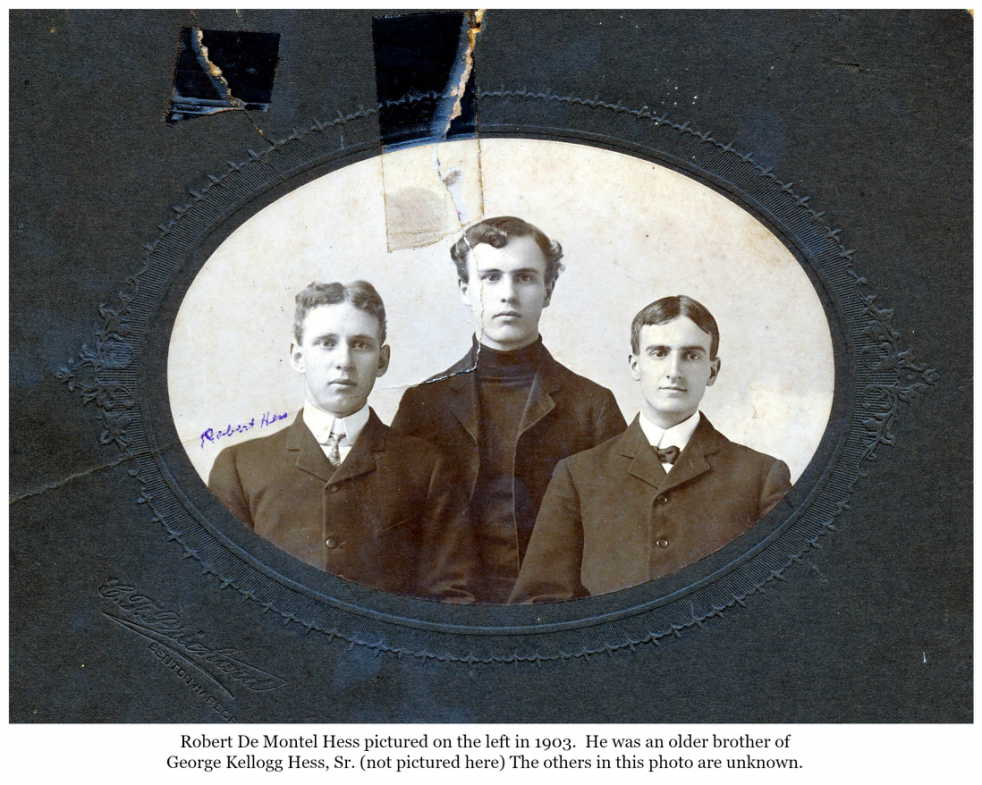
When Robert De Montel Hess was born on April 8, 1882, in Benton Harbor, Berrien Co., Michigan, his father, Juan Hess, was 31 and his mother, Dorothy (Dora Bishop), was 25.
Robert de Montel and my grandfather, George Kellogg Hess, Sr. were brothers. They had two other siblings (also children of Juan and Dora) that had died as very young children. According to Michigan death records these two Hess children died in 1880 of diphtheria. They were Hattie (4 years old) and Perry Hess (2 years old).
I do not know why an obituary for Juan Hess written many years later on January 15, 1929, states that he only had 2 sons. Perhaps, it was the “fashion” at the time not to mention children who died in their youth?
This is the 1929 obituary (below) for Juan Hess (father of Robert de Montel Hess)
I chose to write this blog because I was intrigued that Robert de Montel may have been a namesake for my own father. There were 2 generations of the Hess family that had a child “George” and a child “Robert”. My father was Robert Lawrence Hess and his brother was George K. Hess, Jr. My father did not recall much about his Uncle Robert de Montel Hess, (the subject of this blog), because his uncle had been deceased for many years before my father was born in 1924. Even so, my father did believe that this was the relative that may have inspired the name “Robert.” If this is true, it also makes me wonder why my father was called only by his middle name “Larry” (short for Lawrence) as a child.
The deaths of Hattie and Perry had happened before my Grandfather’s birth in September of 1891. But, sadly, my grandfather George Kellogg Hess, Sr. would know death of loved ones (other than these two older siblings) again soon being only 13 years old when his mother, Dora Bishop Hess, died and only 15 years old when his only remaining brother, Robert de Montel Hess, died.
Robert de Montel Hess, married Alice Susanne King on October 19, 1904, in Benton Harbor, Michigan. They had one child during their marriage. He died on January 18, 1907, in Berrien, Michigan, at the age of 24 from a liver abscess due to appendicitis. He was buried in Berrien County, Michigan. As stated, his death, was in part attributed to appendicitis. This is interesting to me as my father had a burst appendix at the age of 5 years old and made a rather amazing recovery.
At the time Robert’s marriage to Alice he was 22 years old. More surprising, is the fact that Alice was a mere 16 years old when they wed. This would make Alice only 19 years old when she became a widow. There seems to be a date conflict. All census records indicate that Alice was born in 1888. However, the News article pictured below, states that she was a graduate of Benton Harbor College in 1904-shocking considering that she was only 16??? Or…was someone trying to make Alice “older” than she really was??
So, Robert’s mother Dora died on October 15, 1904. He married Alice 4 days after his mother’s death on October 19, 1904.
The news photo below is from 8 May 1929 – It highlights events from”25 years ago” and tells how Mrs. Juan Hess and son Robert (a college senior) entertained the Juniors at the Hess farm. Printed in 8 May 1929 in the News Palladium. This party took place 6 months before the wedding of Robert and Alice and 6 months before Dora’s death.
The child born to the marriage of Robert de Montel Hess and Alice King Hess was Hattie Lenore Hess. (Her first name being the same as Robert’s sister who had perished as a child). She was born on 17 September 1905.
Robert de Montel did not live long enough to be part of the 1910 census. Alice is in the 1910 census living with her parents in Michigan and her 4 year old daughter who is now going by her middle name Hattie “Lenore” Hess. In 1910, Alice states that she is a sales lady in a furniture store in Benton Harbor. Then, also in 1910, Alice would go on to marry a man named Harlow A. Hansley and live in Los Angeles. She died in 1957 in Los Angeles, CA. Her daughter Hattie Lenore Hess had been living with her mother and step-father in Los Angeles.
In the 1920 census, Alice and Harlow are still in Los Angeles with Alice’s daughter who is now 14 years old and using the name “Lenora”.
Please write and let me know if you have any other information on Robert de Montel Hess or the Hess family!















































 Memorandum to File: Nov. 24, 1986
 Hess Sr. (1891 – 1969)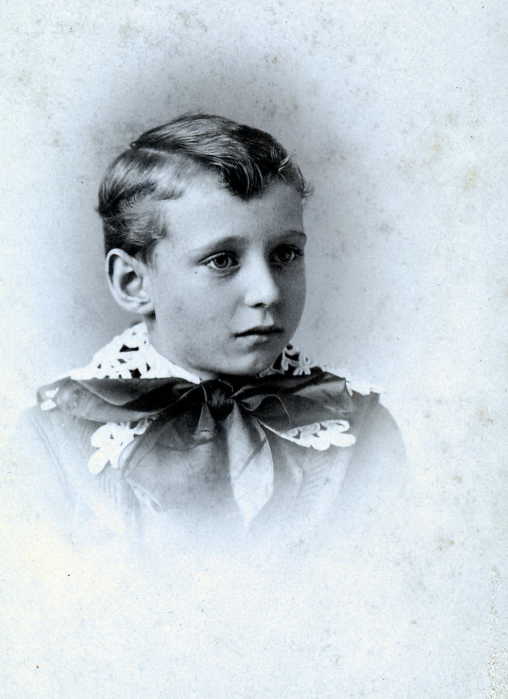


 telling life stories