
Nicholas Knapp was my 8th great grandfather. Here is how my family relates:
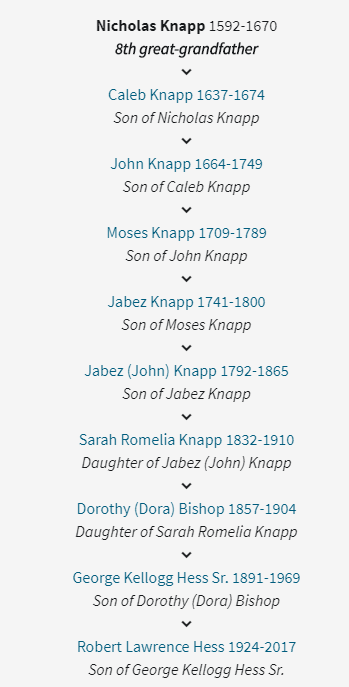
When Nicholas Knapp was born on May 16, 1592, in Wells-Next-To-The-Sea, Norfolk, England, his father, John, was 42 and his mother, Martha Blois (or Blosse), was 27. He married Eleanor (or Elinor) Disbrow Lockwood and they had 11 children together. He then married Unity Brown on January 9, 1659, in Stamford, Connecticut. He died on April 16, 1670, in Stamford, Connecticut, having lived a long life of 77 years, and was buried there.
In my other ancestry posts, I’ve shared that I grew up believing my heritage was predominantly German. As my genealogy research has deepened, I’ve discovered that this assumption isn’t quite accurate. In fact, a significant part of my ancestry is English, a realization that has both surprised me and opened up new avenues of learning. The more I explore my family history, the more I see how much there still is to understand.
I had to look up information about Wells-next-the-Sea where Nicholas was born. At the time of his birth, it was a small port town on the North Norfolk coast of England.
Fishing was crucial in 1592, with Wells-next-the-Sea known for crab, lobster, and herring. The port facilitated regional trade, exchanging fish and agricultural products for textiles and manufactured goods.
The town was a close-knit community with most residents involved in fishing or farming. Houses were typically built from local materials like flint and brick. Religion played a significant role, with the Anglican Church at the heart of social life.
On 6 April 1630, Nicholas (my 8th great grandfather) and wife Eleanor (my 8th great grandmother) left for America and traveled to Salem, MA.
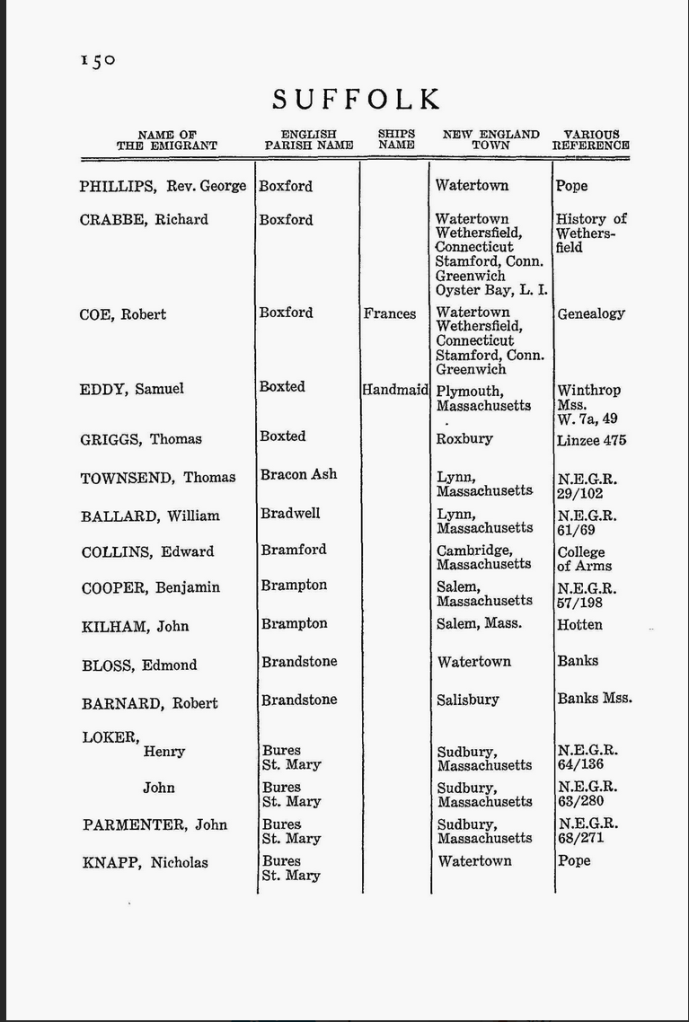
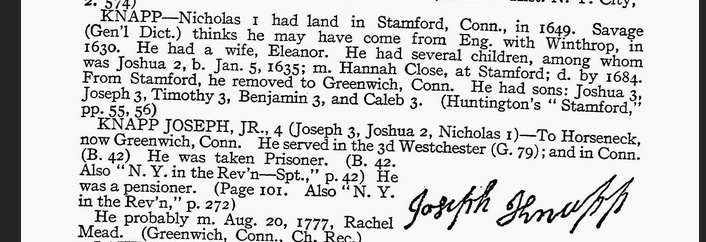
There, they were a part of the Massachusetts Bay Colony. He was one of the very early settlers of Watertown, MA. and Stamford, CT. His life in the colonies was one of living and working under the strict Puritan governance associated with John Winthrop and Richard Saltonstall.
Nicholas appears multiple times in Massachusetts Bay court records. In one record, Nicholas was fined for pretending or claiming to cure scurvy by using a local water source that the court judged to have no medicinal worth. Oops!
His other legal woes included land disputes, fines, and behavioral or regulatory infractions. Specifically he engaged in, an unlicensed medical practice, misuse or promotion of land or water resources and making claims that could cause disorder or deception. As shocking as this may seem, it did not necessarily mean that he was a con man because early settlers experimented with remedies – I would love to see a movie about him!
He had enough of a standing not to be jailed but was fined.
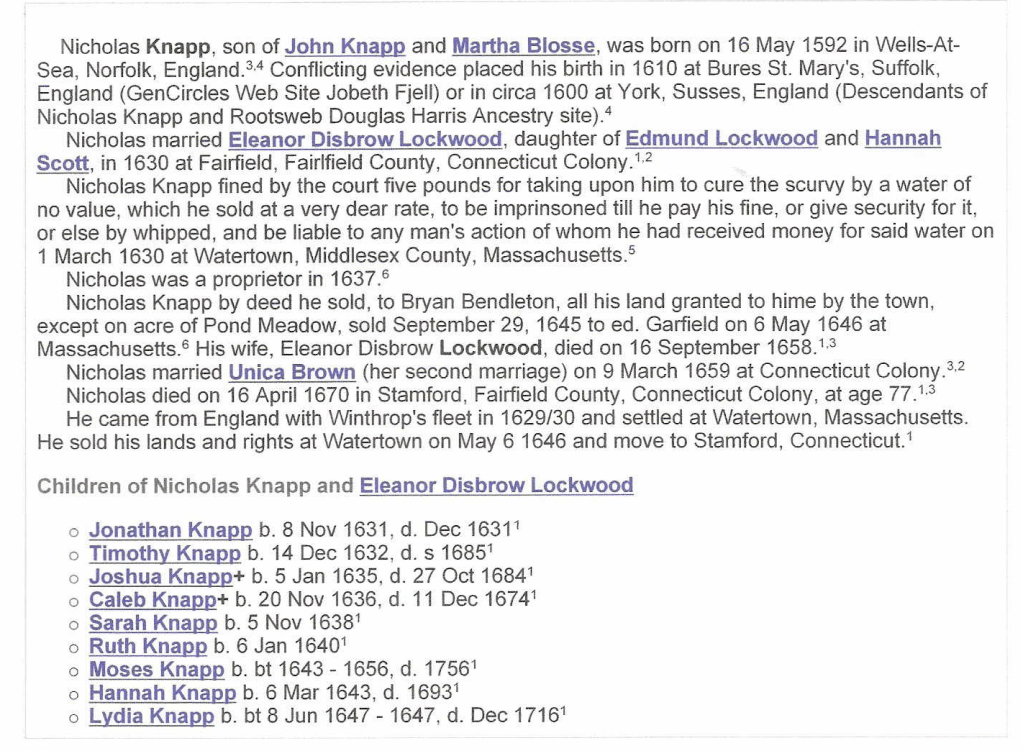
Nicholas passed away on April 16, 1670, in Stamford, Connecticut.
 telling life stories