Tag Archives: ancestry

Anna Cappadoro Bivona 1877 – 1976

When Anna Cappadoro was born on November 30, 1877, in Sicilia, Italy, her father, Guglielmo, was 45, and her mother, Maria, was 44. She had seven sons and one daughter with Vincenzo (Vincent) Vincente Bivona between 1898 and 1918. She died on 10 July 1976 in Queens, New York, at the age of 98.
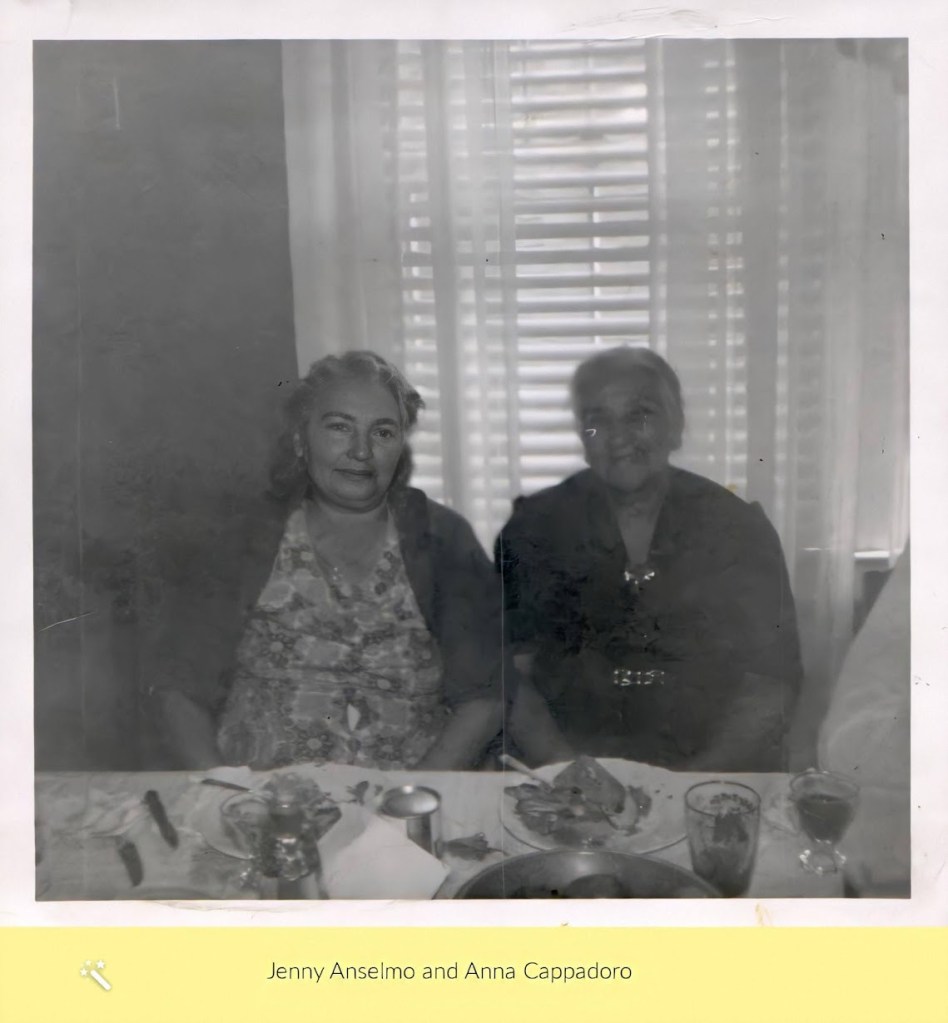
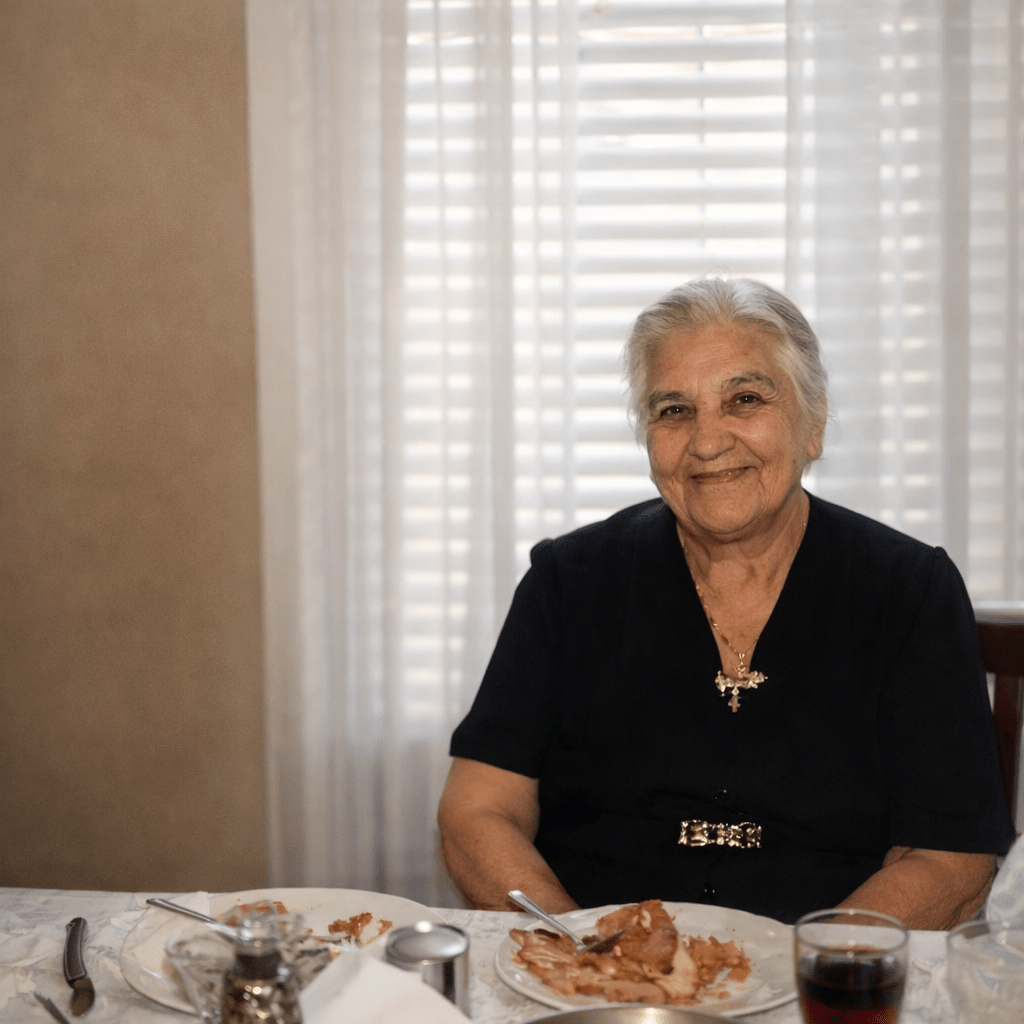
Anna is seated on the right side of this photo – date unknown. The magic wand on the caption means that I have made a digital enhancement to this photo.
I asked AI to take the above photo of Anna and restore it completely. I will wait for members of her family to let me know how well this photo edit worked and how realistic it is.This edit certainly helps to see the details of her lovely dress and her gold necklace. The smile is gorgeous!
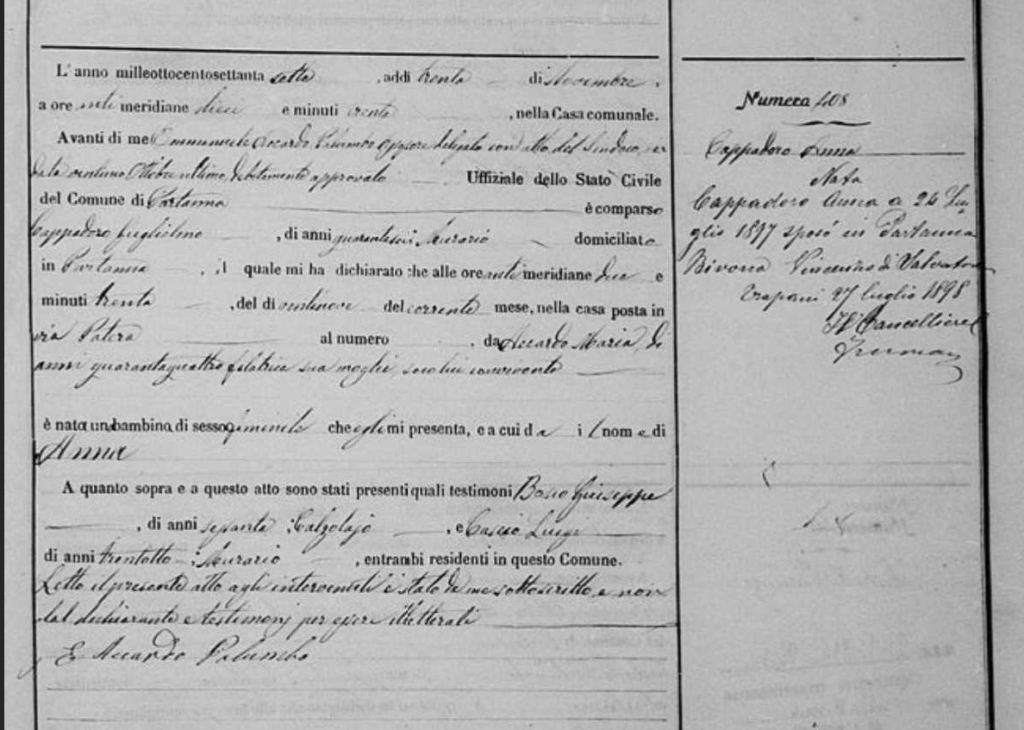
The birth certificate for Anna. 26 Jul 1877. She was born in Custonaci which is a town and municipality located in the Trapani province of northwestern Sicily, Italy

I asked for AI for a translation of the birth certificate shown above:

Year 1877, on the 26th day of July, at the hour one after noon and minutes twenty,
in the Town Hall. Before me, Emanuele Occorso, Mayor and acting Civil Registrar
of the Municipality of Custonaci, appeared Cappadoro Luigi, 40 years old, stonecutter, domiciled in Custonaci, who declared to me that at the hour one after noon and minutes twenty, of the current day,in the house located on Via Salvo,
to Cappadoro Maria, his wife, housewife, living with him, a female child was born,
whom he presents to me and to whom he gives the name: Anna

The above declaration and presentation were made in the presence of the witnesses
Bascio Giuseppe, aged 40, stonecutter, and Casale Luigi, aged 30, bricklayer,
both residents of this municipality.

After this act was read to the declarant and the witnesses, they signed it with me.

Signed:
Emanuele Occorso, Civil Registrar
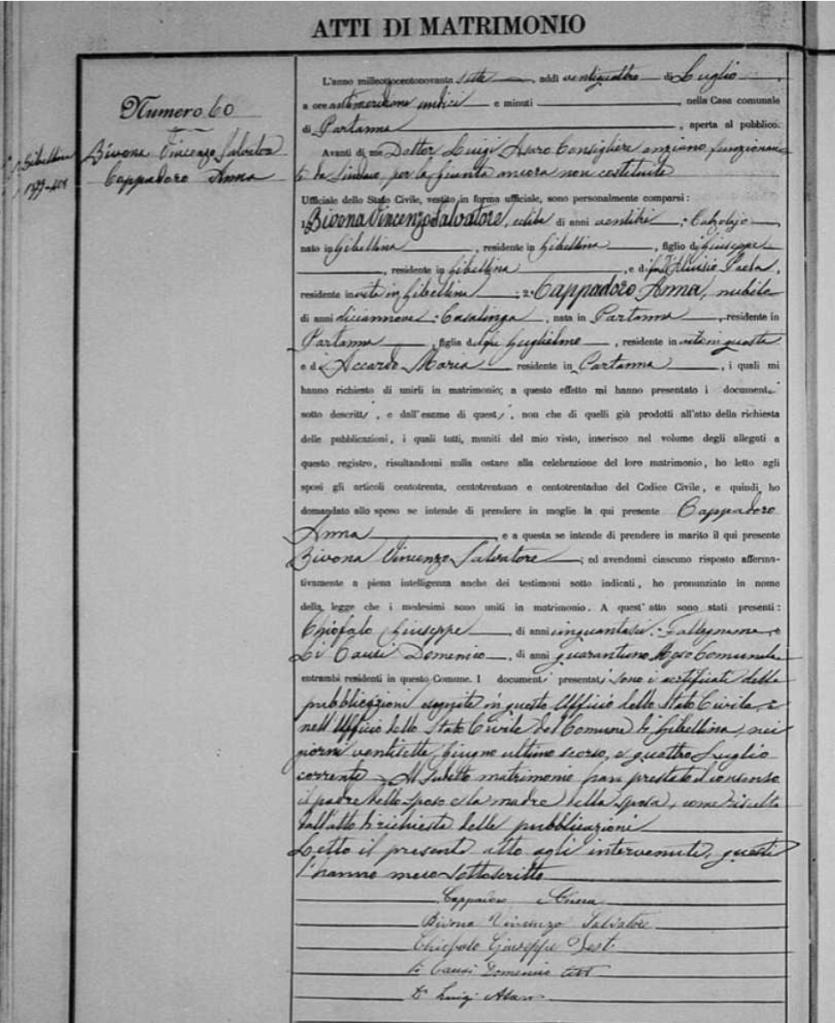
Wedding certificate for Anna. 27 Jul 1987 in Custonaci. Anna was 19 when she married. Her husband was 23 years old.

I used AI to translate this wedding document – see below:

Year 1897, on the 27th day of July, at the hour ten in the morning, in the Town Hall of Custonaci, open to the public. Before me, Dott. Luigi Quaranta, Mayor and acting Civil Registrar, vested in official form, there personally appeared:

Bivona Vincenzo Salvatore, unmarried, stonecutter, born in Gibellina,
resident in Gibellina, son of Giuseppe, resident in Gibellina,and of Giuseppa Foderà, resident in Gibellina; and Cappadoro Anna, unmarried, housewife, born in Custonaci,resident in Custonaci, daughter of the late Luigi, resident in Custonaci,
and of Accardi Maria, resident in Custonaci; who requested to be united in marriage.

For this purpose they presented the required documents, and from the examination of these, as well as of those already produced at the time of the marriage banns,
all bearing my approval and inserted in the volume of attachments to this register,
and finding no impediment to the celebration of their marriage, I read to the spouses the articles of the Civil Code concerning the rights and duties of husband and wife.

I then asked the groom whether he intended to take as wife the present Cappadoro Anna, and the bride whether she intended to take as husband the present Bivona Vincenzo Salvatore; each having answered affirmatively and mutually,
in the presence of the witnesses named below, I declared, in the name of the law, that they were united in marriage.

The witnesses present were: Coppola Giuseppe, 40 years old, laborer, and Di Carlo Domenico, 44 years old, farm worker,both residents of this municipality.

The documents presented were: certificates of birth, marriage banns published in this Civil Registry Office and in the Civil Registry Office of the Municipality of Gibellina,
and certificates showing that no impediment existed to the marriage. After this act was read aloud to those present, it was signed as follows.

Signatures:
Cappadoro Anna
Bivona Vincenzo Salvatore
Coppola Giuseppe
Di Carlo Domenico
Luigi Quaranta, Civil Registrar

According to my research, Anna’s two oldest children were born in Italy. They were Giuseppe “Joseph” Bivona 1898-1961 and Gugllielmo “William” Bivona 1900-1981.

Her next 5 children were born in Argentina. They were; Juan “John” Bivona 1902-1975, Francesco “Frank” Bivona 1904-1969 (the direct ancestor to my brother-in-law’s family), Vincent E Bivona Jr 1908-2001, Antonio (Anthony Tony) Bivona 1911-1998,

Her youngest was born in New York. Angelo Bivona 1918-1993.

It is interesting to note that both Anna’s father and her husband were stone cutters.

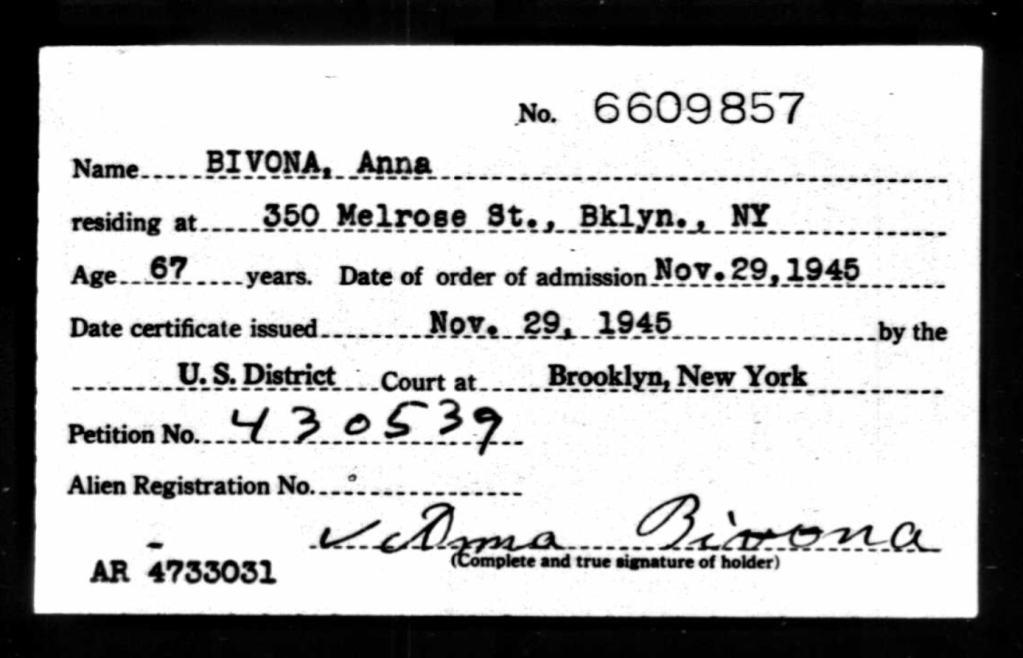
Anna became a naturalized citizen of the USA in 1945.
I have a previous blog that I have not updated but it should have a great deal of additional information about the life of Anna. https://tellinglifestories.org/2018/08/11/francesco-frank-bivona-1904-1969/
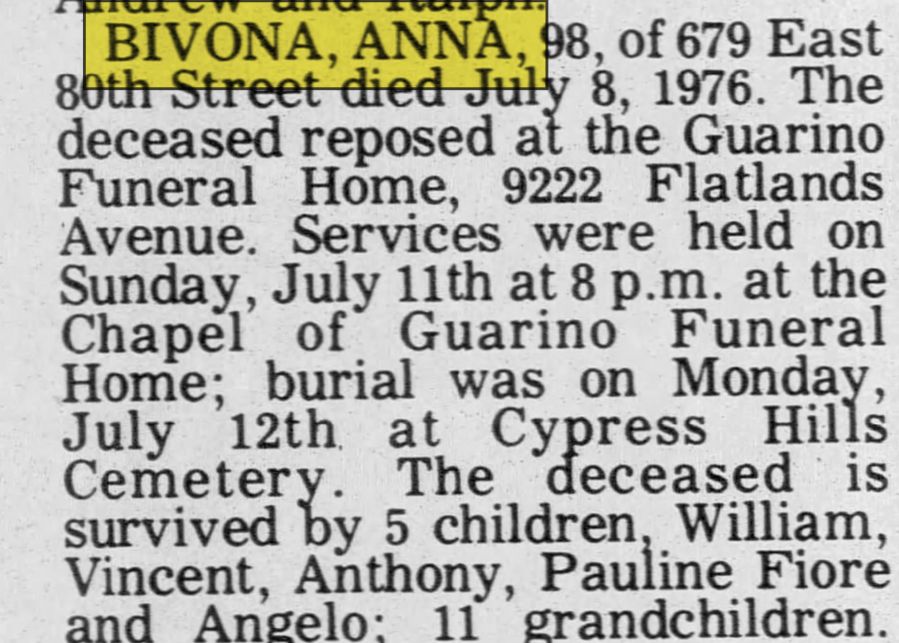
The Canarsie Courier – 15 Jul 1976.

Nicholas Knapp

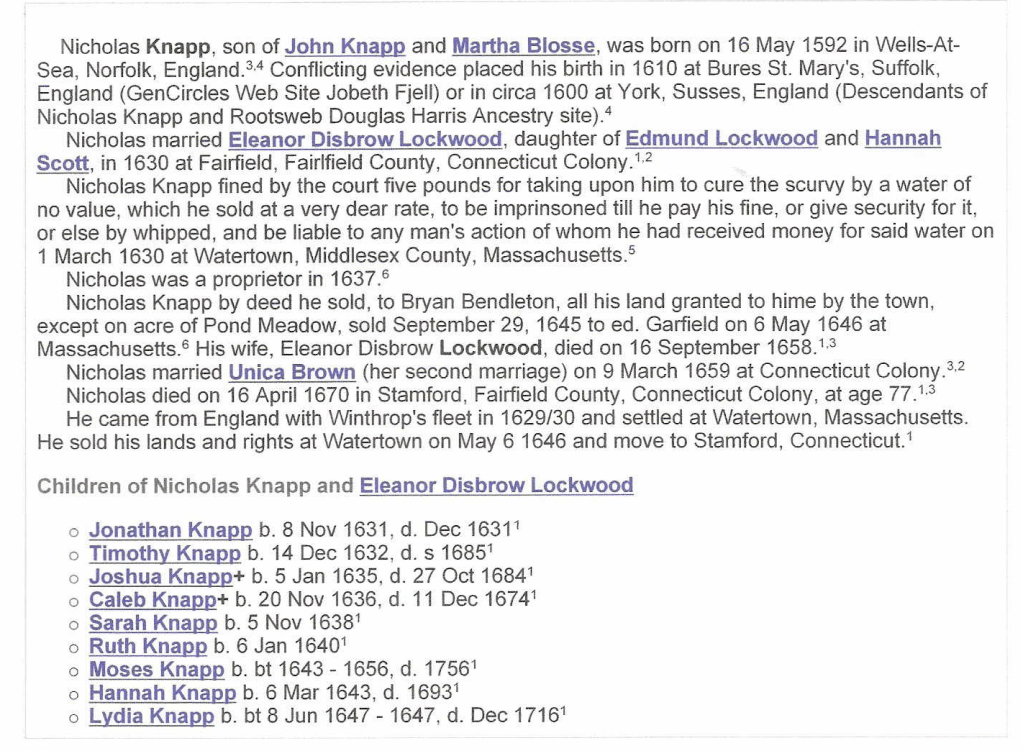
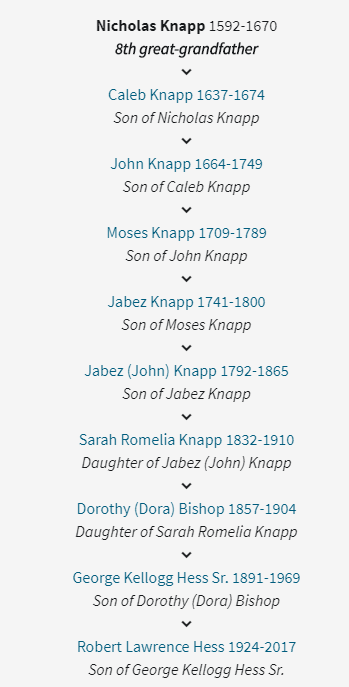
Nicholas Knapp was my 8th great grandfather. Here is how my family relates:

When Nicholas Knapp was born on May 16, 1592, in Wells-Next-To-The-Sea, Norfolk, England, his father, John, was 42 and his mother, Martha Blois (or Blosse), was 27. He married Eleanor (or Elinor) Disbrow Lockwood and they had 11 children together. He then married Unity Brown on January 9, 1659, in Stamford, Connecticut. He died on April 16, 1670, in Stamford, Connecticut, having lived a long life of 77 years, and was buried there.

In my other ancestry posts, I’ve shared that I grew up believing my heritage was predominantly German. As my genealogy research has deepened, I’ve discovered that this assumption isn’t quite accurate. In fact, a significant part of my ancestry is English, a realization that has both surprised me and opened up new avenues of learning. The more I explore my family history, the more I see how much there still is to understand.

I had to look up information about Wells-next-the-Sea where Nicholas was born. At the time of his birth, it was a small port town on the North Norfolk coast of England.

Fishing was crucial in 1592, with Wells-next-the-Sea known for crab, lobster, and herring. The port facilitated regional trade, exchanging fish and agricultural products for textiles and manufactured goods.

The town was a close-knit community with most residents involved in fishing or farming. Houses were typically built from local materials like flint and brick. Religion played a significant role, with the Anglican Church at the heart of social life.

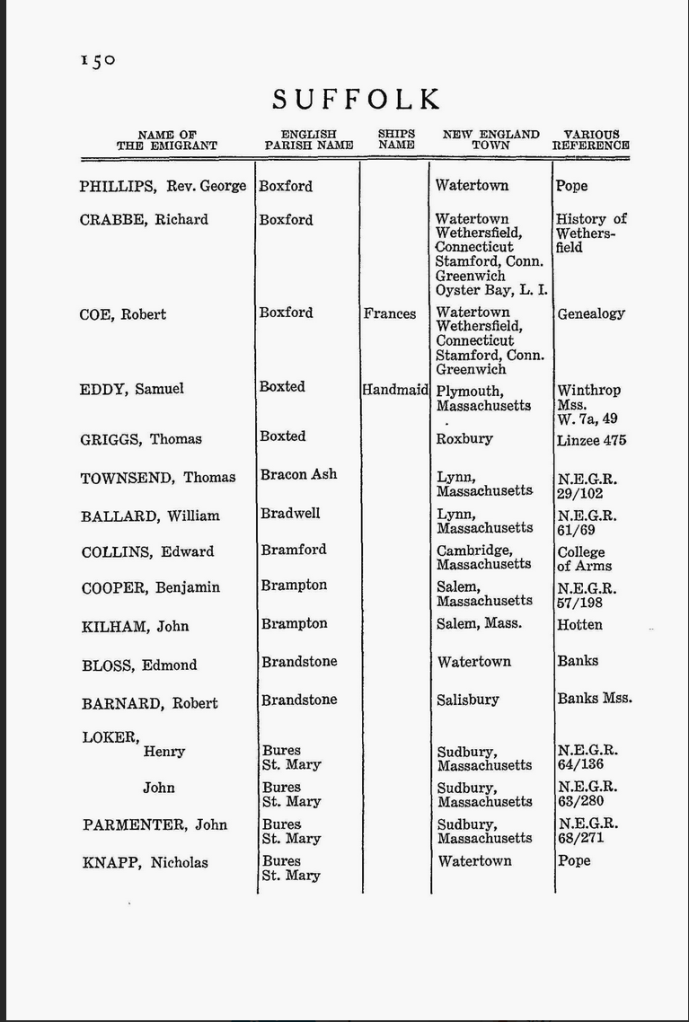
On 6 April 1630, Nicholas (my 8th great grandfather) and wife Eleanor (my 8th great grandmother) left for America and traveled to Salem, MA.

Topographical dictionary of 2885 English Emigrants to New England 1620 to 1650

There, they were a part of the Massachusetts Bay Colony. He was one of the very early settlers of Watertown, MA. and Stamford, CT. His life in the colonies was one of living and working under the strict Puritan governance associated with John Winthrop and Richard Saltonstall.

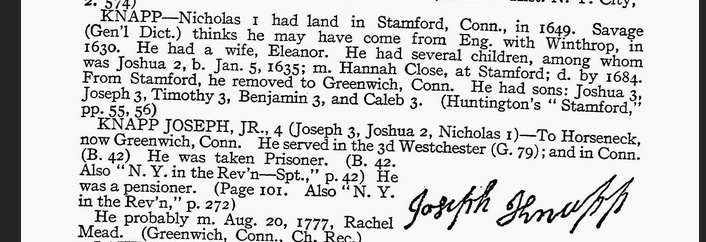
Refugees of 1776 from Long Island to Connecticut

Nicholas appears multiple times in Massachusetts Bay court records. In one record, Nicholas was fined for pretending or claiming to cure scurvy by using a local water source that the court judged to have no medicinal worth. Oops!

His other legal woes included land disputes, fines, and behavioral or regulatory infractions. Specifically he engaged in, an unlicensed medical practice, misuse or promotion of land or water resources and making claims that could cause disorder or deception. As shocking as this may seem, it did not necessarily mean that he was a con man because early settlers experimented with remedies – I would love to see a movie about him!

He had enough of a standing not to be jailed but was fined.

Nicholas passed away on April 16, 1670, in Stamford, Connecticut.

Home Stories – Memories of Tim Whitmer

HOME STORIES – memories from Tim Whitmer 

THE ROBERTSON FAMILY HOME (Maternal grandparents of Tim Whitmer

Delbert C. Roberston and Lillian J. Jackson were Tim’s maternal grandparents. Their family home was in Owensboro, KY. By 1952, their home was at 1637 Parrish Ave. Tim recalls that the house was small, with a long and slender yard. One of the highlights of their yard, was a screened-in outbuilding where the family would gather for wonderful dishes like homemade ice cream. Among other wonderful foods served there, Tim mentioned the banana salad, b-b-q mutton, and watermelon. (Mutton was a favorite food and was served at a local establishment called The Mutton Pit.) Tim remembers that the home was shaped like a “box” with a living room at the front and 2 bedrooms in the back. There was 1 bathroom. He believes there was a crawl space. The kitchen was a good size, and his grandmother was a very good cook. One of the features of the kitchen were the bins that were 8” to 10” long and about 24” deep. These bins fit into the kitchen cupboards and held items like oatmeal, white flour, and cornmeal. Tim was allowed to play in the flour with his clean hands when he was very young. A happy family home that was always welcoming! 

THE WHITMER FAMILY HOME (Paternal grandparents of Tim Whitmer) 

Charles Emmett Whitmer, Sr. and Eura Noffsinger were the paternal grandparents of Tim Whitmer. Tim recalls, that his grandfather ran a local General Store that he had started on his own. In fact, the Calumet clock in the Ann Arbor home of Tim and Mary Ann came from that store where it used to hang. The store had a unique giant oak tree that grew up through the center of the building. The Whitmer family home in Owensboro was single story. There was no basement. This is the home that Charles Emmett Whitmer, Jr. grew up in. At some point, an addition was built on this home, and the large front porch connected the original home to an additional home with its own entry. Tim said that “duplex” was not a word used at that time. The porch was not like the porches of today. It was bricked halfway up, was about 8’ x 10’ and you “set out” (not sat out) on your porch! In several US Census records and city directories, a home address of 1303 Breckenridge was listed. 

ROMANCE A CUTE STORY ABOUT CHARLES AND WANDA (Parents of Tim Whitmer) 

A group of men holding guns

Description automatically generated with low confidenceTim recalls that his parents met in High School where Tim’s father played the trombone, and his mother played the clarinet. A funny story that Charles liked to recall is how he would use the slide of his trombone to tap Wanda.