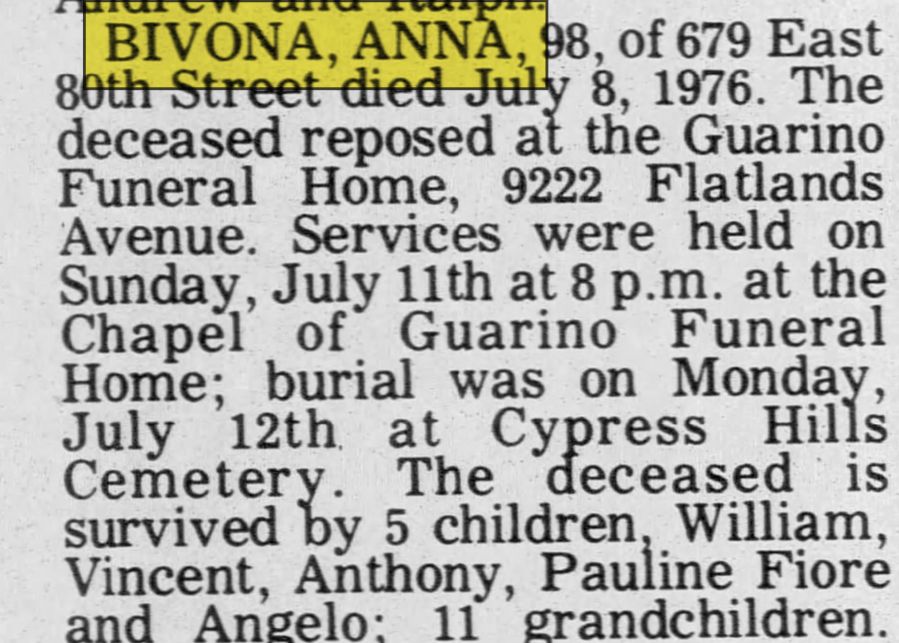
When Anna Cappadoro was born on November 30, 1877, in Sicilia, Italy, her father, Guglielmo, was 45, and her mother, Maria, was 44. She had seven sons and one daughter with Vincenzo (Vincent) Vincente Bivona between 1898 and 1918. She died on 10 July 1976 in Queens, New York, at the age of 98.
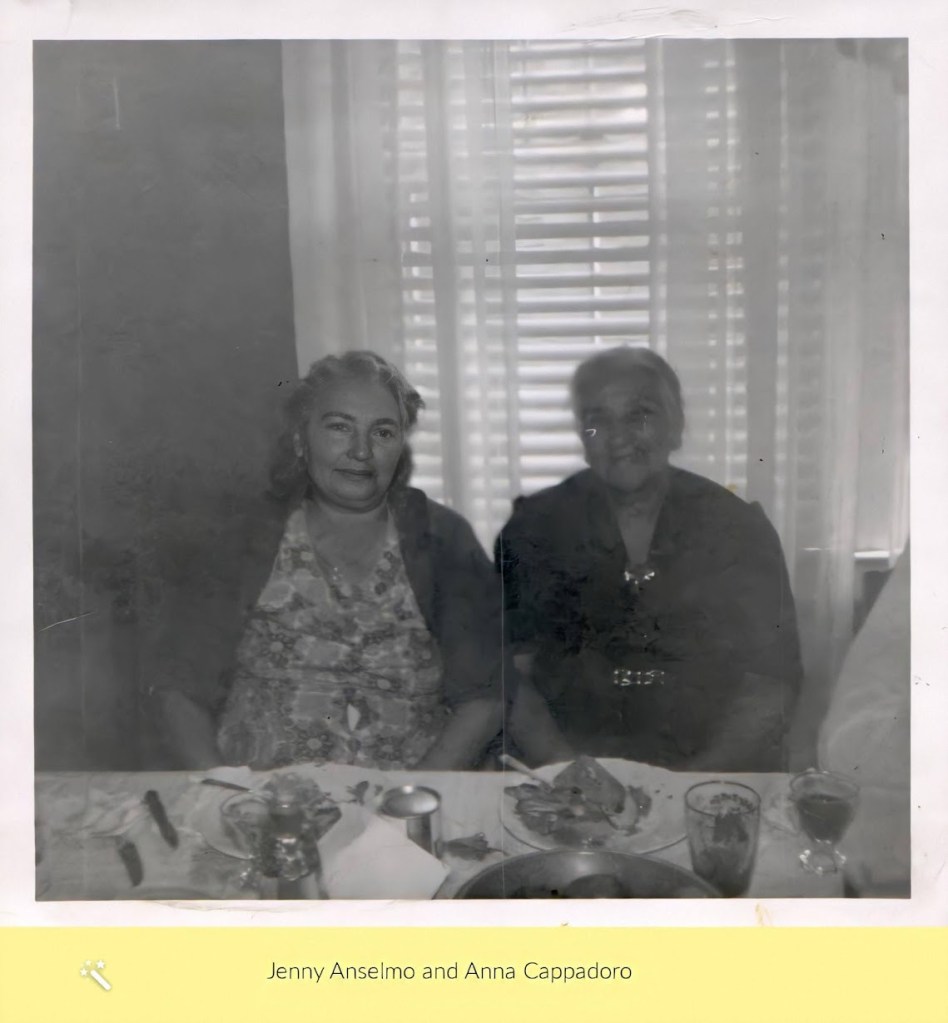
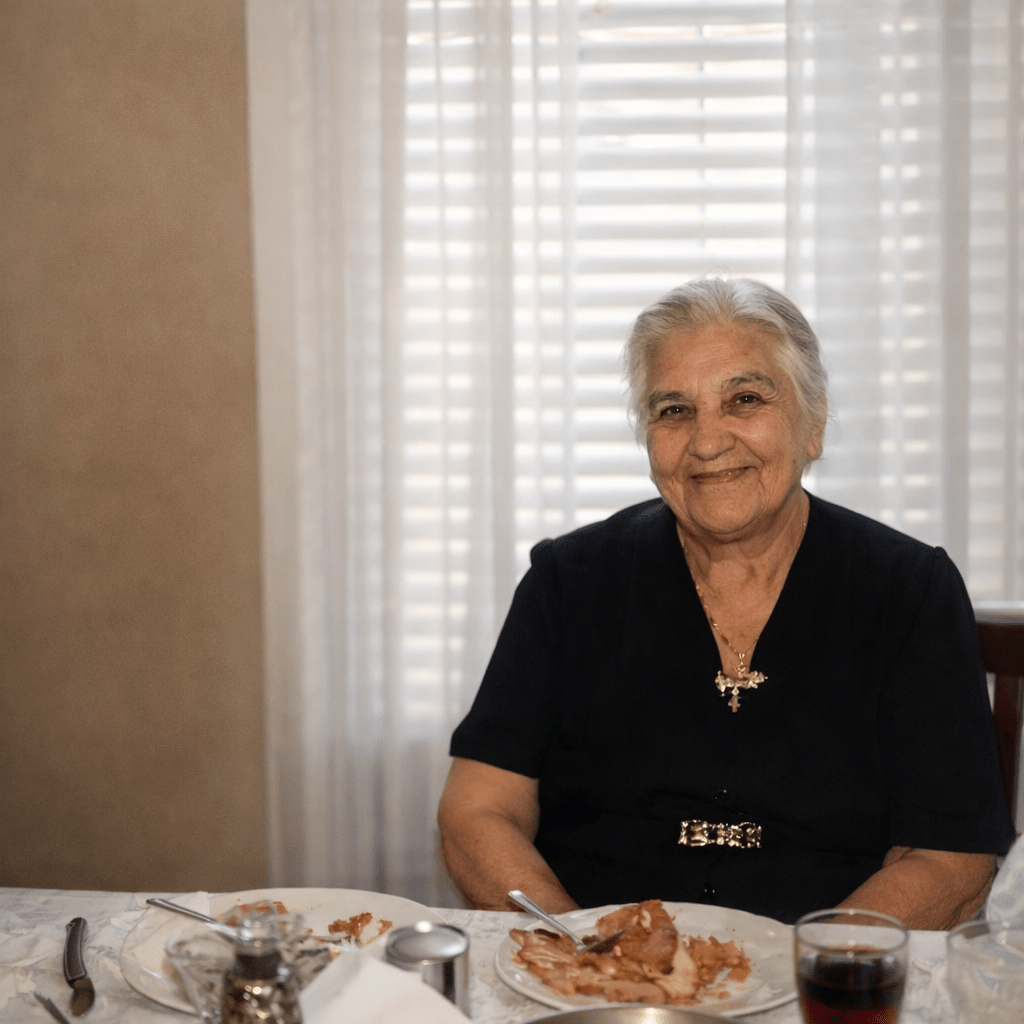
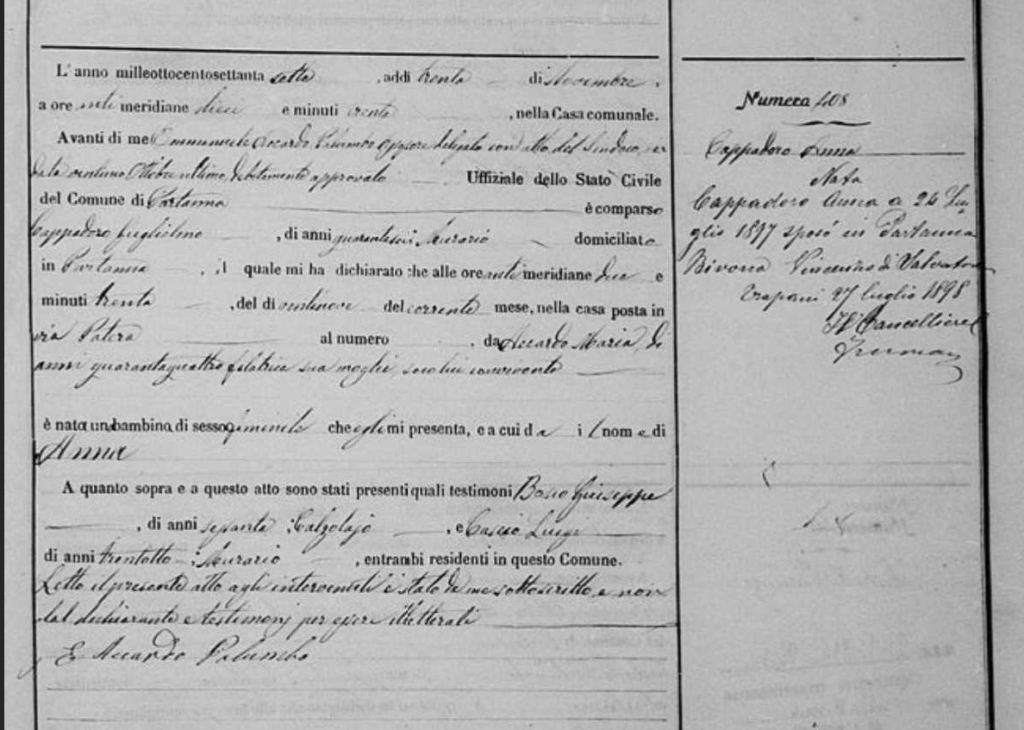
Anna is seated on the right side of this photo – date unknown. The magic wand on the caption means that I have made a digital enhancement to this photo.I asked AI to take the above photo of Anna and restore it completely. I will wait for members of her family to let me know how well this photo edit worked and how realistic it is.This edit certainly helps to see the details of her lovely dress and her gold necklace. The smile is gorgeous!The birth certificate for Anna. 26 Jul 1877. She was born in Custonaci which is a town and municipality located in the Trapani province of northwestern Sicily, Italy
I asked for AI for a translation of the birth certificate shown above:
Year 1877, on the 26th day of July, at the hour one after noon and minutes twenty, in the Town Hall. Before me, Emanuele Occorso, Mayor and acting Civil Registrar of the Municipality of Custonaci, appeared Cappadoro Luigi, 40 years old, stonecutter, domiciled in Custonaci, who declared to me that at the hour one after noon and minutes twenty, of the current day,in the house located on Via Salvo, to Cappadoro Maria, his wife, housewife, living with him, a female child was born, whom he presents to me and to whom he gives the name: Anna
The above declaration and presentation were made in the presence of the witnesses Bascio Giuseppe, aged 40, stonecutter, and Casale Luigi, aged 30, bricklayer, both residents of this municipality.
After this act was read to the declarant and the witnesses, they signed it with me.
Signed: Emanuele Occorso, Civil Registrar
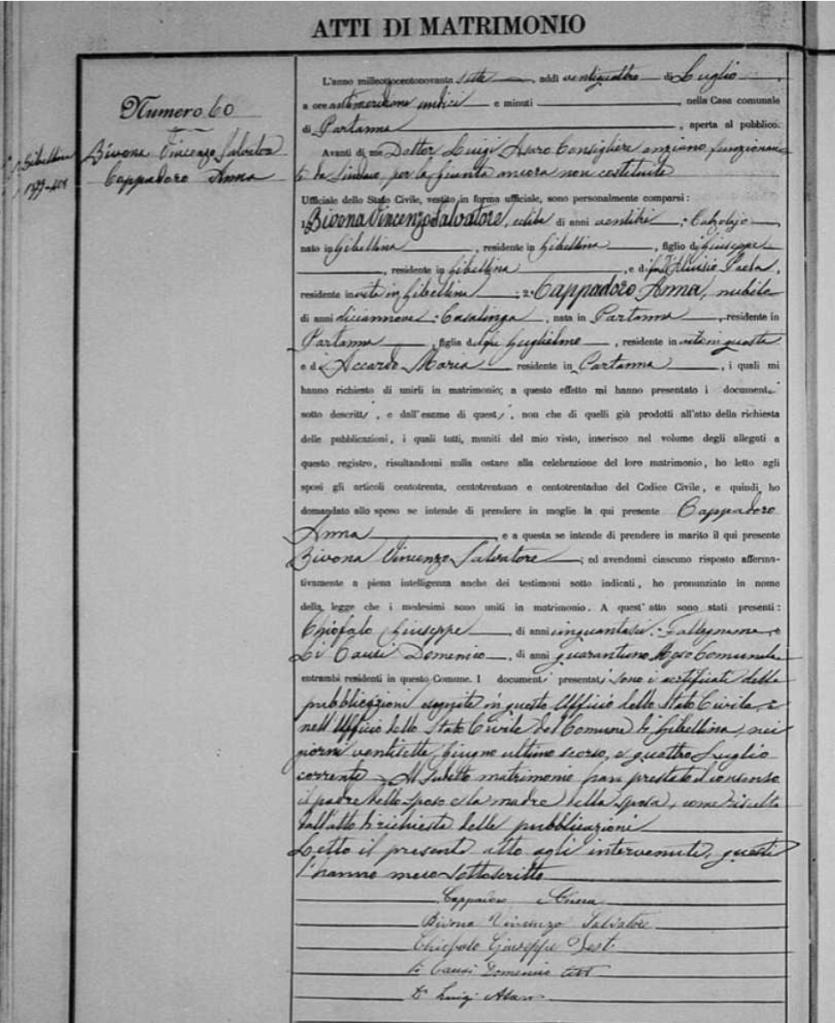
Wedding certificate for Anna. 27 Jul 1987 in Custonaci. Anna was 19 when she married. Her husband was 23 years old.
I used AI to translate this wedding document – see below:
Year 1897, on the 27th day of July, at the hour ten in the morning, in the Town Hall of Custonaci, open to the public. Before me, Dott. Luigi Quaranta, Mayor and acting Civil Registrar, vested in official form, there personally appeared:
Bivona Vincenzo Salvatore, unmarried, stonecutter, born in Gibellina, resident in Gibellina, son of Giuseppe, resident in Gibellina,and of Giuseppa Foderà, resident in Gibellina; and Cappadoro Anna, unmarried, housewife, born in Custonaci,resident in Custonaci, daughter of the late Luigi, resident in Custonaci, and of Accardi Maria, resident in Custonaci; who requested to be united in marriage.
For this purpose they presented the required documents, and from the examination of these, as well as of those already produced at the time of the marriage banns, all bearing my approval and inserted in the volume of attachments to this register, and finding no impediment to the celebration of their marriage, I read to the spouses the articles of the Civil Code concerning the rights and duties of husband and wife.
I then asked the groom whether he intended to take as wife the present Cappadoro Anna, and the bride whether she intended to take as husband the present Bivona Vincenzo Salvatore; each having answered affirmatively and mutually, in the presence of the witnesses named below, I declared, in the name of the law, that they were united in marriage.
The witnesses present were: Coppola Giuseppe, 40 years old, laborer, and Di Carlo Domenico, 44 years old, farm worker,both residents of this municipality.
The documents presented were: certificates of birth, marriage banns published in this Civil Registry Office and in the Civil Registry Office of the Municipality of Gibellina, and certificates showing that no impediment existed to the marriage. After this act was read aloud to those present, it was signed as follows.
Signatures: Cappadoro Anna Bivona Vincenzo Salvatore Coppola Giuseppe Di Carlo Domenico Luigi Quaranta, Civil Registrar
According to my research, Anna’s two oldest children were born in Italy. They were Giuseppe “Joseph” Bivona 1898-1961 and Gugllielmo “William” Bivona 1900-1981.
Her next 5 children were born in Argentina. They were; Juan “John” Bivona 1902-1975, Francesco “Frank” Bivona 1904-1969 (the direct ancestor to my brother-in-law’s family), Vincent E Bivona Jr 1908-2001, Antonio (Anthony Tony) Bivona 1911-1998,
Her youngest was born in New York. Angelo Bivona 1918-1993.
It is interesting to note that both Anna’s father and her husband were stone cutters.
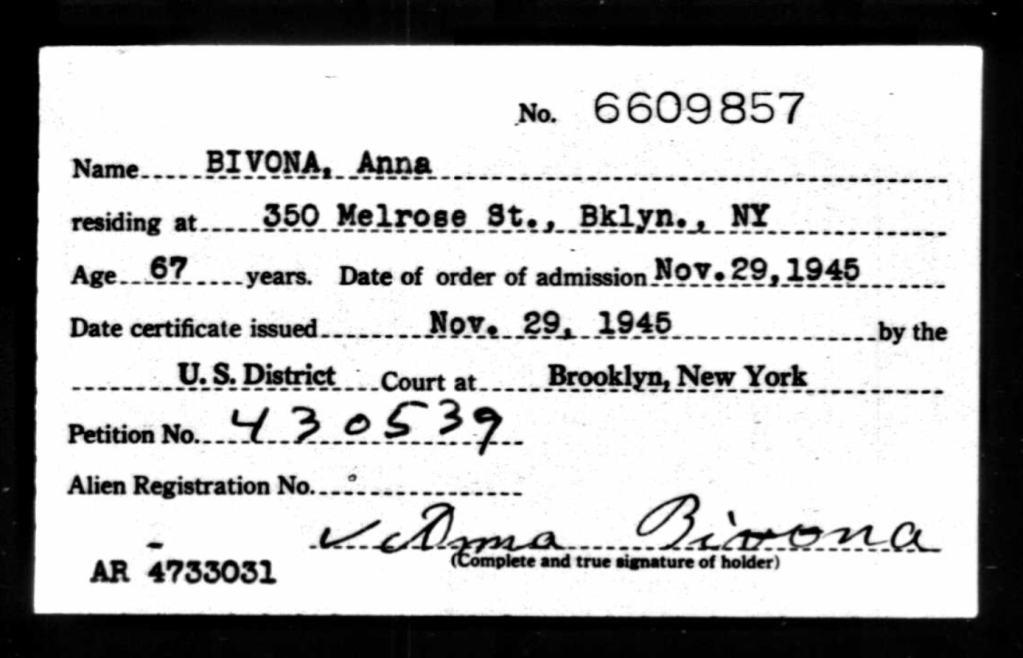
Anna became a naturalized citizen of the USA in 1945.
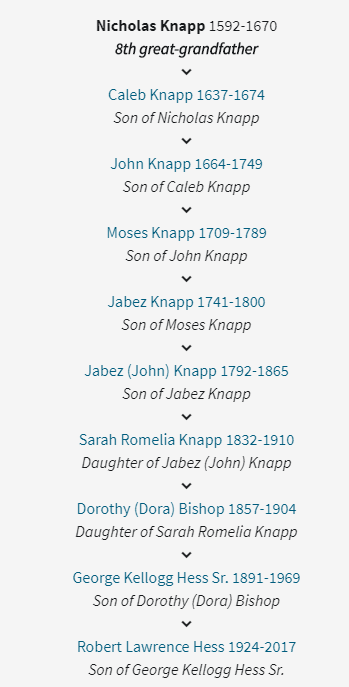
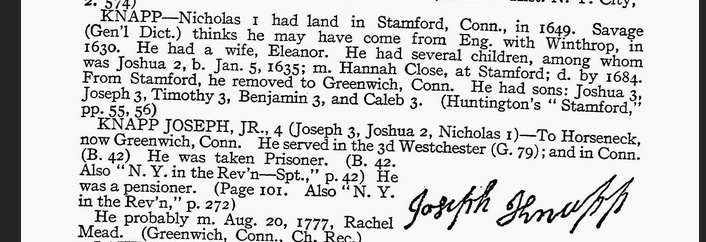
Nicholas Knapp was my 8th great grandfather. Here is how my family relates:
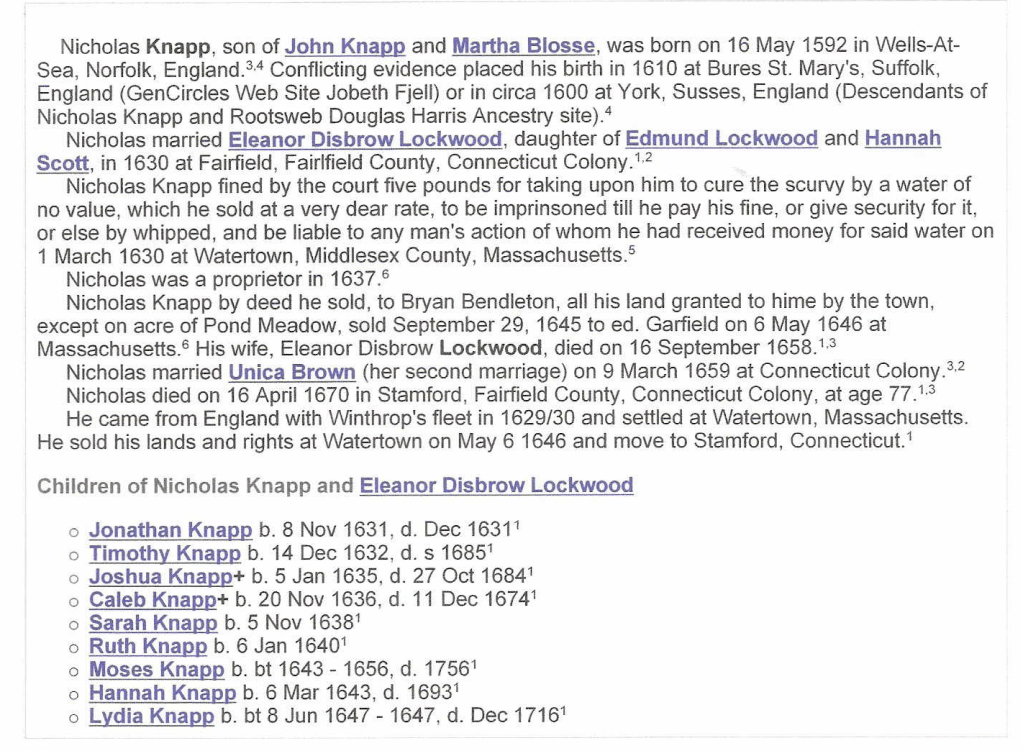
When Nicholas Knapp was born on May 16, 1592, in Wells-Next-To-The-Sea, Norfolk, England, his father, John, was 42 and his mother, Martha Blois (or Blosse), was 27. He married Eleanor (or Elinor) Disbrow Lockwood and they had 11 children together. He then married Unity Brown on January 9, 1659, in Stamford, Connecticut. He died on April 16, 1670, in Stamford, Connecticut, having lived a long life of 77 years, and was buried there.
In my other ancestry posts, I’ve shared that I grew up believing my heritage was predominantly German. As my genealogy research has deepened, I’ve discovered that this assumption isn’t quite accurate. In fact, a significant part of my ancestry is English, a realization that has both surprised me and opened up new avenues of learning. The more I explore my family history, the more I see how much there still is to understand.
I had to look up information about Wells-next-the-Sea where Nicholas was born. At the time of his birth, it was a small port town on the North Norfolk coast of England.
Fishing was crucial in 1592, with Wells-next-the-Sea known for crab, lobster, and herring. The port facilitated regional trade, exchanging fish and agricultural products for textiles and manufactured goods.
The town was a close-knit community with most residents involved in fishing or farming. Houses were typically built from local materials like flint and brick. Religion played a significant role, with the Anglican Church at the heart of social life.
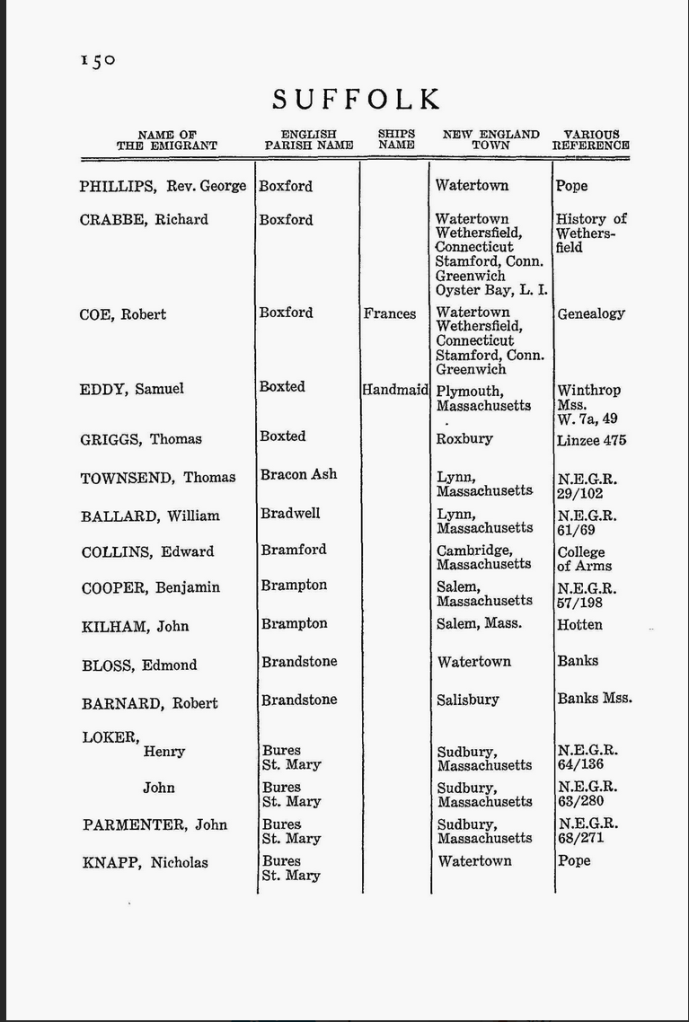
On 6 April 1630, Nicholas (my 8th great grandfather) and wife Eleanor (my 8th great grandmother) left for America and traveled to Salem, MA.
Topographical dictionary of 2885 English Emigrants to New England 1620 to 1650
There, they were a part of the Massachusetts Bay Colony. He was one of the very early settlers of Watertown, MA. and Stamford, CT. His life in the colonies was one of living and working under the strict Puritan governance associated with John Winthrop and Richard Saltonstall.
Refugees of 1776 from Long Island to Connecticut
Nicholas appears multiple times in Massachusetts Bay court records. In one record, Nicholas was fined for pretending or claiming to cure scurvy by using a local water sourcethat the court judged to have no medicinal worth. Oops!
His other legal woes included land disputes, fines, and behavioral or regulatory infractions. Specifically he engaged in, an unlicensed medical practice, misuse or promotion of land or water resources and making claims that could cause disorder or deception. As shocking as this may seem, it did not necessarily mean that he was a con man because early settlers experimented with remedies – I would love to see a movie about him!
He had enough of a standing not to be jailed but was fined.
Nicholas passed away on April 16, 1670, in Stamford, Connecticut.
The Spring of 2020 sprung full of sorrow and fear. In January of 2020, we had heard stories of a terrible virus. The virus was named Covid-19 because it had been discovered in the year 2019. This virus made the news by January, but it had not yet really changed our lives in the state of Michigan. But the clock was ticking, and the virus was ruthless.
By March of 2020 there were the earliest signs of Spring but also the fear of a new life reality. The virus was now proclaimed to be a pandemic. It was here to stay for an unspecified time. I have always spent a lot of my time doing genealogy. I had studied a relative’s life who had died during the 1917/18 pandemic. I also knew that these pandemics appear around every 100 years. The horror of realizing that a pandemic would be a part of my life reality was devastating. I was more worried for my family than myself. But it was all a grave concern. I have several health conditions that put me at more risk for serious disease. One of those health concerns was obesity. I made choices to use the time of the pandemic as a time to rid myself of excess weight. I planned to walk daily. I walked off pound after pound. I walked miles every day either rain or shine.
My fear level was high. I watched the news stories, and they were not good. Our nation was not prepared for this event. Our nation’s leader denied the science and denied the revered Dr. Fauci. I was in despair. My sense of terror was growing as my understanding of the implications to the future of humanity became more informed thru the science stories that I consumed by watching hours of TV news.
On March 10, 2020 I went for a preparation shopping trip. I was going to shop like the preppers who plan for the end of the world. I wanted to buy enough to sustain myself for several months. You see at that time I still thought the pandemic would not last more than that. I did something that is hard to do when you live in a tiny house, I hoarded. I packed a grocery cart with over $300.00 worth of food, cleaning supplies, and paper products. I had big jumbo bags of rice, pounds of potatoes and cans of soup. I only have a tiny kitchen, so my closets had to become mini pantries. I had to use my laundry soap bottles as door stops, and a rather odd look began to emerge in my tiny dwelling. As I personally started to shed some weight, my tiny home suffered from an over stocking.
The Governor of Michigan issued a “Stay Home and Stay Safe” proclamation in the spring of 2020. I decided then that I would wait out the pandemic in the safe bubble of my little house. I live alone, so this was an incredibly significant decision that began to change many of my priorities. I am a social creature, so this was foreign to me.
One of the first good things that happened was the advent of Zoom meetings. I zoomed. I zoomed and zoomed. I zoomed with my family in Germany and in San Francisco. I zoomed with family in St. Louis Missouri, I zoomed with family in Atlanta Georgia and in Fargo North Dakota. Oddly enough, I was also zooming with family in Ann Arbor Michigan even though we lived just a few miles from each other.
Still, during all the despair in the world, there was a change in our seasons. Spring finally was arriving by April and May of 2020. On my morning walks, I saw signs of crocus and other spring flowers. I spent a great deal of time engaging in my other hobby of photography and especially macro photography. I posted photos to my friends on social media. I posted photos on google maps and other places.
I had many phone calls with friends. I also started a writing campaign to our state lawmakers. My social awareness had accelerated and there was clearly action to be taken.
In May of 2020, I sadly realized that because of Covid and my isolation I would not be making my annual trip to the flower nursery. I adore flower gardens. I sat at my computer and ordered flower seeds on Amazon Prime. So strange. It was all so strange. I ordered zinnia seeds. By the end of summer in 2020, I had a new title in the neighborhood and on social media. I was now called the Zinnia Queen because my yard exploded with these flowers in every inch of soil available to them.
By May of 2020, I was not sure how much longer I could endure. My weight was still going down. All the walking and gardening was good for me. I also am very called to be socially active. I became very disquieted by stories coming from meat packing plants across our country, especially Iowa. I saw the working conditions for employees of these plants where they worked in horrid conditions during this global pandemic. I made a choice to be fully vegan and then I lost still more weight.
In the spring of 2020, I took a class on cartography and made a map. I made a map of a fantasy city/state land that showed my Covid-19 experiences. By this time, I also sadly had begun to hear stories of the souls who had perished. People who I had known. Life was fearful. And yet, in my morning walks, I studied and photographed flowers. I zoomed with friends. I stopped hoarding food when I realized how easy it was to order it on-line. I engaged in learning more about the issues of racial injustices. I put my efforts into joining writing campaigns and classes as I made not just a change in my weight but in my understanding of our culture and of white privilege. I yearned for change in politics, racial equality, economics, and a million other concerns.
Looking back, the biggest thing that was happening was the change that I was undergoing. I was a socially conscious, active liberal, a vegan Zinnia Queen. I was more in love with my loved ones even though I was not able to share time in person with them. I met new people in on-line forums. Life was moving forward. The Spring was causing a metamorphosis.
It is now approaching the spring of 2021. I just had my Covid 19 vaccine. I have more hope. I will forever be changed. This Spring, the lessons of 2020 will be very present as I prepare to finally step outside my tiny home and into the world. I still hope to keep my Zinnia Queen title. I yearn for healing. I yearn for all people to have the opportunity to be vaccinated. I know that I will leave this experience more aware, and thankfully still alive. I have sprung into a resolve to keep the lessons of the dark year we call 2020.
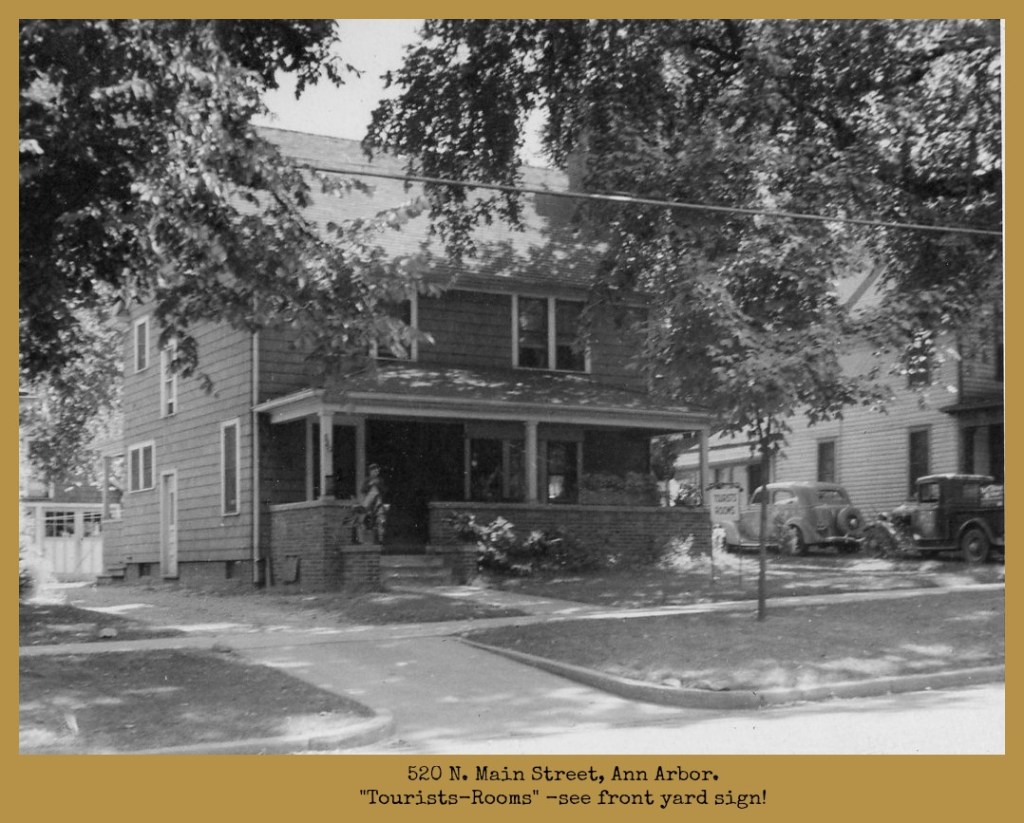
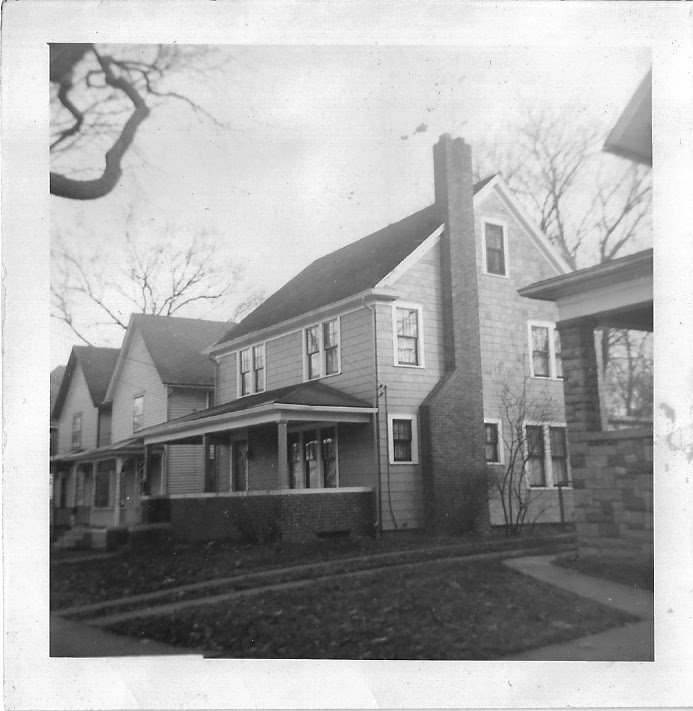
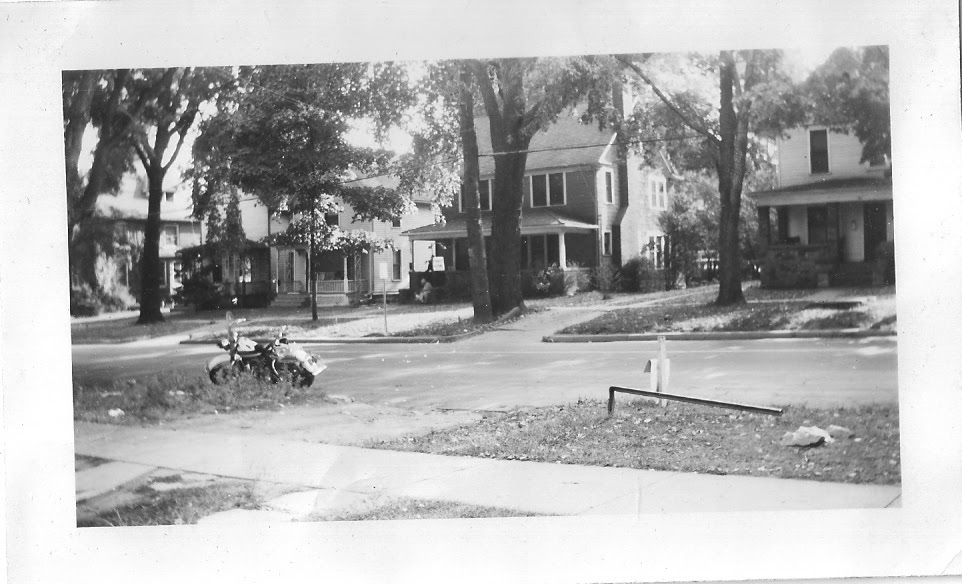
I want to make sure that the family photos of 520 North Main Street, Ann Arbor, Michigan, are preserved. This family home holds an important place in the history of Ann Arbor, as it served not only as the home of my family line but also as a Main Street tourist home. It was also and always a home where love abounded!
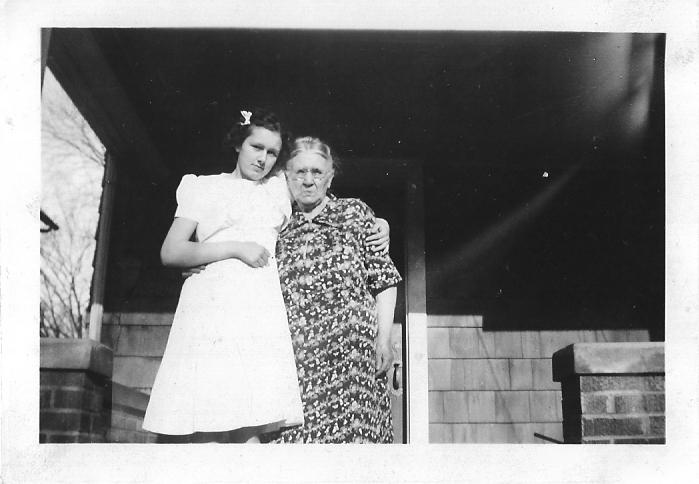
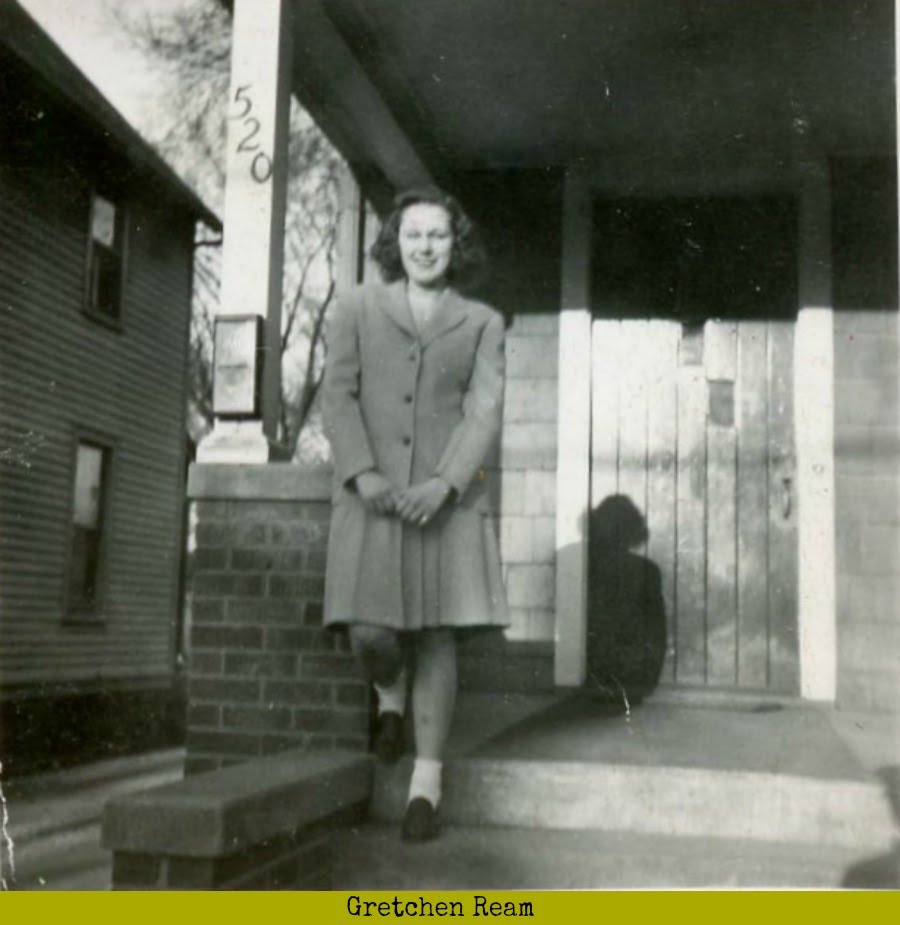
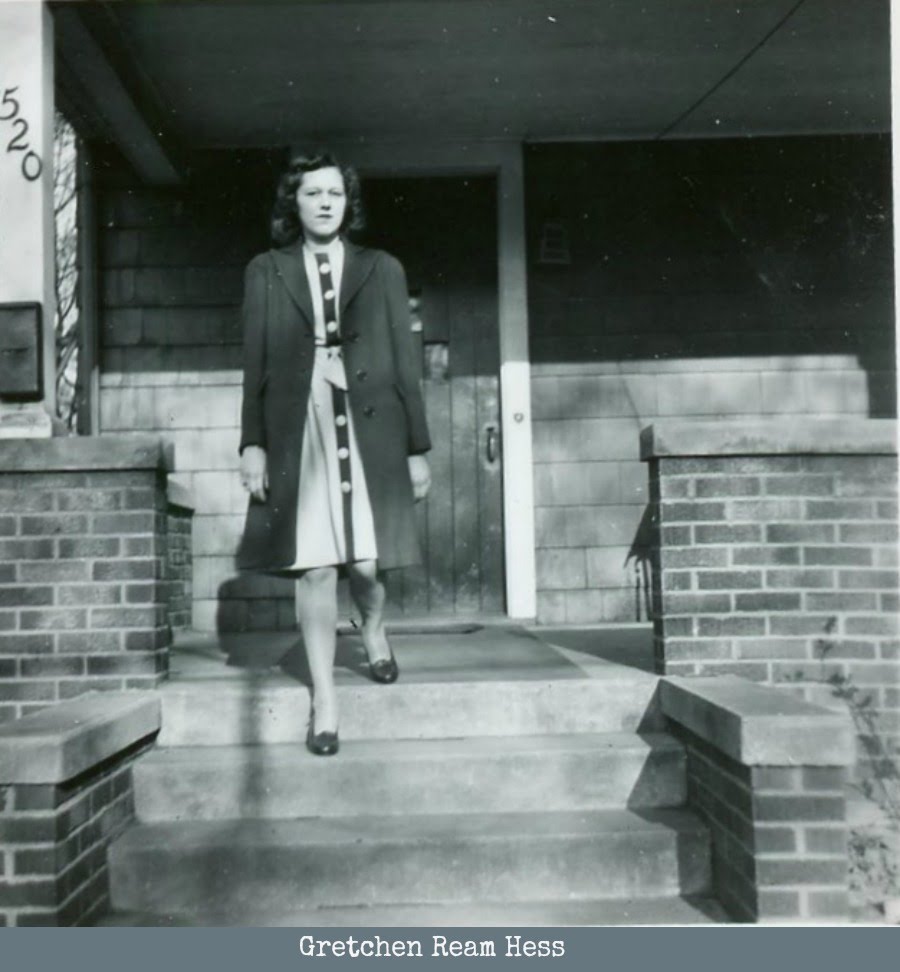
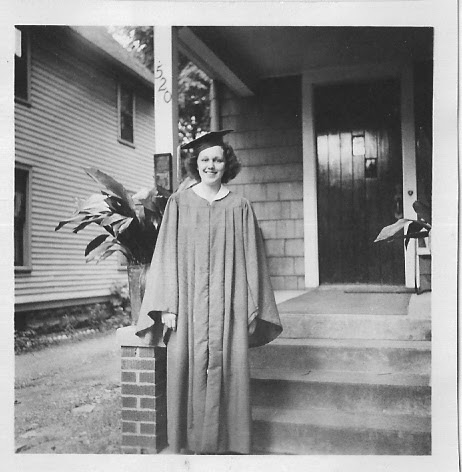
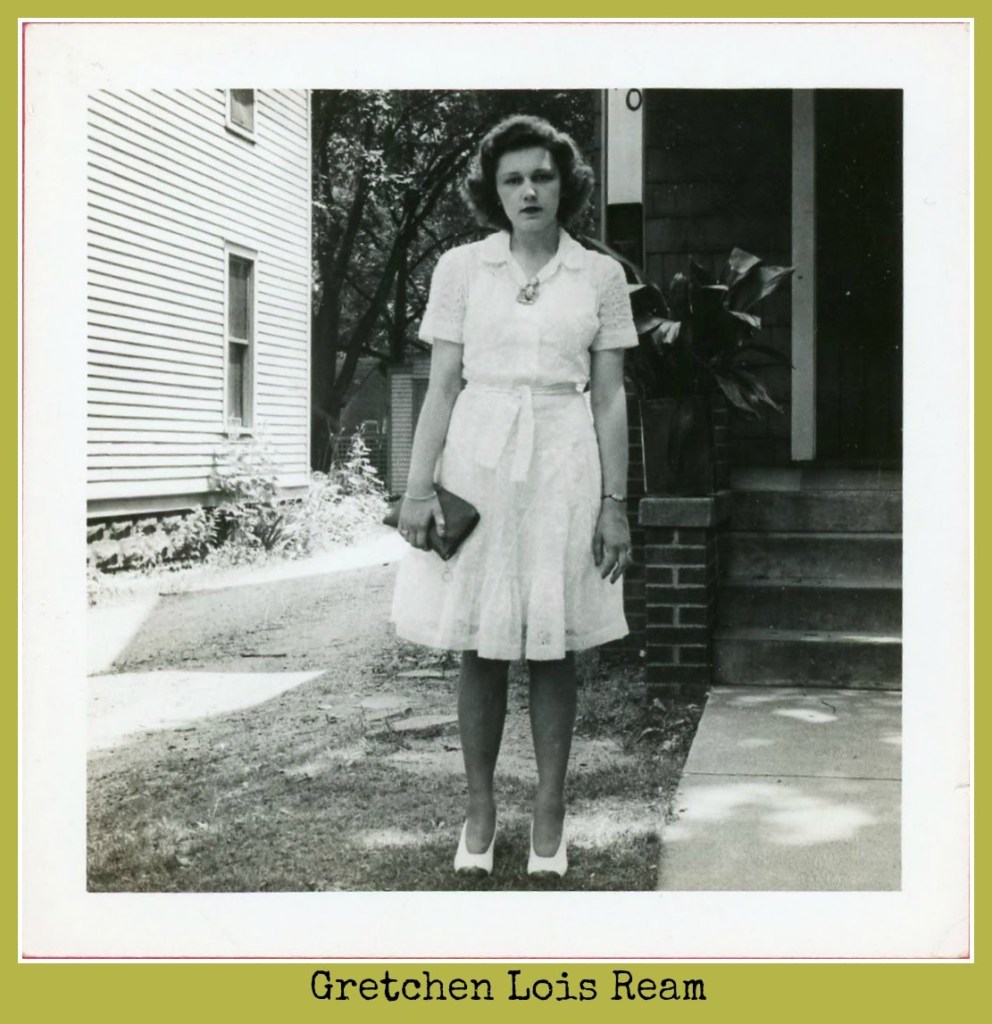
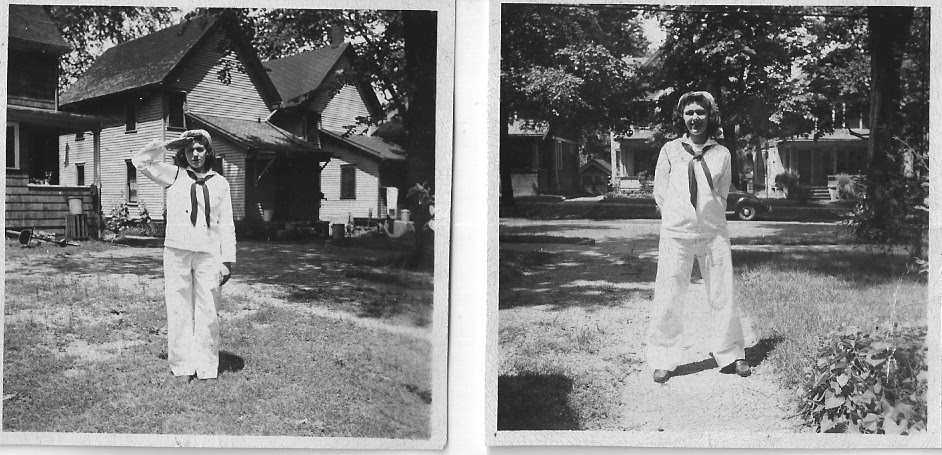
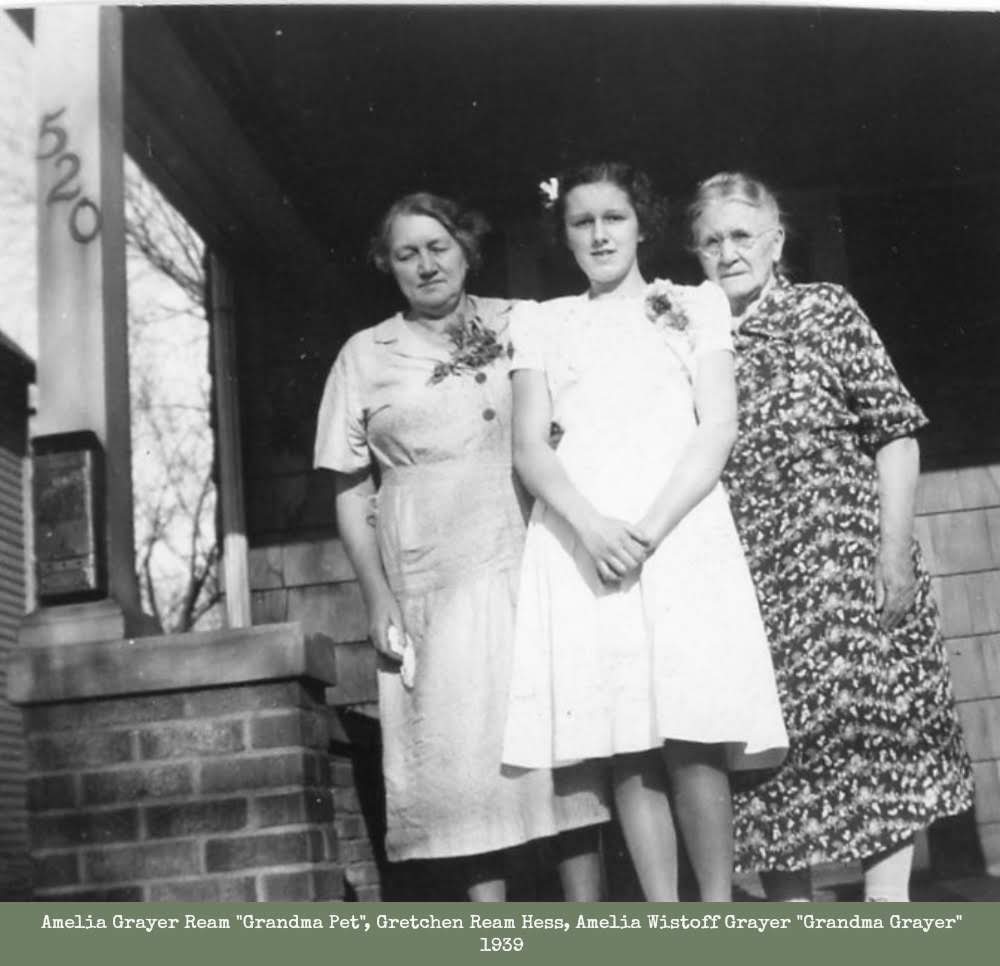
My mother Gretchen Lois Ream with her Grandmother Amelia Grayer standing on the front porch of 520 N. Main Street, Ann Arbor. April 2, 1939. Grandma Grayer went by Amelia just like her daughter. Grandma Grayer’s given name was Emilie Louise Wisthoff Grayer (1861-1965 – immigrated from Germany)My mother Gretchen Ream standing on the front porch steps of 520 N. Main Street, Ann Arbor, MI. Photo date estimated as 1939 or 1940.My mother on the front porch of 520 N. Main Street, Ann Arbor, MI c1940Gretchen Ream standing in front of 520 N. Main Street, Ann Arbor, MI in June of 1943Gretchen Lois Ream standing on the front lawn of 520 N. Main Street, Ann Arbor, MI. c1943.In the left photo, my mother is standing in the back yard of 520 N. Main Street, Ann Arbor, MI. The driveway to 520 N. Main was shared with the Klotz’s home next door to the North. It looks like the photo on the right side is of my mother standing in the front walkway to 520 N. Main Street, Ann Arbor, MI. c1943.
520 N. Main Street, Ann Arbor, was the home of my grandparents, Amelia and Grover Ream and their children Gretchen Ream (Hess) and Robert Emerson Ream. Also living there was my great grandmother Grandma Grayer.
The home was built in the mid 1920’s. As I understand it, my grandparents had lived at this address prior to that time in a smaller house. My grandfather, Grover Ream, was a highly skilled carpenter and a member of the Ann Arbor Carpenters’ Union. He played an integral role in the construction of many large buildings in Ann Arbor, including several fraternity houses on the University of Michigan campus.
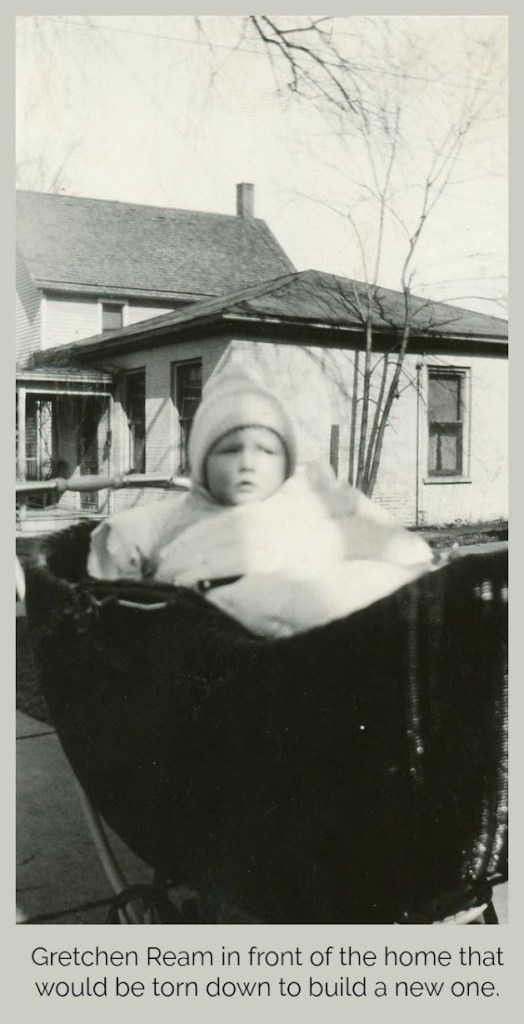
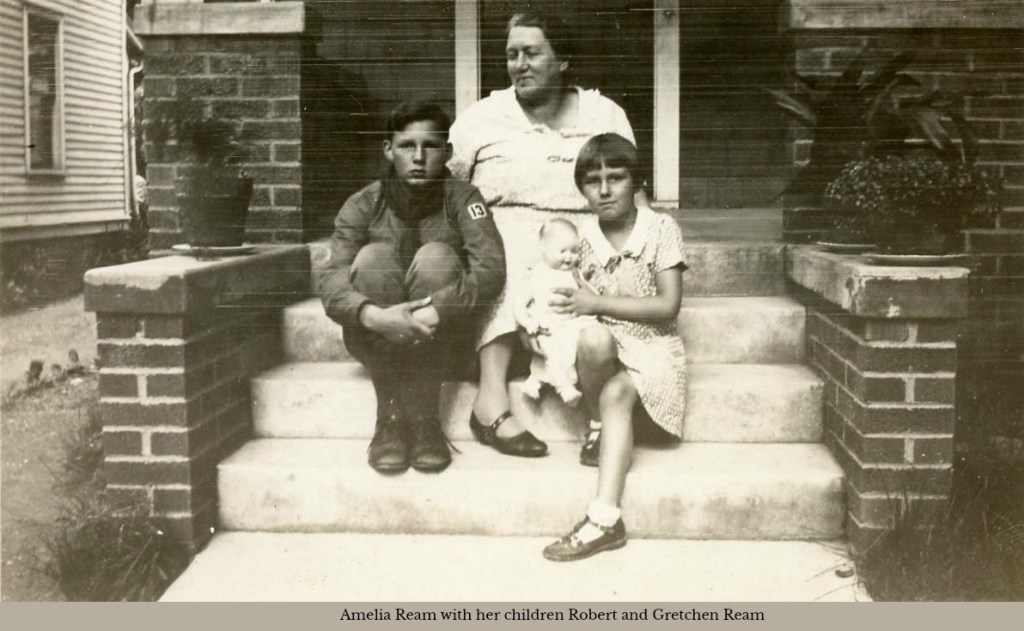
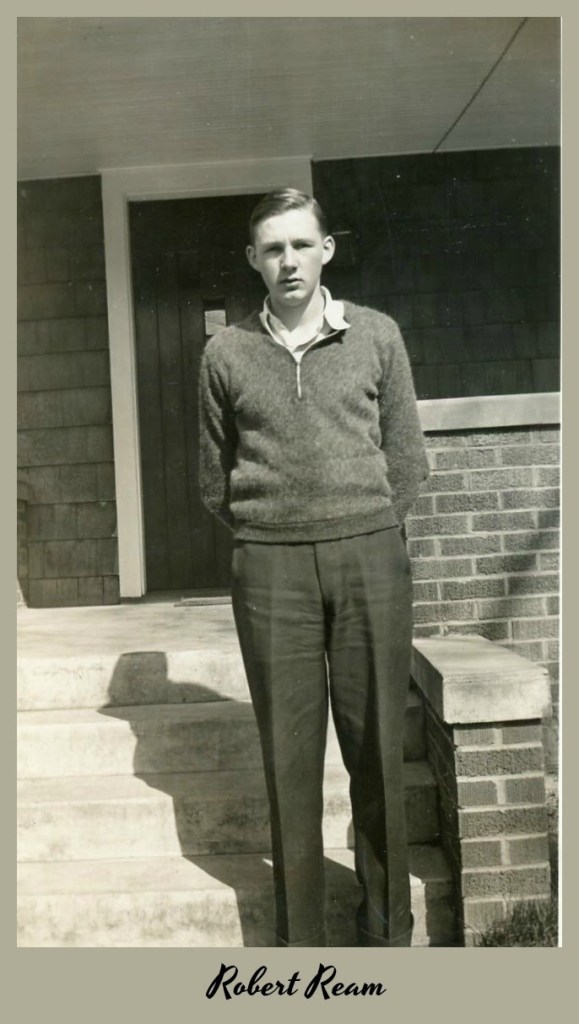
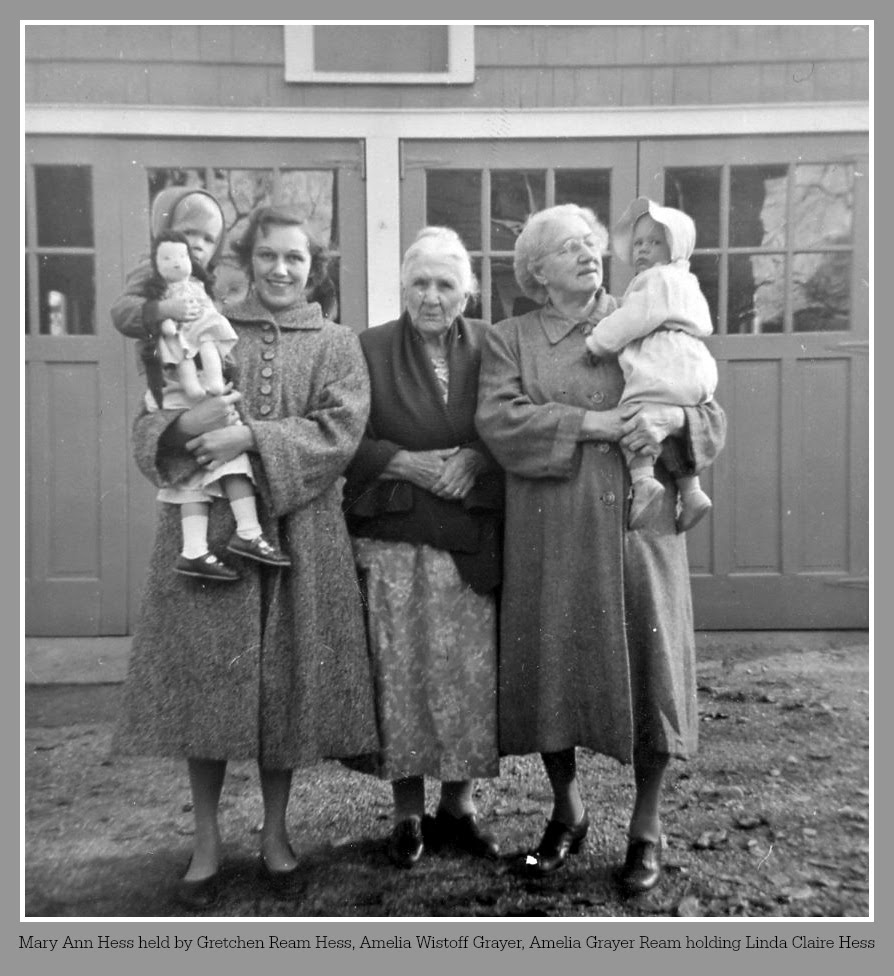
Photo of Gretchen Lois Ream as an infant. My mother dated the photo as 4 Feb 1926 on the property for 520 N. Main Street, Ann Arbor, MIMy grandmother Amelia Ream with her children on the front porch steps at 520 N. Main Street, Ann Arbor, MI. c1930.Robert Emerson Ream standing on the front steps of 520 N. Main Street, Ann Arbor, MI c19333 generations. Amelia Ream, Gretchen Ream and Amelia Grayer. 1939. On the porch of 520 N. Main Street, Ann Arbor, MI4 generations of my family! Standing in front of the large garage in back of the house at 520 N. Main Street, Ann Arbor. 1954.
It is my belief that my grandfather planned and built this larger home on their property so that my grandmother would have a means of livelihood, knowing that his own health was fragile. He died of cancer in 1930, only a few years after the new home was completed.
If “location, location, location” defines a great home, this one was ideal. It is situated just a few blocks from downtown Ann Arbor’s shopping district, the Farmers Market, and the University of Michigan’s main campus.
The house is described as a three-story home with six bedrooms and one-and-a-half baths.
As I understand it, a tourist home was different from a boarding house. It was more akin to a modern-day Airbnb, offering short-term stays. The primary clientele were traveling salesmen (yes—men, as it would have been unheard of to host female guests) and visitors to the University of Michigan.
520 N. Main Street, Ann Arbor, MIA photo of 520 N. Main Street looking across the street.
The home itself was quite large. Bedrooms on the second floor were rented out, likely for a daily fee and intended only for short-term guests. After my grandfather died, my great-grandmother and grandmother slept on the main floor, while my mother and uncle had their bedrooms on the third floor. (This is to the best of my memory and may be subject to dispute. My grandmother died just one day after my eleventh birthday.)
The house had a large, detached two-car garage with an attic space above it. The driveway was shared with the house next door on the north side, owned by our beloved friends, Madalyn and Edward Klotz.
Things I Remember About the House
The Garage My grandmother did not own or drive a car, yet there was a very cool, old-fashioned automobile stored in her garage for someone else. Think old gangster cars—Bonnie and Clyde style. On rare occasions, we were allowed to climb onto the running boards and pretend we were headed off on great adventures.
The Living Room (19′ x 13′) The living room sat just beyond the front hallway on the right as you entered the house. It had windows on two walls. Two large, side-by-side west-facing windows looked out toward the front porch, and two additional windows—one on each side of the fireplace—faced south.
The tiled fireplace was a focal point, though I don’t recall it ever being used. In one corner stood an old-fashioned television on a stand—the kind you turned on and waited for while it warmed up. It was black and white, but my grandmother placed colored film at the top and bottom of the screen so the sky could be blue and the grass green.
We often watched The Lawrence Welk Show together and danced while the Lennon Sisters performed. My grandmother had a soft, tall-backed armchair where she would hold us on her lap. There was also a sofa for guests and a freestanding corner shelf filled with collectible figurines—ones we were actually allowed to play with.
The Kitchen (13′ x 8′) This is where the real magic happened. Grandma was a wonderful cook, and when we visited, she took our orders like a short-order chef. I loved her French fries, cooked in a deep fryer built right into the stove top. My sisters loved the made spatzen with a press.
The back door was off the kitchen and opened onto a generously sized porch with steps leading down to the driveway. We were allowed to sit on those steps and eat watermelon slices—and since all watermelons had seeds back then, we were also allowed to spit them into the dirt driveway.
A pantry in the kitchen held the joke jar—a Mason jar filled with riddles Grandma cut out of the newspaper. Two side-by-side windows faced north toward the Klotz’s house.
The Hallway The front hallway featured a wide wooden staircase with about twelve steps leading to a landing, where the stairs then turned and continued upward for another half flight. Halfway up was a lookout window.
The only telephone in the house sat on a small table in the hallway, paired with a simple straight-back chair. The front door was distinctive, with three small windowpanes arranged diagonally. A radiator stood near the door, as if to greet you with warmth as soon as you entered.
The Dining Room (14′ x 12′) An arched opening connected the living room and dining room. Two standard-sized doors led from the dining room—one to Grandma’s bedroom and one to the kitchen. Three side-by-side south-facing windows filled the room with light.
A highboy held a candy dish on top. Grandma especially liked Neapolitan coconut candies from the dime store candy counter. Another tall cabinet displayed interesting curios, and a wall shelf held a collection of miniature pitchers.
We could all fit around the dining room table, though at one point I remember a daybed being squeezed into the space as well.
Grandma’s Bedroom (12′ x 10′) Grandma’s bedroom held what I believe was a double bed and a nightstand. One window faced the garage, with a radiator beneath it, and another window was positioned above the bed.
When we spent the night, we were allowed to sleep beside her. Before falling asleep, we always listened as she recited the 23rd Psalm.
The Main-Floor Bathroom This was a very small half bath—just a toilet and a pedestal sink. The floor was a distinctive black-and-white tile. A window sat above another radiator.
Despite having only a sink, this bathroom was used for bathing. Grandma went weekly to a hairdresser for shampooing and styling, and at home I learned how to bathe using a sink full of sudsy water and a washcloth. I think we called them “stand-up showers.”
The Basement Because my grandmother lost much of her mobility due to a very aggressive form of arthritis, we rarely went up or down the stairs. When she did climb stairs, she had to use a crawling motion, placing her hands on the steps above her.
She must have lived with constant pain, yet she was always sweet and full of laughter.
The basement contained a large mangler and a coal storage area.
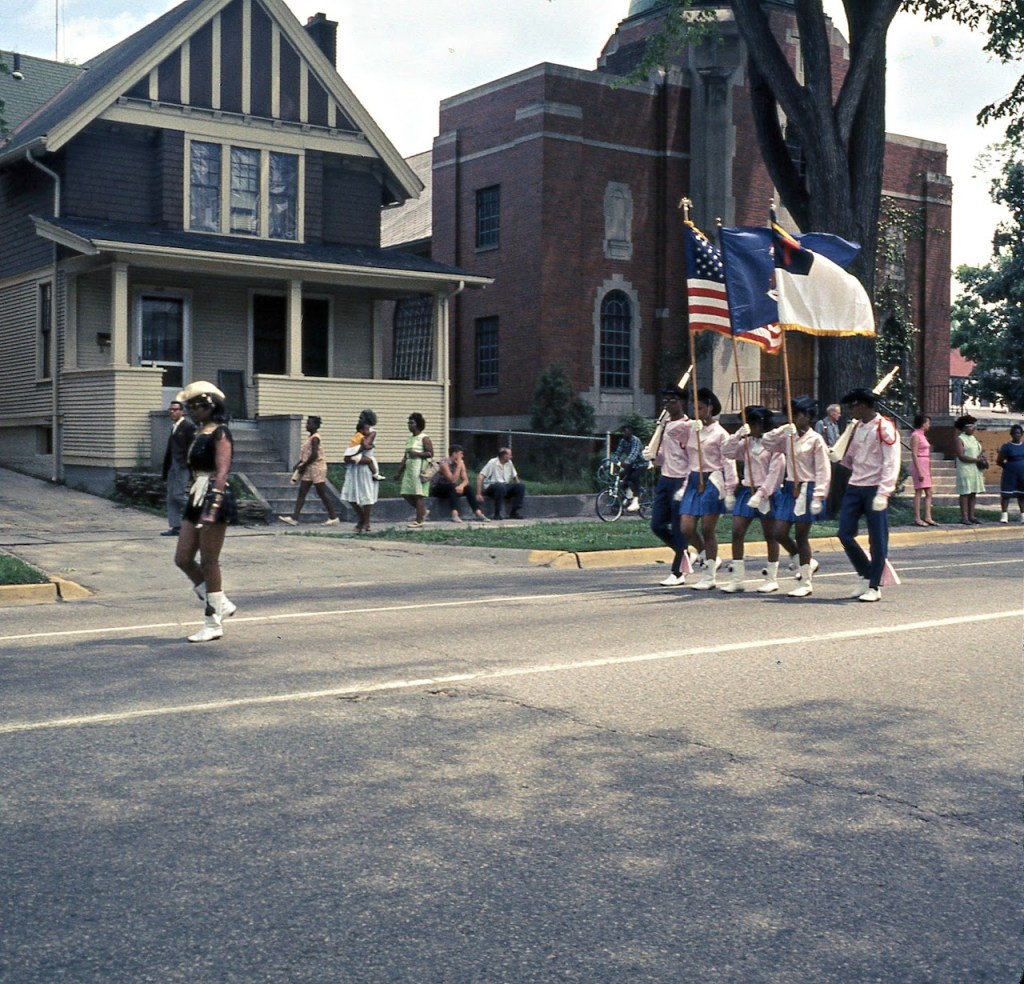
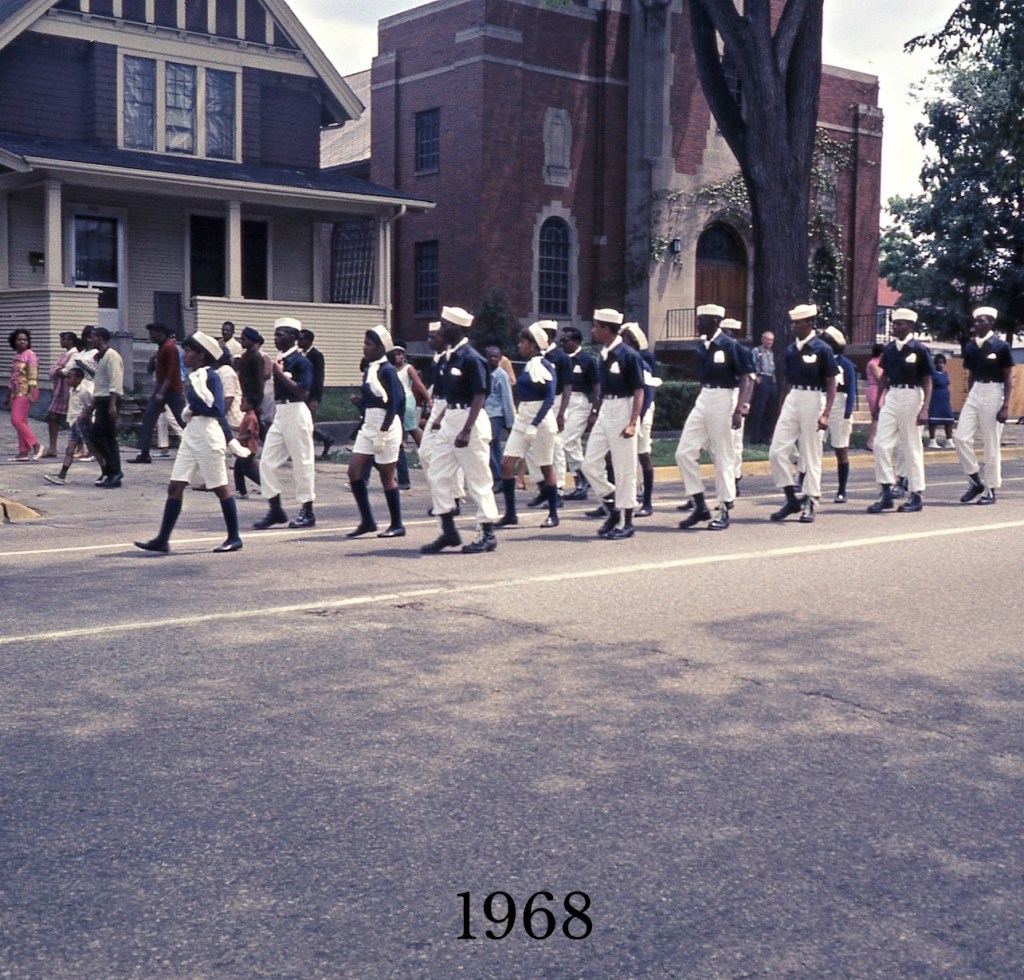
The Front Porch These were the best seats in Ann Arbor for parades traveling south down North Main Street toward downtown. The porch was roomy and lined with wooden rocking chairs.
It was also the perfect place for Grandma to serve one of our favorite treats—purple cows: floats made with purple soda and vanilla ice cream. I was warned more than once that if I rocked too wildly, I would tip over.
I did.
Parades on North Main Street, Ann Arbor 1967parade on North Main Street, Ann Arbor, MI 1968
The Second and Third Floors The second floor held three bedrooms and one full bath, with bedrooms measuring approximately 14′ x 11′. The third floor had two bedrooms, each about 14′ x 13′. The second floor was for the tourist rooms and the third floor was the location for my mother’s and uncle’s bedrooms.
I promised my father that I would continue to tell the stories of our family. One way I have tried to keep that promise is by preserving and sharing our family stories and legacy. I also simply enjoy looking back and remembering. In this blog, I reflect on some of the beloved pets who were part of our lives.
By exploring the animals our family has cared for, we are able to share happy and tender memories, funny anecdotes, and heartwarming moments. Each of these pets had a unique personality, and each became a meaningful part of our family’s story.
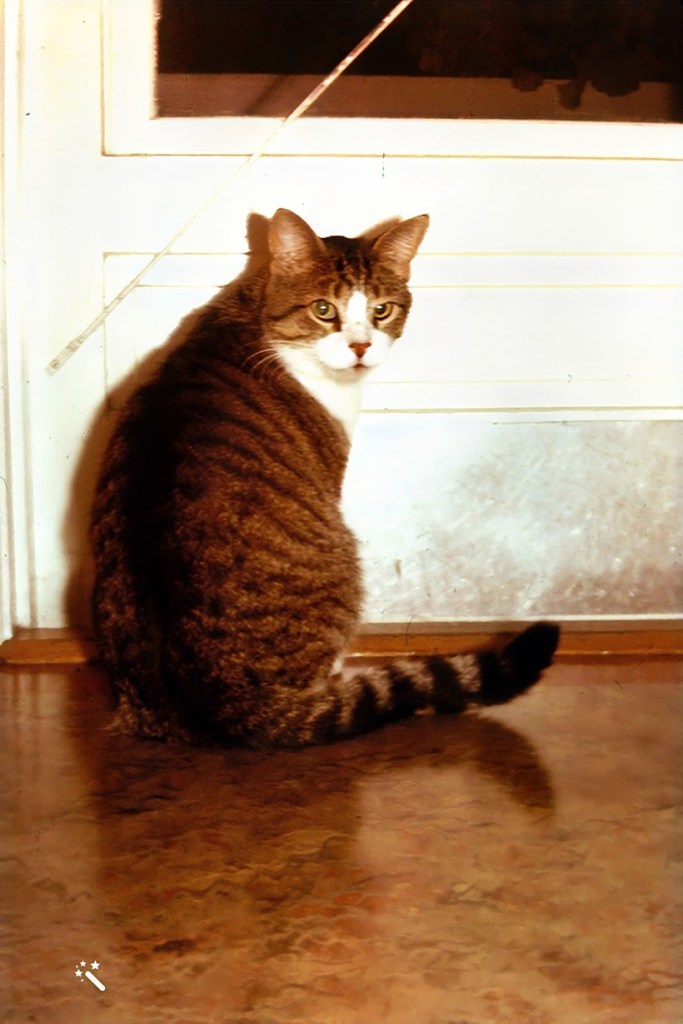
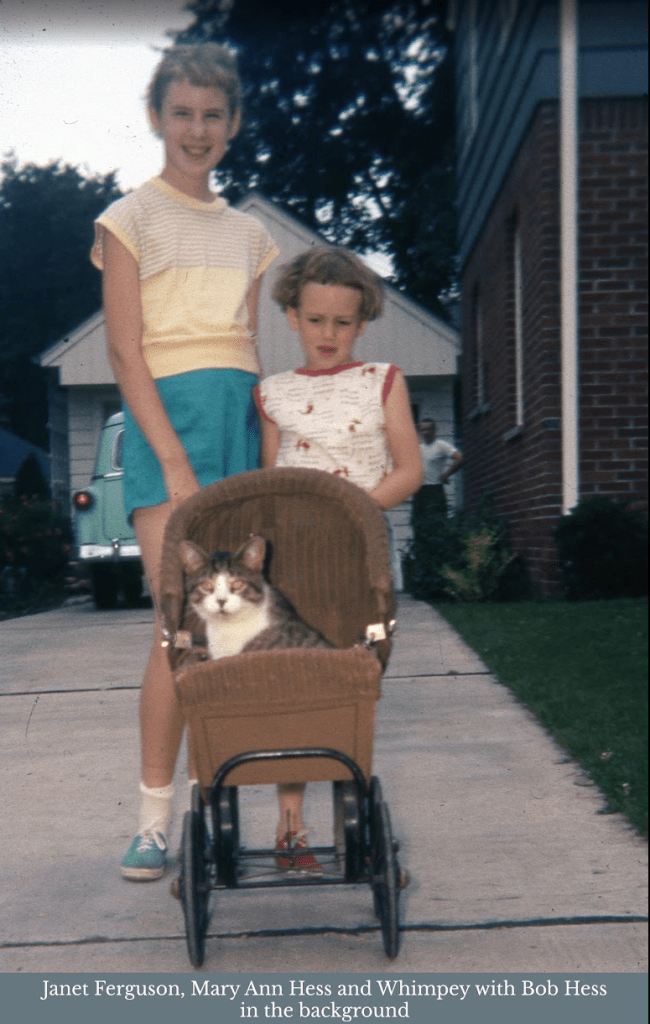
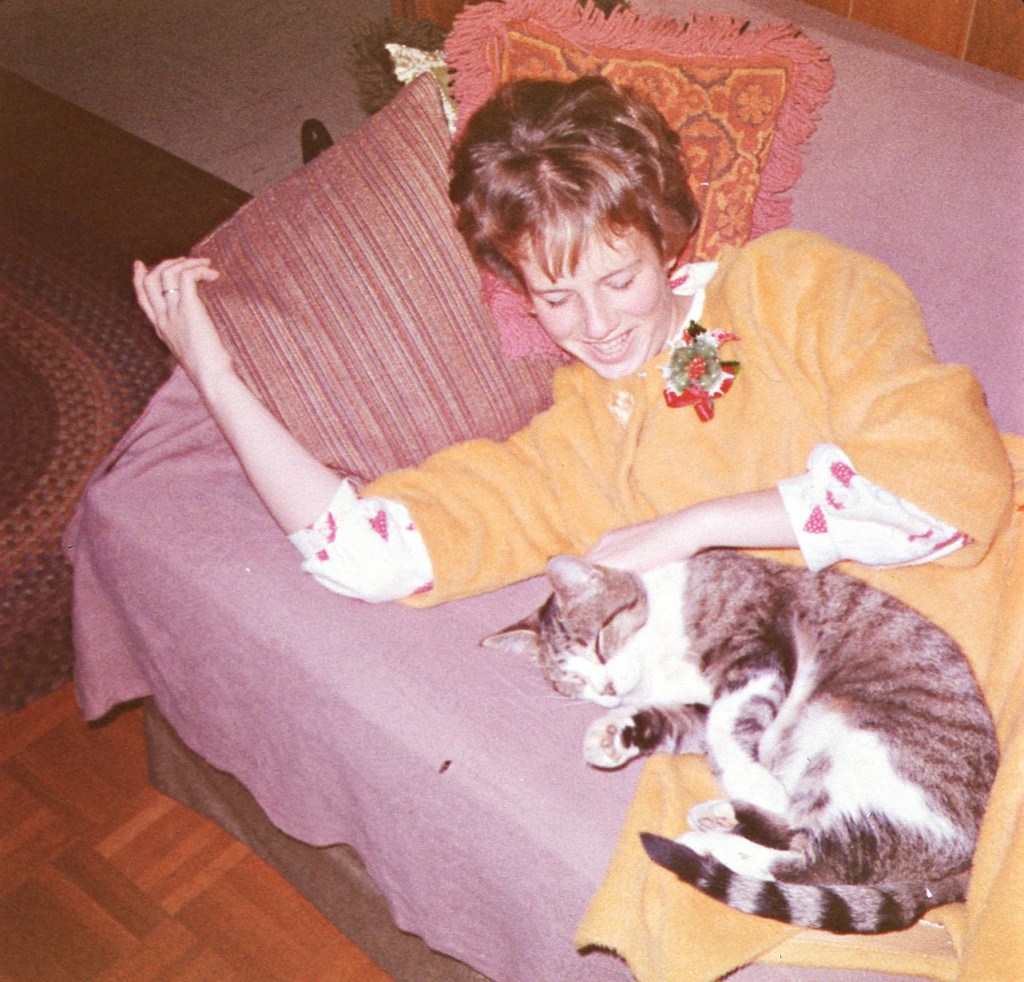
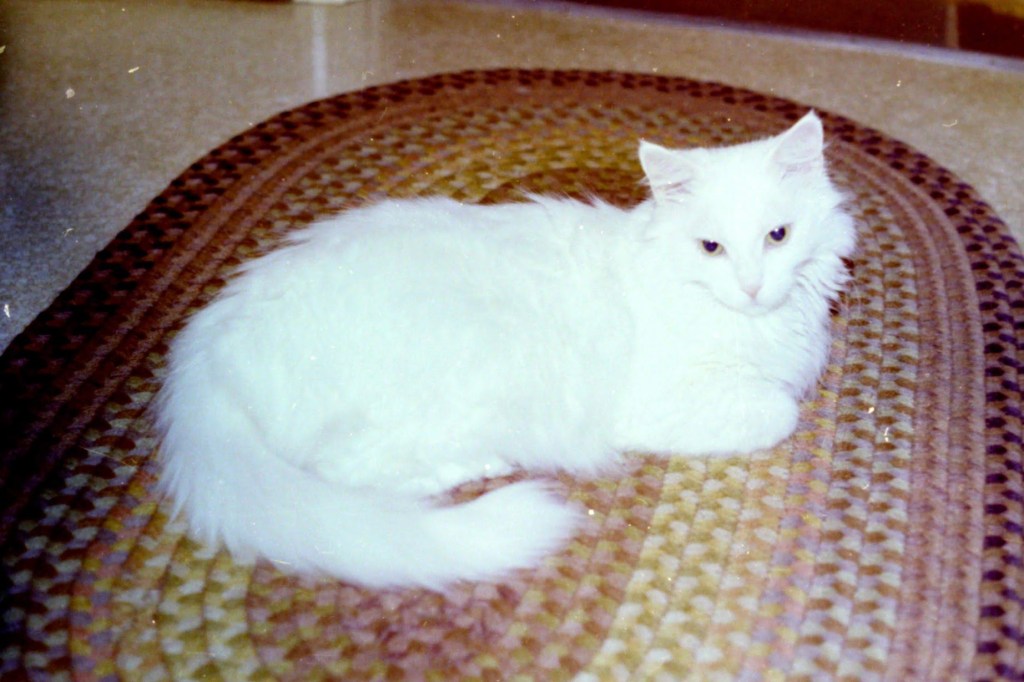
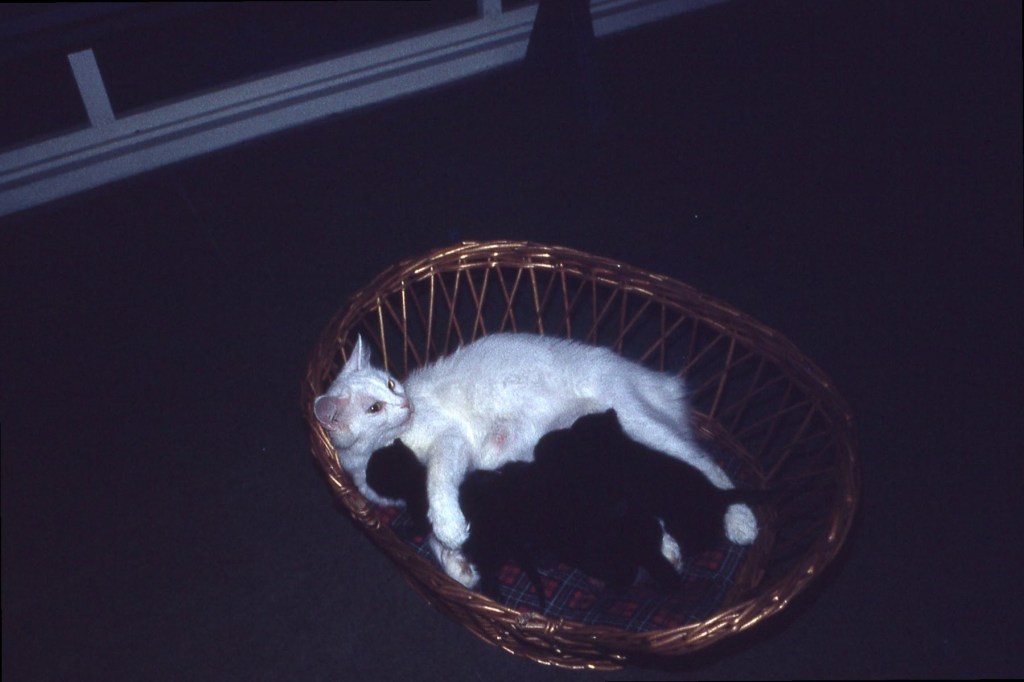
Whimpy was our first cat. This photo must have been taken at the back door of 1517 Harbrooke. Whimpy was free to roam outside. Whimpy in an antique buggy at 1517 Harbrooke, Ann Arbor, MIA beautiful photo of Mary Ann with Whimpy on the sofa at 2629 Danbury Lane.Mutti was our second family cat. Her name was fitting because she was a mother to a quite a few kittens. Her kittens were either all black or all white.Mutti with some of her kittens.
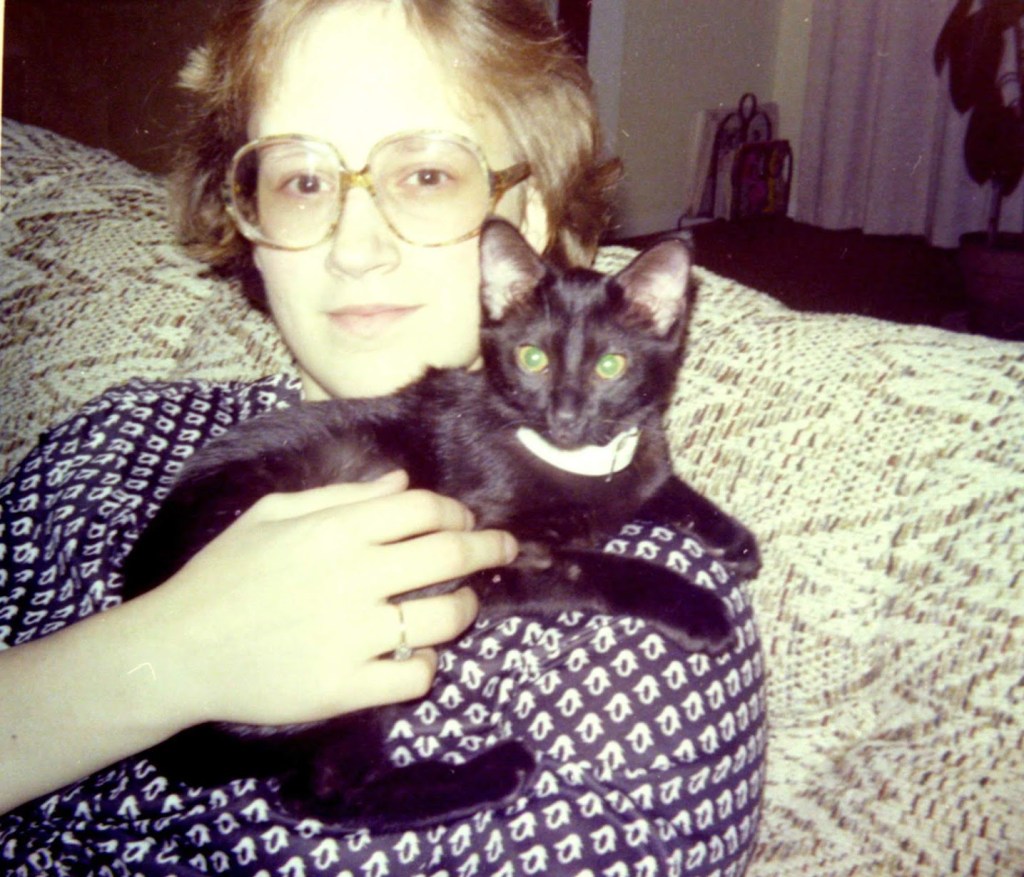
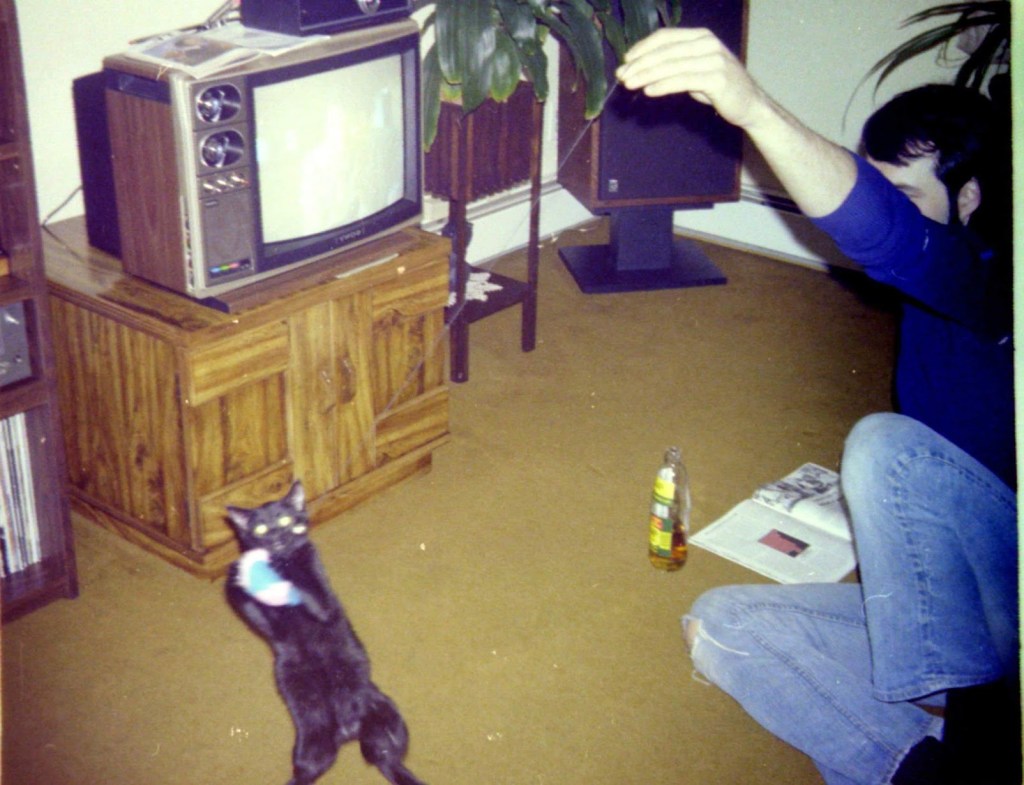
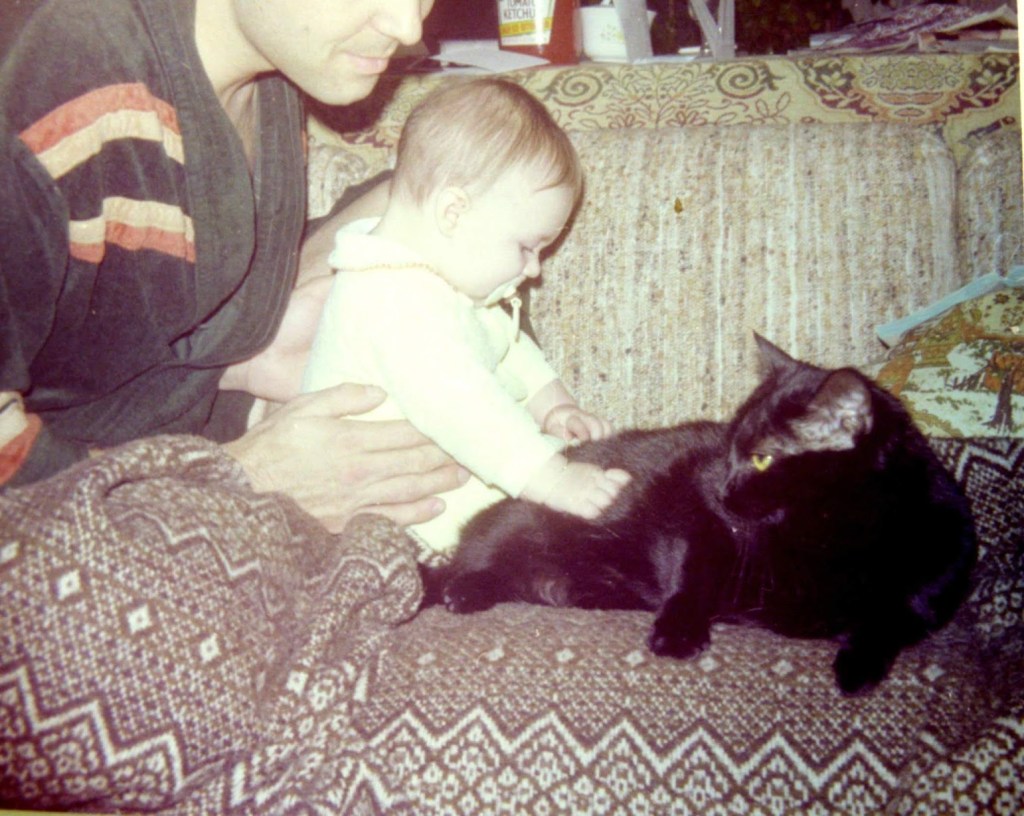
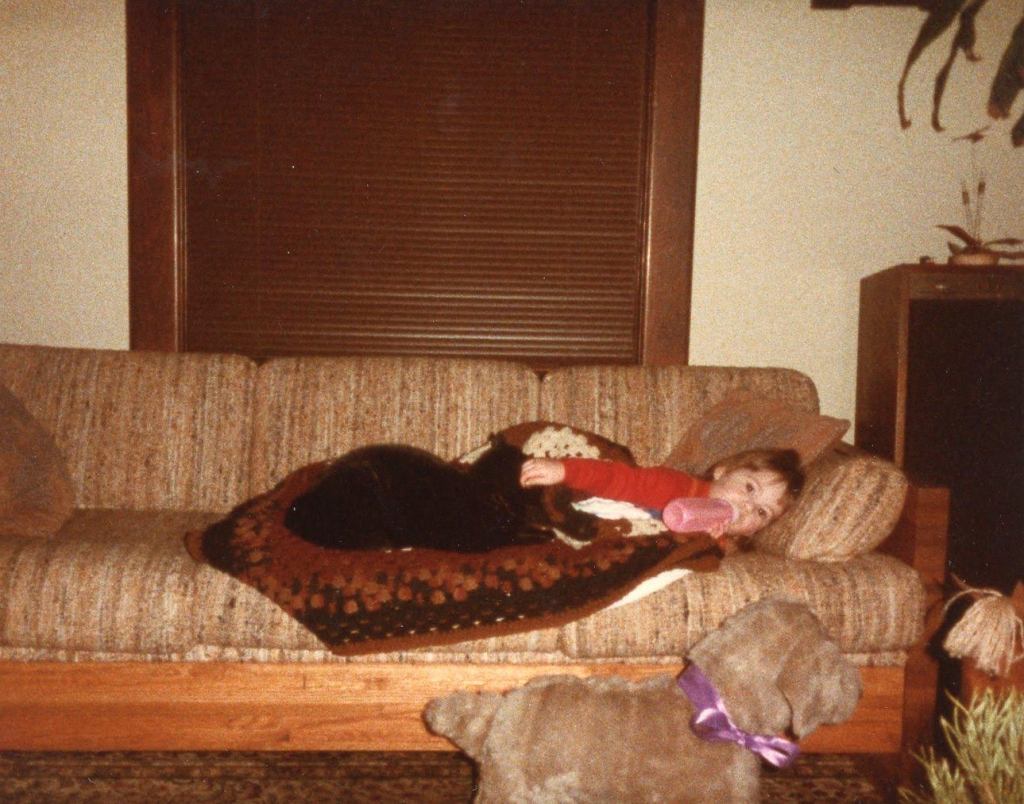
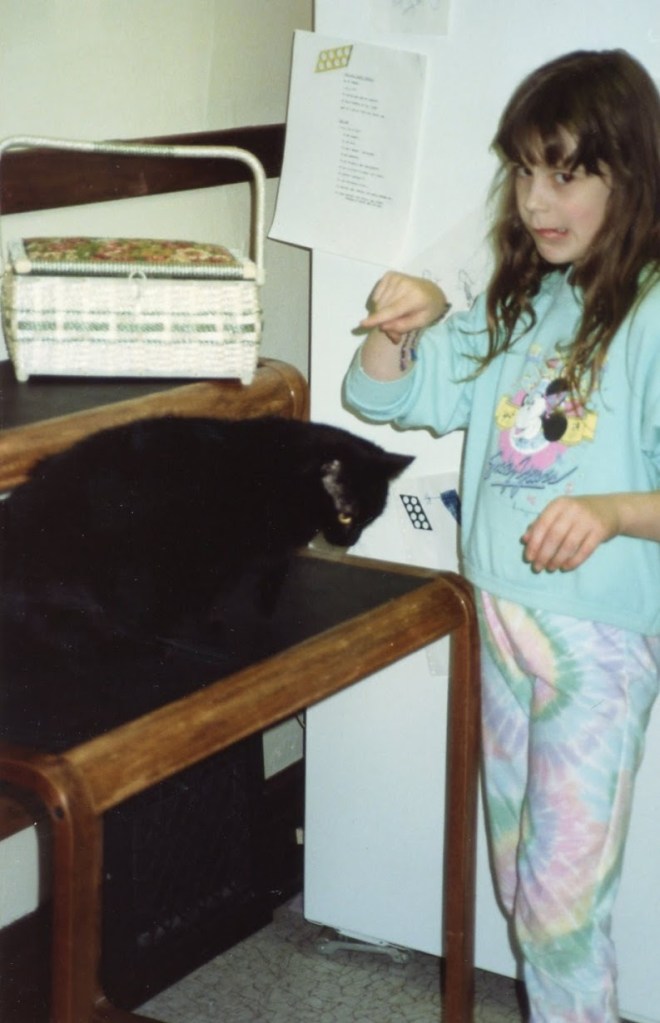
The Groshans got a black kitty and named her Valkyrie. This photo looks was taken at our apartment on Bemidji in Ann Arbor.
Check out the fun kitty toy and our old TV set! I’m not even sure what type of beverage Jack in enjoying?!
Amy pets Valkyrie – photo approx. Nov 1981
Amy, Valkyrie and a bottle on the sofa. The stuffed animal dog was a gift from Grandma and Grandpa. Later, this stuffed animal would no longer stand up after he was used as a sort of riding toy. LOL
Ruh-Roh! Valkyrie is on the desk. Photo taken at 609 S. 1st Street.

 telling life stories